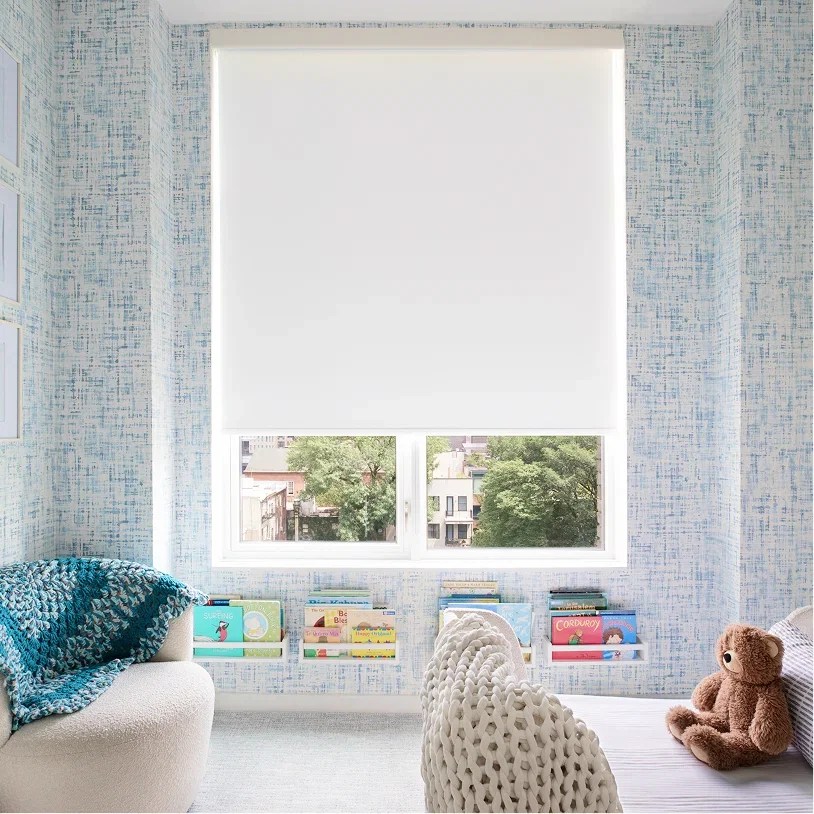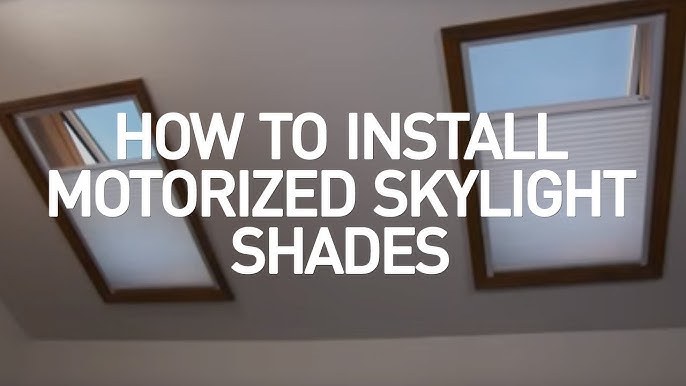
Installing roller shades on skylights is different from installing a shade on a vertical window. Gravity, roof pitch, limited access, heat buildup, and the need to keep fabric tracking in a straight line all affect the hardware choice. The most reliable skylight systems use side channels, tensioned guides, or a manufacturer-specific track so the fabric does not sag or drift when the opening is overhead or angled.
World Wide Shades helps homeowners plan the opening, shade fabric, and control system together. Start with the World Wide Shades builder for a preliminary configuration, then send photos and measurements to World Wide Shades before climbing a ladder or ordering hardware.
Why skylight shade installation needs special hardware
A standard roller shade hangs from a horizontal tube and relies on gravity to keep the cloth flat. A skylight may be horizontal, sloped, or mounted high enough that the fabric is pulled at an angle. A free-hanging roll can bow in the middle, rattle in a draft, or move away from the glass. Skylight systems solve that problem with side channels, cables, spring tension, or a rigid frame that guides the bottom bar.
The opening's slope matters. A 20-degree roof pitch creates a different load than a 45-degree pitch, and a ceiling-mounted shade may require a deeper cassette than a wall-mounted shade. Record the pitch, the finished opening size, and the available flat surface around the frame. If the skylight is within a stairwell or above a two-story room, treat access as a safety issue, not just an installation detail. The skylight shades guide explains which systems are intended for overhead and angled glass.
Measure the skylight before choosing a shade
Measure width at the top, middle, and bottom of the finished opening. Measure the length on both sides, and note the smallest width and shortest length. A difference of even 1/8 inch can affect how a side channel sits; a difference of 1/4 inch or more is a reason to verify the opening before fabrication.
Also measure the reveal depth from the glass or trim to the nearest obstruction. Many guided skylight shades need roughly 2 to 4 inches of usable depth for a cassette and channel, but the exact requirement depends on the fabric roll and motor. Photograph each corner, the skylight label, and any handle or vent. Order World Wide Shades swatches and include those photos when you contact the World Wide Shades team for a mount recommendation.
Do not measure from a ceiling drywall edge if the skylight has a sloped liner. Measure the actual surface where brackets and channels will fasten. If a skylight is being replaced, wait for the new finished opening or get the manufacturer's rough-opening drawings; replacement windows can change the clear width by 1/2 inch or more.
Select the fabric for heat, glare, and sleep
Skylights receive direct overhead sun for much of the day. A light-filtering or solar fabric can reduce glare while keeping the room bright, but a low-openness fabric is often more useful above a desk, television, or bed. Solar openness is commonly listed as 1%, 3%, 5%, or 10%; a 1% screen generally blocks more glare and view-through than a 5% screen.
For a bedroom, nursery, or media room, choose room-darkening or blackout fabric and plan for edge control. A blackout cloth cannot stop light that enters around an unsealed channel. A cassette and side tracks can create a darker result than an exposed tube, especially when the skylight faces east or west and receives low-angle light.
Thermal performance depends on the entire assembly. A reflective or light-colored backing can reduce solar gain, while a dark exterior-facing surface may absorb more heat. A cellular skylight shade can add an air pocket, but a roller shade is often the slimmer option. Review energy-efficient window shades and best shades for south-facing windows before selecting a fabric for a high-exposure roof.
Compare heat-control and blackout fabrics in the World Wide Shades builder when you know whether the room needs a view, darkness, or the lowest possible solar load.
Choose manual or motorized operation
Manual skylight shades are practical only when the opening is reachable without a ladder. A pole or wand can extend the reach, but it may still be awkward above furniture or a stair landing. If the shade is more than about 7 feet above the floor, motorization is usually the safer daily-use choice.
Battery motors are useful where wiring is difficult. Depending on motor size and usage, a battery pack may last several months to more than a year between charges. Large blackout fabrics and frequent daily cycles can shorten that interval. A hardwired motor needs an electrician and a concealed cable route, but it avoids repeated ladder access. Smart controls can schedule the shade to close during peak afternoon sun and open in the morning.
Before ordering, confirm the motor's maximum width, fabric weight, charging access, and remote frequency. A shade that is too large for a small motor may hum, stop under load, or roll unevenly. Ask World Wide Shades about motorized skylight options, or call (844) 674-2716 with the opening dimensions and pitch.
A safe installation sequence
Use a stable platform rated for the height and keep a second person nearby for long rails or a heavy cassette. Never balance on a chair or rest a ladder against fragile skylight trim. Locate framing or use anchors rated for the substrate; a shade can place repeated pull on the fasteners every time it opens and closes.
Dry-fit the cassette and channels before drilling. Mark the centerline, verify that the channels are parallel, and leave clearance for a vent, crank, or insect screen. A 1/16-inch alignment error at the top can become a visible tracking problem over a 48-inch drop.
Fasten the top hardware at the marked points and check that the rail is level relative to the opening, not necessarily to the room. Use the supplied screw size and do not substitute a short drywall screw where a structural fastener is required. If the liner is thin, fasten into framing or install a solid mounting strip first.
Fit the channels tight to the opening without compressing the fabric path. Measure diagonally from the top left to bottom right and top right to bottom left; a difference greater than about 1/8 inch suggests the frame is out of square. Correct the rail or channel position before running the shade.
Lower the shade in short increments. Look for rubbing, a drifting bottom bar, wrinkles, or a fabric edge that touches one channel. Stop if the motor strains or the cloth telescopes toward one side. Repeated operation with a misaligned track can damage the edge and motor.
For a motorized shade, set the upper and lower limits according to the motor instructions. Do not assume a remote reset procedure from another brand is safe. Pair the remote only after the shade moves freely, then test open, stop, close, and any favorite position. Save the remote channel number and motor model with the home's maintenance records.
Common installation mistakes to avoid
The most common mistake is treating a skylight like a vertical window and ordering a standard exposed-tube roller. The second is measuring the visible glass instead of the finished mounting surface. A third is installing channels that are not parallel, which forces the bottom bar to twist. Another is selecting blackout cloth without controlling the perimeter; the result is a dark fabric with bright wedges of light at the sides.
Avoid spraying cleaner near the motor or saturating a fabric mounted on a slope. Dust with a soft brush or vacuum at low suction. If a skylight leaks, resolve the roof or flashing issue before installing a shade. Water can stain fabric, corrode brackets, and create a safety hazard around electrical components.
World Wide Shades can review an unusual skylight before fabrication. Use the contact form for a roof pitch, access photo, and rough dimensions; use the builder after the mount style is confirmed.
Cost and project timing
A manual guided skylight shade commonly costs about $350–$900 for a standard opening, while a motorized system often runs $700–$1,800 or more. Specialty tracks, blackout side channels, extra-long lengths, and difficult access raise the price. Installation can add roughly $150–$500 depending on height and whether electrical work is required.
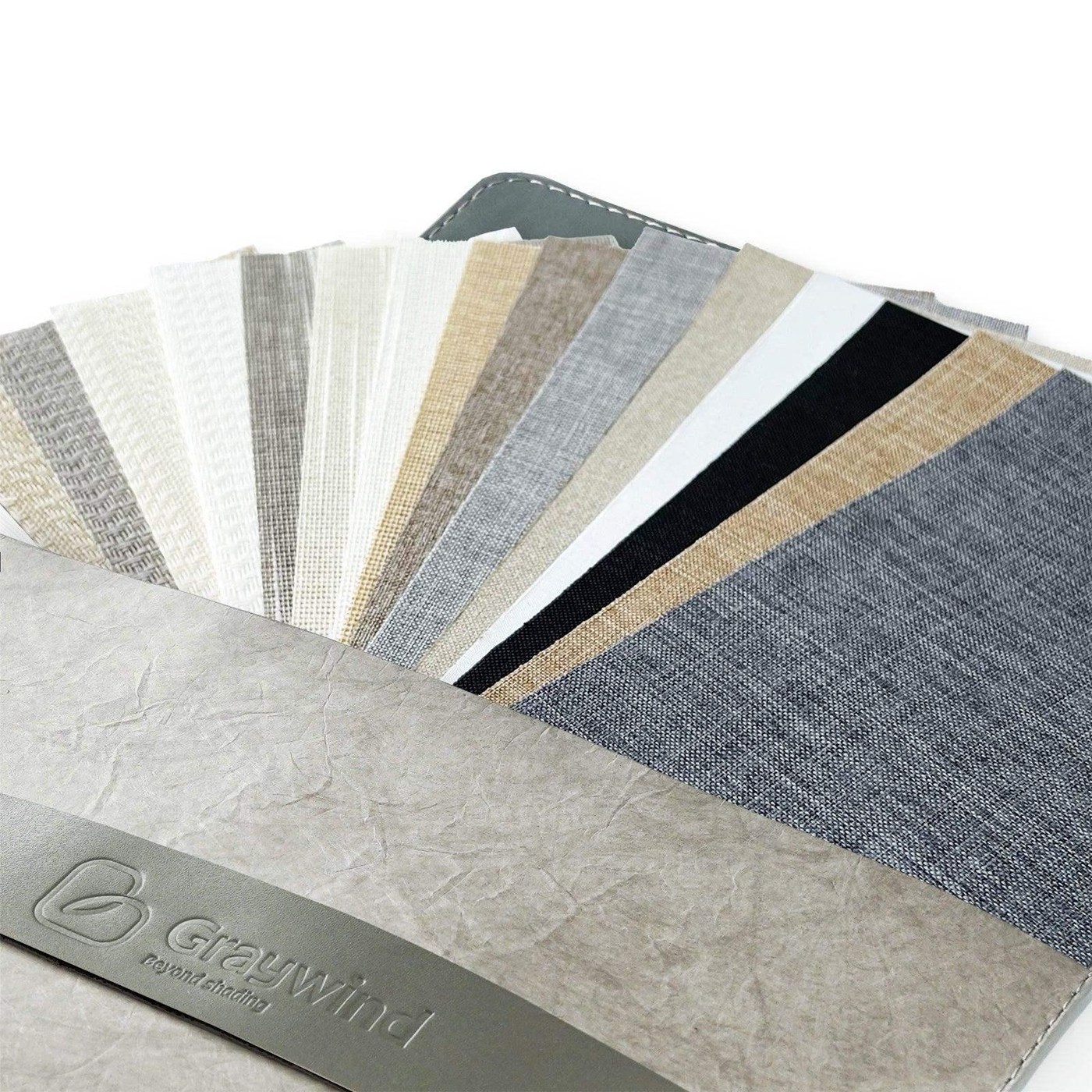
Allow time for a custom fit. Fabrication may take 2–6 weeks, and an electrician may need a separate appointment for hardwiring. Order samples before production because a skylight changes the fabric's appearance dramatically under direct overhead light. Request skylight fabric samples from World Wide Shades before approving the final color.
For adjacent vertical windows, compare the light-filtering shades guide and custom shades for new construction before matching the skylight fabric. Contact World Wide Shades if the roof and wall openings need one coordinated specification.
Frequently asked questions
Usually not with a satisfactory result. A standard free-hanging roller can sag, drift, or fail to stay close to angled glass. Use a skylight-rated system with side channels, cables, tension, or a rigid guide designed for the opening's pitch.
They can reduce glare and solar heat entering through the glass, especially when the fabric is closed before peak sun. Performance depends on glazing, orientation, fabric color, openness, and perimeter gaps. Light-colored or reflective-backed fabrics are common choices for high-exposure skylights.
They are often worth it when the shade is out of reach, above a stairwell, or used on a daily schedule. Battery, hardwired, and solar-charging options should be compared by access, fabric size, and charging needs.
Many guided systems need roughly 2–4 inches of depth for the cassette and channels, but requirements vary by product. Measure the actual reveal and confirm the hardware specification before choosing an inside mount.
Yes, but blackout fabric alone does not guarantee a dark room. Side channels, a cassette, and accurate squaring reduce perimeter light. For maximum darkness, discuss the mount and edge treatment with World Wide Shades.
Send your measurements and photos to World Wide Shades, start a configuration, or call (844) 674-2716. The team can help determine whether the opening needs a guided manual system, battery motor, or hardwired solution.