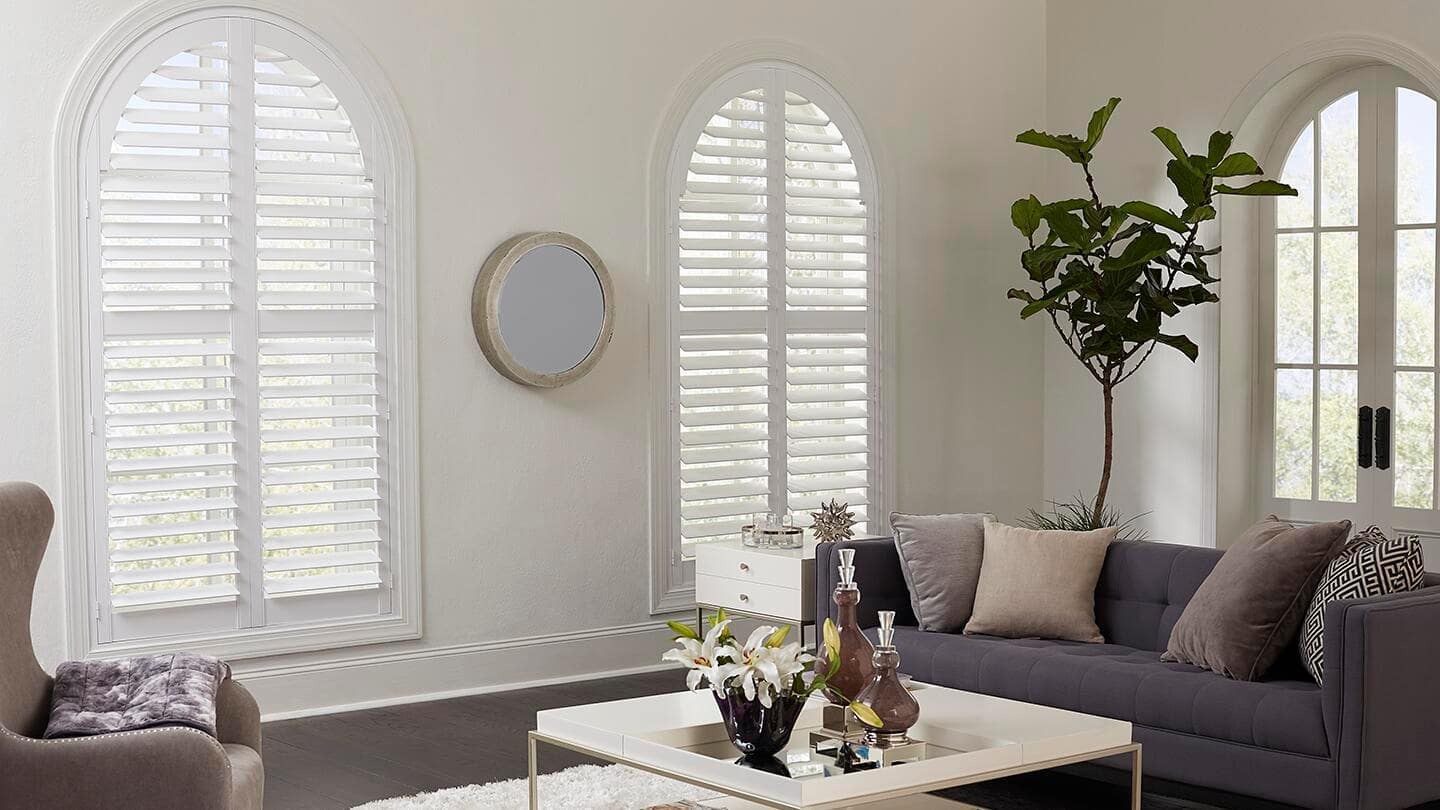
Arched windows add architectural character, but their curved tops make a standard width-and-height measurement incomplete. A shade plan must describe where the straight jambs end, how high the arch rises, whether the arch opens, and what part of the glass actually needs coverage. Measuring an arched window carefully helps you decide whether you need a stationary sun-control panel, a movable shade below the arch, a shaped custom treatment, or two coordinated pieces.
World Wide Shades helps homeowners turn unusual window geometry into a practical shade specification. Use the World Wide Shades builder to explore fabrics and operation, order swatches before judging a color against curved trim, or contact World Wide Shades with a photograph and sketch. The method below is designed to capture the information a custom shade professional needs.
Understand the parts of an arched opening
An arched window has two vertical sides, a horizontal spring line where the curve begins, and a curved top that reaches its highest point at the crown. The distance between the spring points is the chord width. The vertical distance from that chord line to the crown is the rise. Some windows are half-round arches, while others are elliptical, segmental, quarter-round, or eyebrow shapes.
The spring line is the most important reference. If you measure only the total height from sill to crown, a fabricator cannot tell whether the arch is a semicircle or a shallow curve. Mark the left and right spring points with removable tape, then measure the lower rectangular portion and the curved portion separately. The roller shades for arched windows guide explains how different shapes affect the treatment choice.
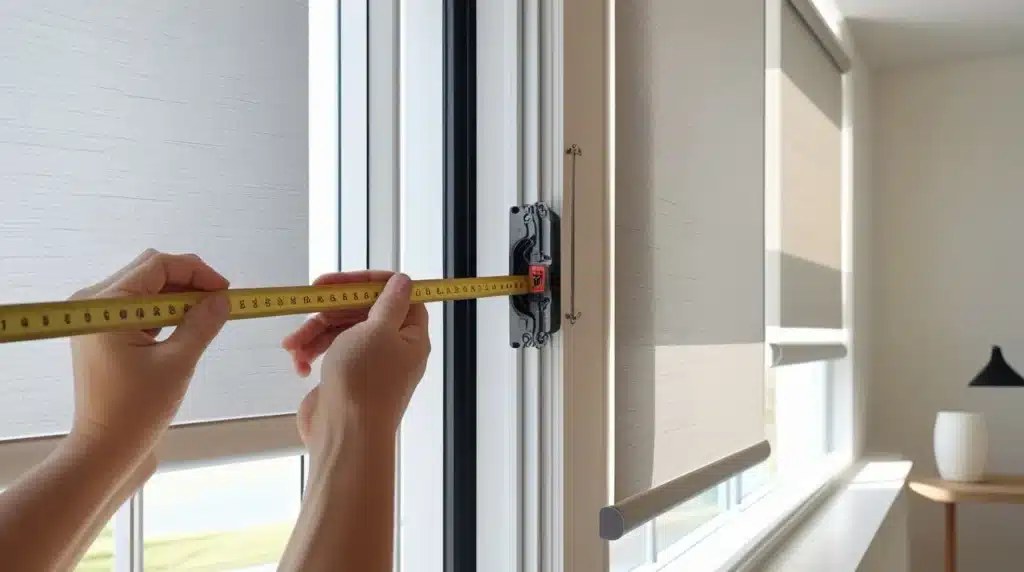
Before measuring, collect a steel tape, a level, pencil, painter's tape, graph paper, camera, and a safe step stool. For a tall or stairwell window, photograph the opening from floor level and hire help instead of leaning from a ladder. World Wide Shades can often spot a geometry issue from a straight-on photo before an order is placed.
Decide what the shade needs to cover
First decide whether you need privacy, glare control, solar heat reduction, or full darkness. A fixed arch above a rectangular shade may need only a solar screen or decorative treatment, while a bedroom may need the entire opening covered. A shade that stops at the spring line can be less expensive and easier to operate, but it leaves the arch exposed.
If the arched glass is high and receives direct sun, a shaped fixed panel can reduce heat without requiring a moving mechanism. If the lower section is reachable, a rectangular roller shade can cover the area below the arch. Motorization may be appropriate when the entire window is tall or above a stair. Contact World Wide Shades if you are unsure whether the arch should be covered independently or as part of one system.
Consider the view from inside and outside. An outside mount may cover trim and create a clean visual rectangle, but it can make the arched architecture less visible. An inside mount follows the opening and preserves the outline, but a shaped fabric may require a template and a more specialized manufacturing process.
Measure the rectangular portion
Label the window A and record raw dimensions before any deductions. Measure the clear width at the sill, at the middle of the straight sides, and at the spring line. Write down the narrowest width. Measure the height from the sill to the left spring point, center spring line, and right spring point; record the shortest height if the lower opening is not perfectly level.
Measure the frame depth at the top of the rectangular portion and at both side jambs. Note whether the sash, crank, lock, screen, or handle projects into the shade path. A recess that appears 2 1/2 inches deep may have only 1 3/4 inches of clear depth after hardware is considered.
For an inside mount, do not round down or apply a deduction without instructions. Give World Wide Shades the raw numbers and the system you are considering. For an outside mount, measure the finished coverage you want, including overlap beyond the side jambs and above the spring line. Two to 3 inches of overlap is common where wall space allows, but curved trim and nearby openings may limit it.
Use the World Wide Shades builder to compare a solar, light-filtering, or blackout plan after the lower measurements are complete. Send your raw sketch through our contact page so the mount can be matched to the available depth.
Measure the arch with spring points and rise
Measure the chord width from the left spring point to the right spring point in a straight horizontal line. Then measure the rise from that chord line to the highest point of the arch. Check the rise at the center with a level or a plumb reference so the tape is truly vertical. Record the total window height separately; never substitute total height for rise.
Take at least three width checks across the curve. Measure horizontally at the spring line, one-third of the way up, and two-thirds of the way up. If the arch is a true half circle, the upper width will reduce predictably. If the curve is elliptical or irregular, these checkpoints reveal it. A custom shade maker can use the points to evaluate whether a standard shape is suitable or whether a full template is safer.
For a round or half-round arch, a paper or cardboard template can communicate the shape better than numbers. Tape several sheets together, hold them against the interior trim, trace the exact edge, and mark “room side,” “top,” “left,” and “right.” Do not force the template into a bowed or uneven frame. Photograph the template flat next to a ruler, then keep it for the consultation.
The skylight shade measurement guide covers related geometry and access issues for unusual openings. World Wide Shades can tell you whether a template is needed for your specific arch before you mail or upload anything.
Record mounting and clearance details
Measure the trim projection around the arch. Decorative casing may extend 1 to 3 inches beyond the wall, and a headrail mounted below it may need spacers to keep the fabric from rubbing. Note whether the trim is flat, stepped, sloped, or thicker at the crown.
Check the bottom rail path. A movable shade below an arch must clear the sill, furniture, stair rail, or counter. A chain loop must not hang where it can be reached by a child; cordless or motorized operation is usually cleaner. The child-safe window treatments guide gives practical safety considerations.
Write down whether the window swings inward, whether a screen is removable, and whether the arch is fixed. Opening casements can strike an inside-mounted shade. A handle that projects 2 inches may require an outside mount or a spacer. A deep sill can support a bottom rail, while a narrow sill may make a low-profile cassette preferable.
For wide arched openings, confirm the maximum shade width and fabric roll diameter. A 72-inch-wide shade can have a larger roll at the top than a 30-inch shade, which changes clearance. Contact World Wide Shades with the clear depth and width so the hardware can be checked rather than assumed.
Create a measurement sketch
Use one page per arched opening and include:
- Overall width and height from the finished interior edges.
- Lower rectangular width at top, middle, and bottom.
- Lower rectangular height on left, center, and right.
- Chord width between spring points.
- Rise from the chord line to the crown.
- Three or more horizontal widths across the curve.
- Clear frame depth and trim projection.
- Handles, latches, screens, furniture, and opening direction.
- Desired mount, coverage, fabric goal, and operation.
Draw the arch as accurately as you can and mark all measurements with arrows. Add a straight-on photo and a corner photo showing depth. If the opening is part of a group, label matching windows so the fabric color and top treatment can be coordinated.
The how to measure skylights for custom roller shades article is useful when the arch is high or difficult to reach. Order swatches from World Wide Shades and view them at the spring line and crown; daylight can make the same fabric appear different against vertical trim and the ceiling.
Select the shade approach
There are four common approaches. A rectangular roller shade below the arch is the simplest and usually the most economical. A fixed shaped solar panel covers the arch while a movable shade handles the lower section. A single shaped treatment follows the curve but requires more custom fabrication and may be stationary. A full-height outside mount covers the opening with a simpler rectangle but hides part of the architectural outline.
Solar screen openness factors often range from 1% to 10%. A 1% or 3% fabric gives stronger glare and heat control, while a 5% or 10% fabric preserves more view. Light-filtering fabric diffuses brightness but does not guarantee nighttime privacy. Blackout fabric can create darkness in the lower section, but curved top gaps must be resolved with the mount design.
Motorization is valuable for a high arch or any window above a stair. A rechargeable motor may add roughly $150 to $350 per moving shade; hardwired power can add installation cost when walls are finished. Compare the motorized shades for high ceilings advice and smart-home motorized shades setup before choosing controls.
Build a shade plan with World Wide Shades after you know the opening geometry. Contact World Wide Shades for a fit review, or call (844) 674-2716 if the window is above a stairwell or has a complicated casing. Call (844) 674-2716 again when you need help interpreting a paper arch template.
Verify the order before fabrication
Read the order drawing line by line. Confirm which dimension is raw and which is finished, which side the control is on, whether the fabric rolls front or back, and whether the arch is covered or left open. Check the color name against the physical swatch and verify the date needed for installation.
Do not assume two arched windows are identical because they look symmetrical. Compare chord, rise, lower width, and depth. A 1/4-inch difference can affect a shaped treatment, and a different trim projection can change the mount. World Wide Shades can help reconcile a pair of windows into a coordinated plan without pretending that every opening is the same.
FAQ
Record the lower width and height, the chord width between spring points, the rise to the crown, several widths across the curve, clear depth, trim projection, and any hardware obstructions. A straight-on photo and a paper template are helpful for irregular arches.
Spring points are where the curved top begins on the left and right sides. The horizontal distance between them is the chord width. The vertical distance from that line to the crown is the rise. Both are needed to describe the arch accurately.
Often, yes. A rectangular shade can cover the lower portion below the spring line, while the arch remains uncovered or receives a fixed solar treatment. This approach is simpler to operate and may cost less than a fully shaped moving shade.
Take width checkpoints at the spring line, one-third up, and two-thirds up, then record the rise and trace a cardboard or paper template. Mark the template orientation and photograph it with a ruler. Send those details to World Wide Shades for a feasibility check.
Inside mounting preserves the opening but requires sufficient depth and may need a shaped treatment. Outside mounting can hide uneven trim and simplify coverage, but it overlaps the architecture. The best option depends on depth, trim, privacy, and whether you want the arch visible.
Turn the arch into a clear plan
An arched window becomes manageable when you separate the rectangular portion from the curved portion. Mark the spring points, record chord and rise, check the curve at several levels, photograph the trim, and write down the hardware clearances. That information gives a custom shade professional something more useful than one overall height.
Start with the World Wide Shades builder, request swatches, or contact World Wide Shades for a measurement review. With the right plan, an arched window can keep its architectural profile while gaining comfortable light control, privacy, and reliable operation.