High ceilings make a room feel open, but they can make a shade impossible to reach. A window above a staircase, a 12-foot great-room opening, or a clerestory row may need motorized shades simply because a person should not climb a ladder every morning. The successful installation is more than adding a motor: it plans power, control, service access, shade weight, alignment, and what happens when a remote, hub, or battery needs attention.
World Wide Shades helps homeowners plan high-ceiling shades before the drywall, trim, or electrical work is finished. Build a high-window motorized shade plan with World Wide Shades, order fabric samples, or contact World Wide Shades with ceiling height, window dimensions, and access constraints. Call (844) 674-2716 if the opening is over a stair, above a foyer, wider than 96 inches, or part of a multi-window group.
When high ceilings require motorization
Reach is the first test. If the top of the shade is above about 8 feet, a manual chain may be inconvenient; above 10 feet, it may require a ladder; above a stair or double-height void, it may be unsafe to access routinely. Motorization is also valuable when the shades are large, heavy, numerous, or programmed to respond to sun and occupancy.
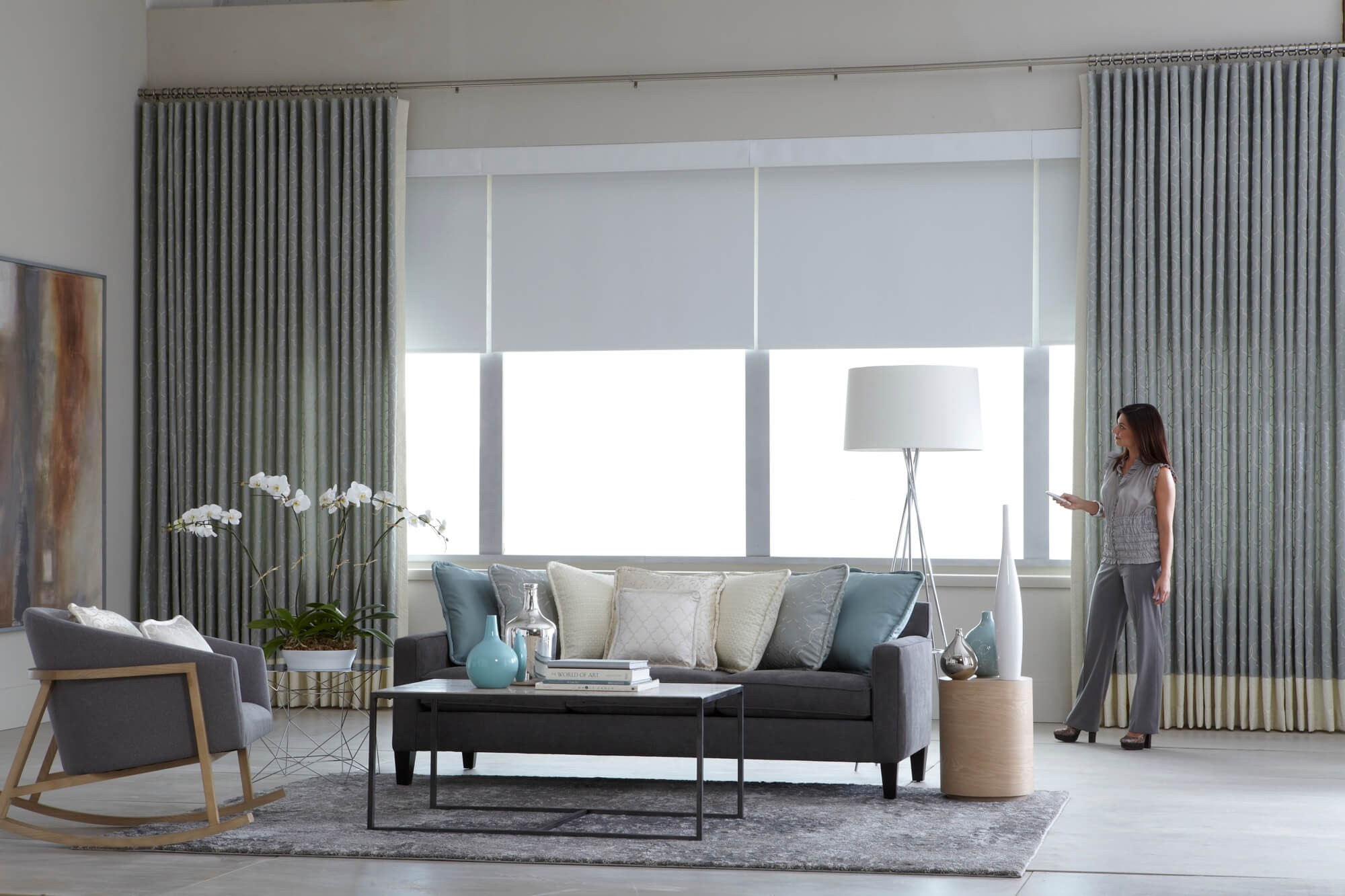
A motor can operate one shade, a pair of coupled shades, or a room group. A remote can provide a simple local command, while a wall control, app, or smart-home bridge can add schedules. The system should still have a fallback that works without the internet. World Wide Shades can map individual and group control so a west-facing shade does not close the entire great room when only one opening is hot.
See shades for double-height foyers, shades for floor-to-ceiling windows, and motorized shade setup for related planning. Ask World Wide Shades to review the access problem instead of choosing a motor solely from a product photo.
Battery power or hardwired power?
Battery-powered motorization is often the simplest retrofit. It avoids opening walls and can work well when the motor is accessible from a lift, balcony, or adjacent floor. The drawback is service access: a battery that is easy to recharge at 7 feet may be difficult at 14 feet. Estimate the number of open-close cycles per day, shade width, fabric weight, and expected charging interval before choosing.
Hardwired or low-voltage power can reduce routine charging and is attractive for a shade that runs every day on a schedule. It requires a planned route, an accessible transformer or power supply, and electrical installation that meets local requirements. High-window wiring should be coordinated with the electrician, shade provider, and builder before surfaces close. Do not bury an inaccessible connection without documenting where it is.
A hybrid plan can use hardwired power for the largest great-room shades and rechargeable motors for smaller clerestories. Contact World Wide Shades for a room-by-room power comparison. Review hardwired motorized shade planning and battery-life expectations when both options are possible.
Measure access, not only glass
Record the width and height of every opening, but also the ceiling height, stair angle, landing size, balcony edge, and distance from a safe floor location to the headrail. Note whether a lift can reach the shade, whether a ladder can be positioned legally and safely, and whether furniture or a chandelier blocks the service path.
Measure recess depth, header thickness, trim projection, mullions, and the distance from the shade to ceiling fans, sprinklers, pendant lights, and HVAC grilles. A motor housing may require more room than a manual roller. An outside mount may make installation possible but change the roll location and sightline. Send a dimensioned photo to World Wide Shades when the opening is above a stair or in a vaulted ceiling.
For paired or coupled shades, verify whether the mullion can carry brackets and whether a center support is required. If the opening is wide, two independent shades can reduce tube deflection and allow zone control. The tradeoff is a center seam and additional hardware. Build a multi-window configuration before ordering a single oversized unit.
Select fabric for the height and exposure
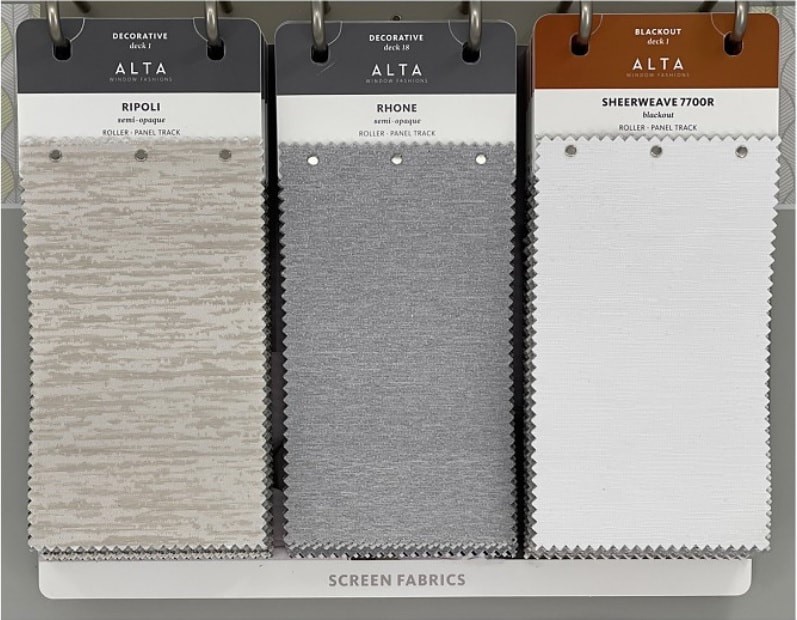
High windows often admit more sun because they see a larger portion of the sky. A clerestory can create glare even when the lower windows are shaded. Solar screens can reduce brightness while preserving a view; light-filtering textiles soften the room; room-darkening fabrics help bedrooms and media rooms but need careful edge-gap planning.
A tall roll also increases the amount of fabric stored at the headrail. Heavier blackout textiles, decorative hems, and side channels can increase motor load. Confirm that the selected tube and motor are rated for the width, drop, and fabric. Read about energy-efficient window shades, UV protection, and best fabrics for roller shades before treating fabric as only a color choice.
Use samples at the actual window. A 3% screen may look airy on a table but visibly darker over a large opening. A light-colored shade may reflect more daylight into the room, while a dark screen can preserve exterior contrast. Order World Wide Shades swatches and view them from the floor where occupants will actually see the shade.
Choose control zones deliberately
High windows need control that is obvious to guests and easy for residents. A five-channel remote may assign one channel to each opening and an all-shades channel for a whole-room command. A wall control near the room entrance can be more discoverable than a remote that gets lost. An app or voice assistant is convenient, but it should not be the only way to move a shade.
Group by behavior, not just by room. West-facing shades may need an afternoon glare scene; bedroom shades may follow sleep; clerestories may stay at a partial position to keep daylight without heat. Avoid a single “close everything” command if the shades have different jobs. Review Alexa and Google Home motorized shade options and smart-home scene planning.
Create scenes with conservative positions first. A 50% test position can reveal glare, reflections, and view changes without fully closing a tall opening. Once the household understands the result, add sunrise, sunset, temperature, or occupancy triggers. Ask World Wide Shades to document the control map so a future resident or service technician knows what each channel does.
Installation and alignment at height
High-window installation should be treated as a site-access project. Confirm lift or scaffold requirements, protect floors and furnishings, and keep people out of the drop zone. A qualified installer should verify the header, use appropriate fasteners, and keep brackets level. Small alignment errors can become obvious over a 10-foot drop as the fabric telescopes or the bottom bar drifts.
Before the installer leaves, run every shade through multiple complete cycles. Test the first and last foot of travel, intermediate positions, group commands, and limit settings. Confirm that fabric edges remain parallel and that the bottom bar clears trim, mullions, and nearby furniture. Photograph the motor label, wiring route, battery location, and remote channel plan for future service.
If a shade stops halfway, do not repeatedly force it. Check power, limits, obstruction, and alignment, then contact the provider. Use the roller-shade installation guide for general preparation, but high or oversized openings deserve professional access planning.
Maintenance without risky ladder work
Maintenance is easier when it is designed in advance. Keep a written service location for batteries, transformers, hubs, and manual override points. Schedule visual inspections from the floor every few months: look for fabric edge drift, dust on the bottom bar, uneven roll, or a change in noise. Clean according to the fabric instructions; avoid soaking a motorized shade or pulling the fabric by hand.
For rechargeable motors, set a calendar reminder based on real battery performance rather than waiting for a shade to stop. If the system reports battery level, review it monthly during the first season. For hardwired systems, document which circuit or transformer serves each group. Keep spare batteries, the remote manual, and the channel map in a labeled location.
A high ceiling is not a reason to ignore a noisy or uneven shade. Early service can prevent fabric damage and a difficult lift visit. Contact World Wide Shades if a high shade changes speed, drifts sideways, or no longer reaches its programmed limits.
High-ceiling motorized shade cost planning
Price depends on width, drop, fabric, motor, control, power, mounting, installation access, and the number of zones. A small rechargeable shade at 9 feet is a different project from a 72-by-144-inch hardwired blackout shade above a stair. Include lift or scaffold access, electrical work, paired hardware, cassette or side channels, and future service in the budget.
Request a comparison with at least three configurations: manual or inaccessible baseline, rechargeable motor, and hardwired motor. The lowest initial number may create higher service cost if a battery requires a lift every six months. World Wide Shades can help compare lifetime convenience, not just the motor line item. Review custom roller shade cost guidance before setting a project allowance.
High-ceiling FAQ
No, but motorization is usually the practical choice when the shade is above reach, over a stair, wide, heavy, or used on a schedule. A rarely adjusted decorative opening may have another solution, but routine ladder access should not be the plan.
They can be, provided the motor and battery are sized for the fabric and the charging path is safe and realistic. For an inaccessible shade with many daily cycles, hardwired power may reduce service visits. World Wide Shades can compare both options.
Plan a safe lift or service access point, document battery or transformer location, and keep local controls available. Never place a ladder on stairs or furniture. Have a qualified installer handle work that requires elevated access.
Yes, if the motors and control system support grouping. Grouping by exposure or use may be more useful than grouping every window in one room. Independent zones can prevent one shade's glare problem from closing all the others.
The best fabric depends on glare, heat, privacy, view, and darkness goals. Solar screens often suit bright living areas, light-filtering fabrics soften daylight, and room-darkening textiles help bedrooms or media rooms. Sample the fabric at the actual window.
Plan the service path before the shade path
A high-ceiling shade should look good from the floor and remain serviceable years later. Confirm measurements, power, control zones, fabric load, mounting structure, and safe access before installation. Build your high-window solution with World Wide Shades, order samples, or contact World Wide Shades. Call (844) 674-2716 to review an opening that a ladder cannot safely reach. World Wide Shades can help make height a reason for better planning, not a source of daily frustration.