Why double-height windows are a different category
A two-story foyer or great room looks stunning—until glare, heat gain, and privacy become daily problems. Double-height windows are often 15–25 feet from sill to header in many newer builds, which creates challenges you don’t run into on standard windows: longer drops, heavier fabric loads, and hardware that must stay stable over time.
This is where “almost right” specs become expensive. A shade that telescopes, wrinkles, or drifts off-level is hard to service when the window is two floors up.
CTA: If you have two-story windows and want a solution that works every day, start with World Wide Shades and we’ll help you spec a system built for the height: Design in the builder.
Motorization is the default (and usually the safest choice)
A sizing worksheet you can do in 10 minutes
Before you shop, capture a few measurements and constraints. This keeps you from ordering a shade that looks right on paper but is painful to operate in real life.
- Width at top/middle/bottom of each window section (in inches).
- Height at left/center/right (in inches). On two-story openings, drywall and trim can hide small out-of-square issues.
- Mounting surface: wood header, drywall, metal framing, or stone/tile.
- Reach and access: can an installer safely set a ladder/scaffold, and is there a balcony or stair landing that changes the approach?
- Do you need daytime glare control only, or also night privacy?
- Is the window south/west facing with strong afternoon sun?
- Do you want grouped control (one button for the whole wall) or independent zones?
CTA: If you want a quick sanity check on your plan, World Wide Shades can review your measurements and suggest a layout: contact us.
Motor power: battery vs hardwired at two stories
For high windows, power choice affects maintenance.
Battery can be great when wiring is difficult, but at two stories you should consider how you’ll recharge.
- If the window is hard to reach, plan a realistic recharge routine.
- Ask whether the system supports an external charging port or easy battery access.
Hardwired can be ideal when you want “set it and forget it” operation and you’re already doing electrical work.
If you’re deciding, see: Battery vs hardwired motorized shades.
CTA: Want help choosing the power approach that fits your home? Call World Wide Shades at (844) 674-2716 or start in the builder.
Noise and smoothness: what you’ll notice in a great room
Great rooms are echoey. A motor that sounds fine in a small office can feel loud in a tall, open space.
Practical tips:
- choose quality hardware and a stable tube to reduce vibration
- group shades thoughtfully (multiple motors moving at once can sound “busy”)
- use automations to run shades when you’re not in the room (morning schedules, midday sun control)
Related reading: Smart home shade scenes and automations.
CTA: If you want a quiet, premium feel, World Wide Shades can recommend the right motor class and grouping: contact us.
For double-height placements, manual operation is inconvenient and sometimes unsafe. Motorization gives you:
- consistent up/down travel (reduces fabric tracking issues)
- easier daily glare control
- the ability to schedule operation to reduce heat gain
If you’re comparing smart-home options, read: Motorized shades with Alexa and Google Home and Smart home motorized shades setup.
CTA: Want help choosing a motor type and control? World Wide Shades can guide you—call (844) 674-2716 or contact us.
Engineering considerations: height, weight, and torque
A shade that’s 8 feet tall might behave perfectly, while the same fabric at 18 feet can sag, telescope, or develop edge curl. With long drops, you typically want:
- dimensionally stable fabrics
- a robust bottom hembar
- precise bracket alignment (even a small out-of-level error is magnified over height)
Motor torque needs to overcome:
- fabric weight
- roller tube inertia
- any additional features (cassettes, side channels, etc.)
When torque is underspecified, symptoms include slow movement, stalling, and inconsistent limits.
Wider spans and taller drops may require a larger tube to avoid deflection. Less tube deflection means smoother rolling and less chance of the shade “walking” to one side over time.
If your great room also has very wide glass, compare options here: Roller shades for large windows.
CTA: Not sure if your windows need a stronger tube or motor? Build your sizes in World Wide Shades and we’ll recommend the right hardware: Start in the builder.
Fabric strategy for great rooms: glare, view, and heat
Double-height spaces often have two competing needs: keep the view and reduce heat/glare.
For daytime use, many homeowners pick solar or light-filtering fabrics that cut glare while preserving view.
A practical rule: the brighter the sun exposure, the more you should care about UV and glare control.
Related reading:
If the room needs nighttime privacy, consider a dual system:
- daylight fabric for glare reduction
- room-darkening or blackout for evenings (or media use)
Related reading: Dual roller shades (day/night).
CTA: Want a plan that handles both daytime and nighttime? World Wide Shades can spec a dual setup for your exact window sizes—contact us or call (844) 674-2716.
Partial coverage strategies that still look intentional
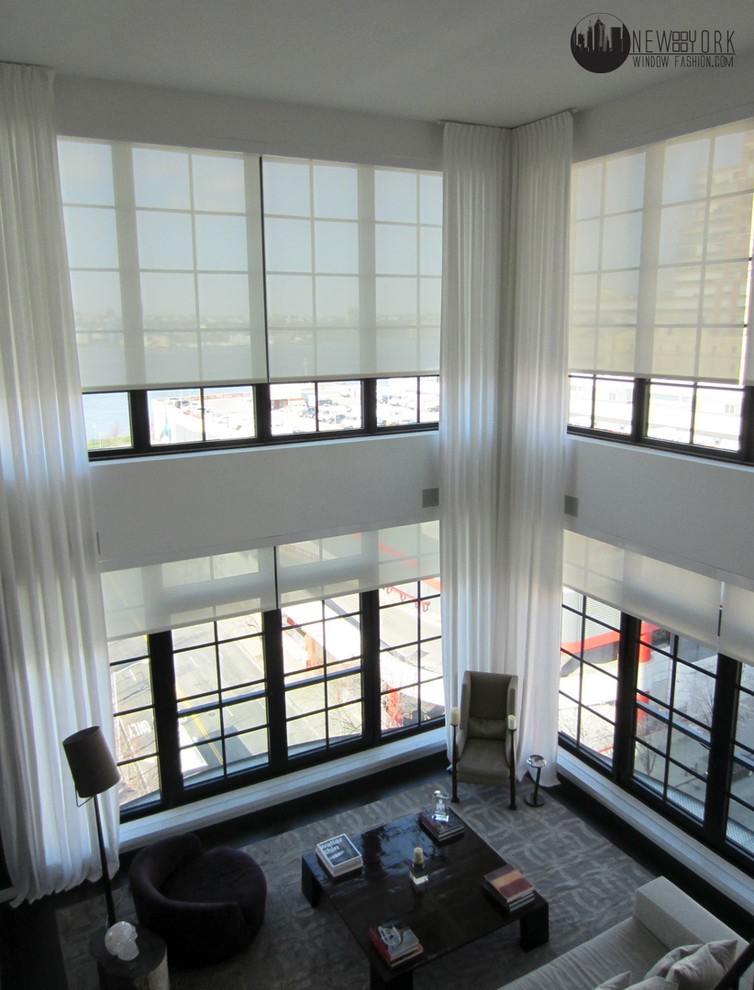
Not every double-height wall needs full top-to-bottom coverage every day. Options that can look great:
If the lower windows are shaded by landscaping or overhangs, an upper shade can control glare when the sun is high.
If the problem is privacy or TV glare, a lower shade can be enough.
Multi-shade layouts can reduce fabric weight per shade and simplify service.
If you’re unsure what layout fits your architecture, World Wide Shades can help you plan the segmentation so it looks symmetrical and performs well. CTA: Start with the builder.
Energy savings: why automated schedules matter
Large glass walls can drive both heating loss in winter and heat gain in summer. While exact savings depend on climate and glass type, a consistent routine helps:
- lower shades during peak sun hours to reduce solar heat gain
- raise them when you want passive warmth
A smart schedule is also easier than remembering to adjust 20-foot shades manually.
Related reading: Shades for cold climates energy efficiency and Shades for hot humid climates mold.
CTA: If you want to automate comfort, World Wide Shades can help you plan motors, groups, and scenes: Contact us.
Installation: what matters most at two stories
Double-height installs demand precision because service is harder later.
Key priorities:
- perfectly level brackets (small errors get amplified)
- solid anchoring into framing or appropriate anchors
- clean cable management for hardwired motors
If you’re comparing DIY vs pro for tall placements, start here: How to install roller shades and Roller shade installation cost: DIY vs professional.
CTA: Want a white-glove experience? World Wide Shades can coordinate an install plan—call (844) 674-2716 or contact us.
Common mistakes (and how to avoid them)
At two stories, you see the shade from far away. Pick textures and colors that look good from across the room, not just up close.
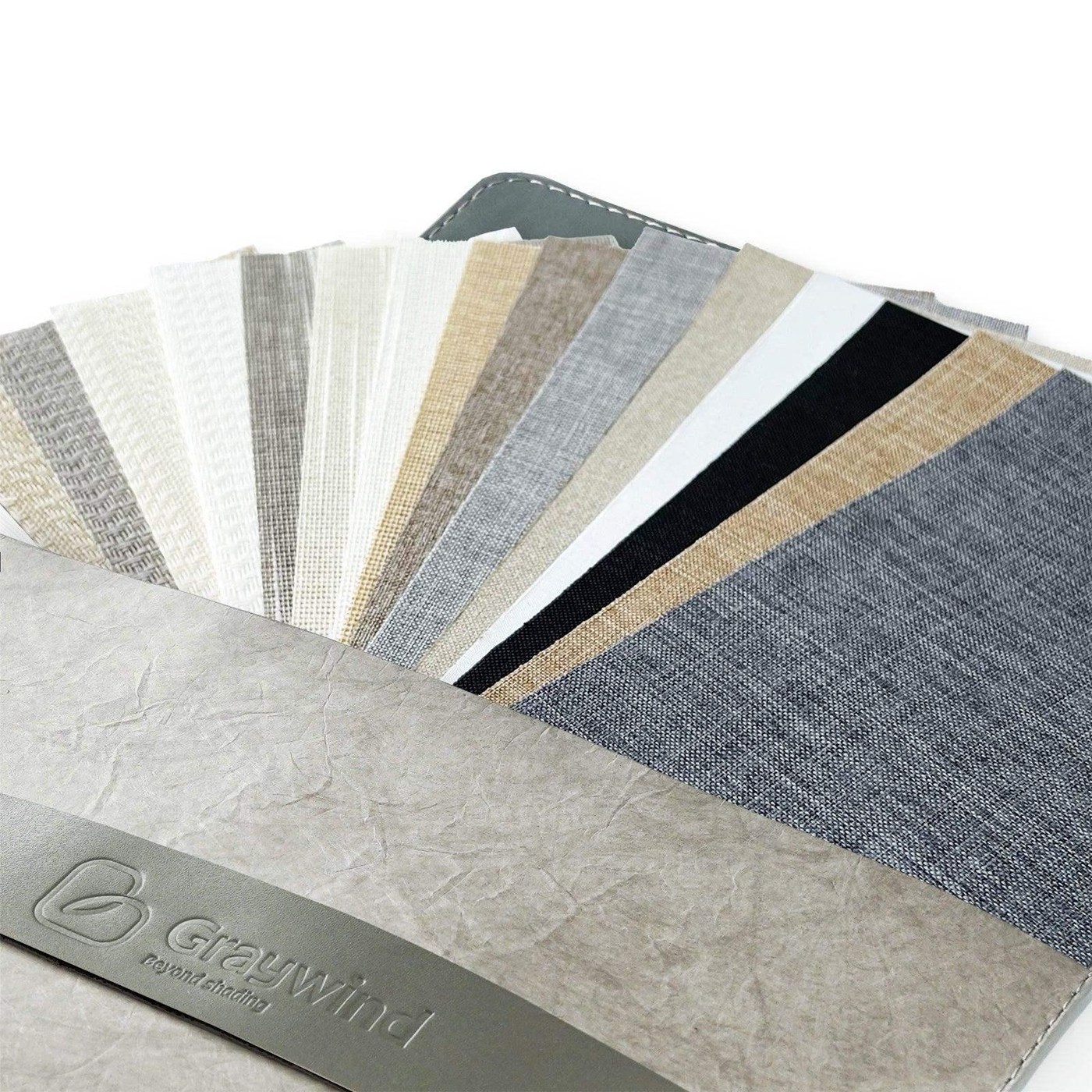
CTA: Make it easy—order World Wide Shades samples: Get swatches.
Great rooms can have more airflow. Lightweight fabrics may move or flutter when doors open or HVAC runs.
Two-story glass can feel exposed after dark. If neighbors can see in, plan a privacy layer.
FAQ: Double-height foyer and great room shades
In most cases, yes. Motorization improves daily usability and helps the shade track consistently, especially at long drops.
Solar or light-filtering fabrics are popular because they reduce glare while preserving daylight and view. If privacy is important at night, add a second layer.
Multiple shades can reduce fabric weight per unit and simplify service, but the best choice depends on width, height, and your wall’s symmetry.
Use stable fabric, correct tube diameter, proper hembar weight, and extremely level installation. Motorization also helps by keeping travel consistent.
Yes—many motor systems can integrate with smart-home control. See World Wide Shades guides on Alexa/Google integration and setup planning.
CTA: If you want two-story shades that look clean and work reliably, World Wide Shades can design the right spec for your window sizes: Start in the builder.