Bay windows reward careful measuring because three or more openings meet at changing angles. A measurement that works for the center panel can leave the side shade rubbing trim, colliding with a sill, or allowing a bright wedge of light between panels. The goal is not simply to record one width and one height; it is to create a panel-by-panel plan that a custom shade maker can fabricate accurately.
World Wide Shades helps homeowners turn a bay-window sketch into a workable roller-shade order. Start with the World Wide Shades builder to explore inside- and outside-mount options, order shade swatches to test color in your room, or contact World Wide Shades with a photo before you finalize unusual angles. This guide explains the measurements to collect and the decisions to make before ordering.
What makes a bay window measurement different
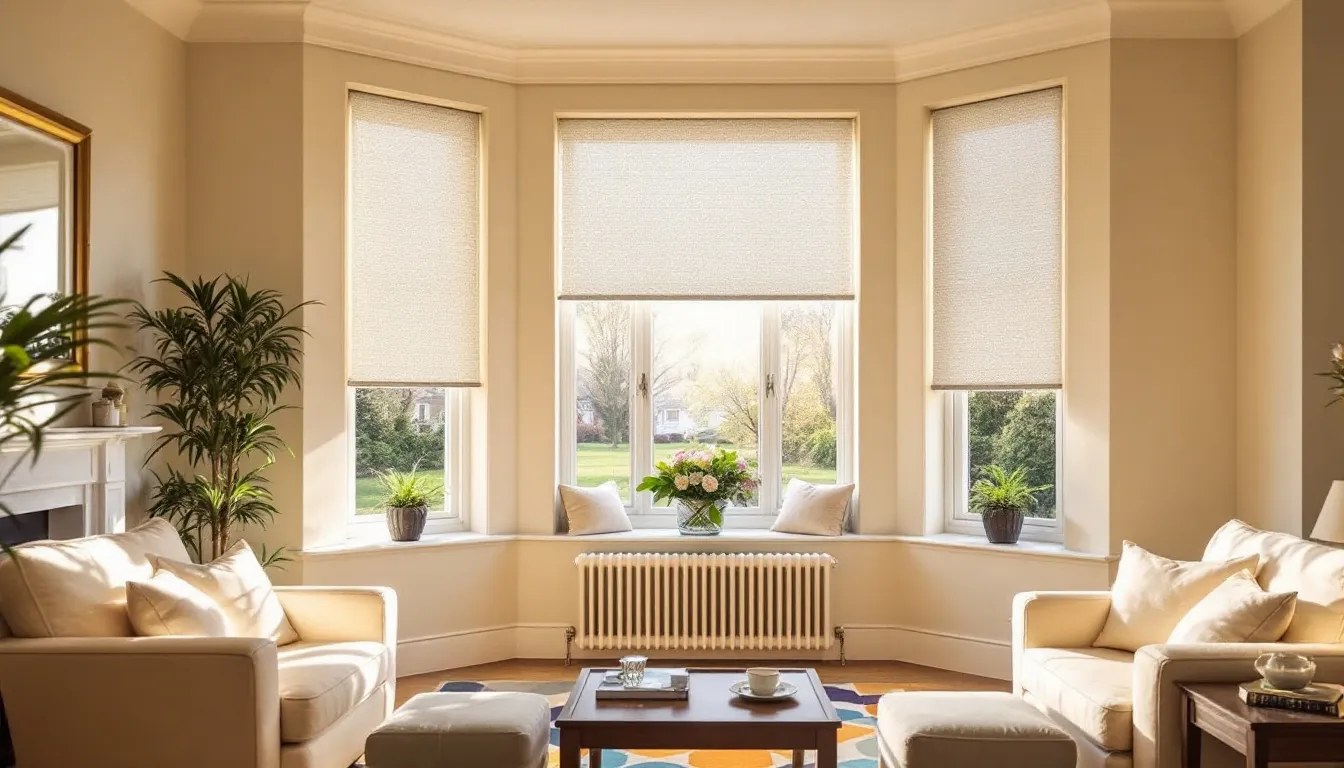
A typical bay has a wide center window and two narrower return windows, often set at 30-, 45-, or 60-degree angles. The center may measure 60 inches wide while each return is only 18 to 30 inches. The frames may also project at different depths, and a handle on one return can occupy the same space a bracket needs.
Treat every shade as its own opening. Do not measure the entire bay from the outside left casing to the outside right casing and divide the result. That approach hides the angle, frame thickness, and clearance between panels. World Wide Shades can review a panel schedule with you, and send the complete sketch through our contact page if the windows do not share a common sill.
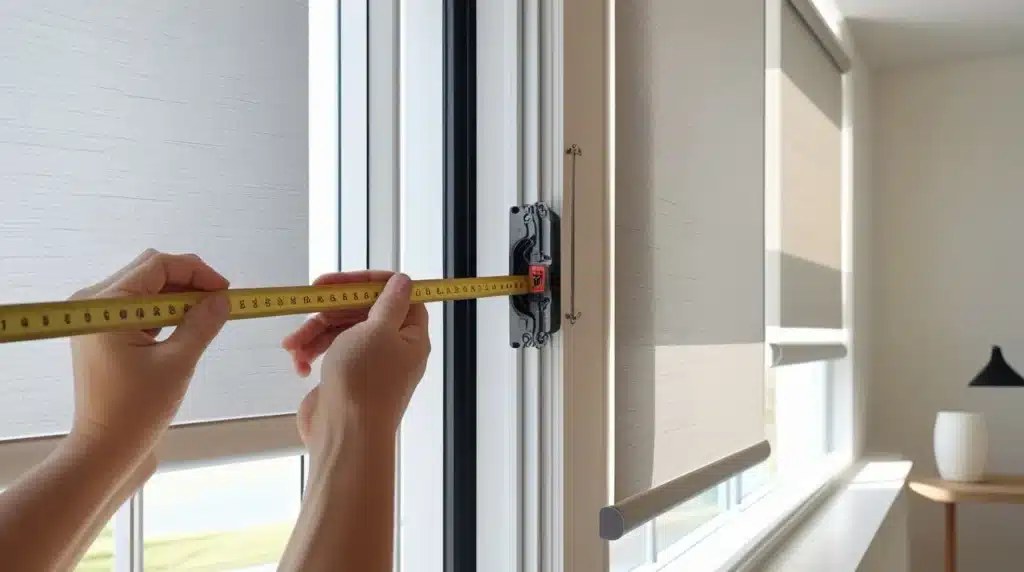
Before measuring, gather a steel tape measure, pencil, paper or a notes app, a level, a step stool, and a flashlight. A second person is useful for wide or high windows. Record measurements to the nearest 1/8 inch; do not round a 29 7/8-inch opening to 30 inches when a custom shade will be made to fit it.
Identify each panel and choose the mount
Stand inside the room and label the openings from left to right: L, C, and R for a three-panel bay, or L1, L2, C, R1, and R2 for a larger configuration. Photograph the bay straight on and from both corners. Mark which panels open, which way handles turn, and where the sill or seat begins.
Next, decide whether each shade is an inside mount or an outside mount. An inside mount sits inside the recess and leaves casing visible. It usually looks integrated, but it needs enough depth for the roller tube, brackets, fabric roll, and bottom rail. A practical target is at least 2 inches of clear depth for a compact system; some cassettes need 3 inches or more.
An outside mount attaches to the face of the wall or casing. It is useful when the recess is shallow, the frame is irregular, or you want the shade to overlap the opening and reduce edge light. Outside mounts need a flat surface, strong fastening points, and room for the shade to roll without hitting the adjacent angled panel.
The roller shade valance options guide shows how a cassette or fascia changes the top projection. World Wide Shades can help compare a low-profile tube with a covered cassette when trim is tight. Call (844) 674-2716 if you cannot tell whether the recess is deep enough for the hardware you prefer.
Measure the width of every opening
For an inside mount, measure the clear width of each panel at the top, middle, and bottom. Write down all three numbers and circle the narrowest. Repeat for the center and every return. A bay frame can vary by 1/4 inch from top to bottom, especially in an older home or after replacement windows were installed.
Do not subtract a deduction yourself unless the manufacturer specifically instructs you to. Custom fabricators apply their own clearance allowance. World Wide Shades can confirm the correct deduction for the selected system; giving the raw opening measurements is safer than guessing that every product uses the same 3/8-inch-per-side rule.
For an outside mount, measure the width you want the finished shade to cover, not merely the glass. A common planning choice is to overlap the opening by 2 to 3 inches per side, but adjacent bay panels may not leave that much room. Measure the flat mounting area from the intended left bracket location to the right bracket location, then check that the overlap does not cross a corner or obstruct the neighboring shade.
At each corner, measure the distance from the front face of one frame to the front face of the next. This corner clearance is critical. A roller tube, cassette, or bracket may need 1 to 2 inches of breathing room, while a handle may need more. If the panels are close, a shallow cassette or an outside mount above the trim can keep the shades from competing.
The custom roller shades versus Home Depot comparison explains why made-to-measure dimensions matter in irregular openings. Build your panel-by-panel plan with World Wide Shades before ordering multiple shades as a set.
Measure height and note the sill
For inside mounts, measure the clear height on the left, center, and right side of every panel. Record the shortest height. A shade needs to clear the sill without the bottom rail binding, and the shortest point determines the fit.
For outside mounts, measure from the proposed top of the headrail or cassette to the desired bottom. Many homeowners place the top 2 to 4 inches above the opening and let the shade finish at the sill or 2 inches below it. A bay seat can change that choice: the bottom rail should not land where it will hit cushions, backs, or a tabletop.
Write down sill depth and projection. A sill that extends 4 inches into the room may be comfortable for a manual shade but leave little space for a bottom rail when the shade is lowered. If the center panel is above a seat, measure from the glass to the front edge of the seat and note the usable clearance. World Wide Shades can use these dimensions to recommend a stop position or an outside mount.
If the bay reaches a tall ceiling, measure the finished height with a laser or have a second person verify the tape. Do not climb onto a chair. For high openings, consider motorization; the smart-home motorized shades setup guide covers controls, hubs, and schedules. Contact World Wide Shades for help planning a safe operating method.
Check angles, projection, and hardware clearance
Measure the angle between the center and return walls if you can do so safely. A simple field method is to measure the distance between the front edges of two panels and the depth back to the wall, then include a rough sketch with the dimensions. Exact geometry is helpful, but a clear photo often reveals trim and handle conflicts that numbers cannot.
Measure the projection of every casing, mullion, lock, crank, and insect screen. Note anything that sticks more than 1/2 inch into the shade path. Casings that are 2 1/4 inches deep can force an outside mount even when the glass recess looks generous. An inward-opening casement handle may require a spacer or a shade that stops short of the handle.
Check where the fabric rolls. A standard roll may project farther than the hanging fabric. A reverse roll can move the fabric away from the glass or toward it, depending on the chosen bracket, but it is not a substitute for confirming clearance. On angled returns, adjacent fabrics may need a small intentional gap so they do not scrape when raised.
For strong sun, also plan for edge light. A shade that fits the glass exactly can still allow a visible strip at the jamb. Solar fabrics, blackout fabrics, side channels, and an outside mount solve different problems. Read the best shades for south-facing windows guide if the bay receives several hours of direct exposure.
Create a bay-window measurement schedule
Put the information in a table or numbered list before requesting a quote:
- Panel name: L, C, R, or the exact sequence in your bay.
- Mount: inside or outside.
- Width measurements: top, middle, bottom, and the selected raw width.
- Height measurements: left, center, right, and the selected raw height.
- Clear depth: the shallowest point in inches.
- Corner clearance: the distance to the adjacent panel.
- Obstacles: handles, locks, trim, mullions, seat, sill, or furniture.
- Operation: cordless, chain, or motorized.
- Fabric goal: view-through, light filtering, room darkening, or blackout.
Label the photos with the same panel names. For example, “C width 61 1/4, 61 1/8, 61 3/16; shortest 61 1/8; depth 2 1/4.” This level of detail makes a conversation with World Wide Shades faster and reduces the risk that a return panel is accidentally swapped with the center panel.
The how to install roller shades guide covers bracket alignment and leveling after the order arrives. Order physical swatches from World Wide Shades before locking in fabric; a bay has several viewing angles, so a color that looks neutral on one return can look warmer on the center.
Choose fabric and operation after measuring
Measurement comes first, but the use of the room should guide the final specification. A 1% to 3% solar screen can reduce glare while preserving a view, while a 5% screen admits more daylight. Light-filtering fabric creates a softer glow but may reveal silhouettes at night. Blackout fabric offers stronger darkness, but side gaps still matter unless the mount or track is designed to cover them.
For a bay seat or breakfast area, cordless operation keeps the ledge clear. For tall returns, a motorized system avoids reaching into corners. A rechargeable motor often adds about $150 to $350 per shade, depending on size and controls; wiring can cost more if walls must be opened. Compare the energy-efficient window shades guide when solar heat is a major concern.
Use the World Wide Shades builder to compare fabric and operation across all panels rather than pricing one shade in isolation. Contact World Wide Shades with your schedule for a fit check, and call (844) 674-2716 if you need help choosing between separate shades and a coordinated motorized group.
FAQ
No. Measure each panel separately because the widths, angles, depths, and obstructions can differ. A single overall width cannot tell a fabricator where the corners fall or how much clearance each roller needs. Send panel labels and photos to World Wide Shades before ordering.
For an inside mount, the narrowest clear width and shallowest depth are especially important. For an outside mount, the flat mounting width and the overlap available at each corner control the design. Record top, middle, and bottom widths and left, center, and right heights for every panel.
There is no universal number because the bracket and cassette dimensions vary. Plan a visible gap rather than allowing tubes to touch at the corners, and verify handle and trim clearance. World Wide Shades can recommend the smallest practical separation for the selected hardware.
Yes. Each panel can have its own motor, and compatible controls can group the shades so they move together. Motorization is helpful for high returns, a window seat, or a bay that receives strong sun. Budget roughly $150 to $350 per motorized opening before unusual wiring or control requirements.
Usually an outside mount is easier when the recess is less than the hardware depth or when trim and handles consume the available space. An inside mount can work if the selected tube and brackets fit the shallowest point. Contact World Wide Shades with the depth and a straight-on photo for a recommendation.
Get a custom bay-window plan
Accurate bay-window measuring is a short project when each panel is treated as its own opening. Record raw widths and heights, verify depth and corner clearance, photograph obstacles, and decide how the shade should operate before you order. That process gives a custom fabricator enough information to make a coordinated set instead of five guesses.
World Wide Shades can help from the first sketch through fabric selection. Start your bay-window configuration, request swatches, or contact World Wide Shades for a review of your measurements. The right plan will keep the rollers level, the fabrics aligned, and the bay comfortable in bright afternoon light.