Motorized shade battery life depends on work, not just time. A small light-filtering shade that moves once each morning and evening may go months between charges, while a wide blackout shade that moves several times a day can need attention sooner. Fabric weight, roller size, temperature, automation, radio communication, and battery age all change the recharge pattern.
World Wide Shades helps homeowners choose a motor and power plan that fits the window and the routine. Start with the custom shade builder, request swatches, or contact World Wide Shades with the number of windows and expected daily movements. Call (844) 674-2716 when a shade will be high, extra wide, or difficult to reach for charging.
What “battery life” can mean
Ask which of these a specification describes:
- Run time: how long the motor can move before the battery is depleted
- Cycles per charge: how many complete open-and-close operations are expected
- Standby life: how long electronics can wait while still listening for commands
- Service life: how long the battery remains useful before capacity declines
- Recharge time: how long a depleted pack needs before it can operate normally
These are different measurements. A shade may move hundreds of cycles in testing but last fewer months in a home with frequent scenes and partial-position changes. Manufacturer estimates also assume a particular shade width, fabric weight, temperature, and control method. Read the exact motor documentation, and treat a range rather than a single calendar promise as a responsible planning number.
The battery and charger are only part of the system. The shade tube, brackets, fabric roll, remote, hub, and app all influence how the product behaves. World Wide Shades can specify the physical shade and compatible power approach; the final battery specification should be confirmed for the selected motor.
The six biggest factors in recharge frequency
A larger shade moves more material and may require more torque. Blackout fabrics, lined fabrics, and dual shades can place more load on the motor than a light solar screen. Extra-wide shades may also need split rollers, coupled motors, or a higher-capacity power solution rather than one small battery.
If you are covering a large opening, compare roller shades for wide windows and custom shades for new construction before assuming rechargeable power is the simplest choice. World Wide Shades can recommend a split that reduces load and makes the visual line easier to service.
Opening at sunrise and closing at sunset is two movements per day. A schedule that moves to 70% at 8 a.m., 35% at noon, 70% at 3 p.m., and closed at night creates four movements, even if the shade never reaches the top each time. Frequent stop-and-start commands can use more energy than a simple morning-and-evening routine.
Count normal scenes for a week. Include manual changes, not only automations. A bedroom may move two times per day; a west-facing office may move six or more times during bright weather. Use this real number when comparing rechargeable, solar-assisted, and hardwired options.
Setting a shade to 50% is not inherently inefficient, but repeated adjustments add work. A smart scene that checks light every five minutes and nudges the shade by a few percentage points can create many movements. Set reasonable thresholds and use a cooldown so the shade does not chase every cloud.
Review smart home motorized shades setup and motorized shades with Alexa and Google Home for a simpler control plan. World Wide Shades can help map rooms to scenes, while the home-automation configuration should avoid unnecessary cycling.
Very hot or cold conditions can affect battery performance. A battery installed inside a headrail behind glass may experience a different temperature than a battery in a shaded interior room. Direct sun on the top of a window can raise the headrail temperature, while an unconditioned space can be cold in winter.
Ask where the battery sits, whether it can be removed, and whether the manufacturer specifies an operating temperature range. Do not leave a charger or battery in a wet location, and do not use a substitute power supply without confirming voltage and connector compatibility.
Wireless motors need to receive commands. A shade that maintains a constant connection to a hub, remote, or network may consume some standby energy even when it is not moving. Poor signal can create repeated retries or encourage homeowners to issue commands more than once.
Place a hub where it can reach the rooms, and avoid putting it inside a metal cabinet. Give shades clear names such as office_west_left and office_west_right. A reliable signal can reduce duplicate commands and make it easier to see when a shade needs charging.
Rechargeable batteries gradually lose capacity. The same shade may need charging more often after years of use than it did when new. A battery that sits completely depleted for a long time may be harder to recover, depending on the motor design.
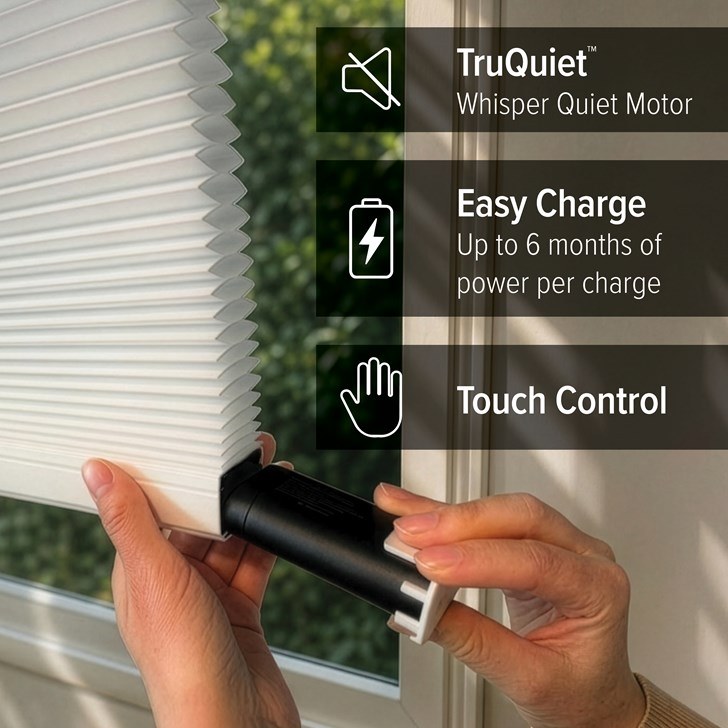
Follow the manufacturer’s charge instructions. Use the supplied or approved charger, unplug it as directed, keep the connector dry, and do not bend a charging cable sharply at the headrail. Record the first few recharge dates; a personal history is more useful than a generic estimate.
How often will a motorized shade need charging?
Many rechargeable shade systems are designed for weeks or months of ordinary residential use between charges, but the exact interval varies widely. A small shade with two movements per day may last several months; a wide, heavy shade with six movements per day may require charging monthly or more often. A dual shade or high-use commercial room can fall outside those broad examples.
Treat the first 30 days as a calibration period. Start with the manufacturer’s recommended charge, note the shade size and fabric, and log every recharge. If the interval is much shorter than expected, check for repeated scenes, a misaligned shade, excessive friction, poor signal, or a battery that was not fully charged.
World Wide Shades can help identify whether the window should use one motor, a split, a dual system, or a wired option. Use the builder, order swatches, and contact World Wide Shades before the room is finished. Call (844) 674-2716 if the shade will be above a stair, in a two-story room, or behind built-in furniture.
Choose the right power strategy
Rechargeable power avoids opening walls and works well in finished rooms. It is practical when the battery can be reached with a charging lead or removable pack. Plan how a ladder or extension will be used, especially for tall windows.
Wired power suits high-use rooms, large shades, difficult access, and new construction. It usually requires more coordination with an electrician, trim, and control wiring. The higher installation effort can be worth it when charging would be disruptive every few weeks.
A solar panel may extend the interval between charges where it receives sufficient daylight. A deep overhang, tinted glass, interior mount, or shaded facade can reduce its usefulness. Ask where the panel can be placed and how its output is rated in the actual window.
Not every window needs a motor. A small, reachable shade used once a week may be simpler with a cordless manual mechanism. Motorization is most valuable when the opening is wide, high, heavy, hard to reach, or part of a daily scene.
Compare smart home motorized shades setup, commercial roller shades for offices, and custom shades for new construction when deciding whether power should be planned at the room or building level.
Put charging into the design
Before ordering, mark the battery location on a room elevation. Ask whether the charging port faces the room, the glass, or the side. A battery behind a valance may be hidden but harder to reach; a visible charging lead may be easier to use but less attractive.
Keep a simple maintenance schedule:
- Log the initial full charge date.
- Check battery status monthly or when movement slows.
- Charge before a long vacation if the manufacturer recommends it.
- Inspect the cable and connector for damage.
- Replace a declining battery with the approved part.
For multiple rooms, charge by zone rather than waiting for every shade to stop. Keep spare approved chargers labeled by system. Never connect a charger with the wrong voltage or polarity merely because its plug fits.
Child and pet safety remain important during charging. Keep cords and temporary leads away from cribs, play areas, and climbing furniture, and review child-safe window treatments and pet-friendly window treatments. Contact World Wide Shades through the project page if charging access conflicts with a safe furniture layout.
Diagnose a short battery interval
If a shade needs charging every few days, start with the easy observations. Is it moving more often than planned? Is the fabric rubbing the frame? Does the bottom rail stop against a sill or handle? Does the motor continue running after the shade reaches its limit? Is the remote being pressed repeatedly because a signal is weak?
Look for patterns. One shade failing quickly may have a mechanical alignment or battery issue. Every shade on one hub failing together may indicate a communication or schedule problem. A slower movement, blinking indicator, or failure under load should be documented with a photo or video before service.
Do not remove covers or change travel limits unless the product instructions authorize it. A service technician can usually distinguish a power issue from a mechanical one more safely when the shade has not been modified.
Motorized shade battery life FAQ
There is no universal calendar answer. A light shade with two daily movements may go months between charges, while a wide blackout or dual shade used six or more times daily may need charging much sooner. Confirm the motor’s rated cycles and track your actual interval.
It can. More fabric and a larger roller may require more torque, especially on a wide opening. Shade width, roll diameter, alignment, and movement frequency all contribute, so ask for the motor’s size and load limits.
Yes, if they create frequent adjustments or repeated connection attempts. Use sensible thresholds, cooldown periods, and schedules rather than checking and moving a shade every few minutes.
It depends on access and use. Rechargeable power is convenient in finished rooms, while hardwired power can be better for high windows, large shades, frequent operation, and new construction where wiring is easy to coordinate.
A sharply shorter interval, slower movement, charging errors, or a battery that will not hold a charge can indicate replacement time. Use the approved battery and follow the manufacturer’s service instructions rather than substituting an unverified pack.
World Wide Shades considers shade size, fabric, access, daily cycles, control scenes, and wiring conditions before recommending rechargeable or wired operation. Start with the builder, request swatches, or contact World Wide Shades; call (844) 674-2716 for a battery-life plan.