Roller shades for wide windows need more planning than a larger piece of fabric. As width increases, the tube, brackets, fabric weight, bottom rail, and operating force all become more important. A shade that technically spans an opening may sag, telescope, rub a frame, or become difficult to lift. Splitting the opening into coordinated shades often produces a straighter, more reliable, and more serviceable result.
World Wide Shades plans wide-window treatments around the opening, mullions, furniture, view, and control routine. Start with the custom shade builder, order swatches to test fabric and seams, or contact World Wide Shades with the overall width and a front photo. Call (844) 674-2716 before ordering an extra-wide or motorized shade so the support and power strategy can be reviewed.
Why width changes the engineering
A roller shade is a loaded system. The fabric rolls onto a tube supported at the ends, and sometimes at one or more intermediate points. Wider and heavier shades place more torque on the tube and brackets. Manual lift effort also rises with shade size, and a large bottom rail can become awkward near a sill or countertop.
Wide openings also magnify small errors. A tube that is slightly out of level can make the fabric move toward one side; a frame that is not square can create friction at the edges; a small fabric wave can be more visible across a long span. The answer is not always “use the biggest available shade.” It may be a split, a coupled pair, a dual system, or hardwired motorization.
Use custom roller shades versus Home Depot and how much do custom roller shades cost to compare made-to-measure planning with off-the-shelf assumptions. World Wide Shades can identify where customization adds useful structure rather than decoration.
Choose one wide shade or multiple splits
One roller creates a clean visual field and avoids a center gap. It can work when the width, fabric weight, tube, brackets, and motor are all rated for the opening. Consider one shade when uninterrupted blackout or a single continuous view matters more than independent control.
The disadvantages are practical. A wide shade may require more lifting force, have a larger roll, and be harder to remove for repair. If one component fails, the entire opening may be unavailable. A single shade also cannot close over only the west side of an open-plan room.
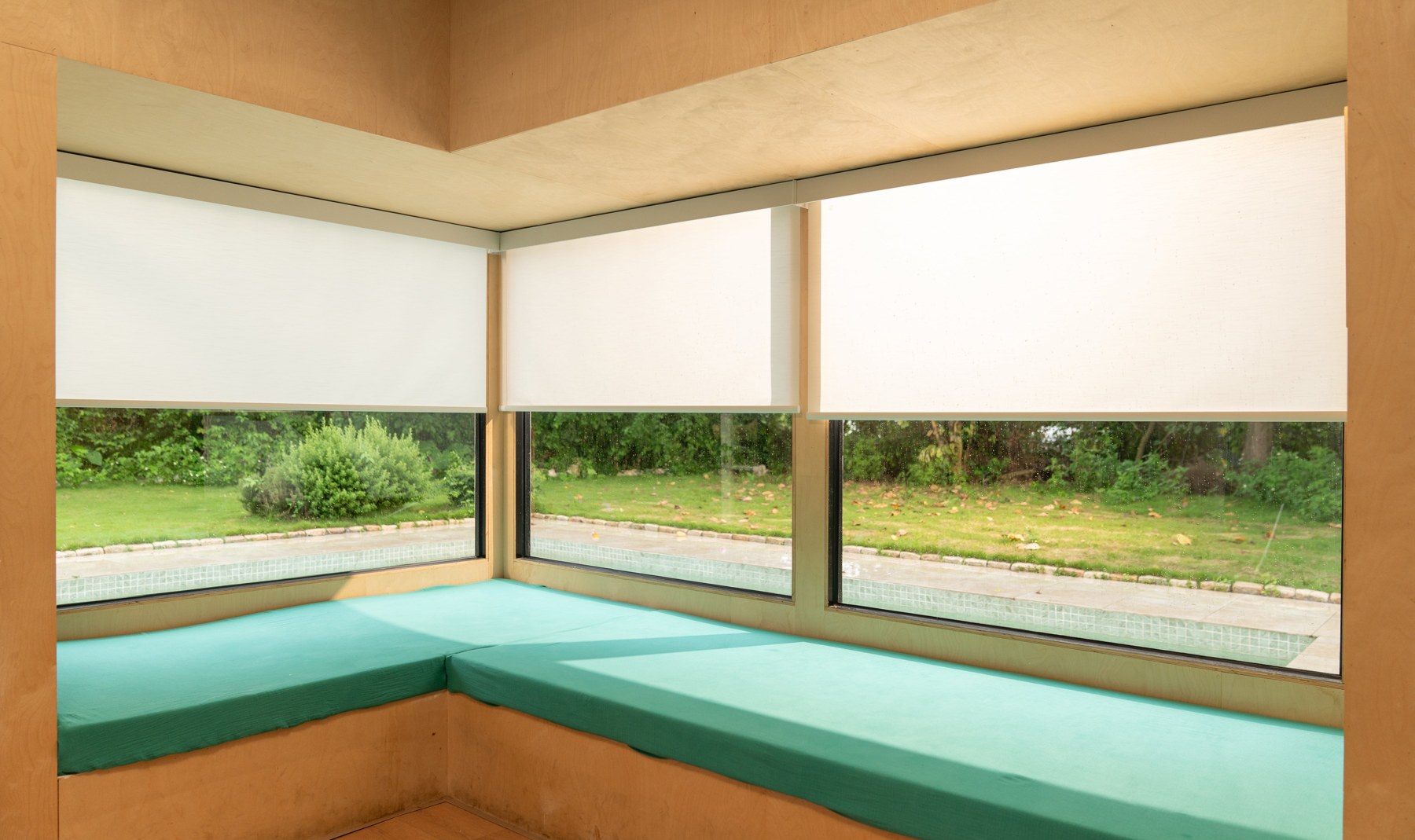
Splitting the opening reduces the width and load of each roller. It can use a mullion or architectural break as a natural seam and lets one side remain open while another filters glare. The trade-off is a visible joint and the need to align the headrails and bottom edges.
Plan the split where the frame, mullion, or room use supports it. A center split at a mullion may look more intentional than a random midpoint. If the opening is 144 inches wide, two approximately 72-inch shades may be reasonable, but the exact split should follow the frame and product limits rather than arithmetic alone.
Multiple shades can be grouped so one command raises them together. A coupled system may share a motor or use separate motors linked in software. Ask whether each shade can still be stopped and serviced independently. Read smart home motorized shades setup for naming and scene planning.
World Wide Shades can coordinate fabrics and fascia so the split feels deliberate. Use the builder to map each section, then contact World Wide Shades if a center mullion is not square or a door must remain operable.
Select supports, tubes, and brackets
Wide shades need a tube and bracket system rated for the finished width and fabric weight. Some systems use a larger tube to resist deflection; others add a center support or divide the shade. A support may interrupt the roll or require more headroom, so it must be planned with the fabric and cassette.
Ask:
- What is the maximum finished width for this fabric and tube?
- Does the width limit change with blackout or lined material?
- Is an intermediate support required?
- How much does the roller deflect at full drop?
- Can brackets be fastened to a structural surface?
- Will the fascia or cassette clear trim and handles?
- How can the shade be removed for future service?
Never solve a width problem by forcing a product beyond its rated span. A visually clean quote can become a difficult installation if the brackets have nowhere solid to land. World Wide Shades can review a wide opening with the wall, header, or trim condition in mind.
Fabric choice matters on a wide span
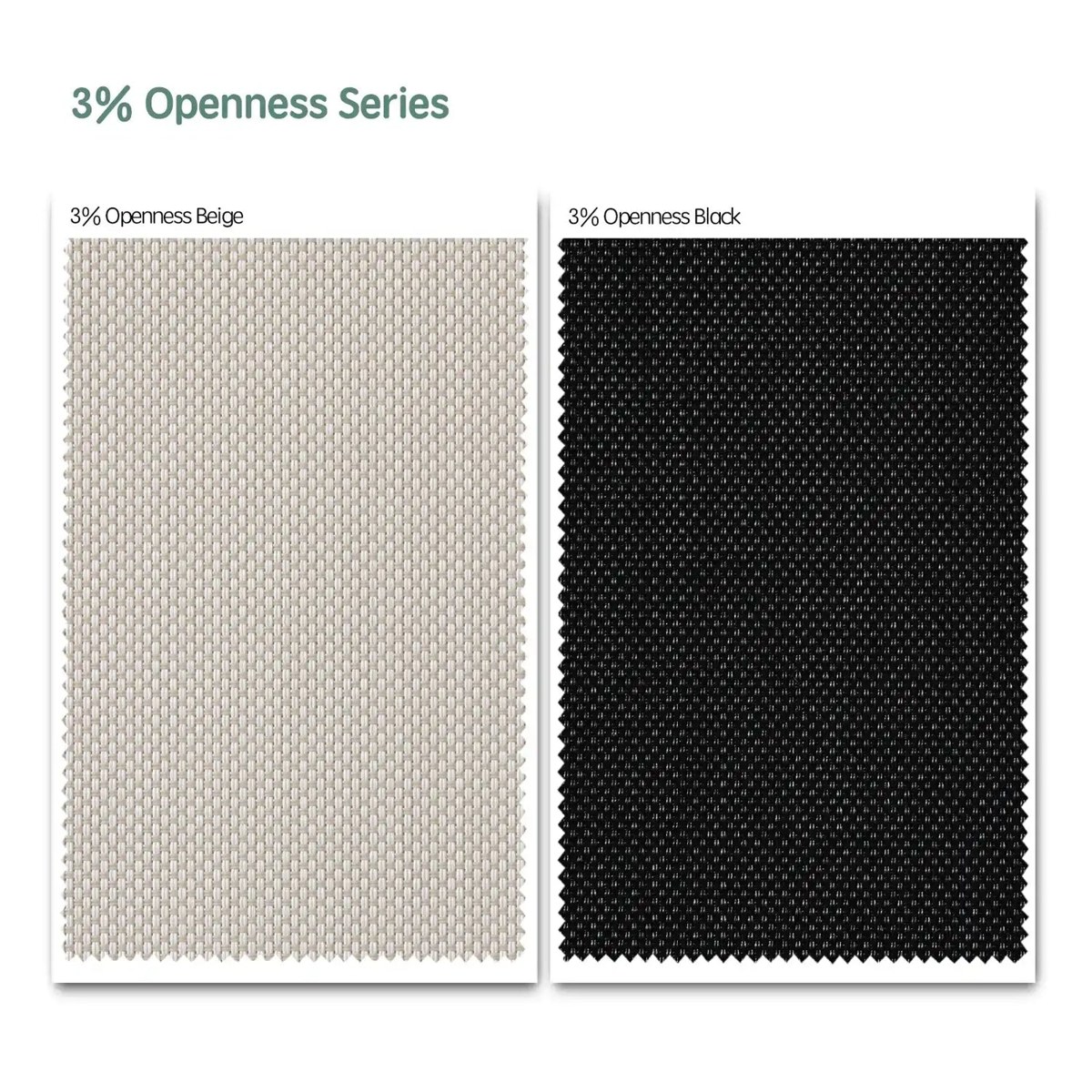
Solar fabrics in 1%, 3%, 5%, and 10% openness can manage glare while preserving a view. Tighter 1% and 3% screens may help a west-facing family room or monitor wall, while 5% or 10% can preserve more landscape detail. Read the window shade openness factor guide and the best fabrics for roller shades.
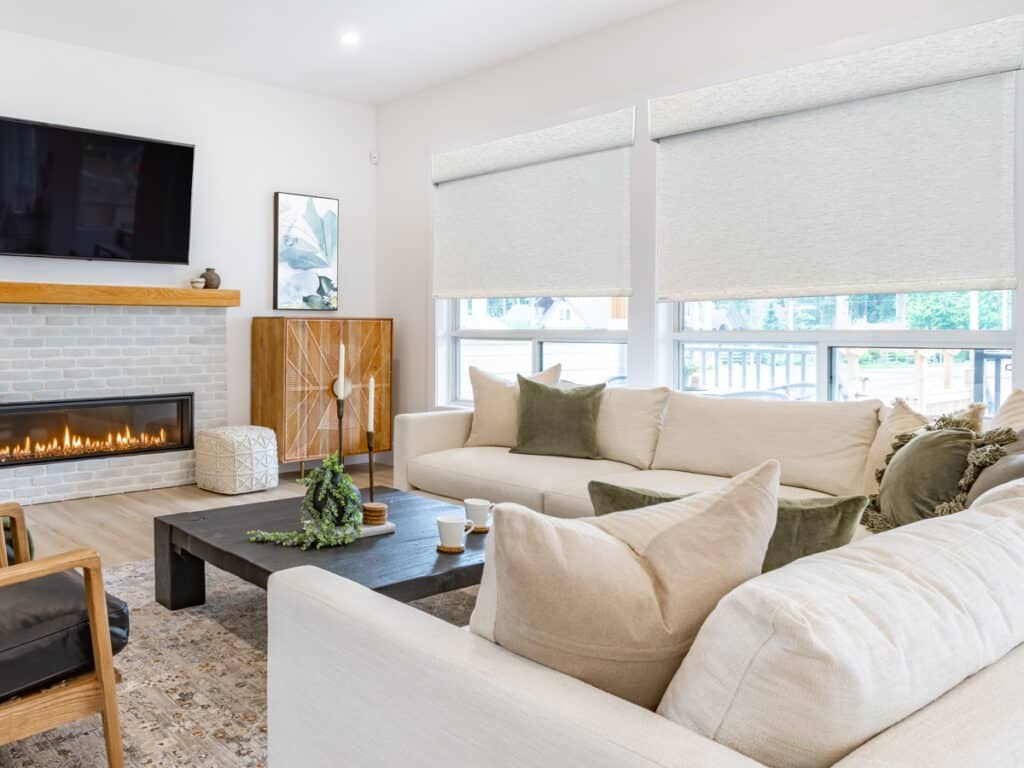
Light-filtering fabric softens daylight and can reduce the visual harshness of a large glass wall. It usually does not provide true nighttime privacy when lights are on. Consider a dual shade if the opening faces neighbors or a street.
Blackout fabric can improve sleep and media viewing, but a wide span makes edge gaps, seams, and fabric behavior more noticeable. A split can make the rollers easier to support, but it introduces a joint that may show a sliver of light. Use careful outside mounting, a cassette, or a coordinated secondary treatment where the room requires more control. See blackout curtains versus blackout shades.
Order swatches and examine them across the full width of the window. A sample cannot show every effect of a long roll, but it can reveal color, weave, and view contrast before the quote is finalized.
Mount wide shades for alignment and service
Inside mounting preserves the frame but requires enough depth for the brackets and roll. Check the shallowest point, not only the center. Handles, locks, mullions, and glass stops can reduce usable depth. Outside mounting can cover more of the opening and simplify clearance, but the headrail becomes more visible and requires a suitable header.
Wide windows often benefit from a shared top line. Align headrails across split shades and decide whether the bottom rails should meet at the same level. A small difference in drop can be visible across a 12-foot opening. Record ceiling, trim, and sill lines before choosing a mount.
If the window is a door or opens to a patio, leave clearance for handles and movement. Review roller shades for French doors and outdoor roller shades for a patio when a wide glass wall includes both fixed and operating sections.
Why motorization is usually worth considering
Manual control becomes less attractive as width, height, or weight increase. A wide shade can require two hands, a long chain, or repeated adjustments. Cordless operation may not be available at every span, and a chain can be hard to reach behind furniture.
Motorization provides:
- Consistent movement across multiple splits
- Grouped operation for a glass wall
- Independent control for glare zones
- Dusk privacy and sunrise schedules
- Safer operation without dangling cords
- Easier control of high or deep windows
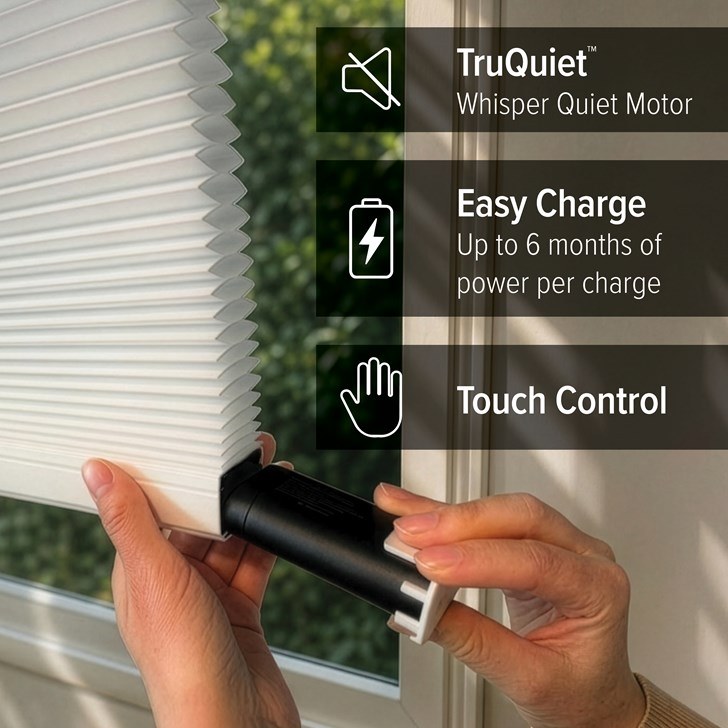
Use rechargeable power when charging access is practical and operation is moderate. Use hardwired or low-voltage power when the shade is high, heavy, frequently used, or part of new construction. Read motorized shade battery life and custom shades for new construction before selecting the motor.
Name each shade by room and position, such as great_room_left, great_room_center, and great_room_right. Add a group for the full wall and individual controls for glare. World Wide Shades can coordinate the physical grouping; verify app, hub, and voice-assistant compatibility for the chosen motor.
Measure a wide window correctly
Take width measurements at the top, middle, and bottom of each intended shade section. Measure height at the left, center, and right. Note differences of 1/8 inch or more, the location of mullions, the frame depth, trim returns, sill projection, handles, outlets, and nearby furniture.
Measure the space above the glass to the ceiling and the distance from the glass to the first obstruction. Photograph the opening straight on and from both sides. If the window is extra tall or above a stair, include a photo showing the access path. A wide shade needs not only a product measurement but a delivery and installation plan.
World Wide Shades can compare an inside mount, outside mount, split, coupled group, and dual shade from your measurements. Start with the builder, request swatches, and contact World Wide Shades. Phone (844) 674-2716 when a room has a glass wall, high transom, or a support condition you cannot describe with one number.
Budget for the complete wide-window project
Custom manual roller shades often begin around $300–$900 per section, while a large motorized section can commonly plan around $700–$1,800 or more depending on width, height, fabric, tube, cassette, and control. A 12-foot opening split into two motorized shades may therefore land roughly in the $1,400–$3,600 range before unusual installation, electrical work, or premium fabric. These are planning ranges, not a quote.
Splitting can add hardware and motors, but it may reduce deflection, simplify lifting, and make future service more manageable. A single shade can save a seam but cost more in tube capacity, access, or replacement. Compare the total ownership plan rather than only the lowest initial number.
Roller shades for wide windows FAQ
It depends on the product’s rated span, fabric weight, frame layout, and desired control. Two or more coordinated shades often reduce load and allow independent glare control, while one shade avoids a center seam.
Use a mullion, frame break, or natural room division when possible. The split should also keep each shade within its rated width and leave enough room for brackets and fabric movement.
Some systems require an intermediate support or a larger tube at wider spans. The exact requirement depends on the width, fabric, roll diameter, and motor; confirm it before ordering rather than improvising during installation.
They are often easier to operate when the shade is large, high, heavy, or behind furniture. Motorization also coordinates multiple splits and avoids the effort of lifting a wide manual shade.
Solar fabric works well for view and glare, light-filtering softens daylight, and blackout helps bedrooms or media rooms. The best choice depends on orientation, privacy, room use, and how noticeable a center seam may be.
World Wide Shades can plan the split points, tube and bracket capacity, fabric, mount, motor, and control grouping as one project. Start with the builder, order swatches, or contact World Wide Shades; call (844) 674-2716 for an extra-wide review.