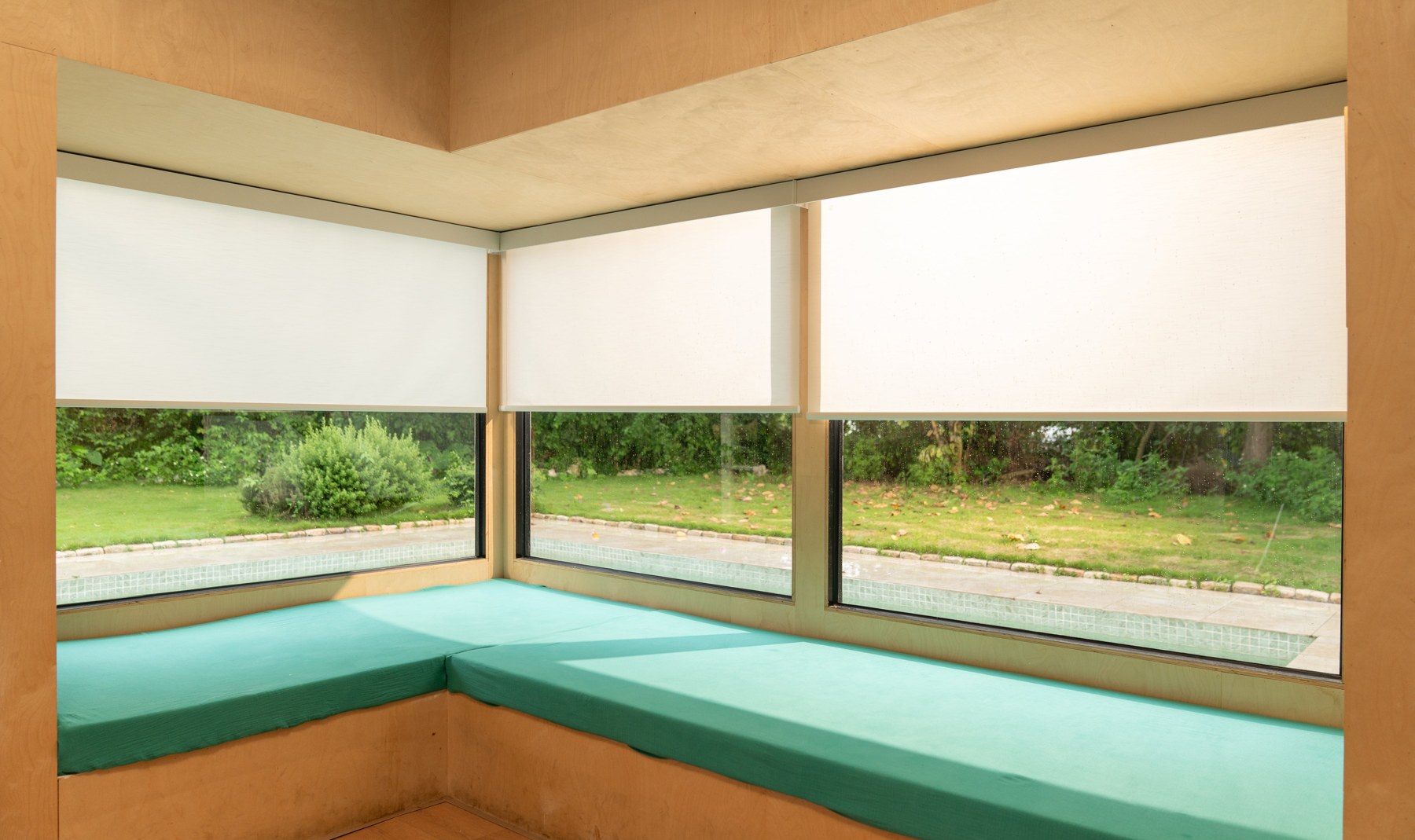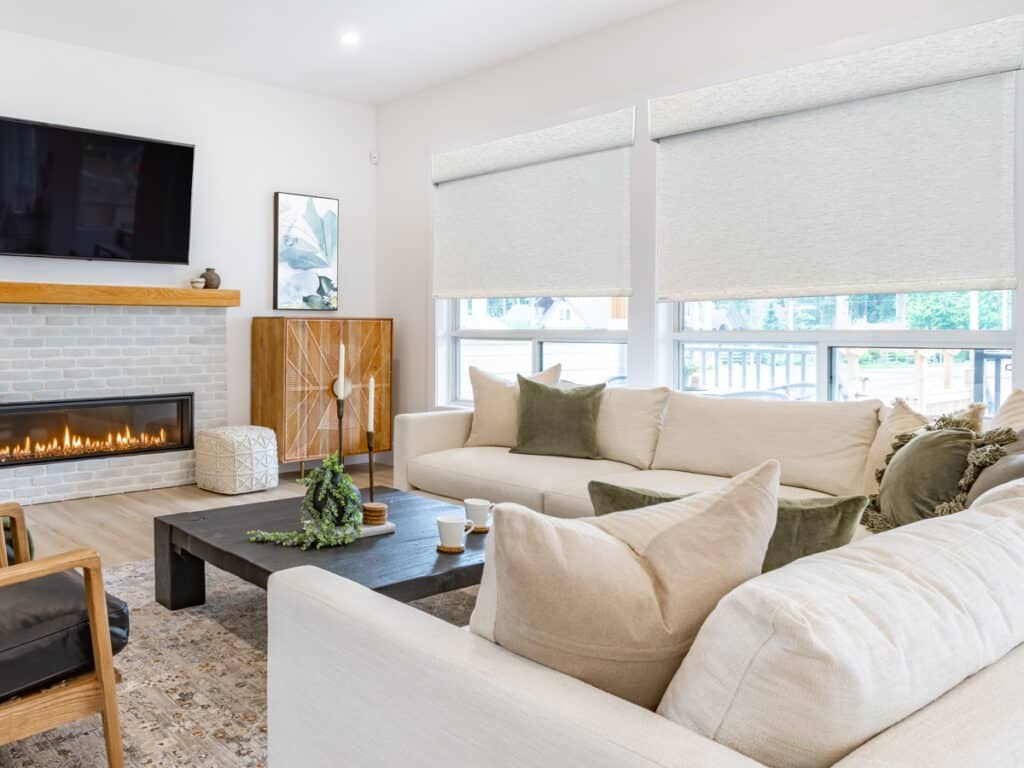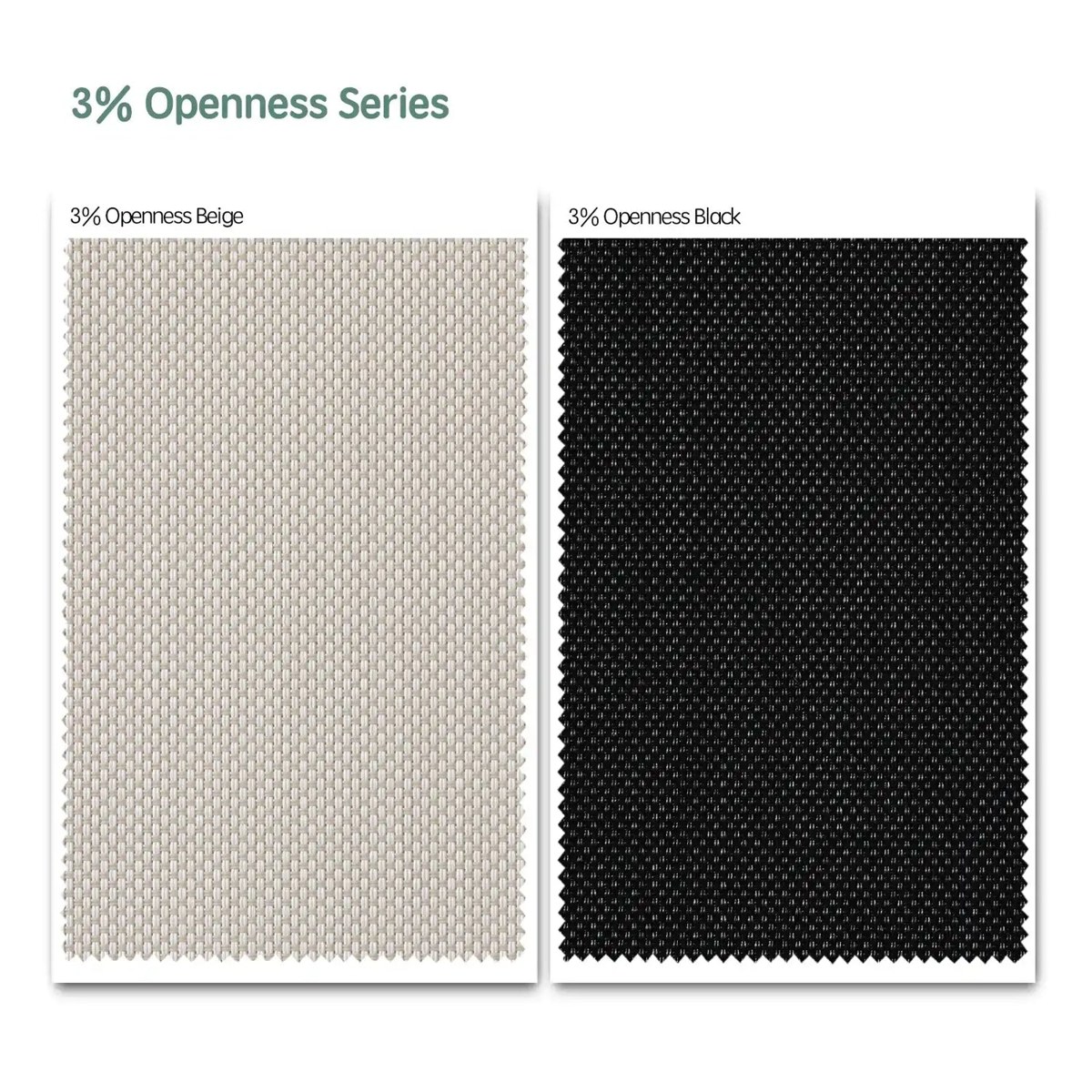
Window shade openness factor is the percentage of a solar screen fabric’s surface made up of tiny spaces. A 1% fabric has a tighter weave than a 5% fabric, and a 10% fabric generally allows more view and daylight. The number is useful, but it is not a complete performance rating. Color, window direction, glass, interior lighting, and the distance between the shade and the glass all change what you experience.
World Wide Shades uses openness factor as one part of a complete fabric recommendation. Start with the custom shade builder, order swatches to test the view at different times, or contact World Wide Shades with the room orientation and a photo. Call (844) 674-2716 if the same project includes bedrooms, screens, and bright west-facing windows.
What the percentage actually tells you
Openness describes the weave, not the amount of sunlight blocked in every room. In simple terms:
- 1%: tight weave, stronger glare and solar control, less daytime view
- 3%: balanced view and filtering for many living rooms and offices
- 5%: more open view and a brighter feel with moderate filtering
- 10%: broadest view among common solar screens, with less privacy and glare control
The percentage does not mean a 1% shade blocks exactly 99% of ultraviolet energy or that a 5% shade blocks exactly 95% of visible light. Construction, color, coating, and window glass matter. Use UV protection window shades and energy-efficient window shades for the broader performance picture.
World Wide Shades can help translate the percentage into a room decision. A home office may need a tighter weave near a monitor, while a quiet room facing a garden may benefit from a more open fabric.
How openness changes the daytime view
At midday, solar shades can preserve a view through the window while reducing the contrast between a bright exterior and a dim interior. A 10% fabric may show more landscape detail than a 1% fabric, but the view can still disappear when the outside is much brighter than the room or when the shade color creates strong reflections.
Dark fabrics often make the outward view look clearer because they reduce reflected interior light. Light fabrics can feel brighter and reflect more solar energy, but may produce a hazier view through the weave. Place a swatch against the glass and look through it from the usual seating position. Do not judge a small sample only under a store’s overhead lighting.
Ask how much view you need from one to ten. If preserving a tree line or water view is central to the room, start with 5% or 10% and evaluate glare. If the window faces a neighbor or a computer screen sits directly opposite the glass, start closer to 1% or 3%.
Openness and privacy are different questions
When the outdoors is brighter than the room, a solar shade can make it harder for people outside to see in. That effect is strongest during the day with the fabric lowered and interior lights off. A more open 5% or 10% fabric may provide less privacy than a 1% or 3% fabric, especially at close range.
When lamps are on inside, the balance reverses. A solar screen may show silhouettes or room shapes from outside even when it looked private at noon. If night privacy is non-negotiable, consider a room-darkening or blackout layer rather than relying on openness alone.
Read light-filtering shades and blackout curtains versus blackout shades for solutions that treat daytime softness and nighttime privacy as separate goals. World Wide Shades can specify a dual shade so you keep a daytime view without leaving the room exposed after dark.
An inside-mounted solar shade may leave small side gaps that admit light and reveal a sliver of the window. Outside mounting can overlap the opening more effectively when the frame and wall allow it. The openness percentage does not eliminate perimeter gaps; accurate measuring and mount selection do the rest.
Match openness to the room
A 3%, 5%, or 10% fabric can work well when the goal is a view with softer daylight. Choose a tighter weave if the room has a television opposite the window, a deep west exposure, or seating that sits close to the glass. Compare the best roller shades for a living room and roller shades versus Roman shades for style and control trade-offs.
Glare is usually more important than maximum view. A 1% or 3% screen can reduce hot spots on a monitor, but the right number depends on window direction and screen placement. A darker fabric may improve perceived screen contrast. Keep a secondary privacy layer in mind if the office is visible from the street at night.
Use the online builder to note desk position, orientation, and whether the shade should be manual or motorized. World Wide Shades can coordinate multiple windows so a single scene does not leave one monitor in direct sun.
A solar shade can look elegant in a bedroom, but it is not a dependable blackout solution. For sleep, naps, or a nursery, use room-darkening or blackout fabric, a dual shade, or a shade with side-channel options where appropriate. Review best window shades for a bedroom and child-safe window treatments.
Choose a fabric and hardware suited to humidity, cleaning, and splashes. A 3% or 5% solar screen can filter glare above a sink while maintaining daylight, but privacy may call for a second layer after sunset. See roller shades for kitchens and bathrooms before selecting a delicate textile.
High solar exposure may call for 1% or 3% openness when heat and glare are the primary problems. A 5% or 10% fabric may be comfortable if the view is more important and the room has exterior overhangs or low-e glass. Read the best shades for south-facing windows and order swatches before assuming one percentage fits the entire house.
Color can matter as much as openness
Two fabrics with the same 3% openness can feel very different. A dark charcoal solar shade may preserve a clearer exterior image, while a warm white shade may brighten the room and reflect more light. Exterior-facing color can influence solar gain, while interior-facing color affects the room’s palette and perceived contrast.
If the fabric has a different color on each side, ask which side faces the glass. Test the sample with interior lights on and off. World Wide Shades can help match the fabric to trim and flooring using swatches, and the window shade color guide gives a useful way to compare undertones.
Do not treat openness as a quality score. A 1% shade is not automatically better than a 10% shade; it is simply tighter. The right choice is the narrowest weave that still gives the view, brightness, and privacy you actually want.
Measure the view, glare, and control needs
Before ordering, note compass direction, nearby trees or buildings, room use, seating position, and the height of the glass. Record when glare appears: 8 a.m., noon, 3 p.m., or sunset. A room with a 10-minute morning glare problem may not need the same fabric as a room with four hours of afternoon heat.
If a window is wider than a standard manual shade, consider a split or motorized configuration. Independent shades let one section close over a monitor while the other stays open to the view. For an open-plan room, group the shades by sun exposure rather than by wall alone.
World Wide Shades can compare a single roller, split rollers, dual shades, and motorization. Use the builder, request swatches, and contact World Wide Shades with your notes. Phone (844) 674-2716 when the project has multiple orientations or a view that must be protected.
Cleaning and long-term expectations
Solar screen fabrics collect dust in the weave. Follow the care instructions for the exact fabric, usually starting with a soft brush or gentle vacuum attachment. Avoid soaking, steam, bleach, and abrasive products unless the manufacturer specifically allows them. Test any approved cleaner in an inconspicuous area.
Openness can look different as dust accumulates or as the sun changes angle. A shade that appears more private in the morning may show more silhouettes at night. Periodically check the fabric with interior lights on, especially in a bedroom or street-facing living room.
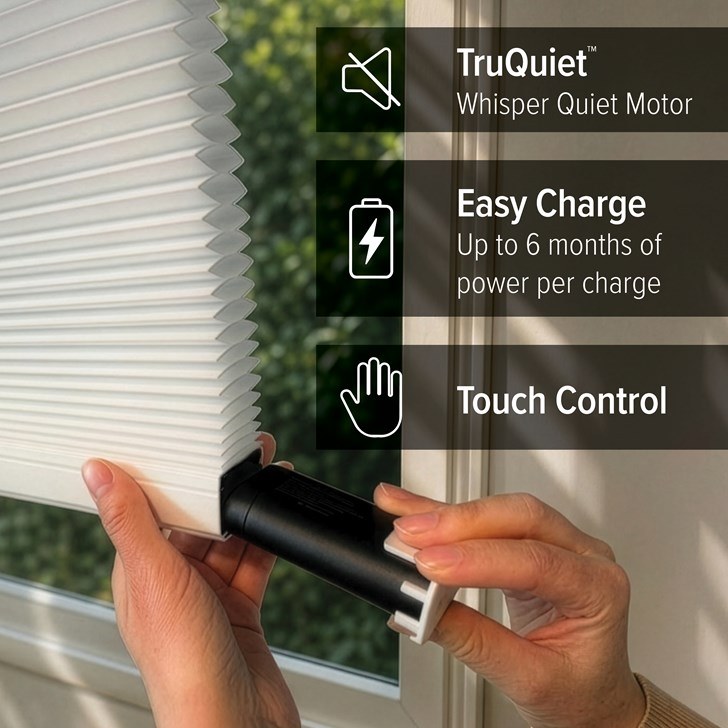
Motorized operation can make large or high shades easier to lower at the correct time. Review smart home motorized shades setup if you want a dusk privacy scene, and choose cordless or motorized products for homes with children and pets.
Window shade openness factor FAQ
Generally, yes. A 1% fabric has a tighter weave and typically admits less daylight and view than a 5% fabric. Actual brightness also depends on fabric color, coating, window glass, and the sun’s angle.
Not reliably by itself. When interior lights are on, a solar screen can reveal silhouettes. Use a room-darkening layer, blackout shade, or dual shade when nighttime privacy is important.
Many offices start with 1% or 3% when monitor glare matters, while 5% can work when the view is the priority. Test a swatch at the desk during the actual glare period before ordering.
Not necessarily. A 10% screen can suit a living room with a valued view, shade trees, or mild exposure. It may be less suitable when street privacy, west glare, or heat control is the primary goal.
No. Openness describes the weave’s open area, while UV performance also depends on yarn, coating, color, glazing, and how much of the window is covered. Ask for the product’s specific performance information.
World Wide Shades considers orientation, view, privacy, glare, room use, fabric color, and mount type rather than choosing a percentage in isolation. Start with the builder, order swatches, or contact World Wide Shades; call (844) 674-2716 for a room-by-room recommendation.