Start With the Heater, Not the Fabric
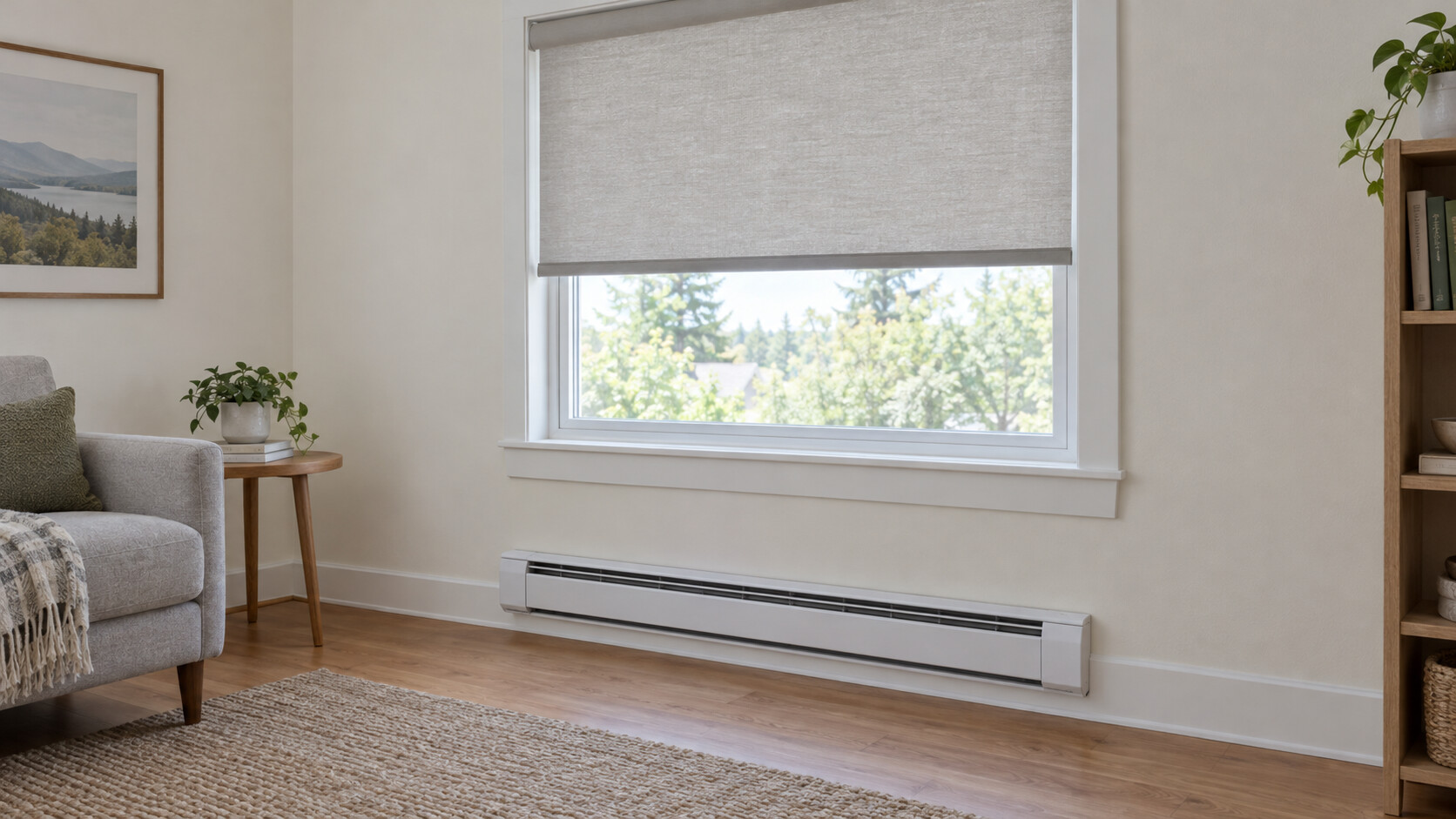
Choosing roller shades above baseboard heaters starts with the appliance below the window. Before comparing colors or ordering a shade, identify the heater and find its installation and operating instructions. The clearance that governs your project belongs to that exact heater, not to a generic window-treatment diagram.
World Wide Shades can help you plan the shade side of the installation, including mount position, finished drop, and fabric options. Heater clearances and installation compliance should be confirmed against the appliance manual, applicable local requirements, and advice from a qualified installer. If those requirements leave no suitable location for a shade, change the design rather than reduce the required space.
Start a placement conversation with World Wide Shades at (844) 674-2716 with your heater model and window details. Resolve the heater restrictions before making the shade dimensions final.
Identify Which Heating System You Have
Do not assume every long, low heater has the same construction or clearance requirements. Find the make and model on the unit or its documentation, and confirm whether it is an electric convection baseboard, another electric heater type, or a water-based system.
For an electric baseboard, the shade plan must respect the appliance's stated restrictions on combustibles and unobstructed airflow. King Electric specifically says baseboards must not be blocked by furniture, bedding, drapes, or other objects in its baseboard placement guidance. A shade that looks tidy from across the room still needs to be assessed at its lowest position.
For a hydronic baseboard or radiator, obtain the instructions for that equipment rather than borrowing an electric heater's numbers. Ask the heating professional to confirm the permitted relationship between the appliance, window covering, and surrounding finishes.
Do not treat a water-based system as permission to let fabric touch the heater or hang into an air opening. If the equipment cannot be identified, pause the shade order until a qualified professional can establish the installation requirements. A general guide to energy-efficient window shades can help with window-covering goals, but it does not establish heater clearance.
Why There Is No Universal Clearance Number
Manufacturer guidance illustrates why a single rule is unsuitable. King Electric's FAQ gives its baseboard guidance as 12 inches above, 12 inches in front, and 6 inches to the sides, while also saying not to block baseboards with drapes or other objects; these are King-specific published examples, not a clearance rule for every heater or shade (King Electric FAQ).
The supplied Cadet manual covers an RBF heater, including the RBF101, rather than establishing a rule for all baseboards. It instructs users to keep electrical cords, drapery, furnishings, and other combustibles at least 3 feet from the front and 6 inches above and on both sides; apply that example only within the specified equipment's instructions (Cadet RBF owner's manual).
Even within one manufacturer's documents, product-specific details matter. The King KP1210/KPH1210 portable-baseboard instructions include a separate drapery arrangement and warn against blocking inlet or outlet airflow, demonstrating why the exact product manual must control the layout (King portable-baseboard instructions).
Do not combine the smallest distances from different sources into a new rule. If a general FAQ and your unit's instructions appear inconsistent, ask the manufacturer or a qualified installer to resolve the difference before installation, while also checking applicable local requirements.
Plan the Shade's Entire Travel
Draw the window, heater, bracket position, roller, and fully lowered hem bar together. Include the shade fabric's plane rather than considering only the distance from the sill to the heater. A shade can sit above an appliance yet still project into a restricted front or discharge area.
Choose a finished drop that keeps the fabric and hem bar out of the heater's required clearance envelope throughout normal use. Do not plan on occupants remembering to stop a longer shade at an informal halfway point. A lower limit, where supported by the selected operating system, should reinforce an already appropriate design rather than compensate for unsafe dimensions.
World Wide Shades recommends settling this endpoint before selecting decorative details. Use the World Wide Shades builder to explore the configuration after the heater requirements have been confirmed, and review how roller shades are installed for broader mounting context.
An inside mount may keep the shade close to the glazing, but that alone does not establish safety. Confirm that the recess supports the chosen brackets and that the lowered shade stays clear of the heater and its restricted airflow path.
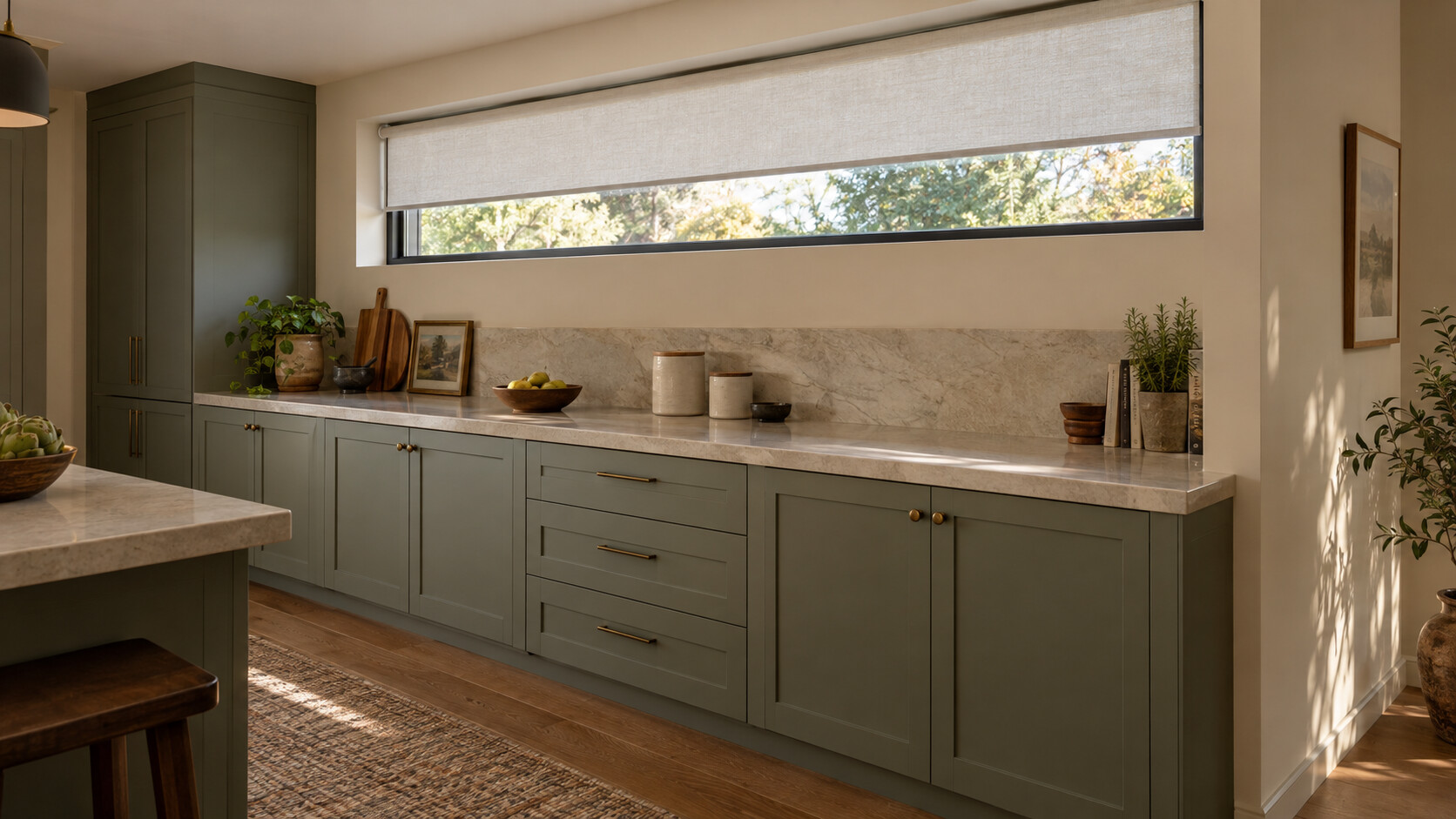
An outside mount can change the fabric plane and finished drop, so evaluate its complete geometry rather than assuming that higher brackets solve everything. If you are also covering windows above furniture, the guide to roller shades for windows above built-in cabinets offers another useful placement scenario, but cabinet spacing does not substitute for heater instructions.
Treat Brackets and the Hem Bar as Part of the Design
Position brackets according to the shade's own mounting instructions, using appropriate support and fasteners for the surface. Do not mount shade hardware to the heater housing or improvise attachments through the appliance. If window trim or wall conditions prevent an appropriate installation, have the mounting arrangement reviewed before ordering.
The hem bar deserves the same attention as the fabric. Include its actual depth and lowest position in your plan, and check that it cannot rest on the heater, catch on a projecting cover, or strike the appliance during operation.
World Wide Shades can help clarify shade dimensions when trim and mounting surfaces complicate the layout. Read about roller shade bracket gaps on uneven walls, then contact World Wide Shades at (844) 674-2716 if the mounting plane is uncertain.
Choose Fabric Only After Placement Is Resolved
Choose between light-filtering and blackout fabrics for privacy, glare, and room use, but do not treat either label as approval for heater exposure. Likewise, a material name such as polyester or PVC does not establish one universal safe operating temperature.
Ask for the selected fabric's care instructions and any relevant restrictions, including those affecting coatings, backing, or the complete shade assembly. Do not rely on a flame-resistance claim, if provided, to waive the heater manufacturer's clearance requirements.
World Wide Shades can help narrow the appearance and light-control choices once the placement is settled. Request fabric swatches, compare the roller shade fabric guide, and use the light-filtering shade guide to decide what the room needs.
Evaluate samples at the window during the times you use the space. Compare the view through the fabric, the privacy it provides, and its effect on the room's appearance without holding samples over an operating heater.
For a workspace, the discussion of roller shades for art studio color accuracy can help frame sample comparisons. If framed pieces are nearby, review roller shades to protect framed artwork as part of a separate artwork-protection plan; neither design goal changes the required heater separation.
Keep Controls and Surroundings Clear
Plan where cords, chains, control devices, and nearby furnishings will sit when the shade is open and closed. Keep them out of the heater's restricted areas, and follow the operating system's installation instructions. Review child-safe window treatments when deciding how people will operate the shade.
A motorized shade still needs an appropriate physical installation. Automation should not be the only thing preventing the fabric from descending into a prohibited area, and programmed positions should not be treated as permission to order an otherwise unsuitable drop.
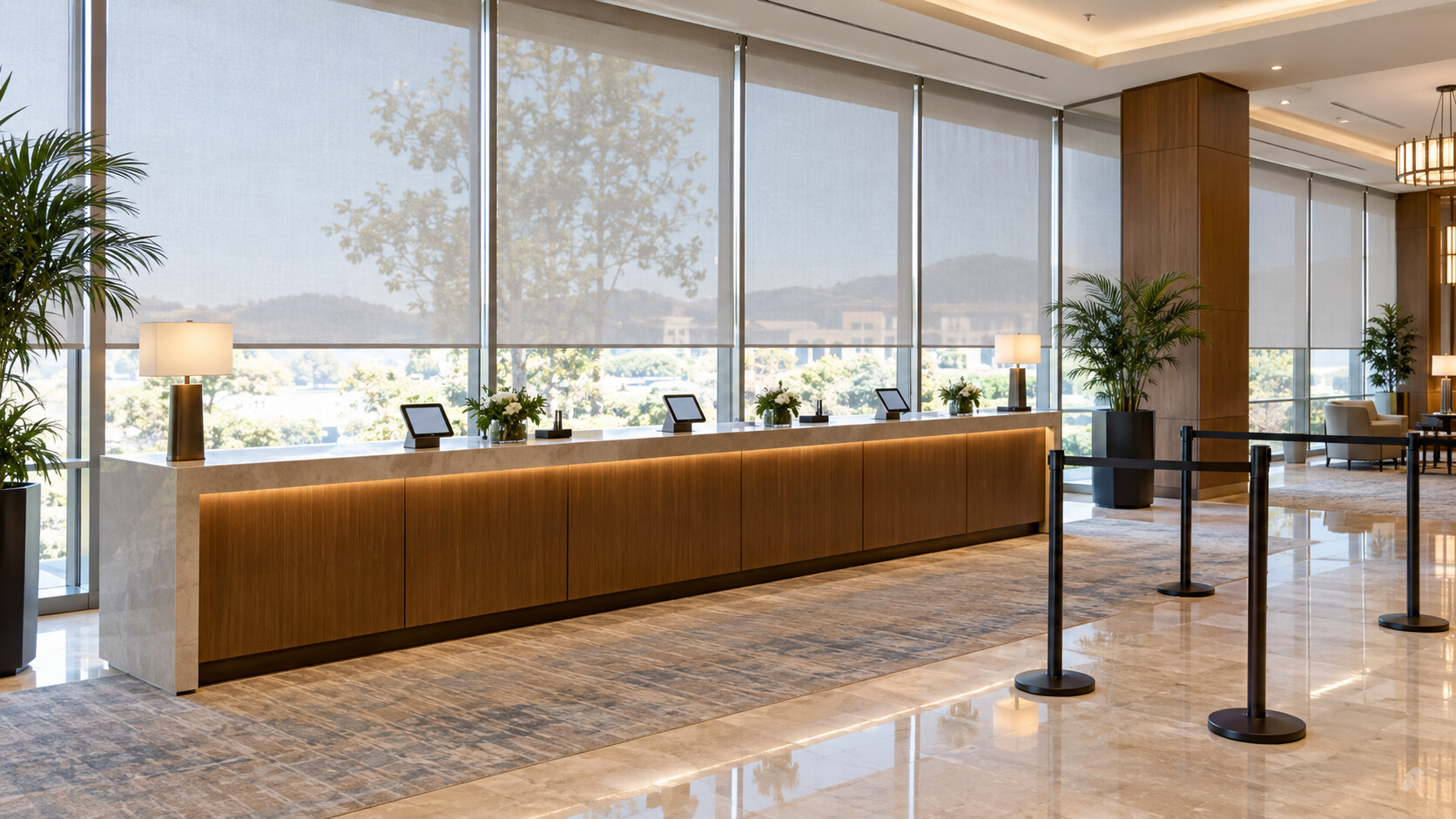
World Wide Shades can help compare control arrangements for the room. For a public-facing setting, the guide to roller shades for hospitality event registration windows provides another operating-context example; staff convenience must remain secondary to the heater's requirements.
Verify the Installation Before Everyday Use
After installation, have the final arrangement checked against both the heater and shade instructions. With the heater off and cool, operate the shade through its entire intended range and observe the fabric edges, hem bar, brackets, and controls. A full travel test checks the arrangement; it does not establish a new safe clearance.
Confirm the required space remains available at the lowest position and that nothing touches the heater or occupies an intake, discharge, or restricted airflow area. Consider ordinary use, including an open window moving the fabric, and ask the installer whether that movement requires a different placement.
Before using the heater with the shade installed, resolve any uncertainty with the heater manufacturer or qualified installer. Do not use your hand, a household thermometer, or a brief heating trial as proof that an unapproved arrangement is acceptable.
For the final shade selection, build your World Wide Shades configuration using the verified dimensions. Keep the heater model, relevant instructions, and agreed shade endpoint with your home records so later changes do not undo the original plan.
Frequently Asked Questions
There is no universal distance for roller shades above baseboard heaters. Use the exact heater's instructions, applicable local requirements, and qualified installation advice to determine the permitted relationship between the shade, hem bar, appliance, and airflow path.
Do not approve the arrangement based on the blackout label alone. First establish compliant placement, then confirm that the selected shade assembly and fabric are appropriate for that location with the relevant product suppliers.
Do not make that assumption. Identify the hydronic equipment and obtain its requirements, then keep the shade from touching the appliance or interfering with its required airflow and access.
Motorization can support a planned operating endpoint, but it does not replace correct dimensions, installation, or heater clearances. Discuss limit settings and normal operation with the shade installer while retaining a physically appropriate placement.
Send the heater make and model, photos of the window and heater, the relevant manual pages, and your proposed mount and finished drop. Ask World Wide Shades for planning help after a qualified professional has clarified the heater requirements, so the shade specification can follow those constraints.