Protect the Artwork Without Losing the Room
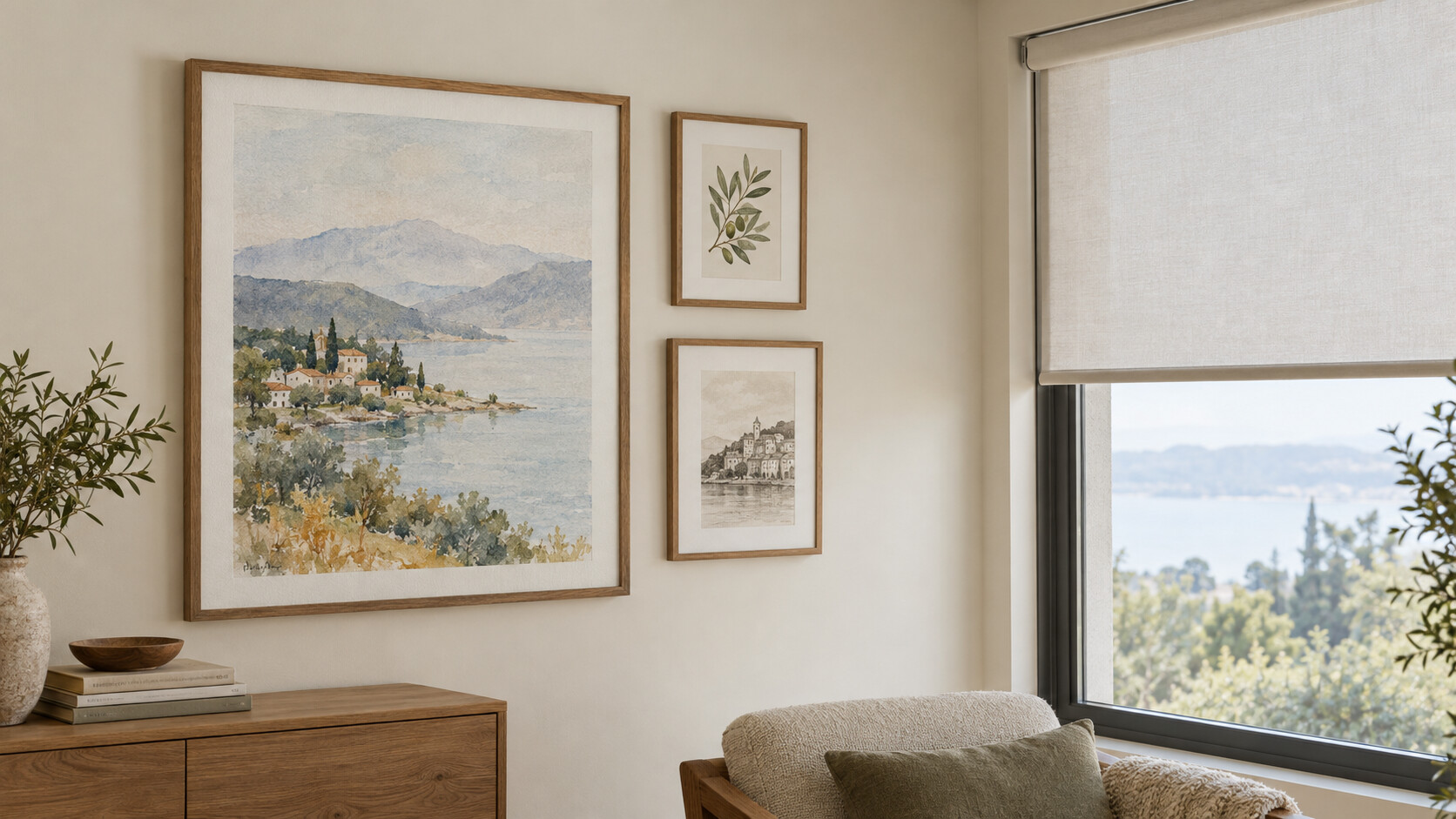
A watercolor above the sofa or a framed photograph beside a dining window can make a room feel personal. Choosing shades to protect framed artwork means considering more than whether the window treatment matches the frame: the goal is to manage the light reaching the work while keeping the room comfortable to use.
Start with realistic expectations. Visible light and ultraviolet radiation can damage sensitive materials, and that damage is cumulative and irreversible; no roller shade, window film, or glazing choice makes every framed work fade-proof (Canadian Conservation Institute).
World Wide Shades recommends treating window coverage as one part of a broader display plan. Think about the artwork’s location, when sunlight crosses the wall, and how consistently someone will operate the shades.
For help translating those priorities into a window treatment, contact World Wide Shades at (844) 674-2716. Begin with the room’s exposure and your daylight preferences rather than a promise of complete protection.
Understand What a Shade Can and Cannot Do
UV protection is useful, but it is not the whole preservation story. The Canadian Conservation Institute explains that visible light fades colors on paper, and that removing UV alone has a more limited benefit than also reducing overall light exposure (Canadian Conservation Institute).
A roller shade controls light at the window; it is not conservation glass and does not change the materials inside a frame. If the artwork needs specialized glazing, a new mount, or an assessment of fragile pigments, those are separate decisions for a qualified framer or conservator.
Our UV protection window shades guide is a useful starting point for window-treatment terminology. World Wide Shades encourages buyers to ask about the exact fabric’s documented characteristics instead of assuming every product described as “solar” provides identical protection.
Getty describes very low illumination for highly sensitive organic materials, discussing a level of 50 lux or less for vulnerable works such as watercolors and manuscripts; its gallery approach also includes monitoring exposure and limiting display time (Getty). These are museum conservation controls, not a universal brightness target for every living room or framed object.
The Smithsonian’s National Museum of Asian Art uses material-based categories that combine maximum illumination with display-duration limits, with the most sensitive component determining the category (Smithsonian light-duration guidelines). A homeowner should take the underlying lesson seriously without treating a single lux figure as a guaranteed safe threshold.
Start With the Artwork’s Position
Before choosing fabric, watch where direct sunlight travels during the hours you normally use the room. Consider the whole wall, not only the window beside it: sunlight from an adjacent opening may reach the frame from an unexpected angle.
Keeping paintings out of direct sunlight is a central recommendation in the Canadian Conservation Institute’s home-care guidance, which also notes that prolonged exposure to ordinary natural or artificial light can cause fading (Canadian Conservation Institute). Moving a vulnerable original to a less exposed wall may therefore be a better first decision than trying to solve everything with fabric alone.
Consider these room-planning choices:
- Artwork placement: Prefer a wall that does not receive a moving patch of direct sun.
- Window operation: Decide whether you can keep the shade lowered during the brightest unoccupied hours.
- Display priorities: Reserve a less exposed position for an irreplaceable original rather than an easily replaced reproduction.
- Professional advice: Ask a conservator about valuable, fragile, or unidentified materials before committing to continuous display.
For a sunny room, our guide to shades for south-facing windows can help organize the window-treatment discussion. World Wide Shades can then help you explore a roller shade configuration suited to the opening and the way you use the space.
Choose Fabric Around Exposure, View, and Privacy
If maintaining an outdoor view is important, a solar-screen fabric may belong on your shortlist. Compare the actual sample and available technical information rather than treating openness percentage as a complete measure of artwork protection.
Openness describes the fabric’s open area, not a universal guarantee about the amount or type of light reaching a particular frame. A screen also should not be assumed to provide nighttime privacy; evaluate the specific fabric from outside when the interior is brighter.
The roller shade fabric guide offers a starting point for comparing fabric families. For an original positioned where the sun beam would otherwise land, prioritize preventing that direct exposure rather than preserving the view at all costs.
A light-filtering shade can be worth considering when you want a softened daytime atmosphere rather than a darkened room. However, “light filtering” does not establish a conservation standard, and a comfortable-looking room can still deliver substantial light exposure to sensitive work.
Use our light-filtering shades guide to frame the comfort questions, then evaluate your chosen fabric against the actual artwork wall. World Wide Shades suggests looking at samples in both bright and overcast conditions before settling on color and translucency.
Where reducing incoming light takes priority over retaining the view, consider an opaque or blackout fabric. Even then, distinguish the fabric’s light-blocking characteristics from the performance of the entire installed shade: perimeter openings can remain.
Do not choose by color alone. Our window shade color guide can support the decorative decision, but the specific fabric construction and coverage deserve separate attention.
Request World Wide Shades fabric swatches to compare the options in your room. Hold samples near the window for appearance, then discuss documented performance and installation coverage before ordering.
Pay Attention to the Light Around the Fabric
A dark fabric panel does not help much if an uncovered strip sends direct sun onto the frame. Examine the sides, top, and bottom of the opening when thinking through coverage, especially when the artwork sits close to the window.
An inside mount and an outside mount create different coverage possibilities. An outside mount may allow more overlap where the surrounding wall and hardware permit it, while an inside mount keeps the treatment within the opening; neither description alone guarantees a light-tight installation.
World Wide Shades recommends discussing the full opening rather than assuming that the ordered shade width equals the fabric width. Ask how the selected hardware affects uncovered areas and whether nearby trim limits overlap.
Our guides to roller shade valance options and bracket gaps on uneven walls can help you identify questions for that discussion. A decorative top treatment should not automatically be treated as a sealed light barrier.
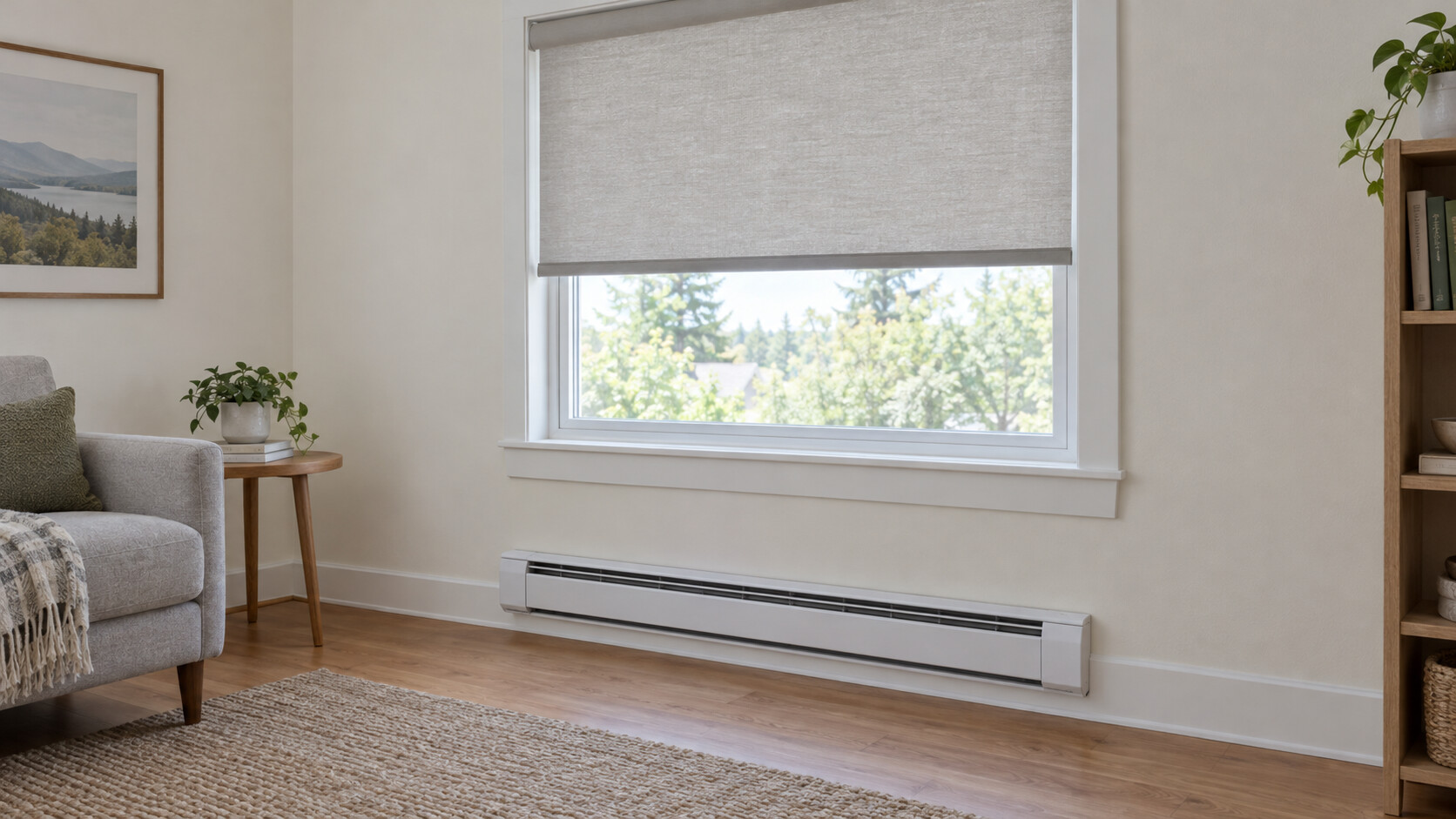
Nearby fixtures matter too. Review roller shade clearance above baseboard heaters when heat sources sit below the opening, or roller shades above built-in cabinets when cabinetry may interfere with the shade’s path.
Build a Routine That Limits Exposure Time
A well-chosen shade only controls daylight while it is in the useful position. Make the routine simple: lower the relevant shade before the direct sun reaches the artwork, and avoid leaving a vulnerable display exposed all day just because nobody is home.
Reducing light intensity and shortening exposure both matter because light damage depends on intensity multiplied by time (Canadian Conservation Institute). Closing a shade after the strongest sunlight has passed does not undo the exposure that already occurred.
If motorized operation is available in your chosen configuration, ask whether a schedule would make the routine easier to maintain. Revisit that schedule as the sun’s path changes, and do not assume a timer can identify the artwork’s conservation needs.
Artificial lighting also belongs in the plan. The Canadian Conservation Institute recommends reducing exposure time, avoiding bright frame-mounted lights, and controlling illumination for sensitive paintings (Canadian Conservation Institute).
For a practical discussion of coverage and operation, call (844) 674-2716 through our contact page. World Wide Shades can help with the window treatment, while a conservator can advise on the artwork’s acceptable display conditions.
Coordinate Protection With How the Space Is Used
An art-filled room still needs to work for reading, conversation, and everyday movement. Plan for comfortable room lighting separately from the amount of light falling directly on a vulnerable picture.
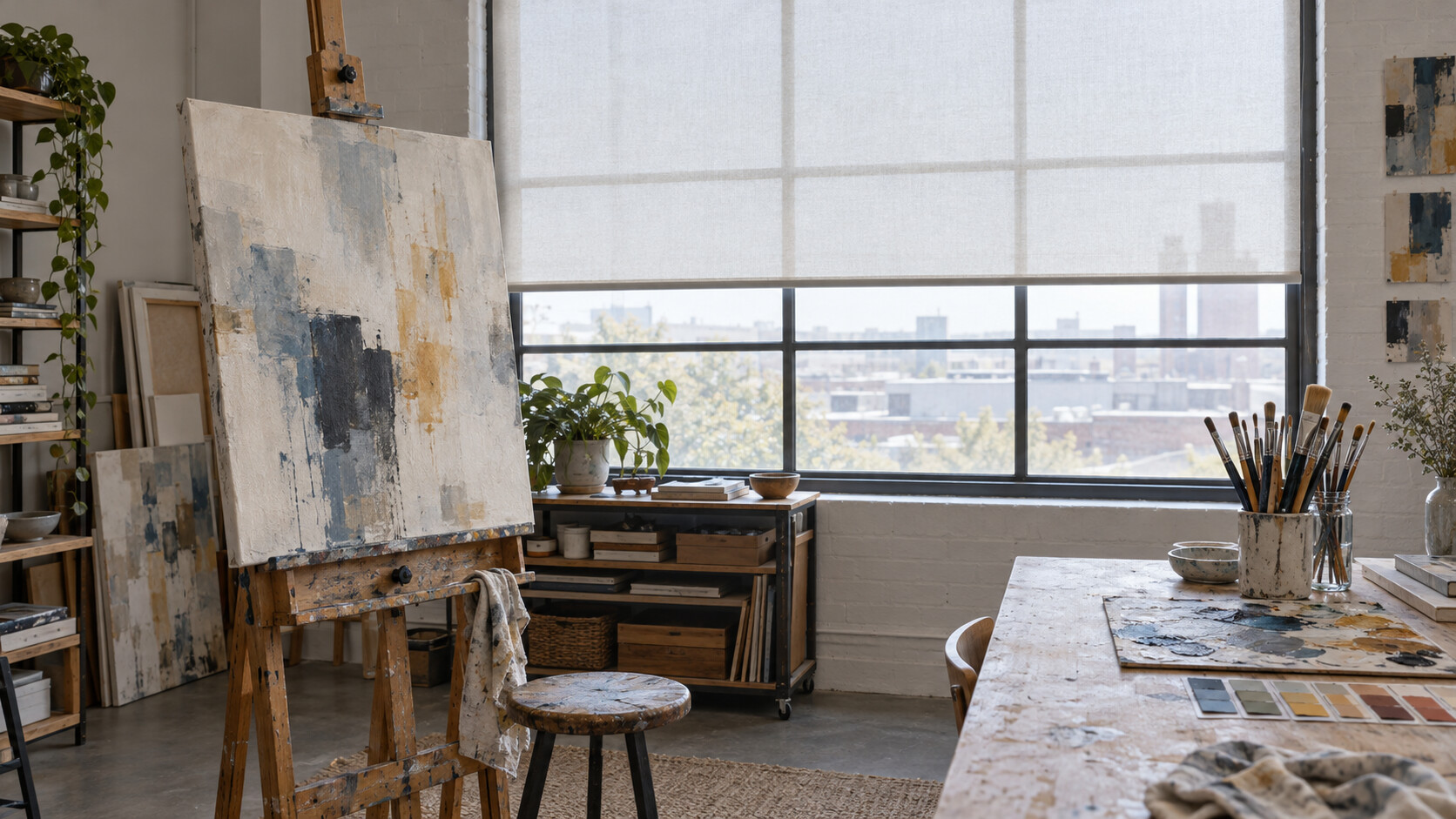
If you also create work in the space, our guide to roller shades for art studio color accuracy addresses a related planning problem. The conditions you want while judging color are not automatically the conditions you want for displaying sensitive originals all day.
Reflections deserve their own attention as well. The discussion of yoga studio mirror glare offers a related way to think about bright windows reflected in glossy surfaces, although removing glare is not proof that an artwork’s exposure is low enough.
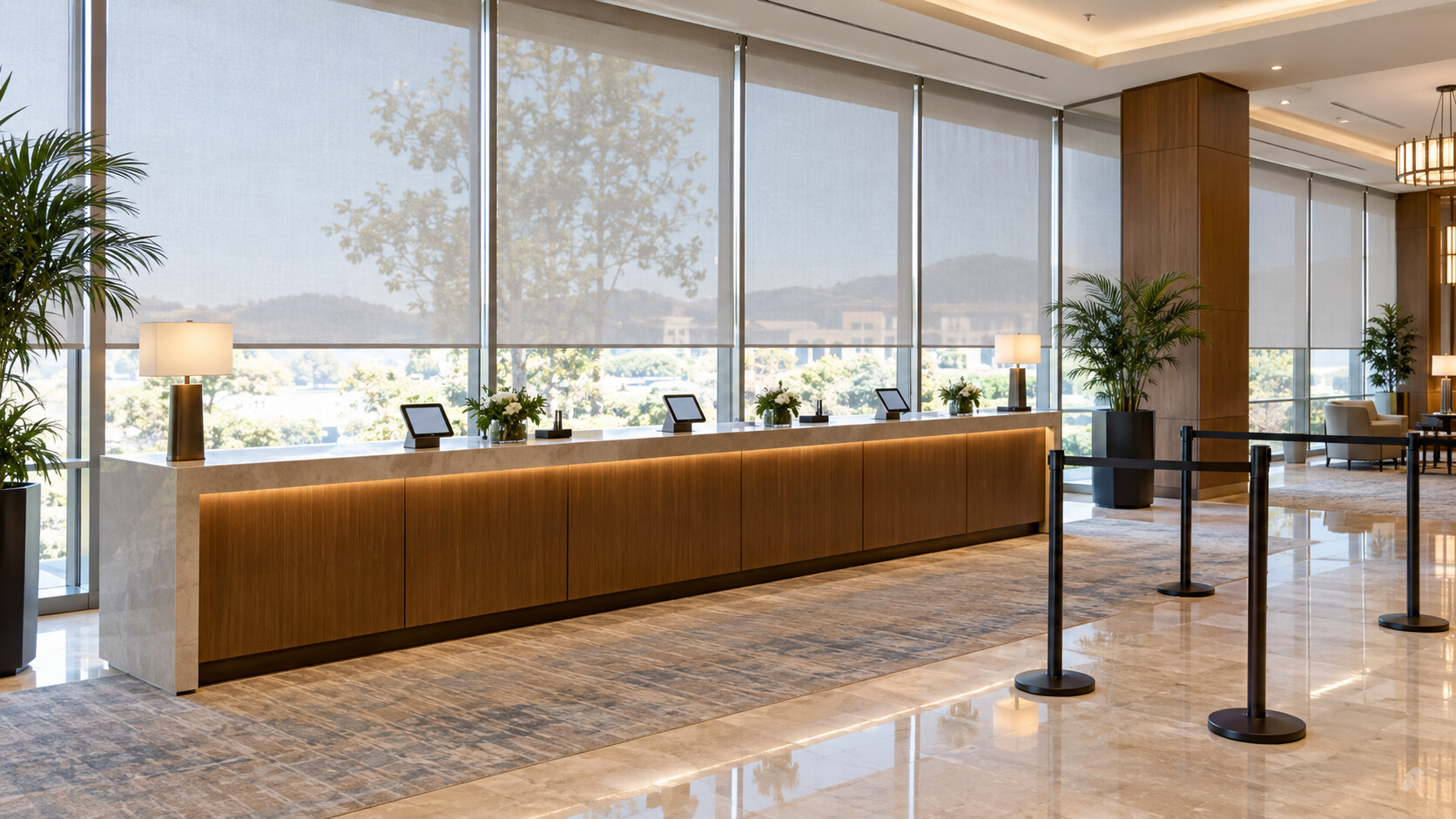
For shared commercial rooms, roller shades for hospitality event registration windows explores another use case where window controls must fit daily activity. In an art display area, assign responsibility for operating the shade so protection does not depend on someone remembering by chance.
Frequently Asked Questions
They can be part of a plan to reduce exposure, but they cannot guarantee that an artwork will never fade. Visible light can still affect sensitive materials after UV is filtered, so preventing direct sun and limiting display exposure remain important (Canadian Conservation Institute).
Not necessarily; the right choice depends on the artwork’s needs, room use, and willingness to give up daylight or view. Evaluate the whole installation, including edge openings, rather than assuming the fabric label describes every light path.
Treat framing and window coverage as complementary decisions, not interchangeable products. UV filtering does not remove the need to manage visible-light exposure, and a roller shade is not a substitute for appropriate framing (Canadian Conservation Institute).
No single museum number should be applied automatically to every home or object. Smithsonian guidance varies illumination and display duration by material category and condition, illustrating why sensitive or valuable work warrants individual advice (Smithsonian light-duration guidelines).
Start by deciding where the artwork can be displayed without direct sun, then select the fabric and coverage around that location. For an irreplaceable or fragile piece, involve a conservator before treating a window-treatment purchase as the complete solution.
Make a Thoughtful Window-Treatment Choice
The most useful shades to protect framed artwork are the ones that fit the window, support a realistic operating routine, and help reduce unwanted exposure without relying on fade-proof claims. World Wide Shades can help you compare fabric appearance, coverage, and everyday usability while leaving conservation decisions with the appropriate specialist.
Start planning your roller shades once you have considered the artwork’s position and your room’s daylight needs. For a delicate original, pair that purchase with professional guidance about framing, lighting, and display duration.