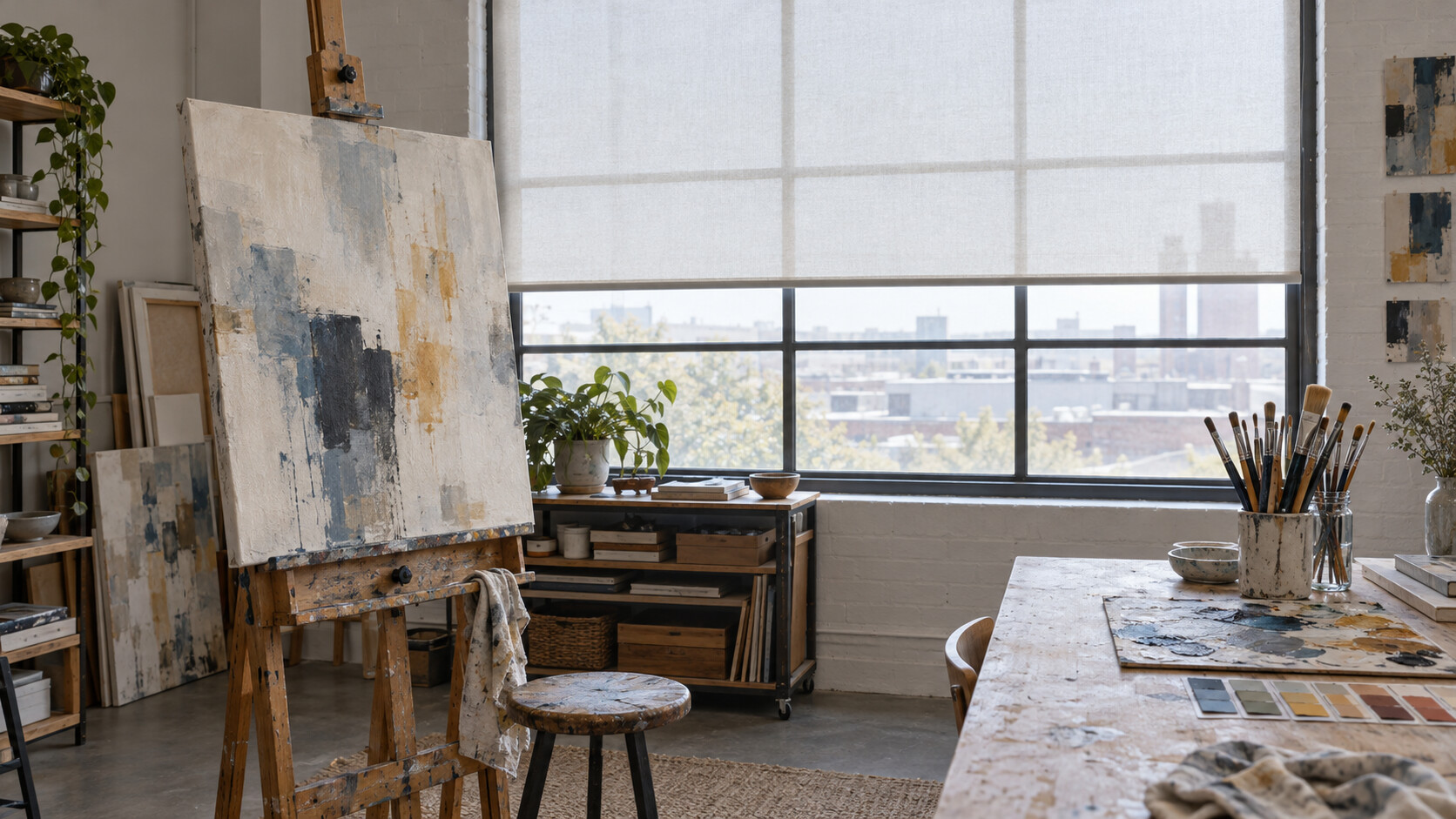
Choosing roller shades for art studios starts with a distinction: pleasant daylight for making art is not the same as controlled lighting for evaluating color. A watercolor painter might welcome a bright window while sketching, then need a more repeatable setup to compare a dried wash with a commissioned reference. Shades help manage the window; they cannot make every lighting condition color-accurate.
World Wide Shades recommends planning around the easel, worktable, and review area rather than choosing a fabric by appearance alone. Start comparing studio shade options in the builder, then use the guide below to separate everyday comfort from final color decisions.
Give working light and evaluation light different jobs
Daylight can be excellent working light, but its spectrum changes with weather, location, season, and time of day, so a studio window is not a fixed evaluation source (X-Rite's visual evaluation guide). Imagine mixing a muted violet beside an east-facing window in the morning and reviewing it late in the afternoon. Rather than assuming the paint changed, compare the dried sample under your designated evaluation lighting.
Set up two modes: an everyday arrangement with comfortable daylight and task lighting, and an evaluation arrangement with uncontrolled window light reduced. For a small studio, that might mean lowering the shade and moving a neutral review board to a dedicated lamp. For professional proof approval, consider an appropriate controlled viewing system rather than treating an ordinary desk lamp as a substitute.
The useful question for World Wide Shades is not “Which shade produces perfect color?” It is “Which shade lets me manage this window when I need to compare colors?” Our light-filtering shades guide provides a starting point for the daylight side of that decision.
What D50, D65, and lamp labels actually mean
CIE standard illuminant D50 represents daylight at approximately 5000K and is widely used in graphic arts and photography; D65 represents average daylight at approximately 6500K (CIE standard illuminants). Neither term means that natural window light stays at that condition throughout the day.
An illuminant describes a spectral distribution, so a lamp's color-temperature number alone does not establish that its spectrum matches D50 or D65 (CIE standard illuminants). If you approve photographic prints, ask the printer which viewing condition they use before buying evaluation equipment. A “daylight” label on a retail bulb is not a complete specification.
CRI is only one measure of lighting performance, and the CIE has identified limitations in how it describes color rendering for some sources, particularly those with narrow-band spectral components (CIE position statement on CRI). Choose consistent, high-quality task lighting with documented performance suitable for your work, then test actual materials under it. A shade purchase should support that lighting plan, not replace it.
Choose roller shades for art studios by the problem
For drawing, sculpting, or general painting, start by identifying where direct rays land during working hours. If the problem is a bright patch crossing the easel, compare filtering fabrics that make that position comfortable. Do not assume that a fabric that looks soft white in a product image will deliver neutral-looking light in your room.
Consider a ceramicist reviewing matte test tiles beside a window. A useful trial is to place the tiles on the usual table, hold candidate fabrics at the glass, and compare visibility and comfort before choosing. The roller shade fabric guide can help organize the material options without turning texture into a claim about color performance.
If you need a separate evaluation mode, compare more opaque options and examine the complete installation, not only the fabric. Plan for light around the edges, exposed glass above the roller, and any second window facing the review surface. A single lowered shade may not sufficiently isolate a review area.
World Wide Shades can help discuss the window-control portion of this setup. Call World Wide Shades at (844) 674-2716 with your window photos and the location of your review station; explain whether you need comfortable working light, stronger daylight exclusion, or both.
Test the fabric beside real studio materials
Treat a swatch as a comparison tool rather than a certification of color neutrality. Put candidate fabrics near the window with white paper, a neutral gray board, and examples of your work. For a portrait painter, include dried skin-tone mixtures; for a textile artist, include threads that are difficult to distinguish.
Repeat the comparison with your task lighting on and during your intended evaluation setup. The point is to discover an unacceptable cast, distracting texture, or inadequate window control before ordering. Our shade fabric swatch lighting test offers a practical structure, while the window shades color guide helps narrow the decorative palette.
World Wide Shades suggests comparing a small, purposeful group instead of collecting every available neutral. Order studio fabric swatches with a specific question for each: does this preserve useful working light, does this reduce the troublesome brightness, and can this support my separate review arrangement?
Make the review area visually quiet
Surrounding colors can affect perceived color, which is why controlled viewing environments use neutral surrounds rather than strongly colored backgrounds (X-Rite's visual evaluation guide). In a home studio with a red accent wall, try a neutral review board before repainting the entire room. Keep brightly colored storage boxes away from the immediate comparison area.
Position the board where you can use your chosen evaluation light consistently. For example, reserve one end of a shared worktable for reviewing dried paint studies instead of comparing them wherever space happens to be available. A repeatable location is easier to manage than an improvised corner beside changing window light.
For a commission, keep a labeled reference sample at that review position and compare new mixtures there before applying them to the final piece. If a client will display the work under a particular lamp, arrange a separate destination-light check rather than changing your main evaluation setup halfway through the project. Record which setup informed an approval so you can return to it.
Screen reflections deserve a separate trial when the studio includes digital illustration or photo editing. Read the yoga studio mirror-glare guide for related reflection-planning ideas, but do not treat a comfortable screen position as proof that the monitor is calibrated. Keep display setup and physical-material evaluation as distinct parts of the workflow.
Plan around the way the room is used
Avoid designing only for a clear, empty window. Picture the shade moving while an easel is tilted back, a canvas rack is full, and tools occupy the counter. World Wide Shades recommends resolving those everyday conflicts before settling on the operating arrangement.
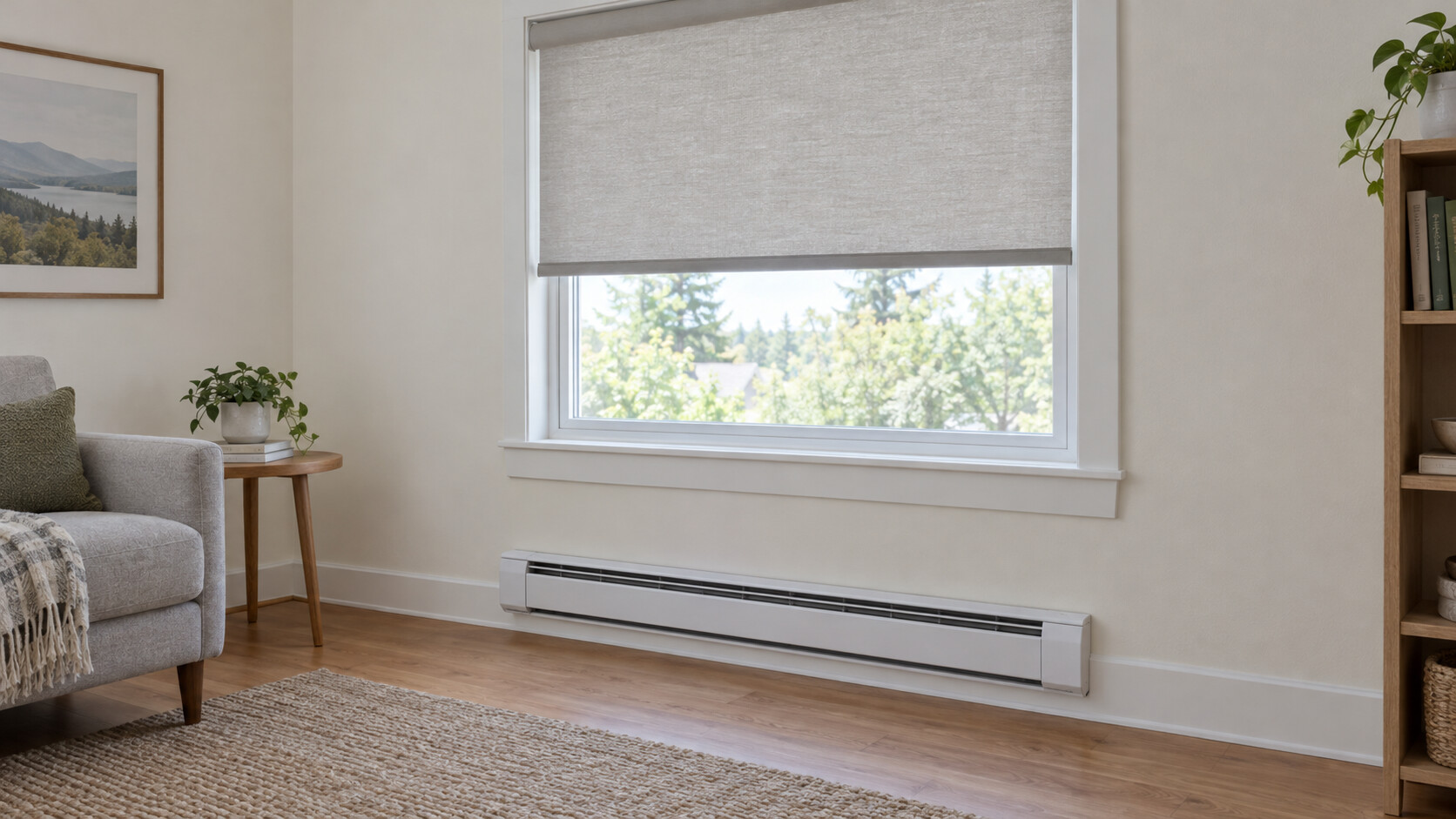
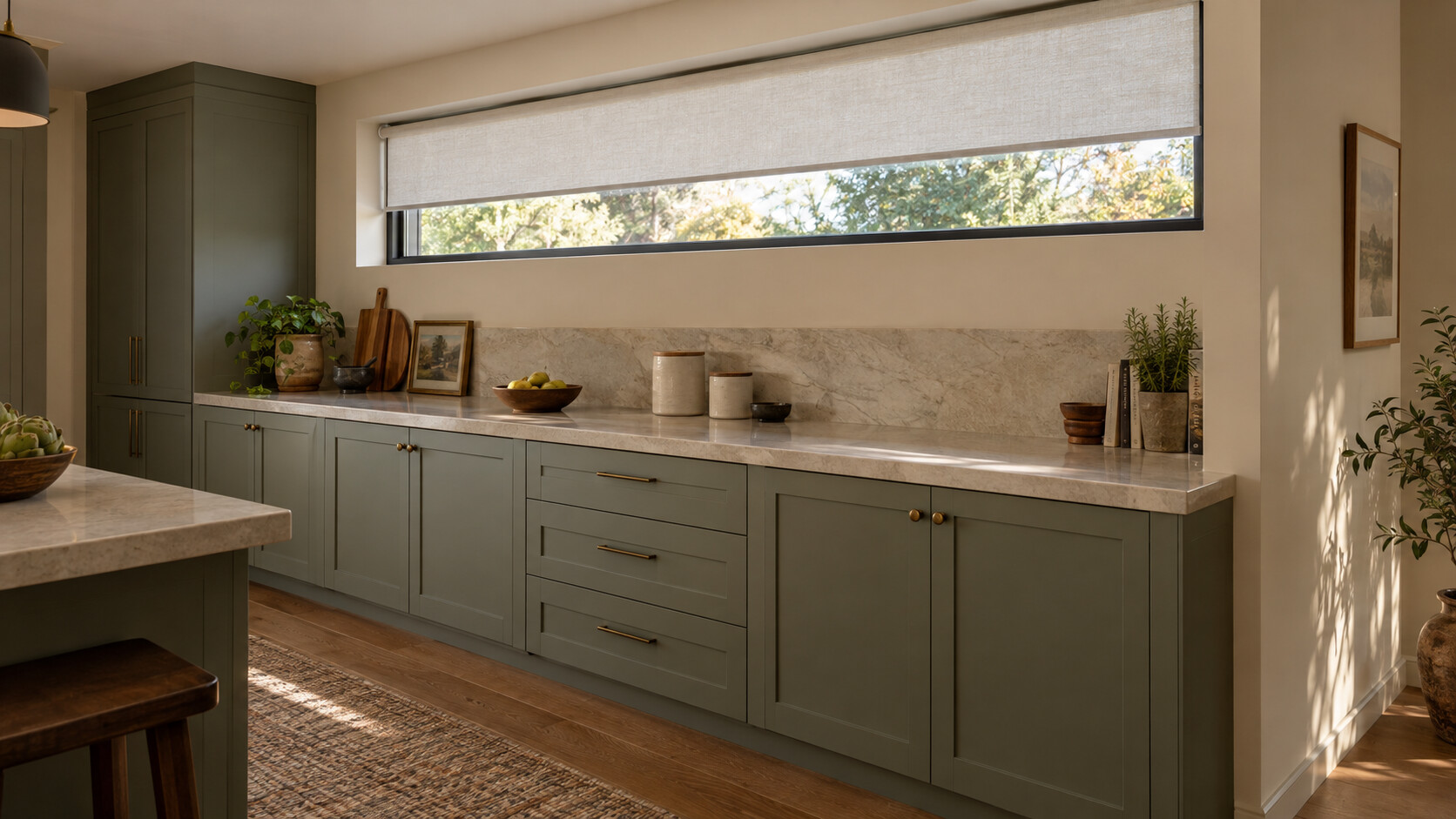
For windows over storage, the guide to roller shades above built-in cabinets addresses a closely related layout. If a heater sits below the glass, use the baseboard-heater clearance guide alongside the heater manufacturer's instructions instead of guessing at separation. Bring any uncertain arrangement to a qualified installer.
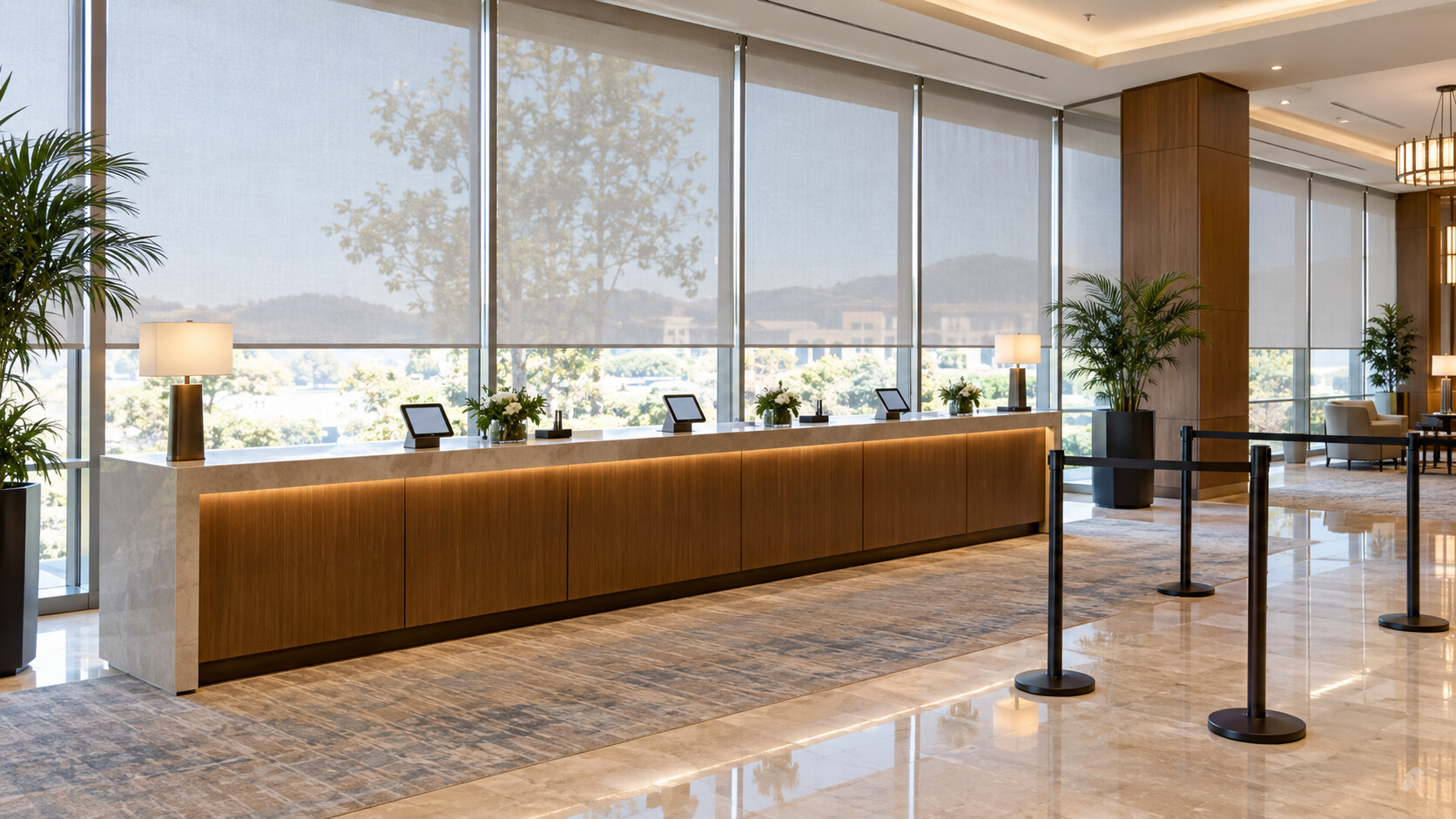
A teaching studio may also need different settings for painting sessions, demonstrations, and visitor check-in. The article on hospitality event registration windows offers another perspective on planning window control around changing tasks. Build a starting configuration with World Wide Shades after deciding which activities the window needs to support.
Try a normal work session before finalizing the room arrangement. A printmaker might need the window accessible while moving large sheets, while an instructor may need to change the shade position without walking between students and a demonstration table. Write down the preferred shade position for each activity so another person can restore the working setup without having to improvise.
Keep finished work and material storage in the plan
Color review is only one studio concern. Decide where finished pieces wait for collection and where paper, fabric, and spare canvases live, then include those locations in your window-control plan. A sensible room layout keeps the review station from doubling as permanent artwork storage.
For related planning, read our guide to roller shades to protect framed artwork together with the UV-protection window shades guide. Do not interpret a UV-related fabric specification as a guarantee that displayed work cannot fade. For valuable or sensitive pieces, get conservation advice appropriate to the materials and display conditions.
A mixed-use creative room has its own compromises: one table may handle painting, sewing, and packing orders. The craft room natural-light guide can help you think through those competing activities. Ask World Wide Shades about your studio layout at (844) 674-2716 before ordering if storage, access, or multiple work zones complicate the choice.
Frequently asked questions
No shade by itself establishes a controlled color-evaluation environment. Use it to manage daylight and direct sun, then pair that control with suitable lighting, neutral surroundings, and a repeatable place to compare your work.
Choose the evaluation condition appropriate to your medium and approval workflow rather than treating D50 as universal; the CIE notes its extensive use in graphic arts and photography (CIE standard illuminants). If you work with a print lab or other production partner, agree on the viewing condition before judging a match.
Use neutral-looking fabrics as candidates, not automatic winners. Compare actual samples at the window and beside your materials, then choose the option that supports both the room's working-light needs and your separate evaluation setup.
Not necessarily: comfortable everyday painting and controlled final review are different needs. Compare filtering options for working comfort, and consider stronger daylight exclusion when window light needs to be reduced for evaluation.
Start with your designated evaluation setup and use the same neutral background and viewing position for both samples. Then check their appearance under relevant destination lighting rather than assuming one successful comparison covers every environment, consistent with X-Rite's guidance on visual evaluation.
Build a studio that supports repeatable decisions
The right window treatment helps you choose when to enjoy daylight and when to reduce its influence. Keep the purchase focused on that controllable job, then use appropriate task lighting and agreed evaluation conditions for consequential color decisions.
World Wide Shades can help turn your room layout and sample comparisons into a window-treatment specification. Start your studio shade design or request fabric swatches so the next decision is based on your working space, not a screen image alone.