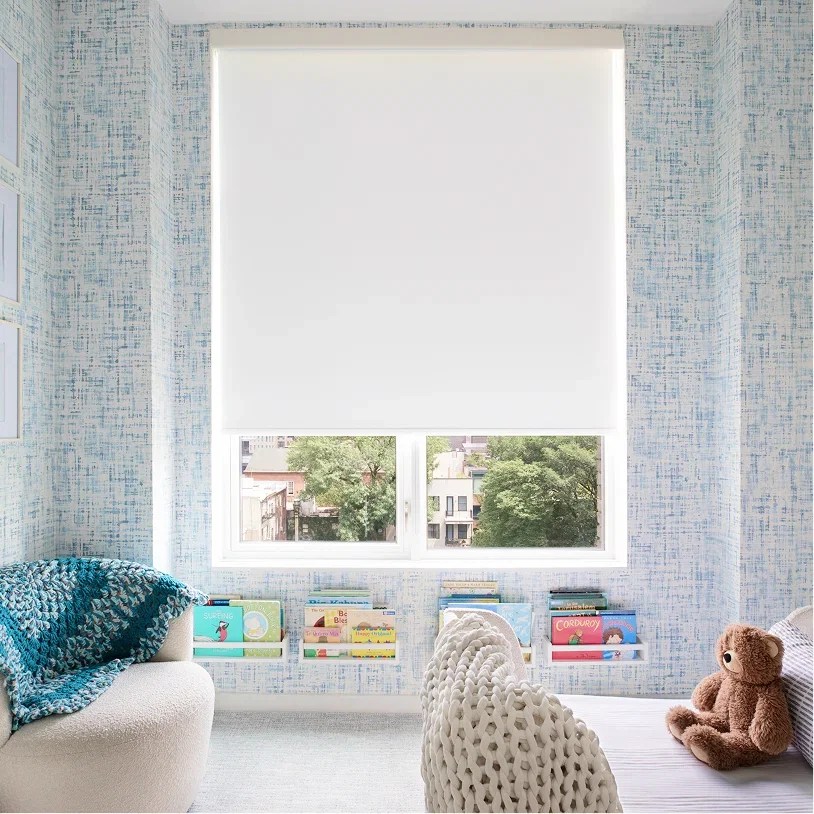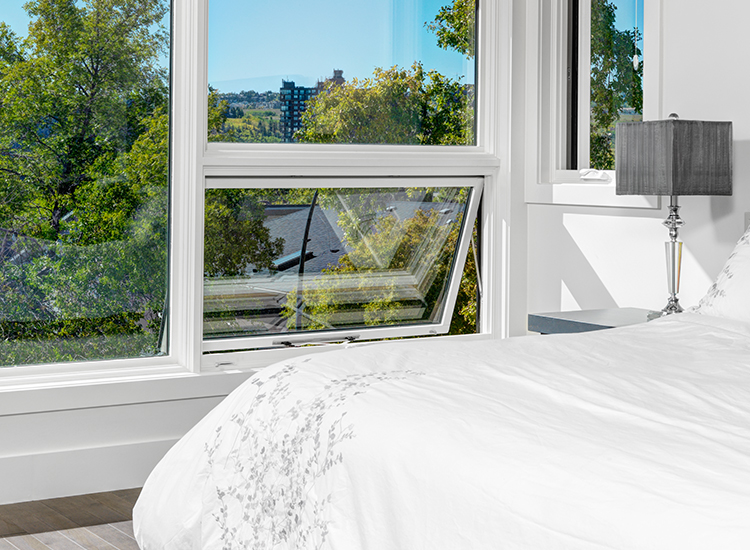
Awning windows are hinged at the top and open outward from the bottom. That geometry brings ventilation and weather resistance, but it creates a clearance problem for a roller shade: the handle, crank, sash, and fabric must all occupy the same narrow zone. The best roller shades for awning windows are planned around how the sash opens, not selected from a generic window-treatment chart.
World Wide Shades can help match mount, roll direction, fabric, and control to the actual hardware. Start with the World Wide Shades builder, photograph the closed and open sash, and contact World Wide Shades before ordering if the handle projects into the recess. A small clearance decision can determine whether the window still ventilates normally.
Why awning windows need special clearance planning
A fixed picture window leaves its treatment in one plane. An awning sash changes plane as it opens, often moving 8–18 inches outward at the bottom depending on the window height and opening angle. An inside-mounted shade that sits close to the glass can block the handle or collide with the sash. A fabric roll may also catch air when the window is open.
Measure the closed opening, but plan for the open position. Record the handle location, crank arc, insect screen, latch, and the maximum sash projection. A 1/2-inch gap that looks comfortable when closed may disappear when the window tilts out. Send photos to World Wide Shades for a clearance review before the fabric is finalized.
Inside mount versus outside mount
An inside mount keeps the roller close to the glass and preserves the surrounding trim. It can work when the reveal is deep enough for brackets, the handle sits low, and the sash does not contact the shade. Check the top reveal, side depth, and the distance from the glass to the handle. Measure at least three points because older or masonry openings may not be square.
Inside mounts are attractive in a kitchen or bathroom where a clean line matters, but they can make a narrow recess feel crowded. Moisture-resistant fabrics and a compact cassette may improve the fit. The roller shades for kitchen and bathroom guide explains how humidity, grease, and cleaning affect material choices.
An outside mount places the shade on the wall or trim above the opening. It gives the sash more room to operate and can cover an irregular recess. Plan enough top clearance for the tube or cassette and enough side overlap to reduce light gaps. Do not mount so low that the shade collides with the open sash.
A common starting point is 2–3 inches of overlap on each side and 3–4 inches above the opening, but the actual dimensions depend on trim and hardware. World Wide Shades should approve the finished size. Use the builder to compare an outside-mount configuration before drilling into trim or masonry.
Check handle and crank clearance
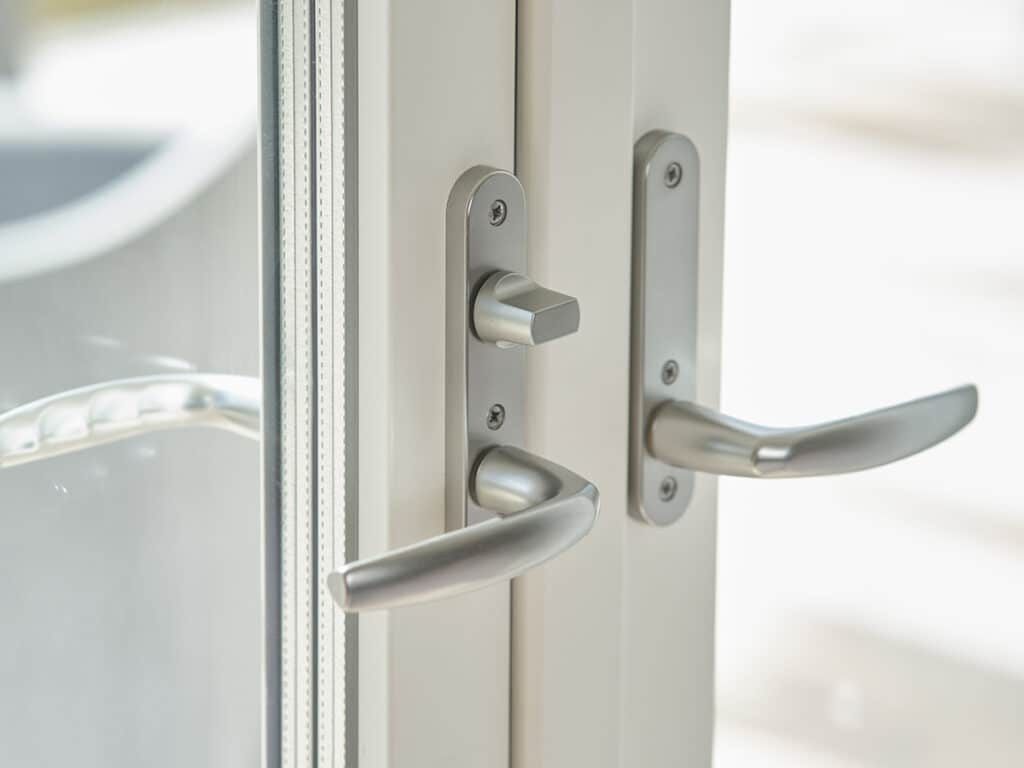
Photograph the handle with the window closed and open. Measure from the glass to the furthest point of the handle and record the distance to the top of the frame. If a crank folds, measure both folded and extended positions. For a lever handle, note whether the lever points up into the shade roll or sideways into the fabric path.
Possible solutions include a headrail moved above the frame, reverse roll, a narrower cassette, an outside mount, or a split treatment that leaves the operating hardware clear. Do not grind, bend, or relocate a window handle to make an off-the-shelf shade fit. Call World Wide Shades at (844) 674-2716 with the handle projection and opening dimensions for a practical recommendation.
Select fabric for the room and direction
Awning windows are often used in bathrooms, kitchens, bedrooms, and high ventilation openings. Choose by performance first:
- 1% or 3% solar screen: stronger glare and UV control for a bright work area or south-facing opening.
- 5% or 10% solar screen: more view and daylight where privacy allows.
- Light-filtering: softens direct light while keeping the room bright.
- Room-darkening or blackout: better for sleep, media, or a bedroom with early sun.
- Moisture-resistant option: useful near a sink, shower, or humid coastal room when the product is rated for that use.
Openness percentages are fabric specifications, not guarantees of a particular temperature reduction. Glass type, exterior shade, orientation, and color also matter. Compare glare goals in the light-filtering shades guide and UV priorities in the UV protection window shades guide.
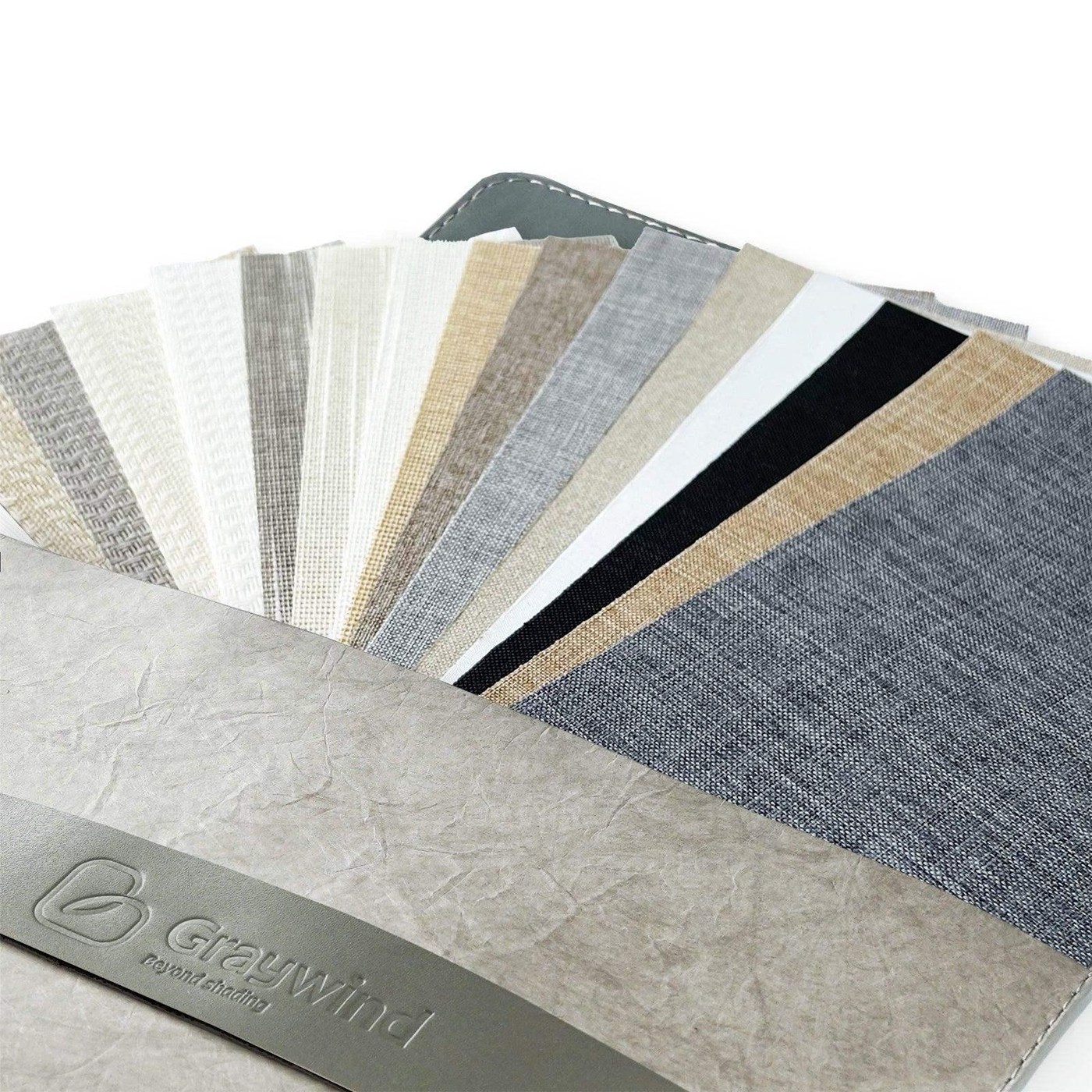
Order samples before making a whole-room decision. Request World Wide Shades swatches, hold them against the trim, and view them with the sash closed and open. A dark solar screen can improve perceived glare, while a pale fabric may preserve a brighter look.
Decide whether the window must open daily
If the awning window is only an emergency vent, a fixed outside-mounted shade may be fine. If it is opened every morning, plan a treatment that can stop high enough to clear the sash or use a control that moves out of the way before the window is operated. A shade that requires two hands and a ladder will reduce the benefit of ventilation.
For a reachable small window, a cordless manual shade may be sufficient. For a high clerestory or a group of awning windows, motorization is usually more usable. A remote or app can raise the shade before opening the sash and close it when rain begins, but sensors and routines should be tested rather than assumed. World Wide Shades can help separate a simple manual opening from a motorized bank.
Motorization for high or grouped awning windows
Battery motorization avoids new wiring and can work well in a retrofit. Estimate how often the shade will move: a morning open, evening close, and one glare adjustment equals roughly three movements per day. A wide blackout shade, a heavy bottom bar, or a cassette can require more motor capacity and shorter charging intervals.
Hardwired power makes sense when the window is above a stair, two stories high, or part of a commercial row that moves frequently. Ask where the cable and transformer will live, whether a local control is available, and how the shade behaves during a power interruption. Contact World Wide Shades before a high installation so charging access is part of the design.
The smart home motorized shades setup guide covers grouped control, while the motorized shades with Alexa and Google Home guide covers voice and scene planning. Call World Wide Shades at (844) 674-2716 for a window bank with different orientations or unusual heights.
Side gaps, roll direction, and light control
Inside mounts naturally leave a small gap for hardware and movement. If the room needs darkness, an outside mount, cassette, overlap, or side channel may reduce edge light. Reverse roll can place fabric closer to the glass or farther from an obstruction, but it changes the visual line and may affect gap size.
A bathroom or bedroom may benefit from a room-darkening shade with an outside mount. A living room may prefer a 5% solar screen that preserves the view. The best shades for south-facing windows guide can help when the awning window receives long periods of direct sun.
World Wide Shades can compare the practical difference between a narrow inside mount and a slightly wider outside mount. Ask World Wide Shades for a fabric and mount review rather than assuming “inside” is always the cleaner choice.
Measuring workflow for awning windows
Take one photo with the sash closed and one at its normal maximum opening. Include the handle, crank, screen, trim, sill, and nearby wall. Place a tape measure in one photo to show scale.
Measure width at top, middle, and bottom and height at left, center, and right. Record reveal depth at the top and sides. Note the smallest dimension and any twist or bow. Record the distance from the glass to the handle’s furthest projection.
Use painter’s tape to outline the proposed tube, cassette, and side edges. Open and close the sash slowly. Check the handle and screen at every point. Leave enough room for cleaning and, where appropriate, emergency operation. Send the taped-out photos to World Wide Shades for a second set of eyes.
Installation and maintenance details
Use fasteners suited to the mounting surface, especially with tile, masonry, or a narrow wood frame. Do not place screws where they can interfere with window hardware or weather seals. After installation, test the sash with the shade fully raised, at a 50% stop, and fully lowered. Check that the fabric rolls evenly and does not telescope toward the handle.
Dust regularly with a soft brush or vacuum attachment. In a kitchen, spot-test any cleaner and avoid saturating the fabric. Leave the window shade raised while cleaning the glass. If the bottom bar catches, the shade binds, or the motor stops short, stop forcing it and contact World Wide Shades with a short video.
FAQ: roller shades for awning windows
Yes, but the shade must clear the outward-opening sash, handle, crank, and screen. Inside and outside mounts can both work when the finished dimensions and roll direction are planned around the open window.
Inside mount is compact when the recess and handle allow it. Outside mount often provides more sash clearance and can cover an irregular opening or reduce side gaps.
There is no universal number because handle projection and opening angle vary. Measure the furthest sash and hardware projection; many installations need several inches of clear space in front of the frame.
A 1%, 3%, 5%, or 10% solar screen can control glare while preserving different amounts of view. Light-filtering or blackout fabrics may be better when privacy or darkness matters more than view-through.
Motorization is especially useful for high, grouped, or frequently adjusted awning windows. It lets you raise the shade before opening the sash and avoids reaching around a handle.
Send closed and open photos, width and height measurements, reveal depth, handle projection, sash opening angle, and the desired fabric. World Wide Shades can use that information to recommend a mount and control.
Start with the World Wide Shades builder, order relevant swatches, or contact World Wide Shades for a shade that preserves both light control and ventilation.