French doors look elegant because of their wide glass and divided-light detail. They are also one of the easiest places to order a shade that collides with a handle, blocks the swing, or leaves an annoying strip of light at the meeting point. The right roller shades for French doors handle clearance plan starts with the door hardware—not with a fabric color.
World Wide Shades helps homeowners map the handle projection, hinge side, astragal, and door swing before choosing an inside or outside mount. Compare the dedicated roller shades for French doors guide, then use the World Wide Shades builder. If your doors have unusual trim or a narrow sidelight, contact World Wide Shades or call (844) 674-2716.
Why French doors need door-by-door planning
A window shade stays still while a door moves. French doors can swing inward or outward, open independently, and meet at a center seam. A shade that works on the left door may be wrong for the right door because the handle, latch, or hinge is mirrored.
Treat each door as its own opening even when the pair is the same size. Record the glass width, frame width, handle depth, and distance from handle to glass. World Wide Shades can coordinate a matched pair while allowing small clearance differences between the leaves.
If the doors lead to a patio, compare roller shades for sliding glass doors and outdoor roller shades for a patio for ideas about solar exposure and daily use.
The handle-clearance measurements that matter
Measure more than width and height. A usable clearance sketch should include:
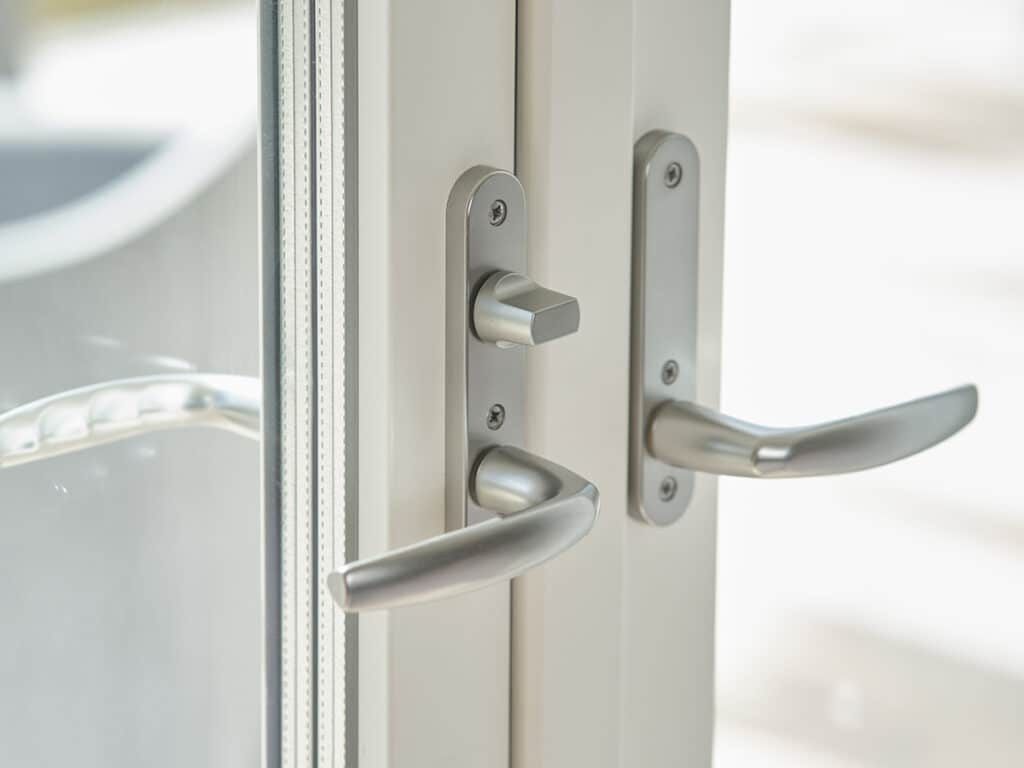
- Handle projection: measure from the door plane to the farthest point of the lever or knob. A 2-inch projection needs a different approach than a flush pull.
- Handle height: record the distance from the sill or bottom of the glass to the handle center.
- Glass-to-handle gap: measure the space between the glass edge and the nearest hardware.
- Opening path: swing the door fully and note whether the shade or cassette would hit a wall, adjacent door, or furniture.
- Center meeting point: check the astragal, weatherstrip, and latch so two shades do not collide.
Take measurements with the door closed and open. A frame can flex slightly, and a handle that clears the shade when closed may catch when the door swings. Upload photos to the builder or contact World Wide Shades for a fit review.
Inside mount versus outside mount
Inside mount places the shade within the glazing recess. It keeps the profile neat and can protect the fabric from the room, but it requires enough depth for the tube and brackets. The handle may project into the shade’s travel path, and shallow French-door frames often leave little margin.
Choose inside mount only after measuring depth at the top, middle, and bottom. If the recess is tapered, use the smallest usable dimension and confirm the hardware requirements with World Wide Shades.
Outside mount attaches to the door face or surrounding trim. It can cover more of the glass, reduce edge leakage, and avoid a shallow recess. The tradeoff is that the headrail and brackets are visible, and the shade must still clear the handle and swing path.
An outside mount may be the better privacy choice when the glass sits close to the frame edge. See inside mount vs. outside mount shades before deciding, then order fabric swatches from World Wide Shades to compare the visual footprint.
Choose a shade style that follows the door
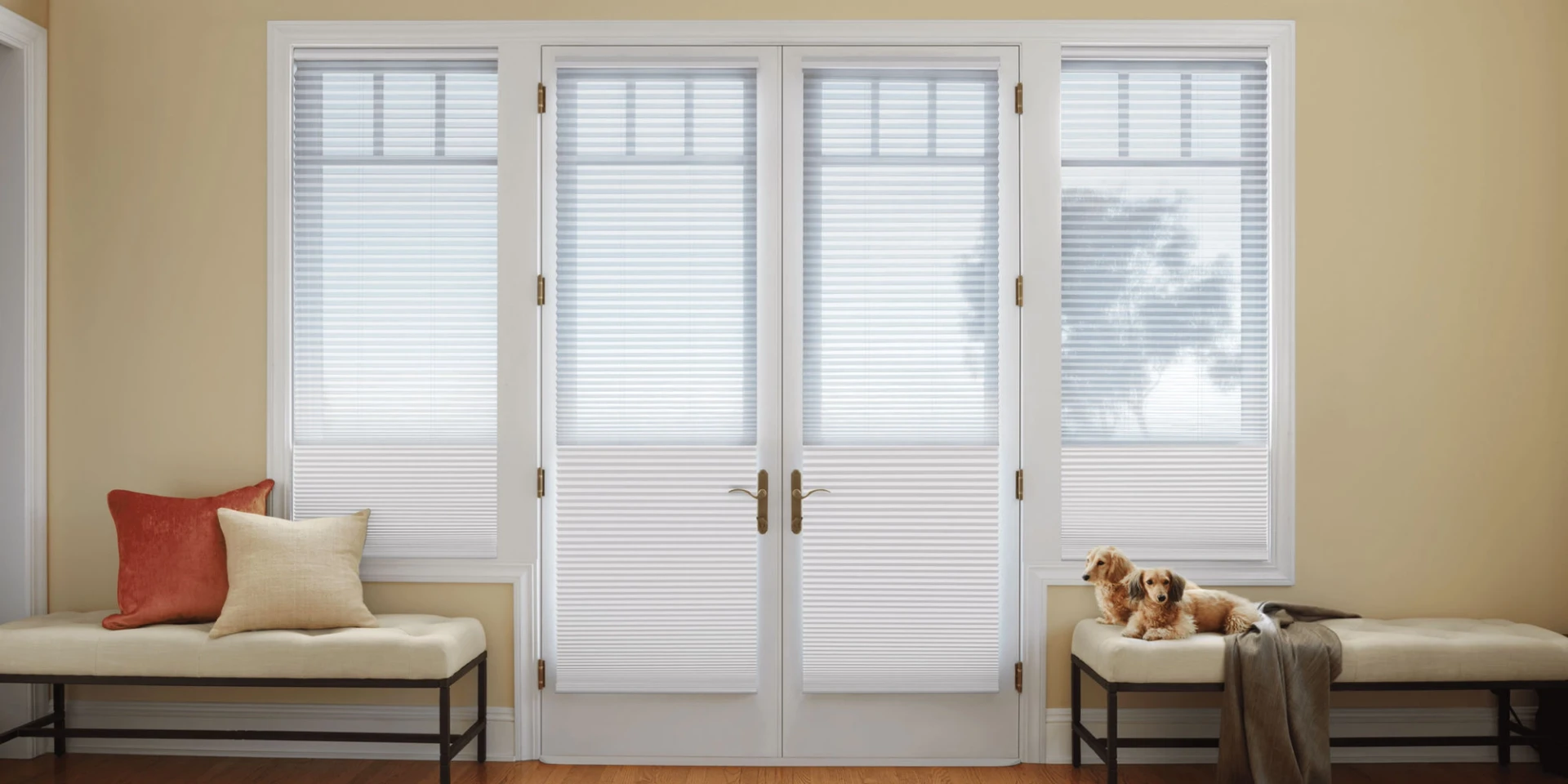
Two independent shades are the most flexible option. Each door can open without moving the other shade, and the pair can be adjusted for different sun angles. Use matched fabrics and hem details so the result feels symmetrical.
A single wide shade can create a cleaner visual line when the doors are rarely opened. It is not a good fit if either leaf needs to swing daily because the treatment must be raised first. For large spans, also review roller shades for large windows.
Guiding hardware helps keep a shade aligned as a door moves. It is especially useful on doors that open frequently or are exposed to drafts. Confirm the hardware will not interfere with hinges, latches, or cleaning access.
Fabric choices for entry, bedroom, and patio doors
- Light-filtering: softens daylight while keeping the entry bright; a good default when privacy is needed without a dark room.
- Solar screen: limits glare and preserves a view; 1%, 3%, 5%, and 10% openness are common comparison points.
- Room-darkening: useful for a bedroom door or media room where bright morning light is disruptive.
- Blackout: the most privacy- and darkness-focused choice, but plan for side and center gaps because no fabric can seal a moving door by itself.
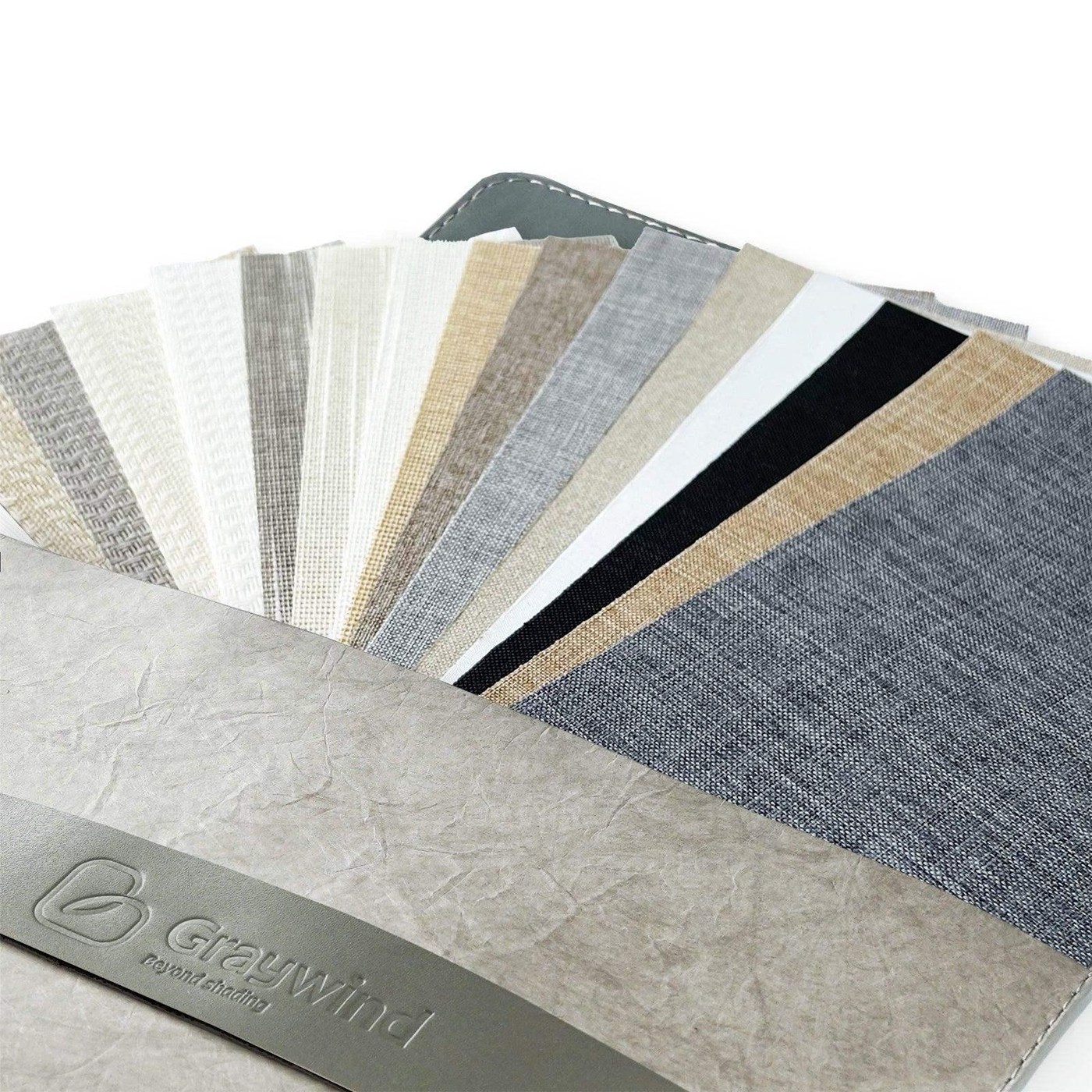
A darker solar screen can preserve the exterior view better than a light screen in daytime conditions, while a light-colored fabric can reflect more solar energy. Always test the samples in the actual doorway. Order swatches from World Wide Shades and hold them beside the handle finish, flooring, and trim.
Child and pet safety at a moving door
French doors often sit in high-traffic paths. Avoid loose cords and chains where children or pets can reach them. Cordless or motorized operation reduces dangling hardware, while hold-downs and stable guides prevent a shade from swinging when the door moves.
For a broader safety review, read child-safe window treatments and pet-friendly window treatments. World Wide Shades can help you choose an operating method that remains easy for adults but does not create a loose loop near the floor.
Motorization: when it helps and when it does not
Motorization is useful when the doors are tall, the shades are used several times a day, or the pair is part of a whole-home routine. A timed close at sunset improves privacy without someone checking every door. It also avoids reaching around a handle to operate a manual shade.
Motorization does not fix a clearance problem. The shade still needs correct width, guides, and hardware. Review motorized shades Alexa Google Home and smart home motorized shades setup, then configure the pair in the builder. Call (844) 674-2716 if you need help separating clearance from control decisions.
Stop light gaps at the center seam
Two shades usually create a center meeting point. A 1/4-inch or 1/2-inch gap can become obvious when the sun is low, especially in a bedroom. Outside mounts with enough overlap, a carefully planned astragal, or a dedicated center treatment can reduce that line.
Do not solve the seam by making each shade so wide that it hits the handle. Clearance and light control have to be balanced. World Wide Shades can recommend the right overlap after reviewing the handle and frame profile. The roller shade light gap side channel guide covers related edge-control strategies.
Installation and daily-use checks
Before final installation, confirm that the brackets are level, the fabric rolls straight, and the bottom rail clears the handle through the full travel. Open each door slowly, then fully, while watching the shade. Test the latch, lock, and weatherstrip before putting furniture back.
Clean the fabric with a soft brush or low-suction vacuum rather than saturating it. Dust near a patio door can build faster than on a bedroom window, so a 60-second monthly pass is often enough to keep the weave looking even. Use how to install roller shades for general technique and ask World Wide Shades about door-specific hardware.
FAQ: Roller shades for French doors
There is no universal number because handles vary in projection and the shade hardware has its own depth. Measure the farthest hardware point, the glass-to-handle gap, and the door swing. Send those details to World Wide Shades before ordering.
Inside mount looks cleaner when the recess is deep and the handle clears the shade. Outside mount often provides more coverage when the recess is shallow or privacy is the priority. The builder can help you compare a starting configuration.
Usually, yes, when the doors open independently. Individual shades let you operate one leaf without moving the other and make mirrored handle clearances easier to manage. World Wide Shades can match both shades as a pair.
Room-darkening or blackout fabric provides more privacy than an open solar screen after interior lights turn on. Plan for center and side gaps, and choose cordless or motorized control when the doorway is high traffic. Request swatches first.
Yes. Motorization is useful for tall or frequently used doors, but it does not replace accurate clearance planning. Contact World Wide Shades or call (844) 674-2716 to review the motor, guide, and handle together.
Hold-downs, side guides, or door-specific guiding hardware can stabilize the bottom rail. The correct choice depends on the door swing and frame. World Wide Shades can confirm the compatible option from photos and measurements.
A better French-door order starts with the hardware
Measure handles before fabric, treat each door as a separate moving opening, and decide whether you need privacy, glare control, darkness, or all three. World Wide Shades can coordinate matched custom shades without ignoring the details that make French doors different. Build your pair at the World Wide Shades builder, order swatches, or contact World Wide Shades at (844) 674-2716.