Roller shades for garage door windows raise a different question than shades for an ordinary room: does the window stay still when the garage opens? A window set into a fixed wall can often be approached as a conventional window-treatment project. Glass inside a sectional garage door belongs to a moving assembly, so appearance and privacy must come after the door manufacturer's restrictions.
At World Wide Shades, the right starting point is identifying the window location before choosing fabric or controls. A tidy roller shade is not automatically a suitable accessory for moving garage-door panels, even when the shade looks small.
If you are unsure which situation you have, contact World Wide Shades or call (844) 674-2716 to discuss the window location before configuring a shade. Describe whether the glass moves with the door and keep any door-model information available.
First identify what actually moves
Stand clear of the operating area and identify whether the glass belongs to the door or the building. This distinction determines which questions to resolve first, not merely where brackets might go.
Treat glazing within the door as part of the door system, not as an ordinary window opening. Amarr's residential owner's manual specifically warns against adding parts because additional parts can overload the springs, cause serious injury, and void the warranty. That warning is a reason not to assume that a lightweight shade, adhesive mount, or small cassette is acceptable. (Amarr owner's manual)
Check the specific door maker's instructions and ask a trained garage-door technician if clarification is needed. If the manufacturer does not permit the proposed accessory, do not install it; choose another privacy approach with the door maker instead.
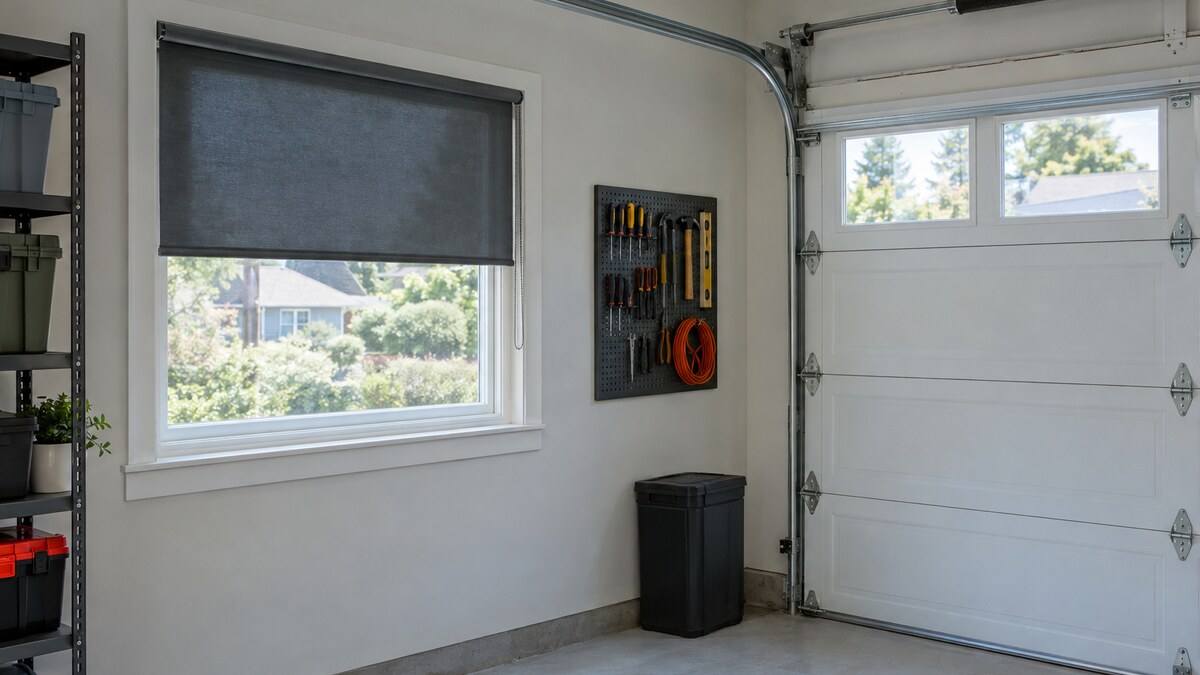
A wall window does not travel with the sectional door, making it the more straightforward location to evaluate for roller shades. Still, plan around nearby tracks, the open door's overhead position, shelving, and any other equipment occupying the same space.
For example, a side-wall window might look unobstructed with the garage closed but sit beside the door's operating envelope. World Wide Shades can help discuss shade dimensions for a fixed opening, while questions about the door's safe operating space belong with its manufacturer or technician.
Low profile does not establish safe clearance
When people request a low-profile garage shade, they usually mean a small roll, slim brackets, or a compact cassette. Those features can matter aesthetically, but none establishes compatibility with a moving door.
For any proposed arrangement near the door, consider the entire shade assembly rather than fabric alone. The roll, bracket ends, bottom bar, controls, and any housing all occupy space; a drawing that shows only the glass will miss important conflicts.
A closed-door view cannot answer every clearance question. Amarr directs owners to keep the area required for door movement clear and to keep hands away from section joints and moving parts. A proposed treatment should never require someone to reach into that area during operation. (Amarr owner's manual)
Have the specific door maker or a trained technician evaluate whether any proposed nearby treatment remains outside the door's full travel. Do not make a trial installation on a moving panel to discover whether it rubs, shifts, or gets caught.
For a fixed wall window, start by separating the shade's mounting space from the garage-door system. Once that boundary is established, explore the World Wide Shades builder to consider a shade for the stationary opening, rather than assuming the same configuration suits a moving panel.
Secure attachment requires more than a strong adhesive
The phrase “no-drill” does not mean “approved for a garage door.” An adhesive accessory still adds a component to the moving assembly, so it does not bypass the door maker's restrictions on added parts. (Amarr owner's manual)
Avoid treating magnets, tapes, improvised clips, or ordinary roller-shade brackets as universal solutions. Secure attachment must mean an explicitly permitted system for the exact application, not simply an attachment that feels firm while the door is closed.
Do not drill into the door, change its hardware, or add shade components as a workaround. Do not attempt to compensate for a proposed accessory by adjusting springs, cables, or opener settings; Amarr reserves work on high-tension components for a trained garage-door technician. (Amarr owner's manual)
For an approved fixed-wall installation, secure mounting is a separate question involving the wall or window substrate and the shade manufacturer's instructions. Our roller-shade installation guide provides general context, but it is not authorization to attach a shade to a garage door.
World Wide Shades recommends resolving the permitted location before ordering. Send the team your project questions or call (844) 674-2716, and consult your door maker or trained technician for door-system approval.
Keep hinges, tracks, the opener, and sensors independent
Plan the treatment without using garage-door hardware as convenient mounting points. Hinges, tracks, opener connections, and safety devices should not become part of a shade installation.
Clopay's FAQ explains that even opener attachment requires the correct door reinforcement and that requirements vary by door model and size. That model-specific guidance is another reason not to improvise around the opener connection or repurpose its brackets. (Clopay garage-door FAQ)
For a nearby fixed shade, consider where its bottom bar and controls will rest during everyday use. Choose a location that does not invite a loose control or fabric edge into the door's operating area, and do not route shade wiring along door hardware.
Keep safety sensors and their beam unobstructed; never relocate or bypass them to accommodate a window treatment. Amarr's manual includes photo-eye and reversal checks among its safety procedures, so continue following the applicable door and opener instructions after any approved work nearby. (Amarr owner's manual)
If an existing shade is close to a track or opener assembly, pause changes until the location has been reviewed. A visually cleaner arrangement is not worth compromising the door's intended operation.
Choose privacy around how you use the garage
Once a fixed-window location is established, define the privacy problem in practical terms. A workshop facing a sidewalk may need visual screening, while a garage used for exercise might need less direct glare without losing its daytime connection outdoors.
Do not choose fabric only from a color thumbnail. Ask how the material handles visibility, then evaluate it in the setting where you intend to use it, especially if privacy after dark matters.
A fabric choice and a coverage choice are not the same decision. When evaluating a proposed shade, look at the material itself and the areas around its edges rather than treating an opaque-looking sample as a promise of complete privacy.
World Wide Shades encourages a sample-first approach for stationary garage windows. Request swatches, compare them against your interior finishes, and discuss the coverage you need before deciding on a configuration.
For example, a homeowner might prioritize concealing stored equipment over preserving a clear outside view. Another might want adjustable daylight for a workbench; neither goal requires turning the moving door into a shade mounting surface.
If comfort is part of the project, use our energy-efficient window-shades guide as a separate planning resource. Avoid assuming that treating one window will solve every temperature issue in the garage.
Plan wall-window shades as part of the whole space
For a fixed opening, decide where the shade belongs before selecting its operation. Consider usable mounting surfaces, access for cleaning, nearby storage, and whether the garage door or another object will make the shade difficult to reach.
An inside-mount appearance may appeal to you, but it should not be the automatic choice if the opening lacks suitable space. Likewise, an outside mount should not extend into a track's operating area simply to cover more glass.
World Wide Shades can help organize the stationary-window portion of the project. Start a configuration in the builder once the mounting location and nearby clearances have been resolved, and keep door-system questions with the appropriate specialist.
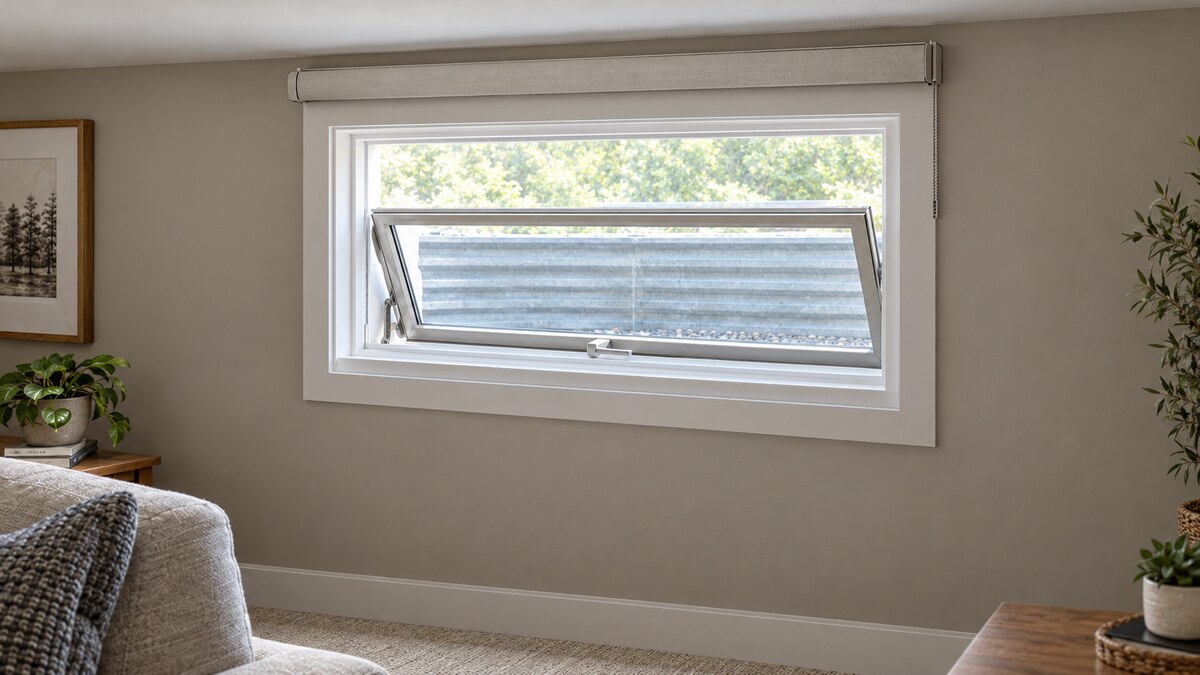
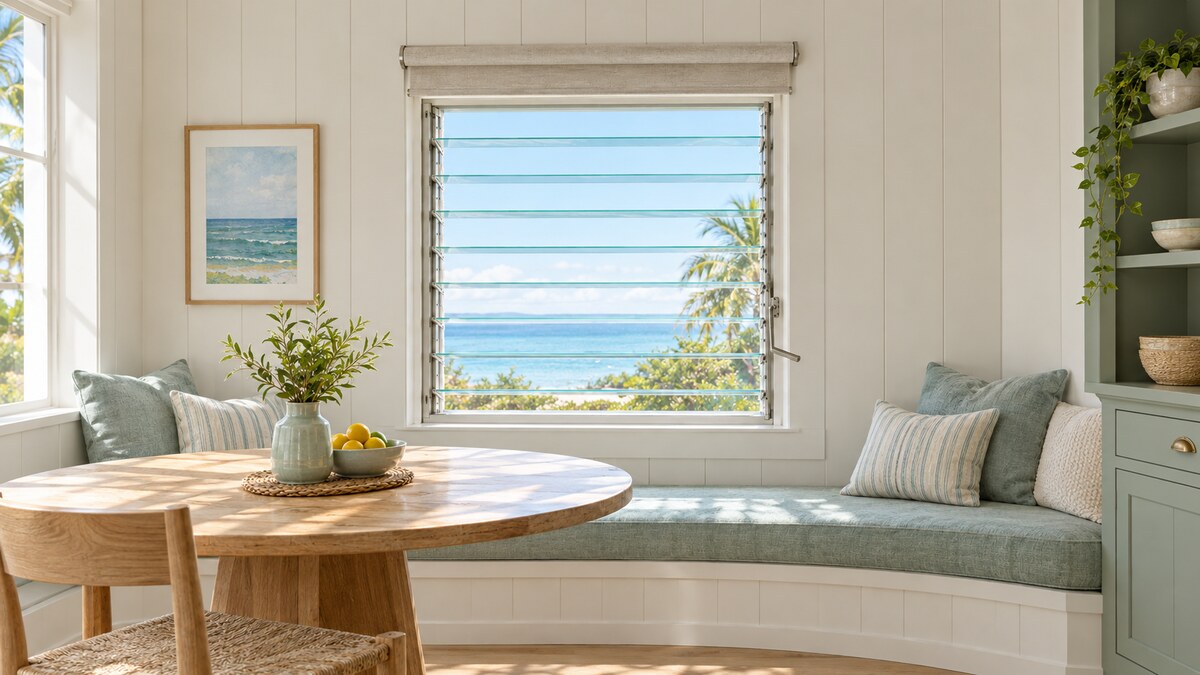
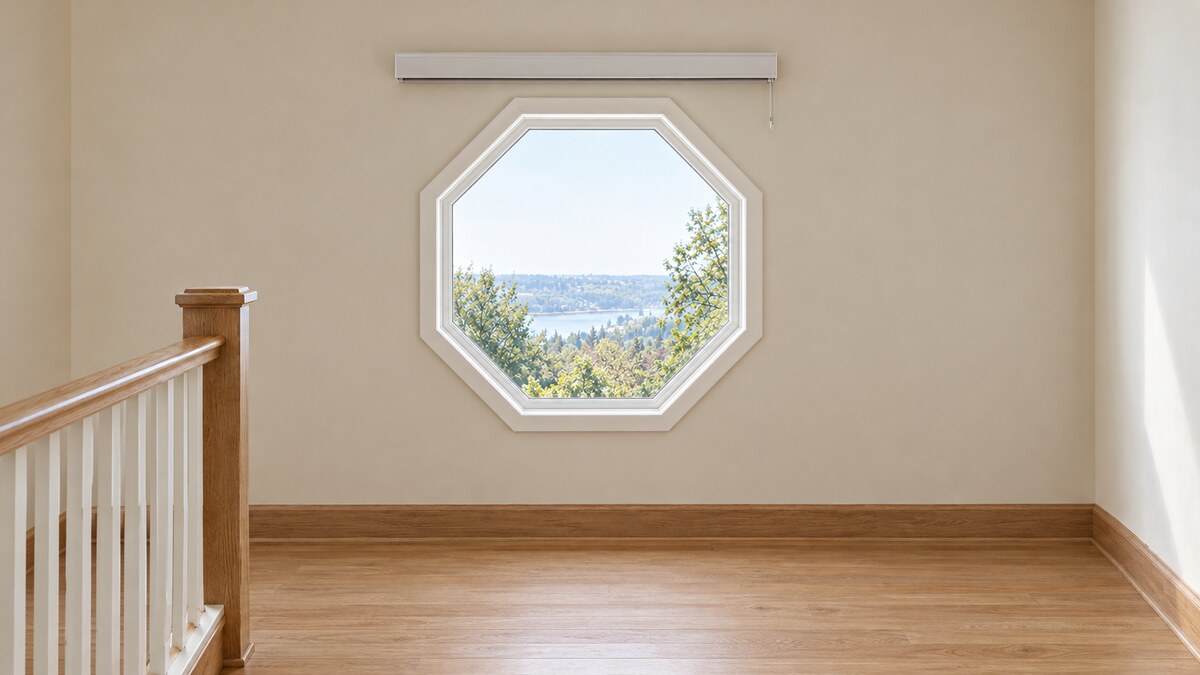
Other unusual openings deserve the same location-first thinking. Compare our guides to hopper windows, jalousie windows, octagon windows, and windows with security bars when planning treatments elsewhere in the home.
Frequently asked questions
Do not assume that you can. Amarr explicitly warns against adding parts to its doors, so check the specific door maker's requirements and consult a trained technician if needed before considering any accessory on a moving panel. (Amarr owner's manual)
No; a compact appearance does not establish compatibility with your door. Have the door maker or trained technician assess the proposed arrangement, and do not use an unapproved trial installation to test clearance.
Do not use attachment style as a substitute for approval. An adhesive-mounted accessory is still an added component, so the manufacturer's restriction on added parts remains relevant. (Amarr owner's manual)
That is the more conventional application to evaluate. Confirm suitable mounting space, keep the treatment independent of door equipment, and choose fabric and coverage around your privacy needs.
First identify whether the glass is stationary or part of the moving door. For a fixed opening, contact World Wide Shades or call (844) 674-2716 to discuss options; for moving-door glazing, ask the specific door maker about permitted privacy solutions before buying a treatment.