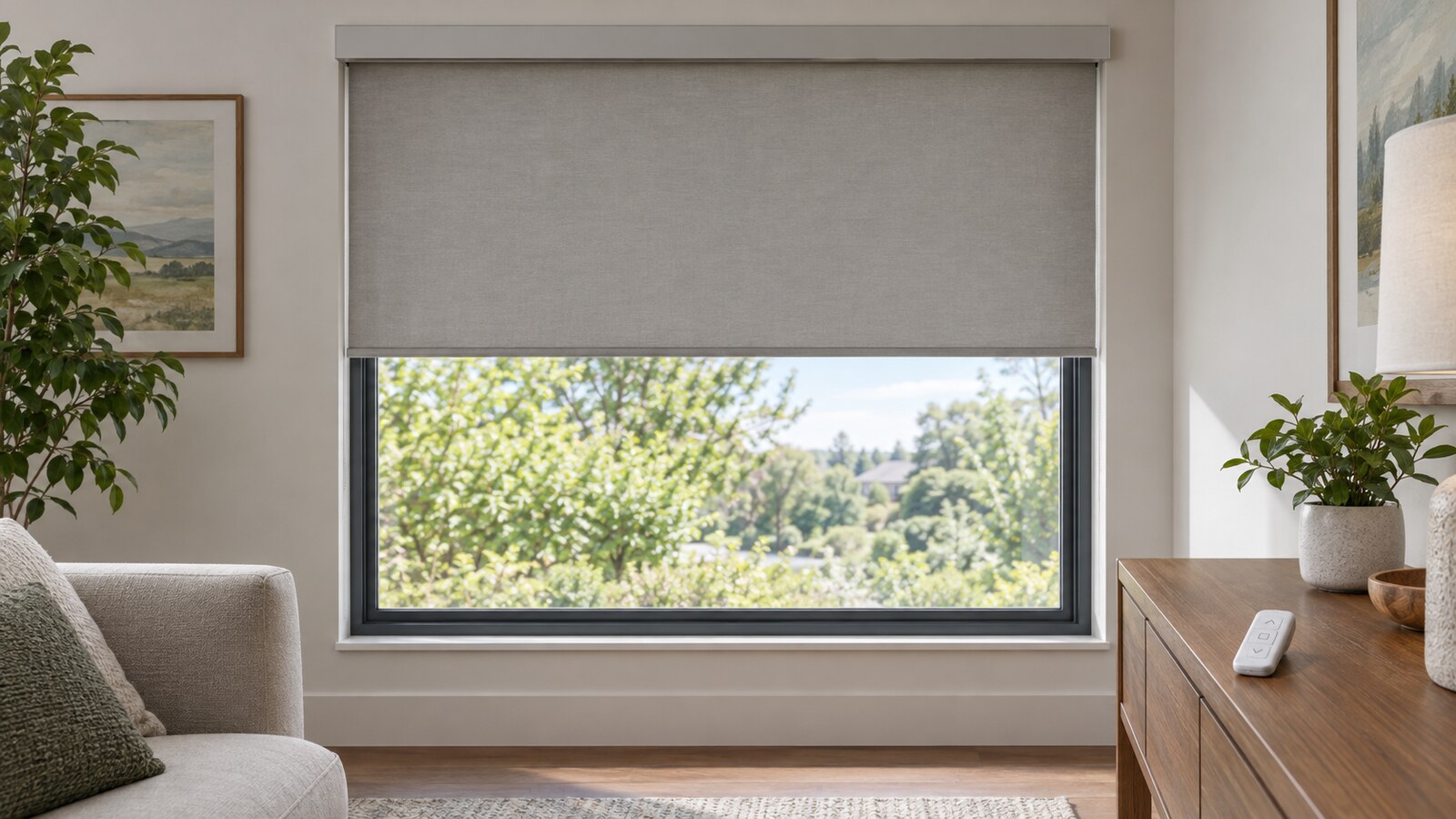
Give the view a comfortable setting
A picture window can be the best feature in a room until sunlight makes the sofa uncomfortable or washes out the television. The goal is not necessarily to cover that glass with the darkest fabric available. It is to decide when the view matters most, where glare causes trouble, and how much control the room needs after sunset.
Solar-screen roller shades can reduce glare and solar heat gain while preserving some outward visibility, although their protection varies and may be lower than that of more opaque coverings, according to the Pacific Northwest National Laboratory window-attachment guide. Treat view preservation as a tradeoff to evaluate, not a promise that every screen will make every exposure comfortable.
For a World Wide Shades project, start with the room’s daily routine rather than a favorite fabric color. Explore picture-window options in the shade builder, then use the considerations below to decide which configuration deserves a closer look.
Identify the glare you actually need to stop
Before selecting fabric, observe the window from the seats people use. Note whether the problem is a direct sunbeam, reflections on a screen, or a bright window that dominates an otherwise dim room.
These observations lead to different design priorities. A reading chair may need protection only during a short afternoon interval, while a television opposite the glass may call for a less transparent covering whenever the screen is in use.
Avoid assuming that every large window needs the same treatment. PNNL explains that window-attachment goals can differ by orientation and location, including glare reduction, daylight, views, and seasonal heat management (PNNL guidance).
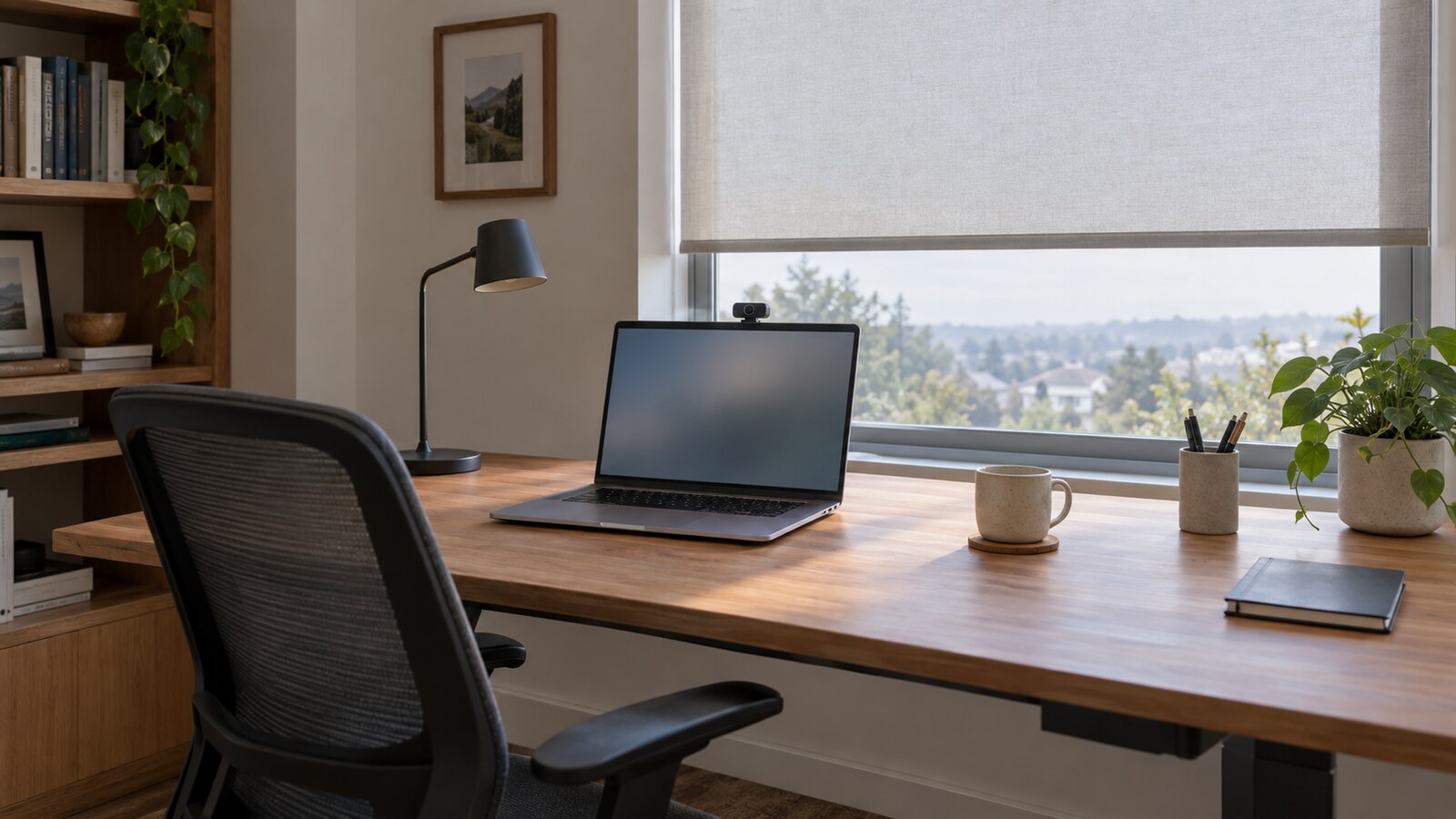
For a room that doubles as a workspace, pair this discussion with roller shades for home-office video calls. For exposure-specific planning, see the guide to shades for south-facing windows.
Choose fabric by performance, not openness alone
Start by deciding whether seeing through the lowered shade is essential. Manufacturer guidance distinguishes view-preserving open fabrics from blockout materials intended for stronger nighttime privacy (Mermet technical guidance).
If the window frames a landscape, compare solar screens first. If the room needs a soft, luminous backdrop rather than a recognizable outdoor scene, include light-filtering options; if evening privacy or darkness is central, include an opaque layer in the discussion.
Our light-filtering shades guide can help frame that comparison. Ask World Wide Shades to identify the actual privacy and light-control classification of the fabric under consideration, rather than relying on a photograph or a broad collection name.
Openness factor describes the relative area of openings in a fabric, while visible transmission also includes light passing through or being diffused by the material (Mermet optical definitions). That distinction matters because matching openness labels do not establish matching visual performance (Mermet optical definitions).
There is no universal best openness factor for a picture window: Mermet advises choosing glare-control fabrics in relation to geographic location and building layout, using both visible transmission and openness (Mermet glare-control guidance). Treat a percentage as one specification to compare, not an automatic recommendation.
As an illustrative comparison, place a 1% and a 5% screen sample against the same glass during the problem period. Those numbers identify hypothetical comparison candidates, not guaranteed glare reductions, UV-blocking percentages, or a statement of World Wide Shades availability.
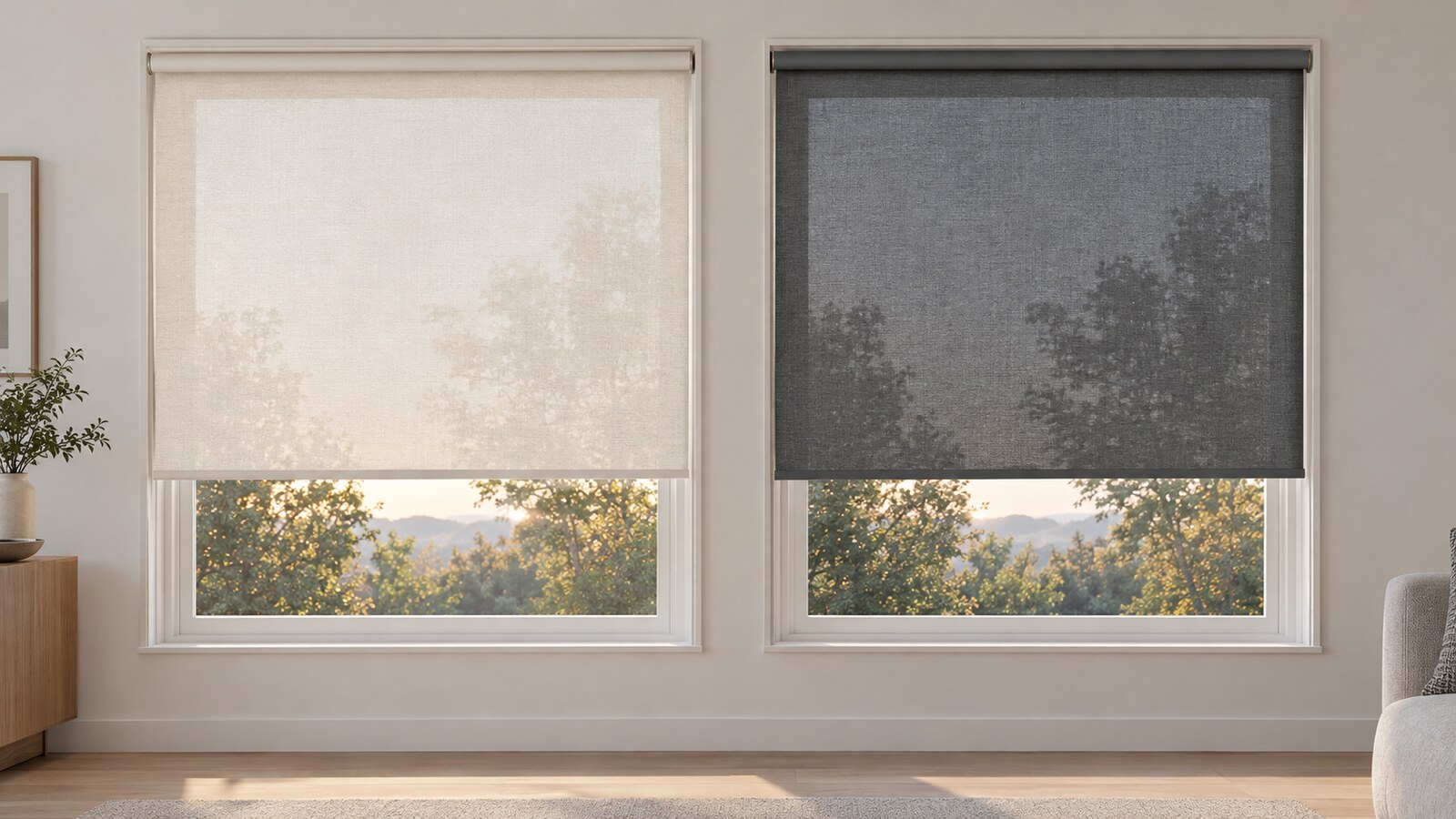
Dark fabrics generally provide clearer outward transparency and stronger glare control, while lighter fabrics diffuse more natural light, according to Mermet’s visual-comfort guidance. This is why a pale screen should not be selected solely because it matches a wall, nor a dark screen solely because it looks transparent in a showroom.
World Wide Shades recommends making the selection conversation specific: describe the view, the screen location, and the time glare becomes disruptive. Order fabric swatches for an in-room comparison, using the sample-order guide to organize the decision.
Keep heat control separate from glare control
A fabric that makes the room easier to look across is not automatically the strongest thermal solution. PNNL explains that comparable exterior attachments generally reduce solar heat gain more effectively than interior attachments because they intercept sunlight before it passes through the glazing (PNNL guidance).
Evaluate the glass and shade as a system, not just the fabric swatch. PNNL recommends case-specific assessment and discusses ratings that include solar heat gain coefficient and visual transmittance, rather than treating one attachment type as universally best (PNNL rating guidance).
For your project, provide the window manufacturer and glazing information when available, including any coatings or films. Request confirmation of compatibility and installation clearances before approving a close-fitting interior treatment, especially where glass documentation places restrictions on attachments.
Read roller-shade fabric color and heat alongside energy-efficient window shades. Keep UV protection as a separate specification too; the UV-protection guide provides another question to bring to the fabric review.
Decide between one broad shade and divided coverage
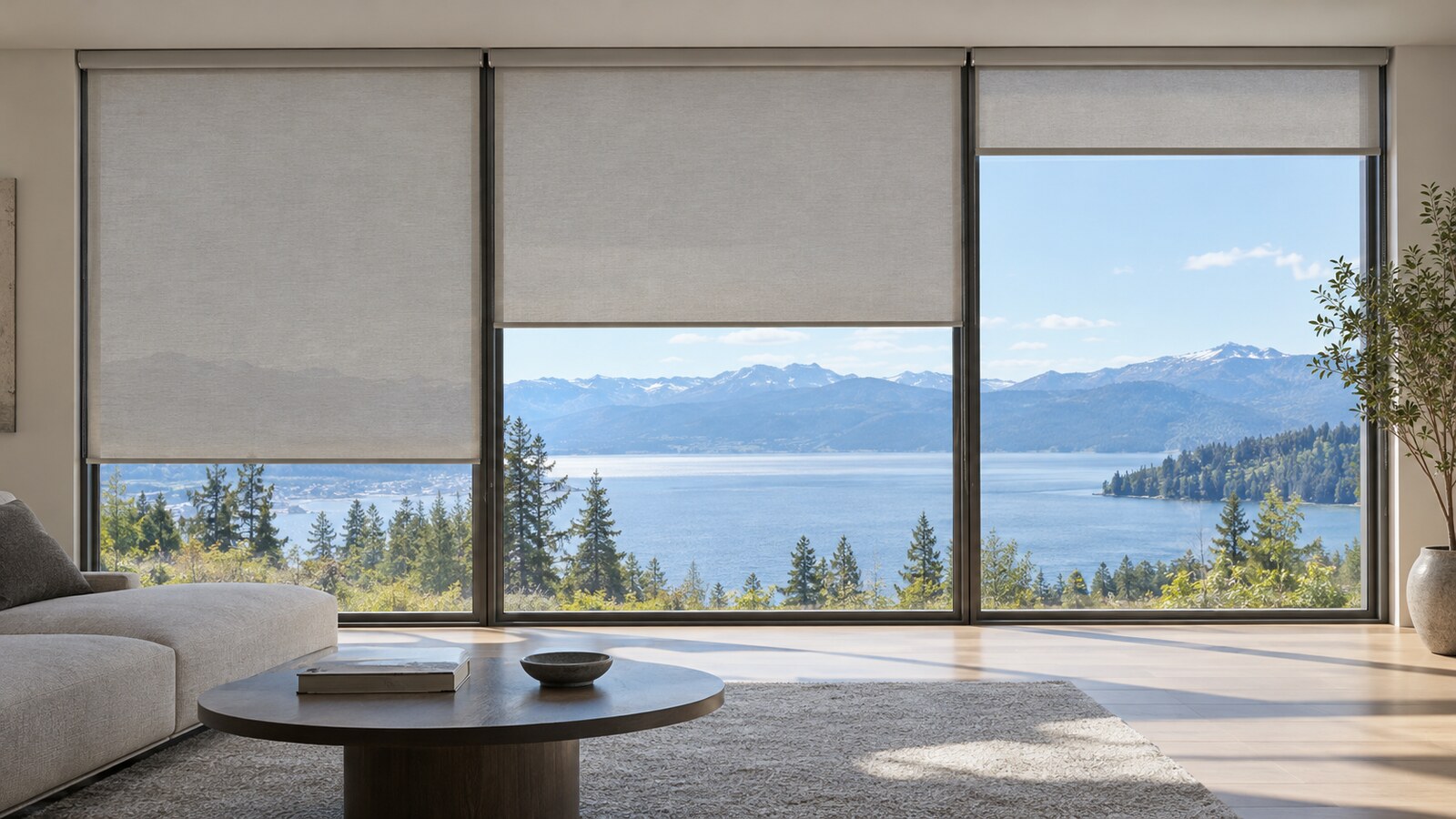
A single panel is an appealing design brief for uninterrupted glass. Ask for confirmation that the exact fabric, finished dimensions, tube, brackets, and operating system can deliver that appearance before treating it as the final plan.
Do not use a universal maximum width from a general shopping guide. Request the approved size range for the actual configuration, including its drop, fabric orientation, and control choice; a width figure without those details is not enough for an order.
Also request a clear answer about seams. Mermet notes that wider fabrics can limit intermediate joins, which means roll width and fabrication deserve attention when an uninterrupted appearance is important (Mermet fabric guidance).
Consider separate panels when different parts of the window serve different activities. For example, the design brief might call for shading the television side while leaving the garden-facing side open; this is an illustrative use case, not a claim about a particular system’s dimensions.
Ask World Wide Shades to show proposed panel divisions against the window’s existing vertical lines. Request the expected center gaps, bracket positions, bottom-bar alignment, and whether coordinated operation is available for the chosen controls.
For uninterrupted glass, decide whether the added division is acceptable before comparing prices. Contact World Wide Shades or call (844) 674-2716 to discuss the proposed layout, with the single-panel and divided-panel alternatives clearly identified.
Resolve reveals, handles, and light gaps before ordering
Treat mounting as part of the design, not an installation detail to settle afterward. Request a drawing showing the shade’s position within or outside the reveal, the fabric coverage, and the space occupied by brackets and the rolled fabric.
Although the picture window itself may be fixed, inspect adjacent opening windows and doors. Flag handles, locks, projecting trim, vents, and anything else that the fabric or bottom bar might encounter.
Do not equate an opaque fabric with a completely dark installation. Ask the supplier to distinguish fabric light transmission from light that may enter around the sides, top, bottom, or panel divisions, and to specify any available gap-management components.
For a dual-layer proposal, request confirmation that both rollers fit the intended mounting position without obstructing neighboring hardware. If concealing the roll is important, review roller-shade valance options before finalizing the look.
Match the motor and power plan to the finished shade
For motorization, request approval based on the complete shade rather than width alone. The specification review should address fabric weight, drop, tube choice, bottom-bar weight, required torque, and the manufacturer’s permitted operating limits.
Avoid assuming that every battery system suits every large opening. PNNL notes that hardwired systems eliminate batteries and are typically better able to power controls for larger, heavier shading systems, while also recognizing battery- and solar-powered approaches (PNNL automation guidance).
Put charging access and servicing into the decision. A concealed installation should still have an agreed way to reach the power source, controls, and components that may need attention.
The motorized-shade power-outage plan covers another useful planning conversation. Do not assume a motorized shade includes a manual override, offline schedule, or voice-assistant compatibility unless the selected system’s documentation confirms it.
For World Wide Shades, specify the desired operation first: local control, grouped movement, scheduling, or smart-home integration. Build a configuration to review with those requirements in mind, rather than choosing a motor solely from its feature list.
Test the room before making the final fabric decision
Compare samples where the shade will hang and from the normal viewing distance. Include the bright period that causes complaints, then repeat the review after sunset if privacy matters.
A small swatch is a comparison aid, not a full-window mockup. Ask whether a larger sample or an installed example of the proposed fabric is available when the decision hinges on subtle differences in brightness or view.
Do not rely on an open solar fabric for guaranteed nighttime privacy. Mermet recommends blockout fabric when protection from outside views is needed in illuminated premises at night (Mermet privacy guidance).
Finally, describe the intended daily routine before setting schedules. PNNL supports adjusting coverings to changing conditions, including opening them for useful winter sunshine and closing them when solar heat gain is unwanted (PNNL operating guidance).
Frequently asked questions
There is no universal answer because glare control depends on visible transmission, openness, location, and building layout (Mermet guidance). Compare actual samples at the problem time instead of choosing by percentage alone.
Make this a configuration-specific question for the supplier. Request written confirmation of the approved width and drop, fabric construction, tube, supports, and operating system before ordering a single oversized panel.
Solar screens can preserve outward views while reducing glare, but the result involves a tradeoff in shade and protection (PNNL guidance). Review the exact color and weave against your own glass rather than expecting an unchanged view.
Separate the fabric specification from the installation proposal. Ask how perimeter gaps and any center divisions will be addressed, and obtain a clear description of the finished system’s limitations.
Base the choice on access, preferred operation, and the approved shade configuration. If motorization is selected, confirm power access and servicing arrangements rather than assuming a rechargeable system is the simplest option.
Bring the whole window into the decision
The right proposal should connect your glare problem with a specific fabric, layout, mounting position, and control system. It should also explain the compromises plainly, including nighttime privacy, visible seams, light gaps, and any limits on a large panel.
Contact World Wide Shades or call (844) 674-2716 to review your picture-window project. Bring your priorities and the proposed specifications together before approving the final order.