Start With the Window, Not Just the Color
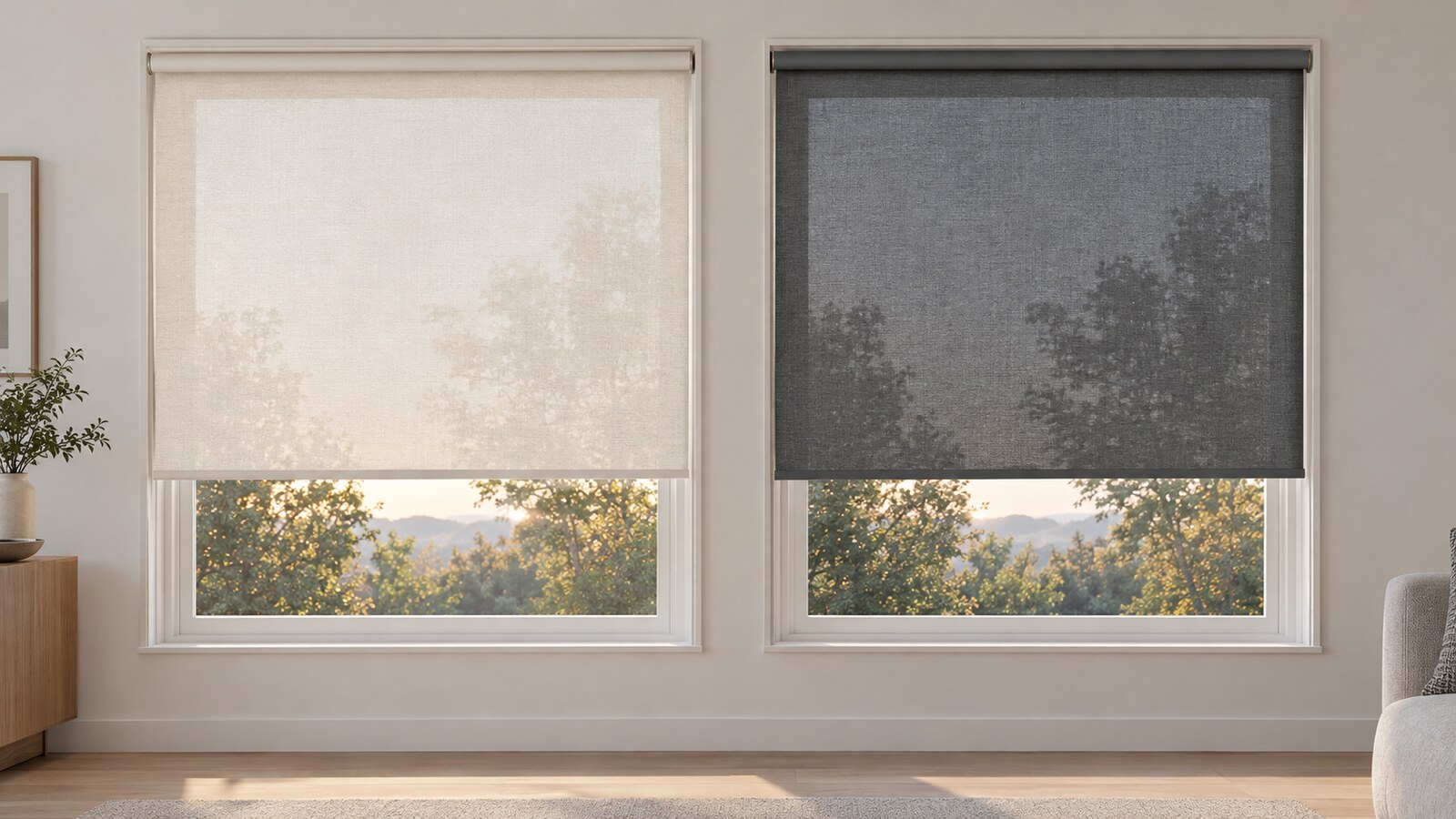
A white roller shade and a charcoal roller shade can create very different experiences at the same sunny window. In comparable solar-screen fabrics, lighter colors generally reflect more solar radiation, while darker colors usually offer better glare control and clearer outward views, according to Lutron’s guide to window shade types.
That does not make white the automatic winner or charcoal a mistake. The useful question is whether your priority is reducing unwanted solar gain, softening a bright view, preserving daylight, or balancing all three. At World Wide Shades, we recommend separating those goals before narrowing the color palette.
Start with our roller shade fabric guide if you are still deciding between solar screen, light-filtering, and blackout materials. Then consider color within the fabric category that fits the room.
Ready to compare actual materials? Order World Wide Shades swatches and select a light, medium, and dark option for a side-by-side comparison.
What Happens When Sunlight Meets Shade Fabric?
Solar radiation reaching a fabric can be transmitted through it, reflected from it, or absorbed by it; manufacturers describe these properties as solar transmittance, solar reflectance, and solar absorptance, respectively (Lutron solar-performance overview). Those three shares account for the incoming solar energy, but they describe the fabric rather than a guaranteed whole-room outcome (Lutron solar-performance overview).
A more reflective window-facing surface sends more solar radiation back toward the glazing, while an absorbing surface converts more of that radiation into heat at the shade (Hunter Douglas architectural fabric guide). Dark interior fabrics can therefore become warmer even while making the room feel visually calmer through reduced glare (Lutron’s window shade guide).
The distinction matters when you sit beside a sunny window. A darker appearance is not proof that a material rejects more solar energy, just as a brighter appearance is not a complete thermal specification.
Imagine 100 units of solar energy reaching a hypothetical fabric: 50 are reflected, 30 absorbed, and 20 transmitted. Those invented numbers illustrate the accounting relationship only; they do not describe a World Wide Shades product, a window assembly, or a predicted cooling result.
In particular, “50 units reflected” does not mean “50% lower cooling bills.” AERC evaluates attachments with standardized windows and conditions, underscoring why fabric-only numbers and installed-system performance are different comparisons (AERC physical test methods).
Light and Dark Fabrics Solve Different Problems
For an interior shade with otherwise comparable construction, a lighter window-facing surface generally favors solar reflection, while a darker room-facing surface favors glare reduction and view-through (Lutron’s window shade guide). Think of those as tendencies to investigate, not performance guarantees attached to a color name.
White, ivory, and pale neutral options are sensible starting points when unwanted sunshine is the main complaint. Light-colored screen fabrics typically reflect more solar radiation and preserve a brighter interior, although the fabric itself can appear luminous and make the view through it less distinct (Hunter Douglas solar shade guide).
That trade-off may suit a dining nook better than a desk facing the glass. World Wide Shades recommends writing down whether you want a brighter room, a less distracting window, or both before comparing pale swatches.
Charcoal, bronze, and darker gray solar fabrics can be attractive choices when the outdoor view is important. At comparable openness, darker fabrics generally provide stronger glare control and better outward visibility, but absorb more solar energy than lighter alternatives (Lutron’s window shade guide).
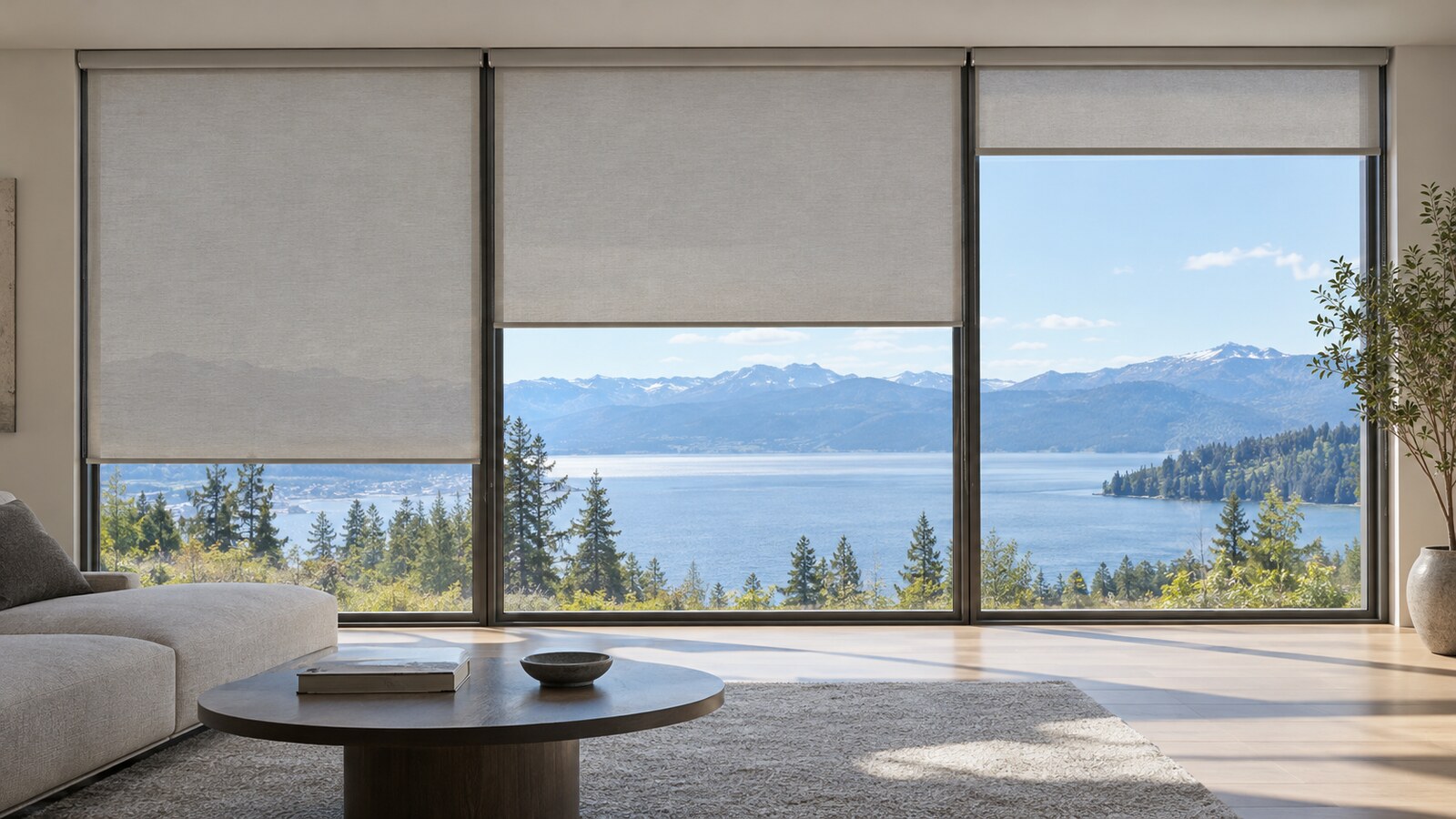
A dark screen should therefore be evaluated for both visual and thermal performance rather than dismissed or selected by appearance alone. Our guide to roller shades for picture windows offers another way to frame the view-versus-control decision.
Need help prioritizing the trade-offs? Contact World Wide Shades or call (844) 674-2716 to discuss your window exposure and preferred fabric appearance.
The Window-Facing Surface May Matter More Than the Room Color
The color you see from the sofa is not always the color facing the glass. Dual-sided fabrics can pair a lighter exterior-facing surface with a darker interior-facing surface to combine solar reflection with glare control and view-through (Lutron’s window shade guide).
Specialized reflective treatments also mean that visible darkness alone cannot reliably rank every fabric’s thermal behavior. Draper describes both duplex fabrics and treatments designed to give darker colors higher reflectance, making the actual material specification essential (Draper fabric-selection white paper).
For any candidate fabric, ask which face is intended to face the glass and whether the published values apply to that exact color and construction. World Wide Shades recommends checking availability rather than assuming that every decorative color has a reflective backing or a two-tone equivalent.
Use our window shade color guide for coordinating the visible surface with your trim and furnishings. Treat that decorating decision as a companion to, not a substitute for, the performance review.
Openness, Visible Light, and Heat Are Not Interchangeable
Openness describes the spaces between yarns in a woven solar-screen fabric; a lower openness generally admits less direct light, while a higher openness generally supports a clearer view (Draper fabric-selection white paper). Color still changes the experience within an openness level, so two screens labeled 5% should not be assumed to deliver identical glare or heat control (Hunter Douglas solar shade guide).
Visible transmittance concerns daylight, whereas solar heat gain coefficient concerns solar heat entering through a rated system; AERC identifies them as separate metrics (AERC residential label guide). Neither an openness percentage nor a UV-blocking claim should be substituted for a solar heat gain rating.
Likewise, blackout describes a light-control objective, not a standalone energy-efficiency rating. To evaluate thermal performance, look for applicable solar and system-level information rather than inferring it from how dark the fabric makes the room.
For related decisions, read our light-filtering shade guide and UV protection guide. Keep your daylight, furniture-protection, privacy, and heat priorities separate while comparing the options.
Explore configurations in the World Wide Shades builder once you have a fabric category and a short color list in mind.
Why the Same Shade Can Feel Different in Two Rooms
A shade is part of a window system, not an isolated color sample. DOE identifies glazing coatings, solar heat gain coefficient, climate, and shade use as relevant to controlling unwanted solar gain (DOE residential window guidance).
Low-emissivity coatings can change how much solar heat a window admits, and coatings are available with different solar-gain characteristics (DOE residential window guidance). Consequently, performance information based on one glazing configuration should not be treated as an exact prediction for another.
Exposure also changes the design problem: DOE’s consumer guidance recommends different solar-gain strategies according to orientation and climate (DOE consumer window guide). For a particularly sunny room, our guide to shades for south-facing windows can help you organize the buying decision.
Season matters as well. DOE recommends closing coverings against summer sun but allowing useful daytime sun through appropriate windows during colder weather, rather than treating every hour of solar gain as undesirable (DOE Energy Saver guide).
AERC’s technical procedures specify baseline windows, attachment mounting, and operating positions, demonstrating why meaningful ratings need defined installation conditions (AERC physical test methods). Ask what a published result actually represents before comparing it with another product.
Lowering a suitable shade before direct sun arrives is also part of the strategy; DOE specifically recommends closing summer coverings on windows receiving direct sunlight (DOE Energy Saver guide). If you prefer motorized operation, consider everyday scheduling alongside the contingencies discussed in our motorized shade power-outage plan.
How to Compare Colors Without Guessing
Begin by naming the problem in ordinary language: “the window is painfully bright,” “the chair feels hot,” or “I want to see the garden.” Those descriptions make better starting points than choosing “cooling white” or “heat-blocking black” from a thumbnail.
For World Wide Shades shoppers, a useful comparison pairs physical samples with available technical information. Review the exact fabric name, color, window-facing finish, openness where applicable, and any documented solar or installed-system ratings before making the final selection.
Evaluate samples at the window during the hours you actually use the room. Use that exercise for appearance and visual comfort, not as a substitute for laboratory thermal testing or a prediction of temperature reduction.
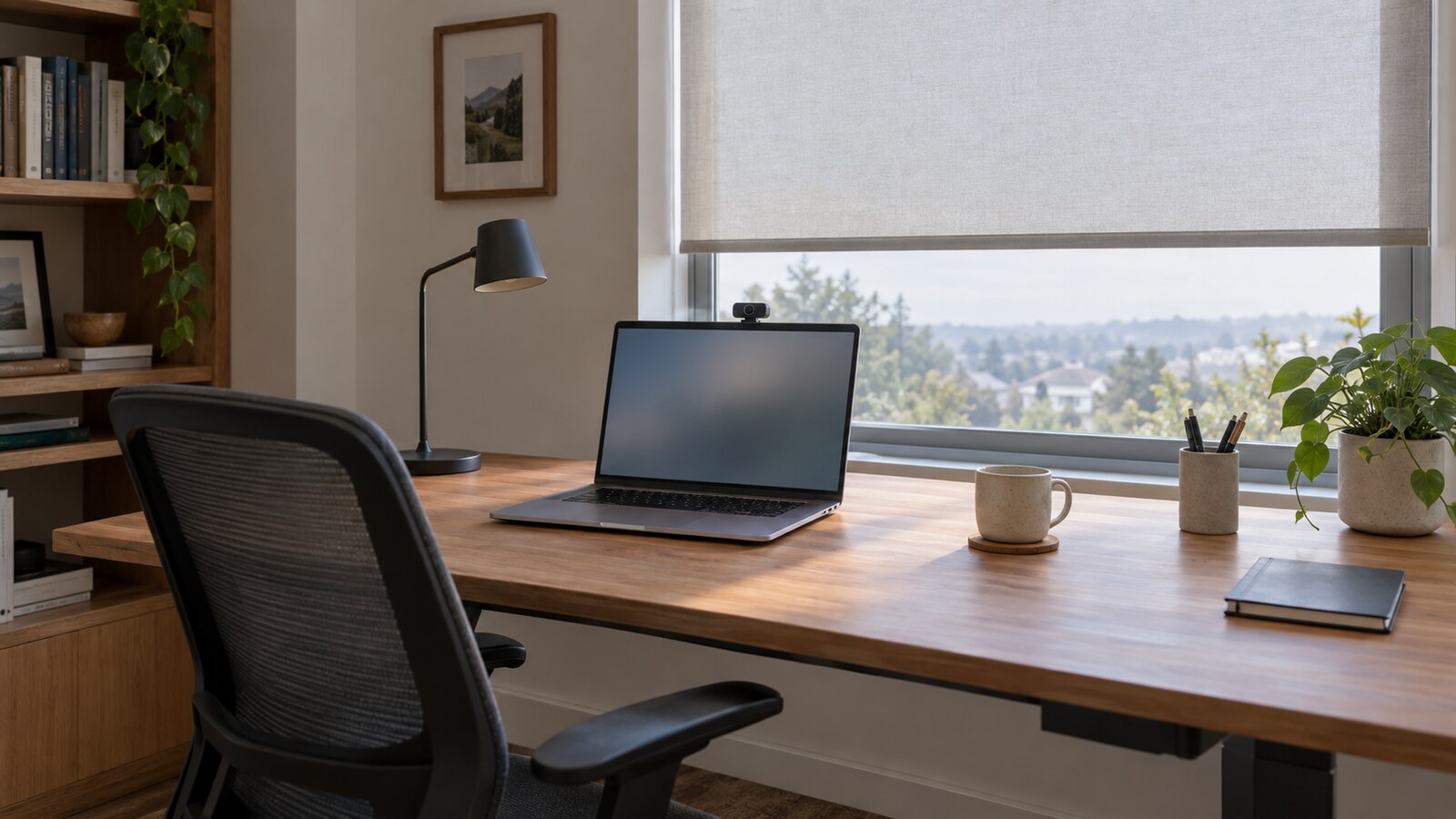
For a desk or video-call setup, include screen reflections and the appearance of the window behind you in that review. Our home-office video-call shade guide and sample-order guide can help structure those choices.
Order comparison swatches before committing to a color, especially if the same fabric will cover several prominent windows. Keep your favorite décor match and your strongest performance candidate in the comparison until you have evaluated both.
Frequently Asked Questions
No. Light-colored fabrics generally reflect more solar radiation than comparable dark fabrics, but glazing, coatings, fabric construction, and installation conditions prevent color alone from guaranteeing the result (Lutron’s window shade guide; AERC physical test methods).
Yes, particularly when glare reduction and outward views are priorities, because darker screen fabrics generally perform well on those visual tasks (Hunter Douglas solar shade guide). Compare their solar properties separately rather than assuming visual comfort proves superior heat rejection.
It can balance competing goals, since dual-sided fabrics combine a reflective window-facing surface with a darker surface intended for glare control and visibility (Lutron’s window shade guide). Ask about the specific material rather than assuming that any light backing produces the same result.
No: openness describes the weave, while solar heat gain coefficient measures a different performance characteristic (Draper fabric-selection white paper; AERC residential label guide). Request the applicable solar data instead of interpreting the openness label as a heat-blocking percentage.
There is no defensible universal savings figure based solely on changing shade color, and AERC explicitly does not guarantee consumer energy savings from its standardized ratings (AERC rating disclaimer). Use our energy-efficient shade guide to broaden the comparison beyond surface tone.
Choose the Balance You Will Enjoy Every Day
The best buying decision starts with a clear priority and ends with the actual fabric, not a rule about white versus black. Keep thermal performance, glare, view, daylight, and decorating preferences visible in the decision so none gets mistaken for another.
World Wide Shades can help you organize that comparison around the room you want to create. Contact World Wide Shades or call (844) 674-2716 to discuss your shortlist before ordering.