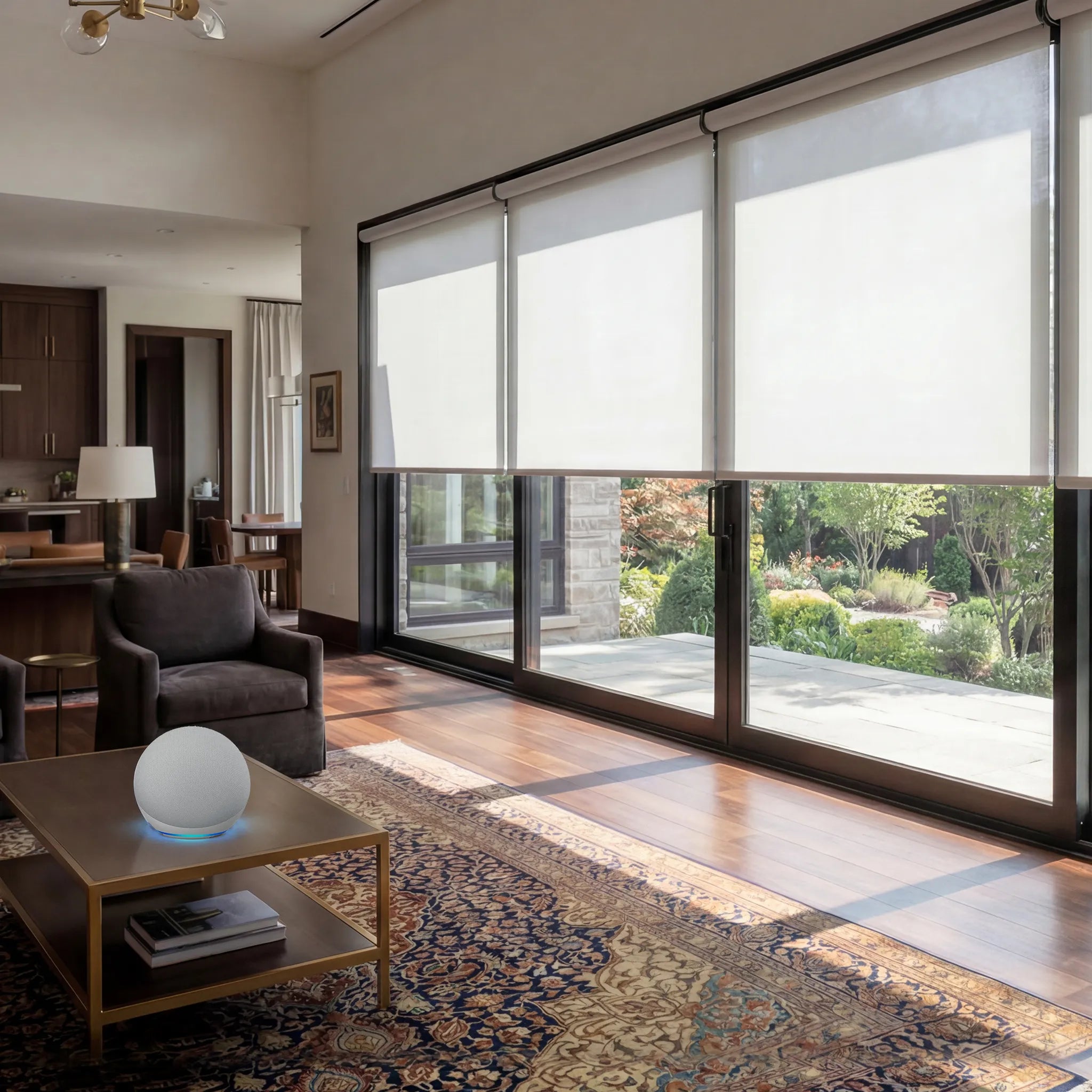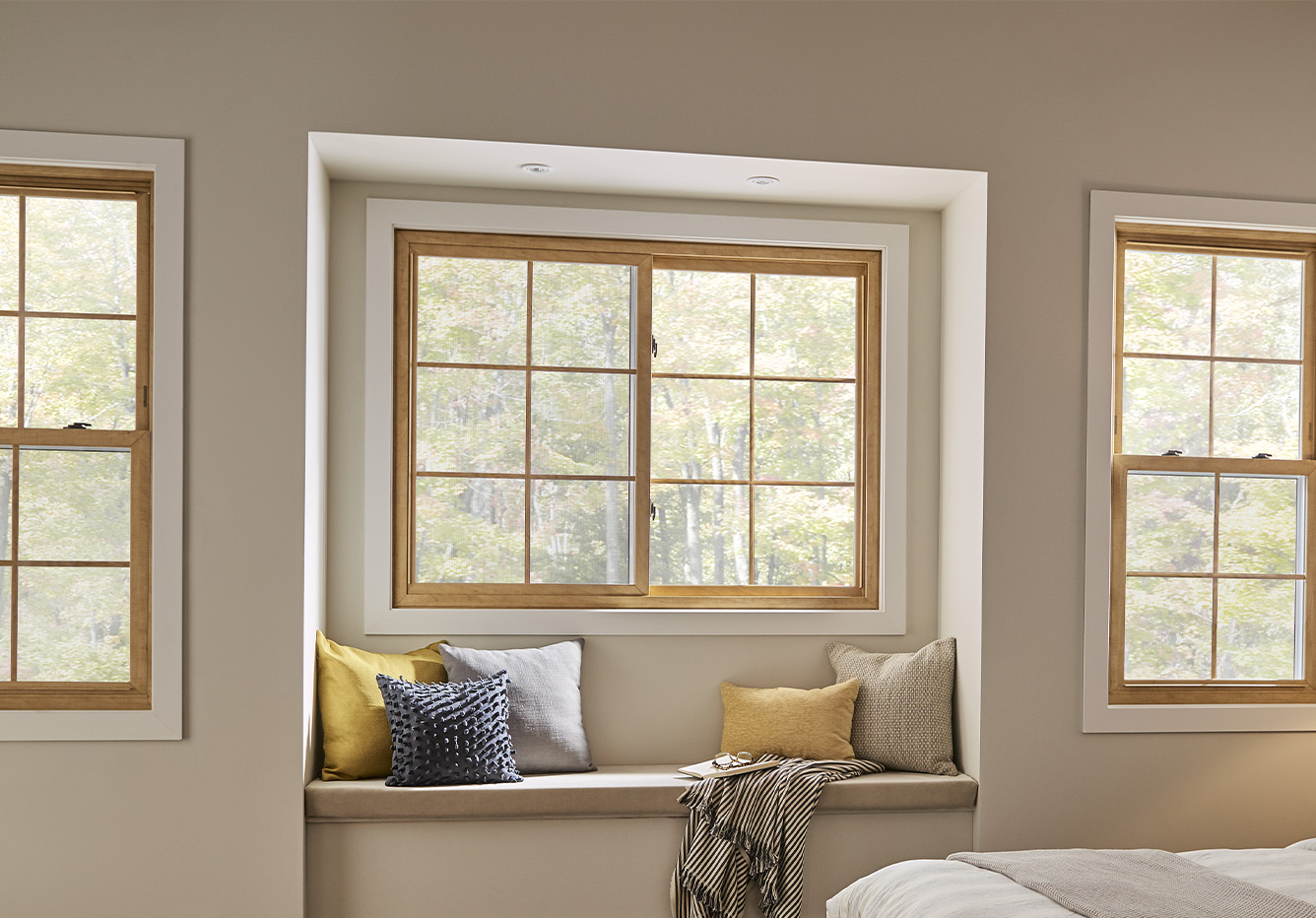
For most horizontal sliding windows, a custom roller shade is the cleanest fit because it raises vertically and leaves the sash free to move sideways. Choose one shade for a unified opening, or two independently controlled shades when you want to uncover only the operable sash. Start a window-by-window design in the World Wide Shades builder after deciding how the window should work.
Last updated: 2026-11-24
Compare the main options
| Configuration | Best use | Main trade-off |
|---|---|---|
| One roller shade | A standard slider where the whole window can be covered together | Raise the full shade to open the sash or uncover the view |
| Two independent roller shades | A wide opening where one side should stay covered while the other opens | Two shade units and controls must align at the meeting rail |
| Linked roller shades | A wide, multi-part opening where one control should move every shade together | The linked shades move as a set, so they do not provide independent coverage |
| Vertical blinds or sliding panels | A low, very wide opening or a patio door where the treatment should stack sideways | The stack occupies side space and changes the look more than a compact roller shade |
| Cellular shades | A room where insulating structure matters more than a slim roller-shade profile | The folded stack and operating hardware are more visible than a roller tube |
The key distinction is that a horizontal slider is a window sash moving on a track, while a sliding glass door is a passage people use. A vertically rising shade generally suits the window; side-stacking panels may suit a frequently used door better. Canisteo Blinds’ guide to sliding-window treatments also describes roller shades as a simple option and split shades as a way to uncover one side at a time.
Decide whether the window needs one shade or two
A single custom roller shade is the straightforward choice when the window is usually either covered or uncovered. It creates one continuous fabric plane, avoids a center seam, and can be raised fully when you want an unobstructed view. This configuration is often the best visual match for a living room, bedroom, or kitchen where the two sashes are used together.
Two independent shades solve a different problem. If one sash opens more often than the other, a split at the meeting rail can let you raise only the shade over the moving side while leaving the fixed side covered. The alignment deserves attention: measure and photograph the meeting rail, latch, frame, and any screen so the split looks intentional rather than arbitrary.
Do not confuse independent shades with linked shades. World Wide Shades linked sets join two to five side-by-side shades so one chain or one motor raises and lowers the entire set together. Rollease Acmeda Easy-Link supports up to three shades across 17 feet; Multi-Link supports up to five across 30 feet. Linked sets are for standard rectangular shapes and cannot include side channels or a dual-shade configuration. If independent coverage is the priority, configure separate shades rather than a linked set.
For a wide slider, decide first whether separate control is worth a center division. Then compare the window’s proportions and fabric pattern: a visible seam can align neatly with the meeting rail, but a single panel gives the calmest uninterrupted view. Review linked roller shade options if synchronized movement is more important than operating one side independently.
Match fabric to the room’s light and privacy
Fabric should answer the room’s main job. A solar screen can soften glare while preserving some view-through; light-filtering material diffuses daylight and limits direct visibility; blackout fabric is the stronger choice when reducing incoming light is the priority. No fabric choice alone eliminates every edge gap, so consider the mounting surface and coverage as well as the opacity label.
For a living room with a landscape or garden view, compare openness factors and fabric colors before choosing a screen. A lighter-looking screen can preserve a brighter feel, while a denser weave may be preferable when glare is more disruptive. For a bedroom, blackout fabric can help darken the window, though the overall result still depends on the fit and the amount of light around the edges. The light-filtering shade guide and UV-protection shade guide explain those fabric decisions in more detail.
World Wide Shades offers more than 500 colors across 40-plus fabric families from Phifer, Mermet, Ferrari, Copaco, Senbesta, and Texstyle, including blackout and light-filtering choices. Each fabric listing shows the mill’s published openness factor and a genuine fabric photo; there is no swatch or sample program. Browse the World Wide Shades fabric library to compare those published details, and see the roller-shade fabric guide for a room-by-room selection framework.
In a kitchen or a family room, think beyond the name of the fabric. Consider whether the shade will be lowered during the day, how much view you want to retain, and whether the color should relate to nearby trim or upholstery. For a room that needs both daytime view-through and nighttime privacy, a dual roller arrangement may be relevant on a standard rectangular window; the dual roller shade page explains how two fabrics work on one bracket. A dual configuration is a different choice from splitting one window into two independently controlled shades.
Choose a control that fits daily use
Manual operation makes sense when the shade is easy to reach and used occasionally. Motorization is worth considering when the window is above furniture, part of a bank of windows, or opened and closed on a routine. It also removes the need to reach across a deep sill or to operate a shade from an awkward position.
World Wide Shades uses rechargeable battery motors with no wiring. Automate motors are the default; if you already own a Somfy remote, you can choose a Somfy motor paired to it. A remote is required, and the Push 5 remote can run up to five shades. For Automate motors only, the Automate Pulse 2 hub adds app control, voice control, and schedules. The motor does not include a charger, but any USB-C charger works, or you can add the Motor Charger.
For a single window, a remote may be enough. For several rooms, decide whether you want individual buttons, a room grouping, or app and voice control before ordering; a hub is not required simply to use a motorized shade. The smart-home motorized shade setup guide and motorized shades with Alexa or Google Home can help you compare the control path. Ask World Wide Shades about motor and remote compatibility or call (844) 674-2716 before you finalize a multi-window plan.
Confirm the mount, latch, and available depth
Inside mounting keeps the shade close to the glass, but the frame must have enough depth and the shade must clear the latch and sash hardware. World Wide Shades requires at least 1.5 inches of frame depth for an inside mount and recommends 2.5 inches for motorized shades. If the frame is shallower, plan an outside mount instead of assuming the cassette or brackets will fit.
For an inside mount, measure width at the top, middle, and bottom and use the narrowest measurement. Measure height at the left, center, and right and use the tallest measurement; enter the exact opening size because the factory makes the deductions. Do not subtract for clearance yourself. If you choose an outside mount, add 2 to 3 inches on each side and 3 inches above the frame, provided the surrounding wall has room.
Also check that the lowered shade does not collide with the latch or interfere with the sash track. A deep sill, projecting handle, screen, or unusually narrow frame can change which mounting position works. For a new build or renovation, coordinate the window treatment with trim depth before the finish details are closed; the custom shades for new construction guide can help structure that conversation.
If a measurement or mount detail is uncertain, World Wide Shades includes a free video fit check by Zoom or Google Meet with every order. Use the measuring guidance before entering dimensions, and call (844) 674-2716 or contact the World Wide Shades team to discuss the opening before ordering.
Know what custom ordering means
Every World Wide Shades shade is 100% custom-made by hand, with delivery in 2 to 4 weeks from order and free shipping in the United States. A custom size can be designed around a particular frame and fabric choice, but custom orders are not returnable. Manufacturing defects are remade free within 30 days, and motors have a one-year warranty; a mismeasured shade receives a one-time free recut, with the customer covering shipping.
That policy makes accurate dimensions and a final configuration review important. Check the fabric, side of the window, number of shades, control choice, and mount before completing the order. The free video fit check is a practical second look at the measurements and mounting plan, not a substitute for selecting the right configuration. For a project involving several windows, list each room and opening separately before building the order.
If the window is part of a larger room plan, compare how its fabric relates to nearby windows rather than selecting it in isolation. See how shades can support energy-conscious window planning, then build the exact window configuration with World Wide Shades to view live pricing without relying on an estimate for a different size or fabric.
FAQ: roller shades for horizontal sliding windows
For most rooms, a custom roller shade is a strong choice because it raises vertically and leaves the horizontal sash free to move. Choose one shade if the whole window can be covered together; choose two independent shades if you want to open one side while keeping the other covered. Fabric, frame depth, and latch clearance determine the final configuration.
Use one shade for an uninterrupted fabric panel when you are comfortable raising the full window covering. Use two independently controlled shades when the operable sash needs its own access. A linked set moves all connected shades together, so it does not provide the same independent coverage.
They serve different priorities. Roller shades lift vertically and create a clean, compact appearance; vertical blinds or sliding panels move sideways and stack to one side. Side-stacking styles are often considered for patio doors, where people walk through the opening. Blinds.com lists sliding panels among its recommendations for sliding glass doors, while also noting roller shades as a wall-mounted soft-fabric option (Blinds.com patio-door guide).
Yes, if the frame has sufficient depth and the lowered shade clears the latch and moving sash. World Wide Shades specifies a 1.5-inch minimum frame depth for inside mounting and recommends 2.5 inches for motorized shades. Measure the opening accurately and use an outside mount if the frame is too shallow.
Motorization is useful when the shade is hard to reach, part of a group, or used frequently. A reachable window used occasionally may be fine with a manual control. Decide whether a remote is enough or whether app, voice, and schedule features are important before choosing a hub.
World Wide Shades linked shades can join two to five side-by-side shades so one motor moves the whole set together. That is useful for synchronized movement, not for uncovering only one sash. If separate operation matters, choose separate independent shades rather than linking them.
Configure the window before you order
The most reliable choice starts with the sash: decide whether the window needs one continuous shade or independent coverage over each side. Then select the fabric for the room, verify depth and latch clearance, choose manual or motorized operation, and confirm the measurements. Configure the window in the World Wide Shades builder, browse fabric choices, or contact World Wide Shades for help reviewing the plan.