Narrow French door glass panels need window treatments that fit a small width without looking bulky or interfering with handles, locks, hinges, or the door swing. Roller shades for French door glass are a strong option because the fabric rolls into a compact headrail and can be sized to each panel. The key is to treat the door as moving hardware, not as a stationary window.
World Wide Shades builds custom shades around the actual glass, trim, and handle clearance. Begin with the World Wide Shades builder to compare fabrics and control styles, then contact World Wide Shades with a photo of the door hardware or call (844) 674-2716 for a quick fit review. A two-minute photo review can prevent a shade that rubs every time the door opens.
Why narrow door panels are a special application
A narrow sidelight may be 6–14 inches wide, while a full French door panel may be 18–30 inches wide. Those dimensions leave little room for a cassette, brackets, fabric roll, and handle. A 1/2-inch obstruction that would be minor on a wide window can consume a meaningful percentage of the usable panel.
Doors also move, vibrate, and get touched. A free-hanging shade can swing when the door closes, slap the glass, or drift away from the frame. The bottom bar needs a stable relationship to the door, and the fabric needs to roll straight even when the panel is opened dozens of times per week.
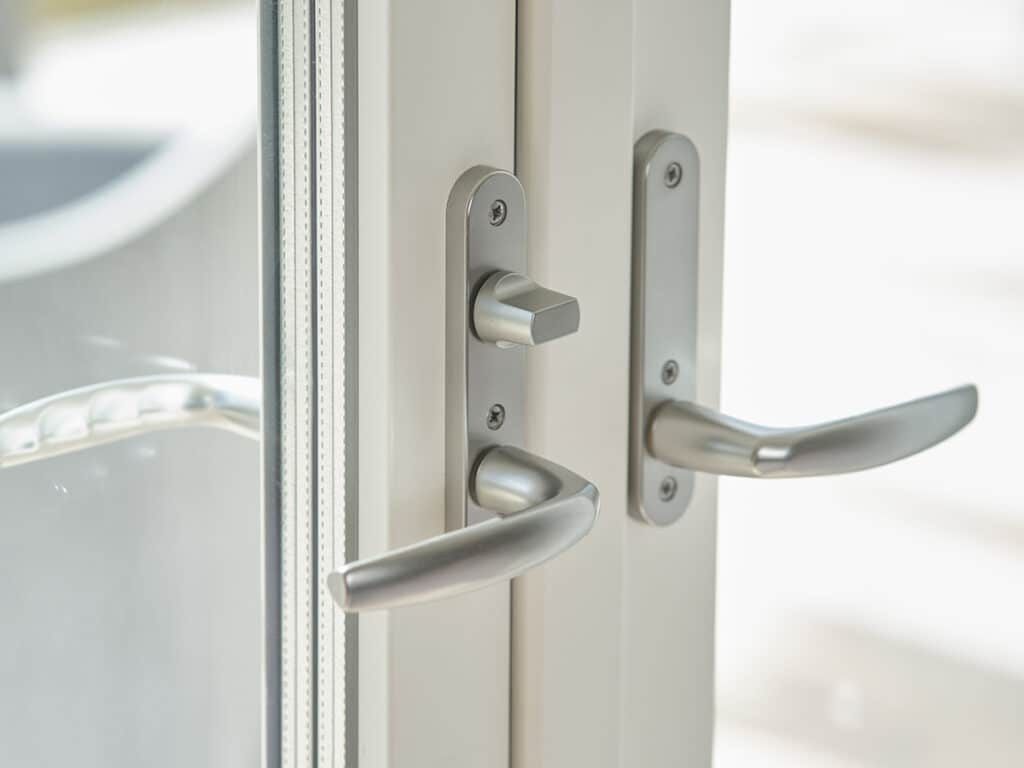
Before choosing color, photograph both sides of the door. Include the handle, deadbolt, multipoint lock, hinges, weatherstrip, and any raised molding. If the door opens into a hallway, note the clearance to the adjacent wall. Send those details to World Wide Shades for a mounting recommendation.
The best roller-shade configurations for narrow panels
An inside mount sits within the glazing recess and keeps the shade close to the door. It can look clean, but the recess must be deep and square enough for the hardware. Measure the width at the top, middle, and bottom, then use the smallest clear width when the provider asks for a deduction.
Check that the fabric roll does not project into the handle path. A shallow cassette may be preferable to an exposed tube when the door is used often. If the recess is only a few inches deep or has irregular stops, an outside mount may be more reliable.
An outside mount attaches to the face of the door or trim and can cover more of the glass. It is useful when the recess is too shallow for brackets or when improved privacy matters at night. The tradeoff is projection: the headrail must clear the handle, lock, and neighboring door.
Mark the proposed headrail location with painter's tape and open the door slowly. Check that the fabric, bottom bar, and brackets will not hit the jamb or adjacent panel. Ask World Wide Shades to review your handle clearance before you finalize an outside mount.
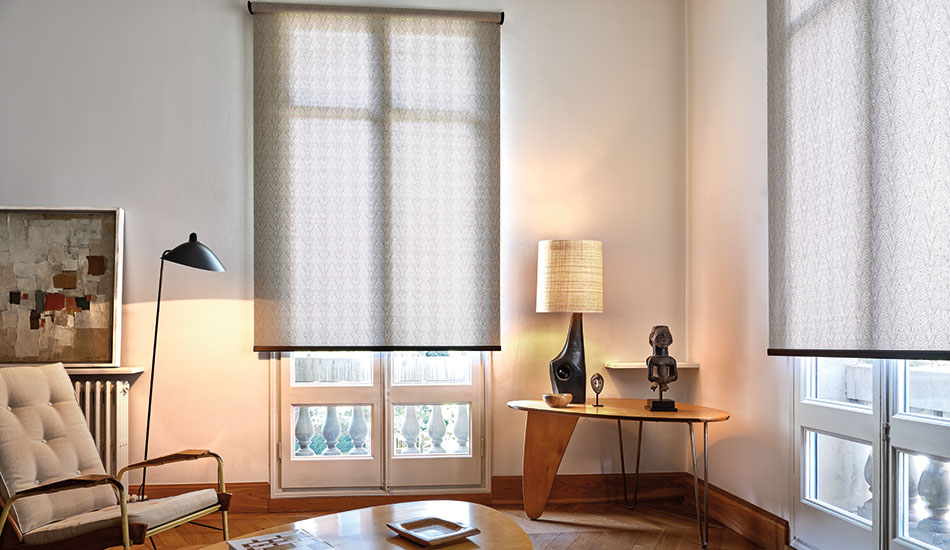
A solar or light-filtering roller can reduce daytime glare while preserving a view, but it will not provide privacy when the interior is brighter than outside. If a front entry or bedroom door needs both daytime comfort and nighttime privacy, consider two coordinated shades or a light-filtering shade paired with another treatment.
The blackout curtains vs. blackout shades guide explains the difference between fabric darkness and edge coverage. For a narrow panel, two separate layers may be too deep, so review the available cassette and mount depth before selecting dual operation.
Select fabric for privacy, glare, and door traffic
Solar screen fabrics are often labeled 1%, 3%, 5%, or 10% openness. A 1% fabric usually blocks more glare and preserves less view-through than a 5% fabric; a 10% screen keeps more brightness and view. For a south- or west-facing patio door, 1% or 3% is a practical starting point when screens or artwork are near the glass. Read UV protection window shades for more planning context.
Light-filtering fabrics soften daylight and can provide daytime privacy, but silhouettes may be visible at night when the room is lit. Room-darkening and blackout fabrics work better for a bedroom, nursery, or front door that faces a busy sidewalk. A blackout panel still needs careful side and bottom coverage because light can enter around the edges.
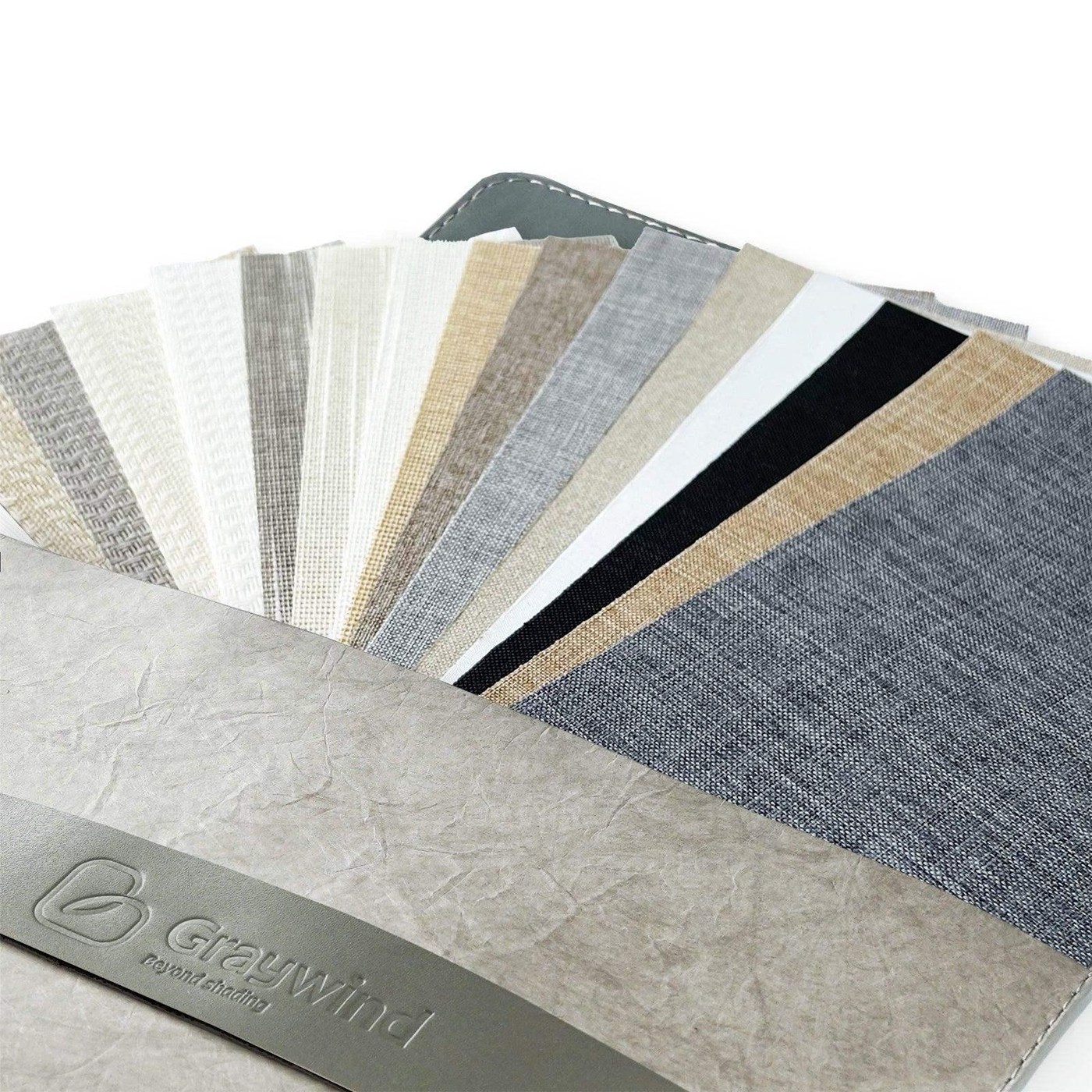
Doors are high-touch locations. Choose a fabric that can be dusted or gently spot-cleaned, and avoid a loose texture that catches on a latch. Neutral colors hide everyday dust, while a textured weave can disguise fingerprints better than a perfectly smooth dark surface. Order World Wide Shades swatches and view them beside the door's paint, metal, and flooring.
Measuring narrow French door glass correctly
Measure the finished mounting surface, not just the visible glass. For each panel, record:
- Clear width at the top, middle, and bottom.
- Clear height at the left, center, and right.
- Recess depth from the glass or stop to the nearest obstruction.
- Handle projection and the distance from the glass edge to the handle.
- Hinge, lock, trim, and weatherstrip positions.
Use the smallest width and height only when the ordering instructions call for a finished opening measurement. Never deduct twice. Custom providers vary: some ask for exact product dimensions, while others apply manufacturing deductions. World Wide Shades can confirm which convention applies to your configuration. Share your measurement notes with World Wide Shades before placing a multi-door order.
For paired French doors, measure each panel independently. Even doors installed together can differ by 1/8–1/4 inch after settling or replacement. Keep a label with each panel's room and hinge side. If the doors are new construction, wait until trim and flooring are finished; a final reveal can change by more than 1/4 inch.
Keep shades stable when the door moves
A bottom hold-down, side guide, or another door-rated stabilizer can keep the fabric aligned. The correct solution depends on whether the door swings inward, outward, or slides. Ask how the bottom bar releases when the shade needs to move and whether the stabilizer is compatible with your weatherstrip.
Cordless operation is a sensible choice for doors because cords can tangle with handles and are easy to bump. Motorization can help with multiple panels or a difficult reach, but confirm battery access and whether the motor adds headrail depth. The motorized shades with Alexa and Google Home guide covers smart-home considerations.
A French door used 10 times per day can create about 3,650 open-and-close cycles per year. That is why alignment matters more than a perfect showroom photo. A shade that tracks straight and clears the handle will look better for longer. Use the World Wide Shades builder to start a door-friendly configuration.
Style decisions that make narrow doors look intentional
Match the shade color to trim when you want the panels to recede. Match nearby window shades when you want a coordinated room. A low-contrast fabric can make several narrow panels read as one clean rhythm, while a high-contrast color emphasizes each door division.
For an older home, a slim cassette can keep the treatment quiet around detailed casing. In a contemporary space, a dark charcoal or warm gray screen can echo the door frame without adding visual weight. Compare the window shades color guide and roller shade valance options before selecting a headrail finish.
If the French doors open to a patio, coordinate the interior treatment with an exterior shade rather than using the same fabric blindly. The outdoor roller shades for patios guide explains why exterior exposure calls for different materials and hardware.
Cost and project timing
Custom roller shades for narrow door panels often cost about $250–$700 per panel for manual configurations. Motorized or dual-layer shades commonly run $600–$1,400 per panel, with premium cassettes, side guides, unusual hardware, and installation adding to the total. A full set of four panels can therefore range from roughly $1,000 to more than $5,000 depending on fabric and controls.
Fabrication and delivery commonly take 2–6 weeks after measurements and fabric are approved. Installation may take 1–3 hours for a small set, but a large group or motorized project can require more time. Request a project-specific estimate from World Wide Shades and order samples before production.
What usually goes wrong
The most common mistake is ordering by nominal door width instead of the exact glass and mounting area. Another is ignoring the handle projection until installation day. A fabric that looks perfect on a wide window can feel too busy on a 10-inch sidelight, and a headrail that clears the glass may still collide with the lock.
Avoid installing brackets into a hollow door without the specified fastener or reinforcement. Do not force a bottom bar past a hold-down. If the fabric telescopes, rubs, or waves after a few cycles, stop and check alignment rather than continuing to operate it.
World Wide Shades can help coordinate a set of doors and adjacent windows so every headrail lines up. Start a design in the World Wide Shades builder, get fabric swatches, or call (844) 674-2716 with the door dimensions.
Frequently asked questions
Yes. They have a compact profile, can be sized to each panel, and offer solar, light-filtering, room-darkening, or blackout fabrics. The shade still needs door-specific planning for handle clearance, movement, and bottom-bar stability.
Choose inside mount when the recess is deep, square, and clear of hardware. Choose outside mount when the recess is shallow or when extra edge coverage matters. Confirm the headrail projection against the handle and jamb before ordering.
Use a door-rated bottom hold-down, side guide, or stabilizer selected for the door's swing and weatherstrip. Keep the shade aligned and avoid operating it when the bottom bar is captured or rubbing.
Room-darkening or blackout fabric provides more privacy than an open solar screen, but edge gaps still matter. Light-filtering fabric may show silhouettes at night when the room is brighter than outside.
Manual panels commonly run about $250–$700 each, while motorized or dual-layer panels often run $600–$1,400 each before installation. Exact pricing depends on size, fabric, cassette, controls, and quantity.
A single shade can cover a combined opening only if the doors function as a stable unit and the headrail clears both handles. Separate shades usually work better because each panel moves independently and can be opened without covering the other door.