Why an oversized picture window needs engineering, not just a bigger shade
An oversized picture window can deliver a dramatic view and still make a room uncomfortable. Large panes magnify afternoon glare, solar heat, and privacy exposure. A shade that is simply scaled up may be heavy, sag-prone, difficult to lift, or impossible to fit through a narrow trim condition. The right plan combines fabric performance with a safe operating method.
Define the dimensions before choosing the product. “Oversized” commonly means a window wider than 96 inches, taller than 84 inches, or both, but the practical limit depends on fabric roll size and the manufacturer's system. A 120-inch-wide opening may need two or three coordinated shades rather than one enormous roll. World Wide Shades can help decide where seams, center gaps, and control zones should fall.
For a floor-to-ceiling installation, compare the design approach in shades for floor-to-ceiling windows. For a view-focused fabric decision, our best fabrics for roller shades guide explains openness, color, and texture.
Start with the window's job
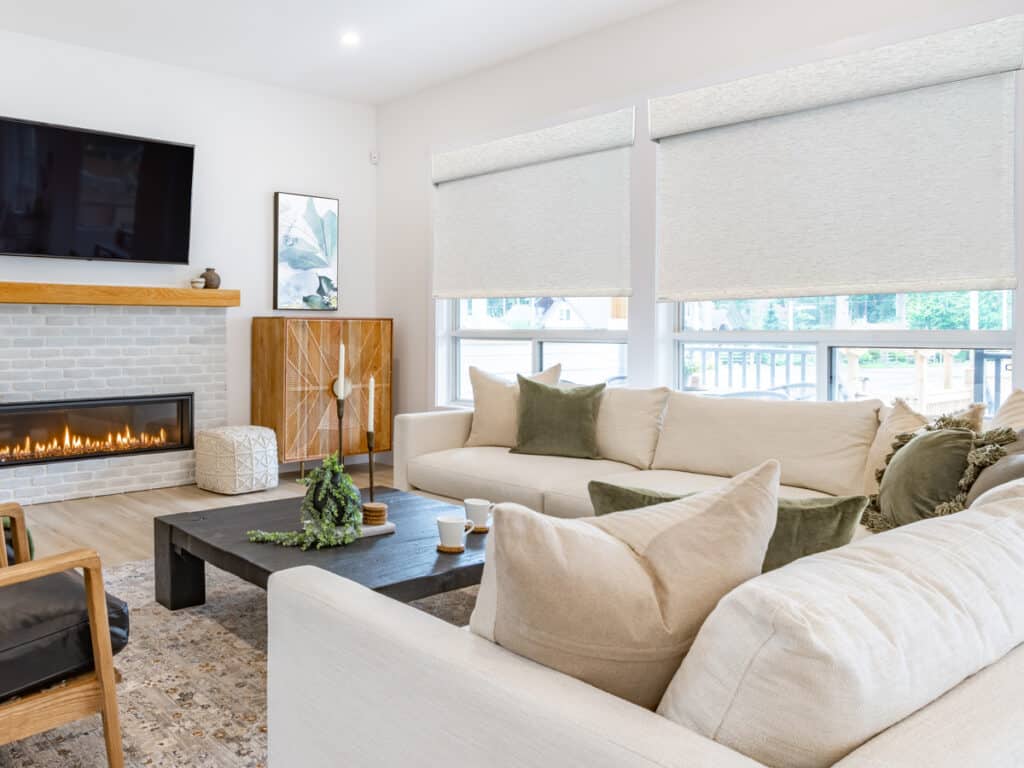
For a living room or home office, solar screen openness is the key specification. A 1% screen blocks more direct brightness than a 5% screen, while a 3% fabric often balances view and glare. If the window faces west, consider a low-opacity option or motorized position changes during the final two hours of daylight. Use a sample at the actual glass; showroom lighting hides reflections.
A south- or west-facing picture window can raise cooling demand and fade flooring, art, and upholstery. A solar fabric reduces direct radiation without making the room fully dark. A room-darkening back-coated fabric can add stronger light control, but it may eliminate the view when lowered. Pair the window treatment with low-emissivity glazing and sensible schedules rather than expecting a shade to solve every heat problem.
The U.S. Department of Energy notes that window attachments can influence solar heat gain and comfort; use its energy-saving window attachment guidance as a planning reference. Product performance still varies by glass, orientation, and installation.
Solar screens are not automatically private at night. When interior lights are brighter than outside, silhouettes can be visible through an open weave. If the picture window faces a street or close neighbor, choose room-darkening fabric, add drapery, or set an automatic sunset close. World Wide Shades can build privacy into the specification instead of treating it as an afterthought.
One wide shade or multiple shades?
If the opening has a curved profile instead, see round and circular window custom solutions.
Start a one-, two-, or three-shade plan in the World Wide Shades builder before selecting the split.
One shade creates the cleanest uninterrupted field, but it also concentrates weight and puts every function in one mechanism. Multiple shades can reduce roll diameter, make installation manageable, and let you shade only the sunny portion. The visual cost is a small gap between units, often 1/2 inch to 1 inch depending on the cassette and frame.
A two-on-one layout works well when a center mullion or furniture arrangement gives you a natural break. Three shades make sense for openings over 144 inches or for rooms with different seating zones. Keep the fabrics and headrails aligned, but allow independent control so one panel does not stay lowered unnecessarily.
For a large opening with several moving panels or sliders, read roller shades for large glass doors and sliders. If the goal is room-darkening, see blackout curtains versus blackout shades before choosing a single wide roll.
Motorization musts for a heavy shade
Contact World Wide Shades to confirm motor capacity and the power path for your opening.
Manual chain operation is rarely the best choice for a very wide or tall shade. A motor reduces pull force, keeps the fabric level, and makes a scheduled glare response possible. Select a motor rated for the shade's dimensions, fabric weight, and roll diameter; “motorized” is not a complete specification by itself.
Rechargeable battery motors are retrofit-friendly and avoid opening walls. Confirm battery location, expected charge interval, and ladder access. A shade used twice daily may need charging every few months, while a rarely moved shade may last longer; the actual interval depends on size, temperature, fabric, and motor. Wired low-voltage power offers a cleaner long-term solution for new construction but should be coordinated before drywall closes.
Set upper and lower limits so the fabric stops before it rubs the sill or overrolls the tube. Use a wall switch or remote for guests, an app for scenes, and optional voice integration for hands-free use. A useful schedule is to lower the west-facing shade 30 minutes before peak glare and raise it after sunset when privacy is no longer an issue. Read smart home motorized shades setup for hub and scene planning.
If children or pets use the room, use cordless controls and mount remotes out of reach. Follow the CPSC window covering safety recommendations for accessible cords and operating hardware. A motor is a safety improvement only when the rest of the installation is planned safely.
Measuring and installing a large picture-window shade
Compare solar and room-darkening swatches against the actual glass before finalizing.
Measure the width at the top, middle, and bottom, then record the smallest value for an inside mount. Measure height at both sides and the center. Note the exact depth behind the trim, the location of mullions, the distance to the ceiling, and whether the glass has a handle or vent. For an outside mount, map the flat wall above and beside the window so brackets have solid structure.
A large opening magnifies small errors. If the top line is out of level by 1/8 inch across 120 inches, the fabric can telescope and expose a wedge of light. Installers should use a long level or laser, anchor into appropriate structure, check cassette clearance, and run several full cycles before leaving. Do not hang a heavy system from decorative trim alone.
World Wide Shades recommends a photo review for wide openings, especially when the shade spans a corner, a transom, or a deep ceiling pocket. Start a custom configuration and include the measurements, or call (844) 674-2716 for help choosing a one-, two-, or three-shade layout.
What oversized picture windows cost
Pricing depends on square footage, fabric, tube size, cassette, motor, power, control bridge, and installation. A pair of 60-inch shades can cost more than one 120-inch shade in some collections because it uses extra hardware, but the two-shade design may be easier to service and more practical. Treat broad online “per-window” prices as a starting point, not a quote.
Ask for line items: fabric and shade, motor, battery or wiring, smart hub, delivery, and installation. Also ask about maximum width, warranty coverage, replacement battery access, and what happens if the fabric is discontinued. For a broader budget framework, see how much do custom roller shades cost.
Review the World Wide Shades swatches to compare solar screen and room-darkening textures. If you are coordinating a remodel, contact World Wide Shades so the power and pocket details are documented before the final paint and trim work. World Wide Shades can supply the shade and the decision framework; call (844) 674-2716 when the opening is unusually wide or tall.
FAQ: roller shades for oversized picture windows
The maximum depends on the collection, fabric roll width, tube diameter, weight, and motor. Many oversized openings are better served by two or three coordinated shades. Ask for a product-specific maximum rather than relying on a generic width number.
One shade has fewer visible seams, but two reduce weight and allow zone control. Two can also be easier to install and service. Use a center mullion or furniture axis to make the split look intentional.
Usually not completely. Open-weave solar fabrics can show silhouettes when interior lights are on. Choose room-darkening material, close the shade at dusk, or layer with drapery if nighttime privacy is important.
Motorization is strongly recommended for wide or tall shades because it reduces manual force and helps keep the roll level. It also supports glare schedules and control from a chair. Verify the motor's rated size and power plan.
A 1% to 3% solar screen often fits strong glare conditions, while 5% preserves more view and daylight. The best choice depends on orientation, glass, furnishings, and privacy. Compare samples at the window during peak sun.
DIY installation is risky when the system is heavy, high, or anchored near a large glass unit. A professional can verify structure, level the cassette, set motor limits, and prevent fabric telescoping. Use the manufacturer's mounting instructions if you proceed.