Why big sliders are a different shade problem
Large sliding glass doors look incredible, but they also create a unique window-treatment challenge: you’re covering a moving wall that people use every day.
Most homeowners run into the same three issues:
- Width and weight limits. A single, extra-wide roller shade gets heavy fast, which affects smooth operation and long-term sag.
- Frequent use. Sliders are opened multiple times per day, so the shade needs to be fast, durable, and easy for everyone in the house.
- Light gaps and privacy. The bigger the opening, the more noticeable edge gaps become—especially at night.
If you want a clean, modern look with daily usability, World Wide Shades can help you configure the right approach for your door size, stacking direction, and lifestyle. Start by pricing options in the custom shade builder or request guidance through /contact.
Measure first: the numbers that decide your options
Before you choose “single wide” or “panel-by-panel,” gather a few measurements. These numbers determine what’s physically realistic and what will look best.
- Overall opening width (inches). Measure at top, middle, bottom; use the largest.
- Overall opening height (inches). Measure left, center, right; use the largest.
- Clearance above the glass (inches). You need room for brackets, roll diameter, and optional cassette.
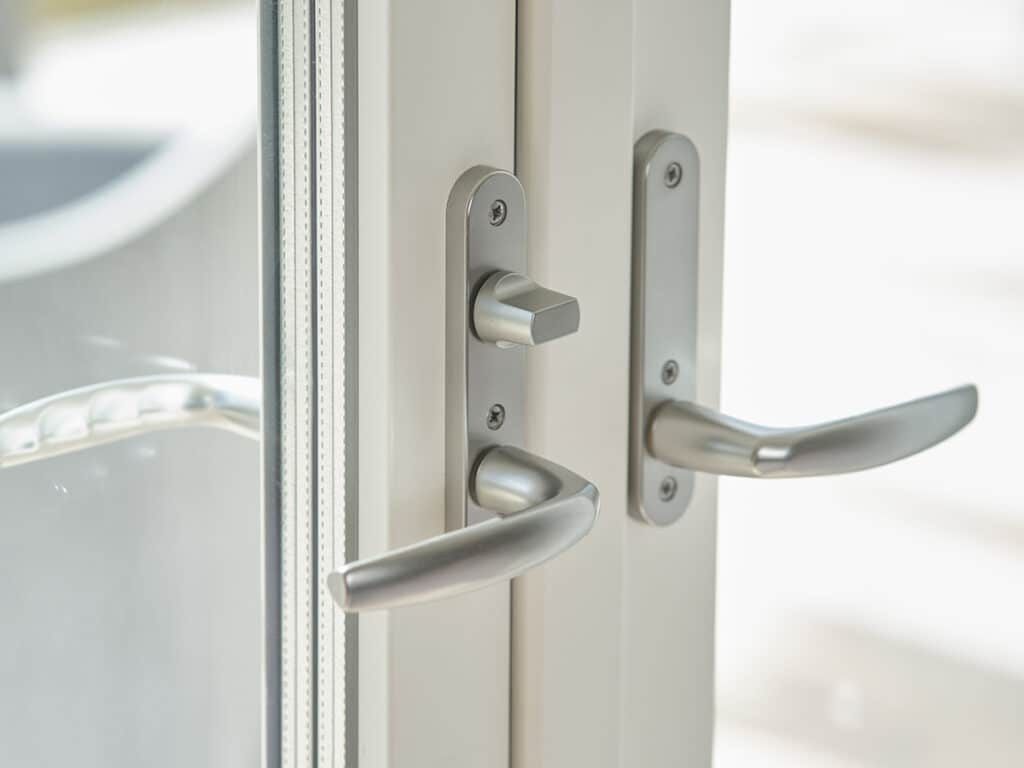
- Handle clearance (inches). If the door has a protruding handle, you may need an outside mount or stand-off brackets.
If you want a fast way to avoid ordering errors, World Wide Shades recommends measuring to the nearest 1/8 inch for inside mounts and verifying the frame is square. For step-by-step guidance, cross-reference our install resources like how-to-measure-windows-for-roller-shades and how-to-install-roller-shades.
Option A: one single-wide roller shade
A single wide roller shade is one shade covering the entire opening.
Single-wide is usually best when:
- You want the cleanest look (one fabric, one hem bar).
- The opening is wide but still within typical hardware/fabric limits.
- You’re willing to prioritize aesthetics over flexibility.
Single-wide shades are especially popular in contemporary homes where minimal seams matter. If you’re aiming for that clean-line look, also read best-roller-shades-living-room for design pairing ideas.
With very wide shades, the real-world issues tend to be:
- Roll diameter grows as width increases, which can require more headroom.
- Fabric telescoping (fabric shifting to one side over time) becomes more noticeable.
- Edge curl is more visible on large expanses of fabric.
- Heavier bottom bars may be needed to keep the fabric tracking straight.
World Wide Shades can help you choose fabrics that resist curling and “memory” issues, especially in sun-exposed rooms. If you’re fighting sun damage or fading, see uv-protection-window-shades.
A single wide roller shade typically covers both sliding panels at once. That means:
- If the shade is down, you can still open the door, but visibility and access can feel restricted.
- If you open the door frequently, you may end up raising and lowering the shade multiple times per day.
If that’s you, motorization often changes the equation. You can tap a remote or wall switch instead of pulling a chain or spring system. To explore automation options, World Wide Shades can walk you through controls and power choices via /contact or you can start with a quote in the shade builder.
Option B: panel-by-panel (two or more shades)
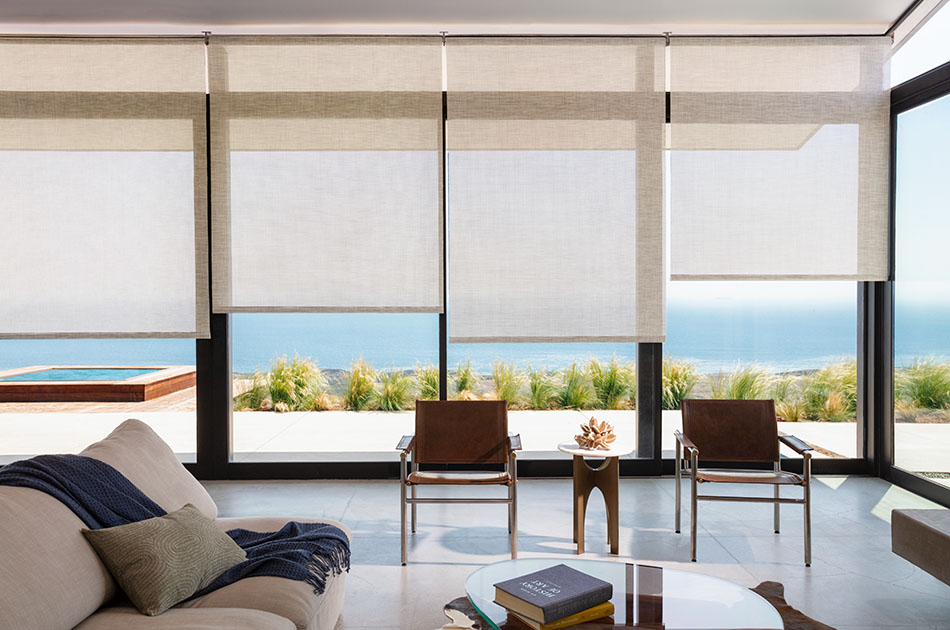
Panel-by-panel means multiple shades placed side-by-side so each shade covers a portion of the opening.
Multi-panel setups are popular because they:
- Reduce weight per shade, improving longevity.
- Keep roll diameter smaller, reducing headroom needs.
- Allow partial coverage (privacy on one side, view on the other).
This approach is especially helpful for extra-wide doors and openings where a single shade would look oversized or become harder to operate smoothly.
The tradeoff is visual: you’ll have a vertical “break” where shades meet.
To make panel seams look intentional:
- Use the same fabric and hem bar style on every panel.
- Align brackets carefully so the bottom bars land at the same height.
- Consider a fascia or cassette for a unified top line.
If you’re sensitive to light coming through edges, pair multi-panel shades with a better mount strategy and consider room-darkening or blackout fabrics. For light control concepts, see light-filtering-shades-guide and blackout-curtains-vs-blackout-shades.
The decision framework: single-wide vs multi-panel
Use this framework to decide quickly.
- A seamless look across the opening
- A single control point
- A minimal, “architectural” aesthetic
- Daily usability on frequently used doors
- Better long-term tracking and smoother operation
- Flexibility (cover one side, leave the other open)
If you’re still unsure, World Wide Shades can recommend a layout based on your exact width, how your doors slide, and where you want the control chain or motor. Get a fast starting price in /builder.
Cost expectations: what usually changes the price
Exact pricing depends on fabric, hardware, and dimensions, but you can estimate where the cost comes from.
- Total square footage of fabric (width × height)
- Upgraded hardware for large widths
- Motorization (battery vs hardwired)
- Cassette/fascia and premium hem bars
In many cases, two mid-sized shades can be close in price to one oversized shade because the hardware duplicates—but multi-panel setups often reduce “specialty” large-format hardware requirements.
For broader context on custom pricing, compare with how-much-do-custom-roller-shades-cost and, if you’re considering smart control, motorized-shades-alexa-google-home.
Motorization: the feature that matters most on sliders
If you open your slider daily, motorization is less of a luxury and more of a usability upgrade.
- Battery is easier to install and works well when you don’t want to open drywall.
- Hardwired is ideal for new construction or remodels because it eliminates recharging and can handle frequent cycles.
For a deeper technical comparison, see battery-vs-hardwired-motorized-shades and smart-home-motorized-shades-setup.
A slider shade might be raised/lowered 4–10 times per day in an active household. Over a year, that’s roughly 1,500–3,600 cycles—one reason smooth hardware and consistent fabric tracking matter.
World Wide Shades can help you select a motor and control method appropriate for high-frequency use. Ask for a recommendation at /contact or start configuring your opening in /builder.
Fabric choices that work best on large spans
Not every fabric behaves the same at large widths.
- Dimensional stability (resists stretching)
- Lower curl tendency at edges
- UV resistance if the door gets direct sun
Solar fabrics can be excellent on sliders because they reduce glare while preserving a view. To understand openness and glare control, see solar-shades-vs-roller-shades and uv-protection-window-shades.
A practical guideline many homeowners like:
- Street-facing sliders: prioritize privacy and choose tighter weaves or room-darkening.
- Backyard sliders: consider solar fabrics so you keep the view while cutting glare.
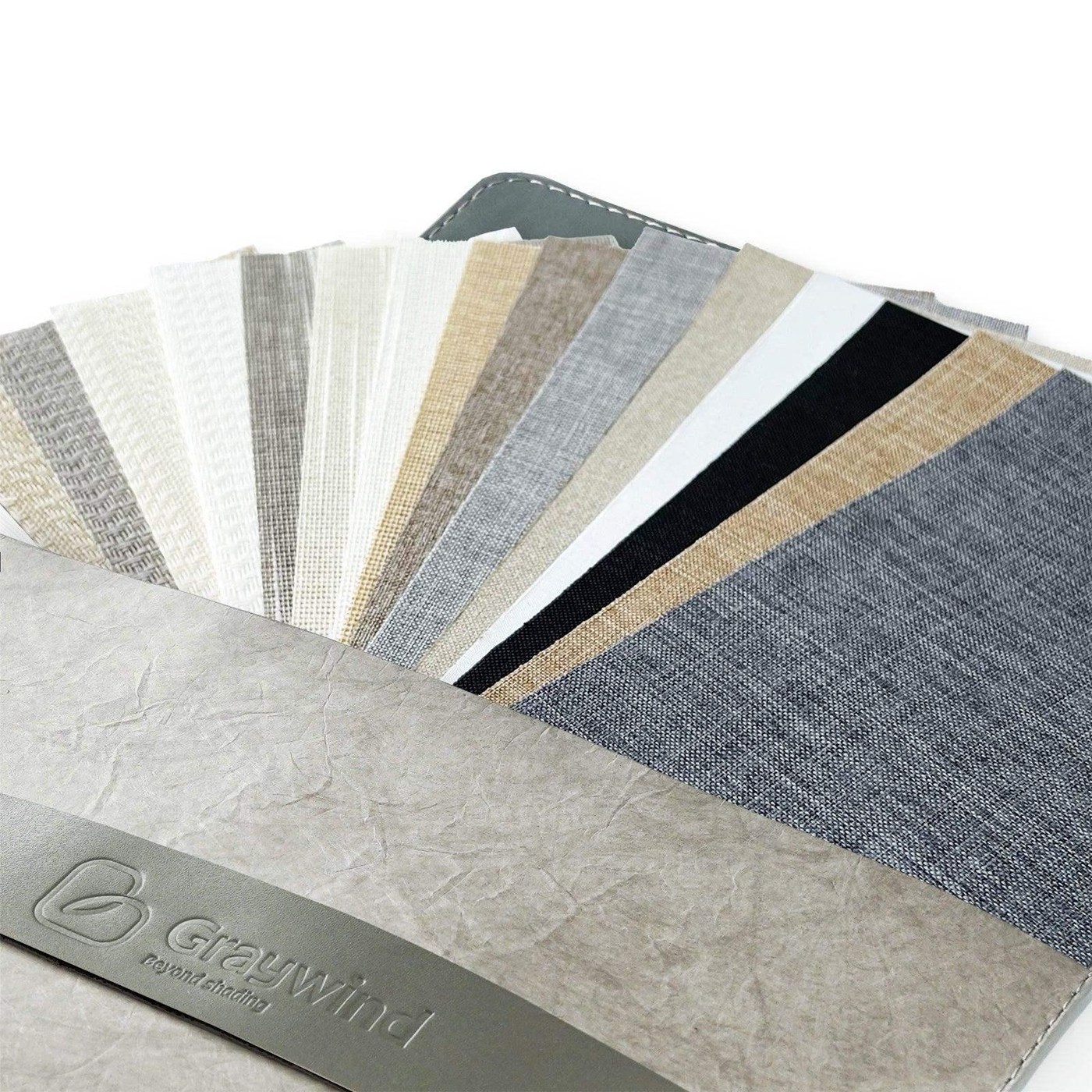
If you want to test fabric in your space, order swatches first. World Wide Shades makes it easy to compare materials via /swatches.
Mounting details that prevent common slider problems
Mount choices impact light gaps, handle clearance, and how “built-in” the shade feels.
Inside mount looks clean when the frame is deep enough and square.
However, with sliders it can:
- Increase the chance of handle interference
- Make edge gaps more visible, especially at night
Outside mount helps you:
- Cover more area for privacy
- Reduce perceived light gaps
- Clear protruding handles
If you want to minimize light leaks (especially with blackout), combine outside mount with a thoughtful overlap plan. For gap-reduction ideas, see roller-shade-light-gaps-side-fix.
When a panel-track system beats a standard roller shade
Some sliding doors are better served by a panel-track style treatment, especially when you want panels to stack to one side.
If you’re comparing modern alternatives to traditional vertical blinds, you’ll like our breakdown in roller-shades-for-sliding-glass-doors and the broader design comparison in roller-shades-vs-blinds-vs-curtains.
World Wide Shades can recommend whether classic roll-up rollers or a track-based approach fits your exact door configuration—reach out at /contact.
FAQ: Roller shades for large glass doors and sliders
They can be reliable within normal width/weight limits, but as width increases you’re more likely to see tracking issues, heavier operation, and a larger roll diameter. If you want daily, low-effort use, multi-panel or motorized configurations often perform better.
Not if they’re designed as a set. Using the same fabric, hem bar style, and aligned mounting heights makes the seams look intentional rather than accidental.
Choose outside mount when possible, increase overlap beyond the glass, and consider room-darkening/blackout fabrics plus better edge coverage. Our guide on roller-shade-light-gaps-side-fix also helps.
For many households, yes. A slider can easily hit 1,500–3,600 raise/lower cycles per year, and motorization keeps operation consistent while reducing wear from uneven pulls.
Yes. Large expanses of fabric magnify small color and texture differences. Ordering samples through /swatches lets you see daytime glare, nighttime privacy, and how the fabric coordinates with flooring and wall paint.
Yes. World Wide Shades can recommend single-wide vs multi-panel layouts, mounting strategy, and motor/power options based on your exact measurements—start with /builder or contact us at /contact or call (844) 674-2716.
CTA: If you want a quick recommendation today, call World Wide Shades at (844) 674-2716 or send photos via /contact.