Why staircase windows are uniquely challenging
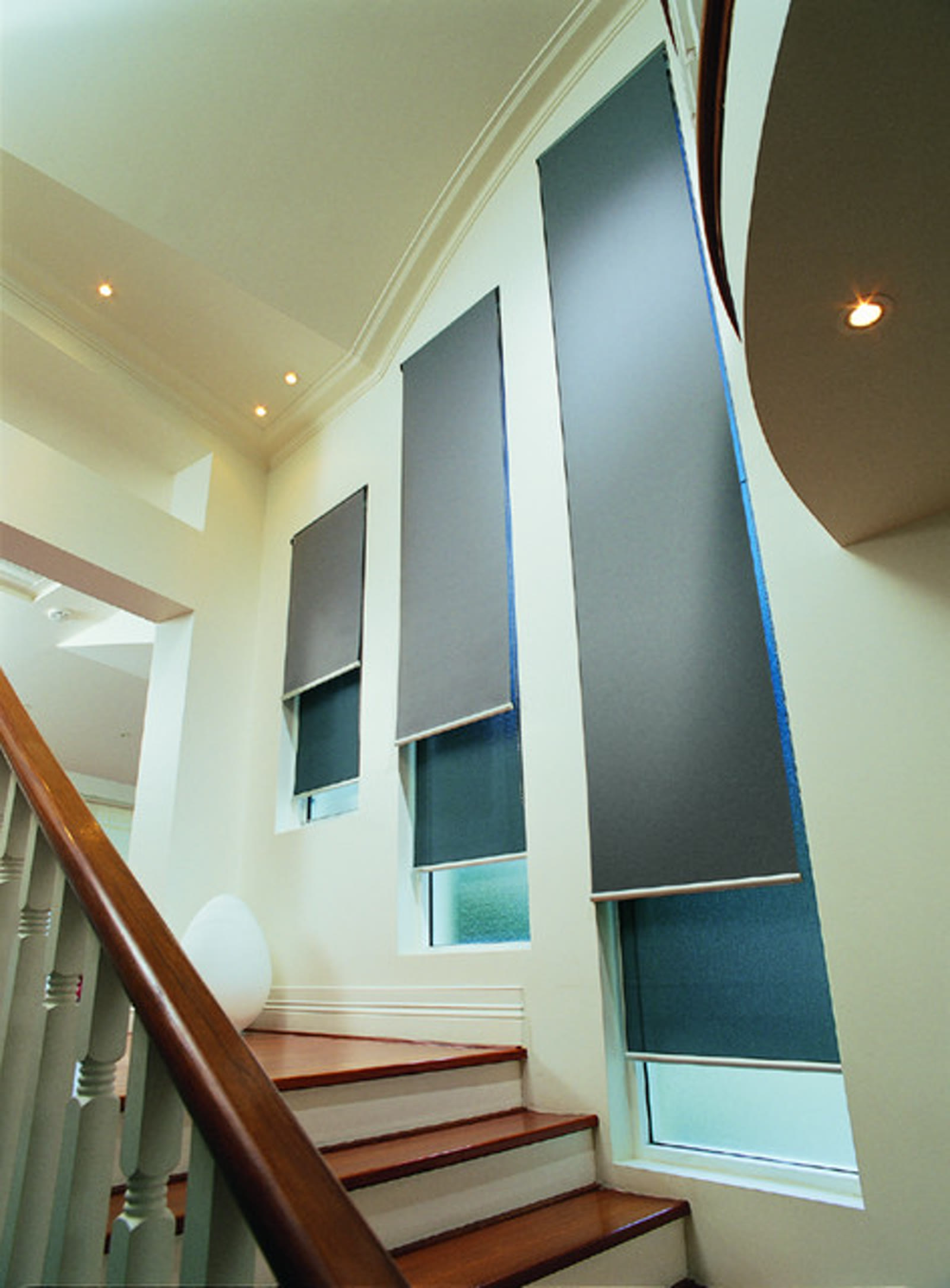
Staircase and stairwell windows look simple on paper, but in real homes they create a perfect storm: tall glass, limited landing space, and daily glare right where you walk. The “hard part” is rarely the shade itself—it’s access, safety, and making sure the hardware is sized correctly for the window height.
Most staircase windows share a few traits:
- High mounting height (often 10–20 feet from the floor) which makes cord control inconvenient and unsafe.
- Steep viewing angles from both downstairs and upstairs, so hardware and light gaps are more visible.
- Mixed privacy needs (street-facing at the bottom, open-to-foyer at the top).
- More sun exposure than you expect, because stairwells are commonly placed on exterior walls with tall, narrow windows.
If you want a solution that looks intentional (not like an afterthought), start with a shade type that is designed to operate cleanly at height.
World Wide Shades helps homeowners design staircase window roller shades that are safe, easy to operate, and sized correctly for tall drops—start with the online consultation through our Shade Builder.
The best roller shade types for stairwells (and what each one solves)
Roller shades are a strong match for staircases because they keep the stack height small, look modern, and can be motorized easily.
Use light-filtering fabrics when you want to reduce glare and soften light while keeping the stairwell bright. They’re ideal for:
- Interior staircases that feel dark in the afternoon
- North-facing windows that mostly need privacy, not blackout
- Homes where the staircase is part of an open foyer and you want a clean look
For most staircases, a light-filtering fabric delivers the best daily experience because you don’t feel like you’re “closing off” the home.
If you’re deciding between shade types room-by-room, compare how light-filtering performs in other spaces in our guide to light-filtering shades.
Solar fabrics are measured by openness (commonly 1% to 10%). Lower openness blocks more glare but reduces view; higher openness preserves view but provides less privacy.
A practical starting point for staircase windows:
- 3% openness: strong glare control, better daytime privacy
- 5% openness: balanced, good for many two-story foyers
- 10% openness: maximum view, minimal glare control (best when privacy isn’t needed)
If your staircase window faces west, solar fabric can noticeably reduce harsh late-day sun while still keeping an airy feel.
World Wide Shades can recommend an openness level based on your orientation and privacy needs—get options and pricing through the Shade Builder or request swatch help via Swatches.
For a deeper breakdown of UV and glare, see our UV protection window shades guide.
Blackout in a stairwell usually isn’t about sleeping—it’s about controlling light spill into adjacent bedrooms, media rooms, or upstairs hallways.
To get true blackout performance in a stairwell, you typically need more than fabric. Light leaks usually come from the sides, top, and bottom.
If you’re chasing a “no light anywhere” result for nearby rooms, cross-check your plan against our bedroom-focused resource: The complete bedroom blackout shade checklist.
World Wide Shades can build stairwell shades with upgraded light control details—contact us to confirm what level of darkness is realistic for your window shape: Contact.
Staircase window measurements that matter (and the numbers people miss)
Tall windows punish small measuring mistakes. The good news: you can measure accurately with the right plan, even if the window is out of reach.
For roller shades, you’re measuring two different “zones”:
- Glass zone: width/height of the visible glass you want to cover.
- Mounting zone: where brackets can actually be installed (inside the frame, on trim, or on wall).
If you’re unsure whether inside-mount is possible, you need to confirm the minimum frame depth. Many roller shade systems need roughly 2 inches of depth to sit cleanly inside a window frame (depth needs vary by hardware).
If your frame depth is shallow, outside-mount becomes the better-looking and more forgiving approach.
World Wide Shades can help you choose inside vs outside mount based on photos and measurements—start with Contact or build a quote in Shade Builder.
Many homeowners assume the fabric covers the entire width between brackets. In reality:
- Shade (overall) width includes hardware.
- Fabric width is typically narrower than overall width due to bracket and mechanism clearance.
That small difference is why side light gaps appear if you try to blackout a tall window with a tight inside mount.
For more context on how mounting decisions affect appearance, see how to install roller shades.
For staircase windows 12+ feet high, a laser measure can be safer than a tape measure—especially if you’re measuring to trim edges.
If you don’t have a laser measure, a common workaround is:
- Measure the window width at reachable height.
- Photograph the window straight-on.
- Measure one known reference (like trim width) and scale the rest.
It’s not perfect, but it can get you close enough to confirm feasibility before you order.
When the window is truly hard to access, World Wide Shades can guide you to the safest approach and confirm measurements before production—call (844) 674-2716 or use the Shade Builder.
Operation options at height: cord loop, cordless, or motorized?
For stairwells, operation style is not just preference—it’s safety.
A continuous loop can be extended down to a reachable height, but it can look messy in open foyers and may not be the best choice in homes with kids or pets.
If you’re prioritizing safer operation, read our broader guide to child-safe window treatments.
Cordless roller shades look great in modern staircases, but you still have to reach the bottom rail to operate them. In stairwells, that often means you’ll never actually use the shade.
Motorization is the simplest way to make staircase shades functional. You can control shades by remote, wall switch, or smart-home routines.
Motorized shades are particularly valuable when:
- The sill height is above your reach
- The window is on a landing where ladders feel unsafe
- You want scheduled glare control (morning vs afternoon)
If you already use voice assistants, you’ll also like our guide to integrating shades into daily routines: motorized shades with Alexa and Google Home.
World Wide Shades can help you decide whether motorization makes sense for your exact window height and daily use—call (844) 674-2716 or start in the Shade Builder.
Hardware choices that matter for tall drops (and why tall shades cost more)
Staircase windows are often tall and narrow. Tall drops require hardware engineered to stay straight and roll evenly.
A taller shade needs a larger tube diameter to prevent deflection and “smiling” (where the roller bows slightly in the middle). Heavier fabrics and wider shades also increase the need for stronger hardware.
A slightly heavier hem bar can help keep a tall shade hanging straight. This matters more on staircase windows where air movement (HVAC return vents, open foyers) can cause the bottom rail to sway.
If you need room-darkening near bedrooms, side channels reduce light gaps. They also help stabilize the fabric in drafty stairwells.
If you’re comparing shade systems, it helps to understand the look difference between hardware styles. See our overview of roller shade valance options.
World Wide Shades will recommend the correct tube size, hem bar, and upgrades based on your width and height—get a quote through the Shade Builder.
Design strategies: making stairwell shades look intentional
A staircase is a highly visible architectural feature. A shade that looks “almost right” can stand out.
Stand at these points before choosing mount style:
- Bottom of stairs looking up
- Top landing looking down
- Main entry / foyer viewpoint
If brackets or a cassette will be visible, you may prefer a cleaner fascia or a valance.
If your stairwell window is in the same open area as living room or foyer windows, consistency matters. Matching fabric color and hardware finish makes the home feel cohesive.
For color selection ideas, use our window shades color guide.
In some homes, the staircase window is part of a larger design scheme with adjacent drapery or decorative treatments.
If you love a layered look, see how designers combine treatments in Layering roller shades with drapery.
World Wide Shades can coordinate fabrics and finishes across multiple rooms—start a project in the Shade Builder.
Installation reality check: DIY vs pro for staircase windows
Many homeowners can install roller shades on standard windows. Stairwells are different because the risk is access, not complexity.
If you’re deciding whether to DIY, consider:
- Do you have a stable ladder setup on a landing?
- Can you safely drill into framing without leaning?
- Will you need a second person to hold the shade at height?
Professional installation often costs less than you think compared to the cost of a fall or a damaged wall.
For an overview of what’s typical, read roller shade installation cost: DIY vs professional.
World Wide Shades can advise on safe installation options and connect you with the right approach—use Contact or call (844) 674-2716.
Common staircase window scenarios and the best roller shade approach
A solar shade (3%–5% openness) is often the sweet spot: you keep the dramatic natural light but reduce glare and heat.
A light-filtering privacy fabric or dual-solution (solar by day, privacy by night) keeps the stairwell comfortable without turning it into a cave.
Go room-darkening or blackout, but plan for light gaps and mounting. If you want true darkness, you may need side channels.
Consider separate shades per window rather than one tall shade. Two smaller shades can be easier to install and may roll more evenly.
World Wide Shades can recommend the cleanest layout based on your exact window grouping—build a configuration in the Shade Builder.
FAQ: Roller shades for staircase and stairwell windows
Yes when the window is out of reach or you want daily glare control; motorization turns a “decorative” stairwell window shade into something you’ll actually use. World Wide Shades can price motorization options through the Shade Builder.
For many stairwells, 3% to 5% openness balances glare control and view. If privacy is a concern, lean toward 3%; if you mainly want to keep the view, consider 5% or higher.
Sometimes, but you need enough depth (often around 2 inches depending on hardware) and a square frame. If the frame is shallow or uneven, outside mount usually looks cleaner and blocks more light.
Use a laser measure when possible, measure from stable points (trim to trim), and avoid leaning on ladders on landings. If the setup feels sketchy, call World Wide Shades at (844) 674-2716 or use Contact to get guidance.
It can, but tall drops require the right tube diameter and hardware. Choosing the correct components helps prevent the shade from telescoping or tracking to one side.
They can. Reducing direct sun can lower heat gain, while insulating fabrics can reduce winter heat loss—especially on tall glass in open foyers. For more, see our energy-efficient window shades.
Ready to design staircase shades that actually work?
Staircase windows should be a feature, not a daily glare problem or a safety hazard.
World Wide Shades will help you choose the right fabric openness, mount style, and control method for tall, hard-to-reach stairwell windows. Start with the Shade Builder, browse Swatches, or call (844) 674-2716 to talk through your setup.