Why sunrooms are the toughest room for window shades
Sunrooms and three-season rooms look amazing, but they’re punishing environments for window treatments. You’re dealing with intense daylight, glare on screens, heat build-up, and UV exposure that can fade floors, rugs, and upholstery.
World Wide Shades helps homeowners choose sunroom roller shades that solve the real problems without turning the space into a cave. The goal is usually “comfortable and bright,” not “dark.” If you want to see what options fit your windows fast, start with the World Wide Shades Builder.
What problems are you trying to solve in a sunroom?
Before you pick a fabric, get clear on the pain point. In most sunrooms, you’re balancing multiple goals.
Glare is the biggest day-to-day complaint. The right roller shade can soften direct sun without destroying your view.
Sunrooms can get uncomfortably hot, especially with south- or west-facing glass. While shades won’t replace good insulation, they can reduce solar gain and make the room feel usable.
UV is what fades and breaks down materials over time. If your sunroom has wood floors, leather furniture, or colorful textiles, UV control is a major value driver.
During the day, sunrooms often feel private because it’s brighter outside. At night, it flips. You may need a more privacy-forward shade for evening.
World Wide Shades can help you map each window to the right fabric type. You can also preview fabrics with World Wide Shades Swatches.
The best roller shade fabrics for sunrooms (by use case)
Sunrooms aren’t one-size-fits-all. Here are the top-performing fabric categories.
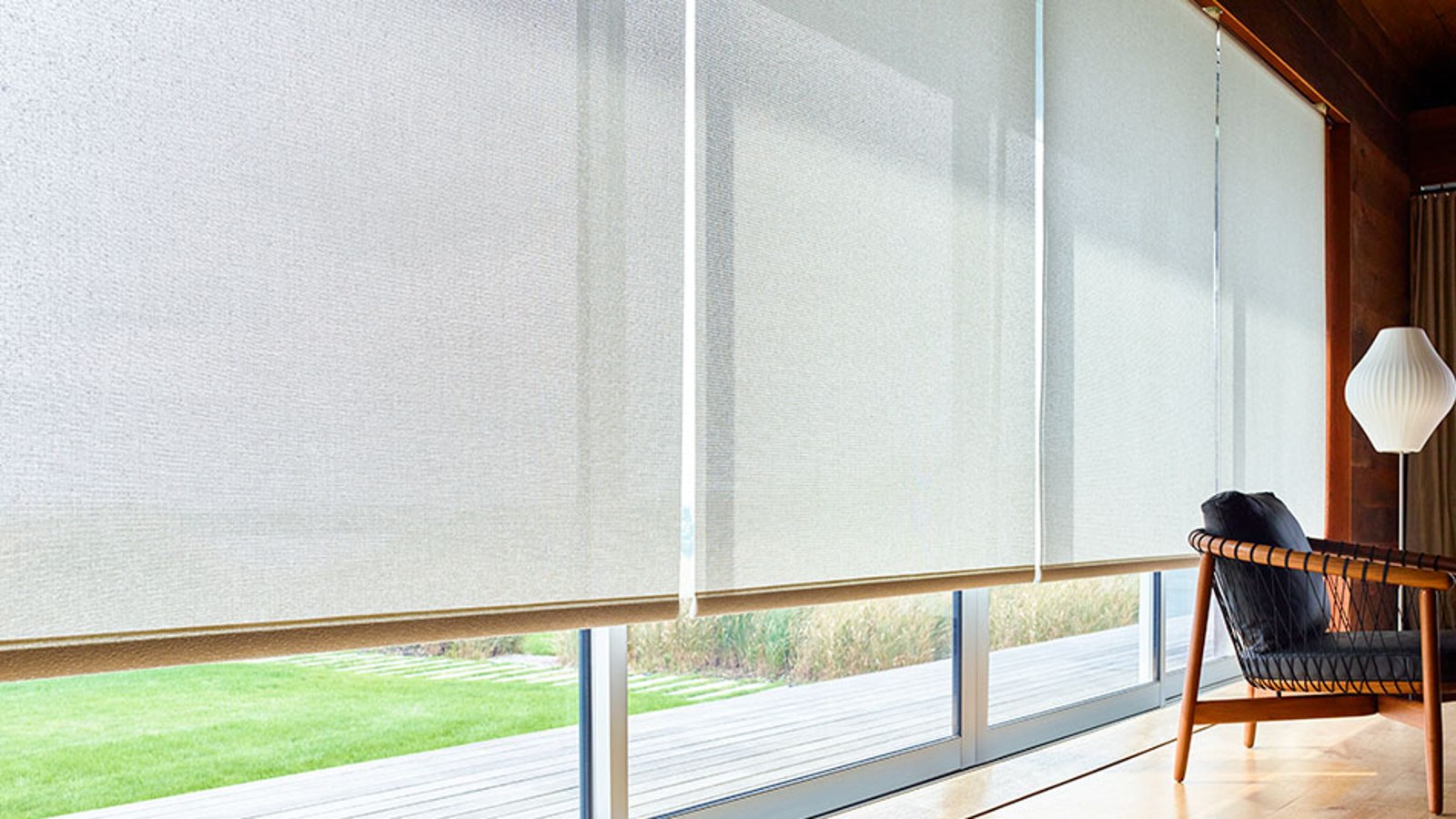
Solar shades are the go-to choice for many sunrooms because they cut glare while keeping an outward view. They’re often described by “openness factor” (how much light and view passes through).
Best for:
- Daytime glare reduction
- Maintaining the view
- Reducing harsh sunlight on seating areas
Tradeoffs:
- At night, solar shades don’t provide full privacy with interior lights on
- They won’t create true darkness for naps or guest sleep
If you’re comparing these styles broadly, solar-shades-vs-roller-shades can help you decide.
CTA: Want to keep the view but lose the glare? Configure solar roller shades in the World Wide Shades Builder.
Light-filtering fabrics diffuse sunlight to create an even glow. This is ideal when you want the room to feel bright and relaxing without harsh hotspots.
Best for:
- Reading spaces
- Plant-filled sunrooms
- Three-season rooms that you want to feel “airy”
Tradeoffs:
- Not as effective as solar shades for preserving a crisp view
- Not as strong as blackout for privacy at night
For a deeper explanation of these fabrics, see light-filtering-shades-guide.
CTA: If you want a soft, designer look in full sun, start with the World Wide Shades Builder.
Blackout isn’t the most common sunroom choice, but it can be the right solution in specific situations:
- A sunroom that doubles as a guest room
- A west-facing room that becomes unusable in late afternoon
- A media space where you want daylight-free viewing
If you’re deciding between fabric types, blackout-curtains-vs-blackout-shades is a helpful comparison.
CTA: Not sure if blackout is too much? Order fabric options from World Wide Shades Swatches and test them in your sunroom.
Choosing the right openness factor for solar shades
Openness factor is the single most important variable for sunroom solar shades.
- Best for harsh sun exposure and west-facing windows
- Great for reducing eye strain
- You’ll sacrifice some view clarity
- A common “sweet spot” for many sunrooms
- Good glare control without making the space feel closed in
- Best when the view is the priority and sun intensity is moderate
- Less effective for strong afternoon sun
Because every sunroom has different glass size and orientation, World Wide Shades recommends testing fabrics in your actual light. Use World Wide Shades Swatches so you can compare openness levels side-by-side.
Heat-smart shade strategies for sunrooms
Shades help comfort most when you use them strategically.
In many sunrooms, only one or two sides get brutal afternoon sun. Prioritize those exposures for stronger glare/heat control fabrics.
The easiest way to reduce heat is to lower the shade before the room overheats. Motorized shades let you do that consistently.
If you’re considering smart control, you’ll like smart-home-motorized-shades-setup and motorized-shades-alexa-google-home.
CTA: Want a “lower at 2pm” routine? Talk to World Wide Shades at /contact or call (844) 674-2716.
If your three-season room has operable windows, ceiling fans, or vents, shades reduce peak sun load so ventilation is more effective.
UV protection: what actually protects furniture and floors
UV damage is gradual, so it’s easy to underestimate until you see a “tan line” on a rug.
Practical ways to improve UV protection:
- Choose fabrics designed for sun exposure
- Lower shades during peak UV hours
- Consider stronger fabrics for windows hitting wood floors directly
For a broader look at UV control, read uv-protection-window-shades.
CTA: If you’re protecting expensive floors or upholstery, start with a UV-first configuration in the World Wide Shades Builder.
Moisture, temperature swings, and durability in three-season rooms
Three-season rooms can have bigger temperature swings than the rest of the house. If your room is not fully conditioned year-round, durability matters.
What to look for:
- Fabrics that resist warping or waviness
- Hardware that handles frequent cycling
- Cordless or motorized operation for long-term reliability
If you have wide spans of glass, also see roller-shades-for-large-windows for structural and performance tips.
Inside mount vs outside mount for sunrooms
Mount style changes both the look and performance.
Inside mount works well when:
- Your window depth is sufficient
- You want a tailored, architectural finish
- You’re okay with small edge light gaps
Outside mount works well when:
- You want more coverage to reduce side glare
- Your window depth is shallow
- You want to hide imperfect trim or framing
If you want a detailed comparison, inside-mount-vs-outside-mount-shades breaks it down.
CTA: Build both mount styles in the World Wide Shades Builder and choose the look that fits your sunroom.
Color and texture: making sunroom shades look intentional
Sunrooms are highly visible spaces, so your shade choice becomes part of the design.
Warm whites, flax, sand, and natural textures can soften the room and play well with plants, wood tones, and wicker.
If you want guidance for coordinated interiors, window-shades-color-guide is a great next read.
At night, a shade reads as a big surface. Swatches help you avoid picking a fabric that looks perfect at noon but feels flat in the evening.
CTA: See your options in real light with World Wide Shades Swatches.
Measuring and installing sunroom roller shades
Sunrooms often have lots of windows, so process matters.
A small measurement error repeated across ten windows becomes a big headache.
For a full step-by-step, read how-to-measure-windows-for-roller-shades.
Start with the windows that get the harshest sun. You’ll feel the comfort improvement quickly, and you can fine-tune choices for the remaining windows.
If you’re installing yourself, how-to-install-roller-shades is a helpful walkthrough.
CTA: Prefer guidance before you order? Contact World Wide Shades at /contact or call (844) 674-2716.
Common mistakes to avoid in sunrooms
If your goal is comfort, a solar shade with the right openness may outperform blackout because you’ll actually keep it down without hating the room.
Solar shades can feel private during the day but transparent at night with lights on. If the sunroom faces neighbors, consider pairing solar shades with an option that increases nighttime privacy.
Sunrooms get hot fast. Motorization or easy cordless operation makes consistent use much more likely.
FAQ: sunroom and three-season room roller shades
Solar shades are usually better for glare while preserving the view. Light-filtering shades are better if you want an evenly diffused glow and don’t care as much about a crisp view. World Wide Shades can help you choose by window exposure.
Many south-facing rooms do well with a mid-range openness, but the “best” choice depends on your view, how strong your sunlight is, and how often you use screens. Swatches are the fastest way to decide.
They can reduce glare and perceived heat and help manage peak sun load, especially if you lower them before the room overheats. They’re most effective when paired with ventilation and smart routines.
CTA: Ready to make your sunroom comfortable? Start with the World Wide Shades Builder, then order swatches to confirm your favorite fabrics.