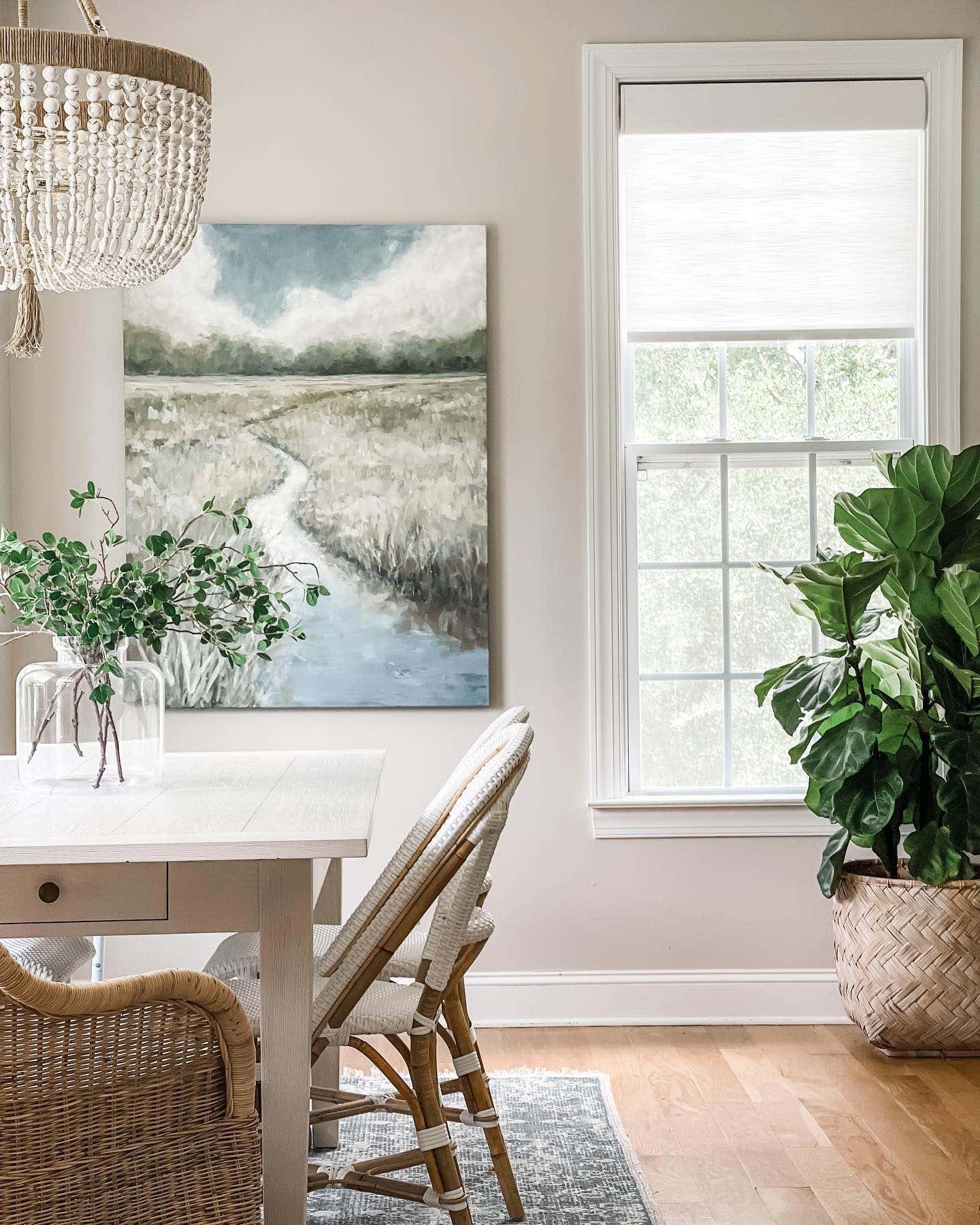
The dining room is one of the few spaces in a home where light is part of the experience. A bright breakfast nook and a candlelit dinner vibe often happen in the same square footage.
That’s why dining room roller shades need to do more than “cover the window.” They should control glare, flatter your lighting, protect finishes from UV, and still look clean when the table is set for guests.
This guide walks through the decisions that make dining room roller shades look custom: fabric, color, mount, and a few upgrades designers use all the time.
If you want to start comparing options quickly, build a few variations in the World Wide Shades Builder and save the ones you like.
What makes dining room shades different from living room shades?
Dining rooms typically have three unique challenges:
- Hard, reflective surfaces (wood tables, glass, mirrors) that show glare
- Changing use cases (daylight meals vs evening entertaining)
- Visibility (street-facing windows where privacy matters at night)
The best solution is usually not the darkest fabric. It’s the right balance of light control and ambiance.
If you’re also planning shades for nearby rooms, these guides can help you keep the look cohesive:
- /blog/best-roller-shades-living-room
- /blog/best-window-shades-bedroom
- /blog/roller-shades-kitchen-bathroom
Choose your “light goal” first
A dining room shade can be tuned for different outcomes.
Light-filtering fabrics soften daylight without making the room feel closed off.
They’re ideal when you want:
- Pleasant daytime brightness
- Reduced glare on art, mirrors, or a TV in an adjacent space
- Privacy without a “bunker” feel
If you’re unsure what light filtering really means, read /blog/light-filtering-shades-guide.
If you want to see fabrics in your own space, order a few from World Wide Shades Swatches.
Room-darkening fabrics are great when the dining room has strong afternoon exposure (especially west-facing windows) but you still want some glow.
If that’s your situation, you may also like /blog/best-shades-west-facing-windows and /blog/best-shades-south-facing-windows.
Blackout is uncommon in dining rooms, but it can make sense when:
- The room doubles as a media space
- You have intense streetlights and want full privacy
- You’re trying to protect finishes and artwork from sun
If blackout is on your shortlist, compare options in /blog/blackout-curtains-vs-blackout-shades and see a bedroom-focused blackout breakdown in /blog/blackout-shades-for-master-bedroom.
Fabric textures that look expensive (without being fussy)
In dining rooms, texture reads as “designer.” A plain, shiny fabric can look like an office.
Here are textures that work in most dining styles.
Linen-look roller shade fabrics soften the room visually.
They work especially well with:
- Neutral paint colors
- Natural wood tables
- Brass or matte black fixtures
Heathered fabrics add depth without looking busy.
If your home is a mix of classic and modern pieces, you may also like /blog/window-shade-trends-2026.
If your dining room is very modern, a smooth matte fabric keeps everything crisp.
If you’re unsure what undertone to choose, our /blog/window-shades-color-guide makes it easier.
To verify color in your actual light, request samples at World Wide Shades Swatches.
Color strategy: match the room, not just the window
A dining room roller shade is a big surface. Color choices can make the room feel bigger, warmer, or more formal.
- Warm white
- Cream
- Soft greige
These colors help daylight bounce around the room.
- Taupe
- Charcoal
- Deep neutral tones
These can create a “restaurant ambiance” at night—especially when paired with a dimmable chandelier.
If you’re deciding between two neutrals, the fastest way to avoid regret is to order both from World Wide Shades Swatches and compare morning vs evening light.
Inside mount vs outside mount (and what looks best)
Mounting changes both the look and the performance.
Inside mount looks clean and furniture-like.
It’s best when:
- Your window trim is attractive
- You have enough depth for the shade hardware
Outside mount can look just as clean when done intentionally.
It’s helpful when:
- You want to cover awkward trim
- You have shallow window depth
- You want more light control and privacy
For a full breakdown, see /blog/inside-mount-vs-outside-mount-shades.
If you’re unsure which your windows can support, contact World Wide Shades at (844) 674-2716 and we’ll guide you.
Dining room privacy: the silhouette test
A common dining room complaint is nighttime silhouettes.
Here’s the quick test:
- If your dining room is visible from the street and you entertain at night, choose a fabric that provides true privacy.
- If you love a bright, sheer look during the day, consider layering (shade + drapery panels) for evening privacy.
World Wide Shades can help you strike the right balance. Start a configuration in the World Wide Shades Builder, then share your draft with our team for feedback.
UV protection: protecting tables, floors, and art
Dining rooms often have expensive surfaces—solid wood tables, hardwood floors, and framed artwork.
If your room gets strong sun, consider fabrics designed for UV protection and glare management.
For more on UV and fading, read /blog/uv-protection-window-shades.
If you’re also working on style direction, our /blog/window-shade-trends-2026 post shows what designers are choosing for modern homes.
Upgrades that make dining room roller shades feel custom
A valance hides hardware and gives the window a more architectural look.
If you want a clean finish, explore:
You can also ask World Wide Shades about a fascia option when you build your quote in the World Wide Shades Builder.
If you want a brighter daytime fabric and a more private evening fabric, dual roller shades can be a great fit.
Learn how they work in /blog/dual-roller-shades-day-night.
Motorized shades are great in dining spaces when:
- Windows are high or behind furniture
- You want to adjust shades mid-meal without interrupting guests
- You want routines (open for morning light, lower before dinner)
If you want smart-home control, read /blog/motorized-shades-alexa-google-home and /blog/smart-home-motorized-shades-setup.
If you’d like a recommendation, contact World Wide Shades at (844) 674-2716.
Measuring tips for a dining room that looks “designer aligned”
Nothing makes a dining room look off like shades that don’t line up.
Two tips:
- Standardize heights across windows in the same sightline.
- Confirm your measurements for each window—even if they look identical.
Use this guide before you order: /blog/how-to-measure-windows-for-roller-shades.
If you’re installing yourself, this helps you avoid the most common alignment mistakes: /blog/how-to-install-roller-shades.
Frequently asked questions about dining room roller shades
If you want to keep a view while cutting glare, many homeowners choose a more open weave.
If you want the room to feel softer and more private, a tighter weave (or light filtering) is a safer choice.
If you want help translating “openness” into a real-world look, request samples at World Wide Shades Swatches.
Not if you pick the right texture.
Linen-look fabrics and warm neutrals can look timeless—even in classic homes.
Start with light filtering fabrics and test them in your space.
If afternoon sun is intense, consider room-darkening fabrics instead of jumping straight to blackout.
For a clear guide, see /blog/light-filtering-shades-guide.
Yes. World Wide Shades can help you pick the best fabric for your dining room’s orientation, privacy needs, and style.
Start by building a few options in the World Wide Shades Builder, then order samples at /swatches, or contact us at (844) 674-2716.
Build your dining room roller shades with confidence
A good dining room roller shade should do three things:
- Make daylight feel softer and more flattering
- Protect your finishes from glare and UV
- Look clean and custom when you host
When you’re ready, create a few versions in the World Wide Shades Builder and compare them side by side.
If you want a quick recommendation, contact World Wide Shades at (844) 674-2716 and we’ll help you choose a fabric that fits how you actually use your dining room.