What makes a roller shade feel rustic?
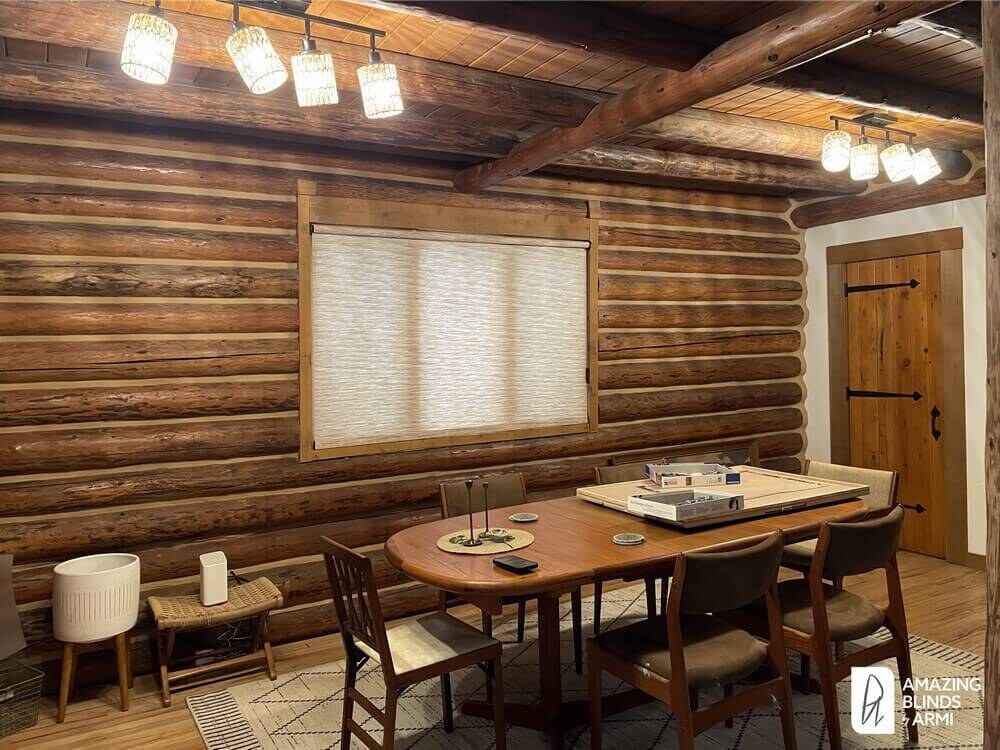
Rustic roller shades look at home in a cabin, lodge, farmhouse, or mountain retreat because they balance clean geometry with natural-looking texture. The best versions do not imitate a log wall with a busy pattern. They use warm neutrals, visible weave, matte hardware, and a fabric that filters daylight without fighting wood grain, stone, or metal.
World Wide Shades can turn that idea into a measured specification: a textured roller fabric, an openness level suited to the view, and a mount that respects trim. Explore the World Wide Shades builder to see how a simple roller profile can work with timber beams, reclaimed wood, and wide picture windows.
Rustic is also practical. Cabins often have strong morning or afternoon sun, temperature swings, and windows that look over a bright lake or snowfield. A fabric that looks warm but cannot handle glare will make the room less comfortable, so choose appearance and performance together.
Pick texture without creating visual clutter
A heathered polyester or linen-look weave gives a rustic room depth while remaining easier to clean than a truly loose natural fiber. Look for small-scale slubs, charcoal flecks, or tonal variation rather than high-contrast stripes. In a room with heavy wood, medium texture is usually enough; adding texture to the shade, rug, upholstery, and wall can make the space feel busy.
For a dark-stained cabin, try oatmeal, flax, mushroom, warm gray, or muted clay. For honey oak or pine, a cool gray-beige can keep the room from turning yellow. The World Wide Shades window shades color guide explains how undertones change beside flooring and trim.
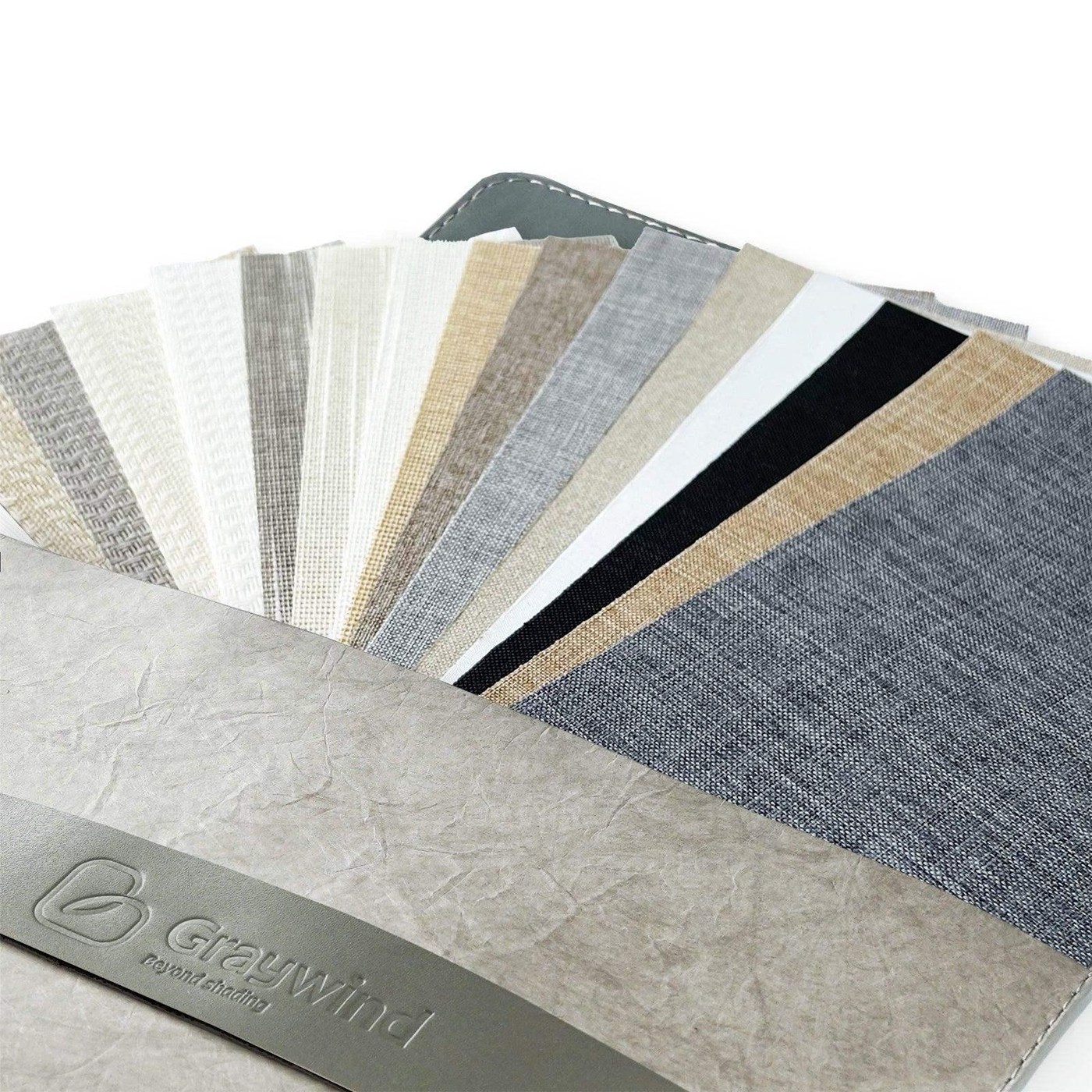
Order samples in at least three finishes. World Wide Shades swatches let you compare the shade against the actual wood in morning and evening light, when warm bulbs and low sun can change the perceived color. Request World Wide Shades swatches before selecting a “natural” fabric from a monitor; screens routinely hide weave scale and sheen.
Choose the right openness for a cabin view
Openness is the percentage of the fabric’s surface made of tiny view-through openings. A 1% screen fabric offers stronger glare and solar control but a darker, more private view. A 3% fabric is a useful middle ground for many living rooms. A 5% fabric preserves more daytime view and daylight while taking the edge off direct sun. These are planning ranges, not a guarantee of a particular temperature reduction.
If privacy at night matters, remember that screen shades can become see-through from outside when indoor lights are on. Use a light-filtering or blackout roller in bedrooms and bathrooms. The best fabrics for roller shades guide compares screen, light-filtering, blackout, and textured options in more detail.
A cabin with a west-facing great-room window may need 1% or 3% screen fabric during late afternoon. A north-facing bedroom may be happier with a 5% light-filtering textile that preserves scarce daylight. For a lake-facing window where the view matters most, a dual-shade system can combine a translucent daytime layer with a room-darkening layer.
World Wide Shades can coordinate two fabrics across one room without forcing every opening into the same opacity. Ask World Wide Shades for a cabin-by-cabin recommendation and share your orientation, view, and privacy needs.
Mounting details that suit rustic architecture
An inside mount keeps the shade tucked into the frame and lets casing, stone, or beadboard remain visible. It generally needs about 2 inches of clear depth, depending on the hardware. An outside mount is more forgiving when a cabin window has shallow trim, uneven stone, or a deep wood casing. Plan for at least 2–3 inches of overlap on each side when the wall allows it.
For a broad picture window, divide a very wide opening into multiple shades rather than creating one oversized roll that is heavy to lift and harder to replace. A 96-inch opening might use two 48-inch shades or three roughly 32-inch shades, depending on mullions and sightlines. The split should align with the architecture, not land randomly across the best view.
A cassette or fascia can hide the roller and provide a finished look without adding ornate decoration. If you want more visual weight, a restrained roller-shade valance in stained wood or a matching fabric can bridge the shade to a rustic cornice. World Wide Shades can help select a clean profile that does not compete with beams.
Handle heat, cold, and changing light
A roller shade cannot turn single-pane glass into an insulated wall, but it can change how the room experiences sunlight. Close the shade before direct sun reaches upholstery, then reopen it when the sun moves away if the view is valuable. Use blackout or lined fabric in sleeping areas where early sunrise and reflected snow can disrupt rest.
For a cabin in a cold climate, compare the roller shade with a cellular option if insulating air pockets are a top priority. The energy-efficient window shades guide explains why fit, gaps, glass, and operating habits all influence results. For a wood-fired great room, choose a fabric and mount that stay within the manufacturer’s clearance requirements from stoves, heaters, and flues.
Moisture matters in a seasonal cabin, too. Ventilate bathrooms and kitchens, and avoid installing untreated textiles where condensation regularly collects. A smooth synthetic fabric is often a better rustic choice than a delicate natural weave in a damp mudroom.
Rustic style by room
In the living room, pair warm gray or flax with leather, wool, and a matte-black or bronze hardware finish. In a bedroom, use room-darkening fabric, an outside mount, and a shade that overlaps the frame enough to reduce dawn light. In a kitchen, choose a tightly woven, spot-cleanable textile and keep the bottom rail away from the sink splash zone.
A loft with a tall gable window may be best with motorization. It avoids ladders, makes daily use realistic, and lets you schedule shades during intense afternoon sun. A manual chain can be appropriate for an occasional-use guest room only when it is safely positioned and accessible without climbing.
World Wide Shades can match the visual language across these different rooms while changing the fabric performance. Start a custom rustic shade plan or call (844) 674-2716 to discuss unusual openings and cabin access.
Care for textured rustic shades
Dust a textured shade monthly with a soft brush or low-suction vacuum. Do not scrub the weave, soak the roll, or use furniture oil on the fabric. Wipe the headrail and brackets with a dry cloth, and check that the shade rolls evenly every few months. Uneven rolling is easier to correct early than after the fabric edge has curled.
Keep the sample and care instructions with the cabin’s maintenance file. If a shade is closed for weeks at a time, inspect it for condensation, insects, or grit before operating it. World Wide Shades can advise on replacement fabric, motor batteries, and repair options when a seasonal home is not visited often.
FAQ: rustic roller shades
A heathered, linen-look, or fine woven polyester fabric usually gives a warm rustic feel without the maintenance of a loose natural weave. Choose tonal variation and a matte finish instead of shiny vinyl or a loud print.
Yes, if the fabric is matched to orientation, view, privacy, and temperature needs. Screen fabrics help with glare, while light-filtering or blackout fabrics are better for bedrooms and nighttime privacy.
Start by comparing 1%, 3%, and 5% screen samples. Lower percentages generally provide stronger glare control, while higher percentages preserve more daylight and daytime view. The best choice depends on the glass and direction of the window.
Use inside mount when the frame has adequate depth and you want trim to remain visible. Use outside mount for shallow, irregular, or heavily cased openings, and add enough overlap to reduce edge light.
Yes. Motorization is especially useful for tall loft windows, wide great-room openings, and shades that need a daily sun schedule. Contact World Wide Shades or call (844) 674-2716 for a tailored recommendation.
Plan a cohesive cabin window package
A cabin often mixes standard windows, a picture window, and a high gable or skylight. Treat them as one light-control system even when the hardware differs. Use the same warm neutral family, then vary opacity by room: a screen in the view-facing living room, light filtering in the kitchen, and blackout in sleeping areas. This keeps the architecture coherent while respecting how each opening is used.
For unusual rooflines, review the skylight shades guide before choosing a roller specification. A shade that looks right on a vertical window may need a different track, motor, or fabric tension when gravity and heat act on an angled opening.