Why corner windows are tricky (and why the “meeting point” matters)
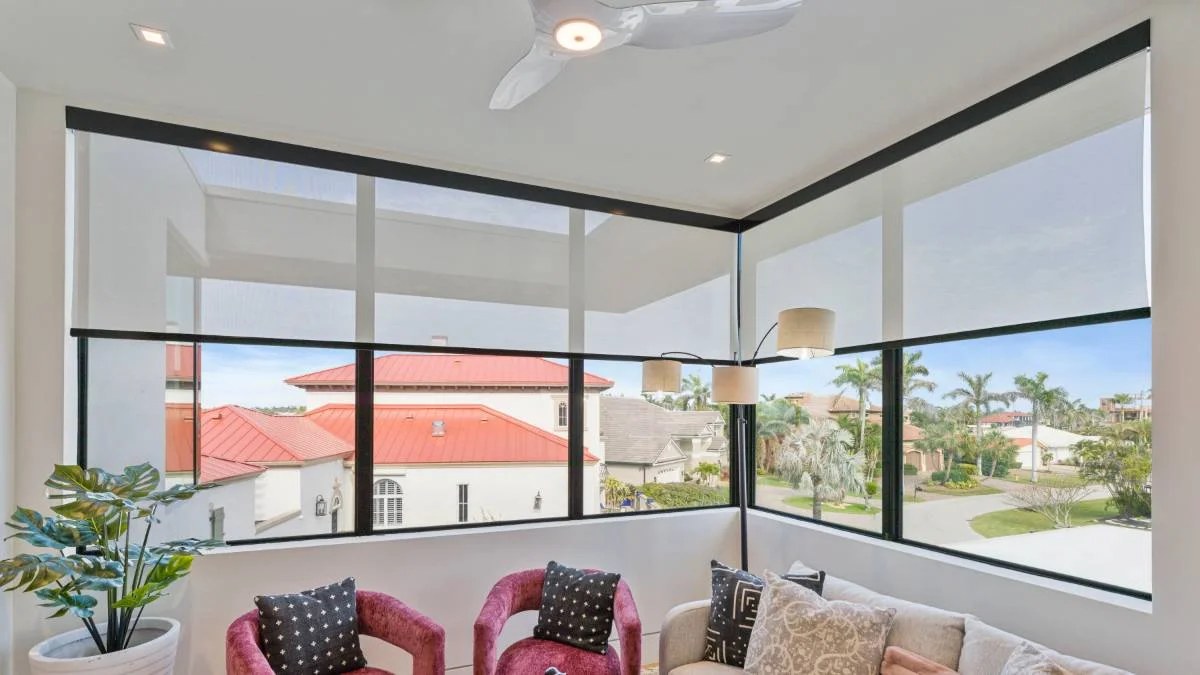
Corner windows bring in dramatic light and make a room feel larger, but they introduce one unique problem: two pieces of glass meet at an inside corner with no flat wall between them.
That inside corner is the “meeting point.” It’s where shade hardware, fabric edges, and light gaps become obvious. If you choose the wrong configuration, you can end up with:
- A privacy gap right at eye level
- Glare leaking in exactly where you want it blocked
- Shades that bump into each other when rolling up
- A look that feels improvised instead of intentional
World Wide Shades helps homeowners and designers solve corner window shades with measurements, mounting guidance, and fabrics that fit real-life architecture.
The core question: one continuous shade or two separate shades?
Most corner windows cannot be covered with one continuous shade that wraps the corner. A roller shade needs a straight headrail/roller tube; it can’t bend around an angle.
In practice, that means you’re almost always choosing between:
- Two separate shades (one per window)
- A layered approach (sheer/solar + blackout, or shade + drapery)
For most homes, the best-looking, most serviceable answer is two separate roller shades planned so the edges “meet” cleanly.
If you want help deciding, start with the online quote flow: Design your custom shades in our Builder.
Corner window layout options that actually work
The right layout depends on whether you have a true glass-to-glass corner, a thin mullion/post, or a small return of drywall.
Best for: windows with enough depth for an inside mount and a clean, modern look.
How it works: Each shade sits inside its own window frame. The fabrics come down independently.
The meeting-point challenge: You’ll usually have a small “V” gap where the two fabrics stop short of the corner.
How to minimize the gap:
- Choose an outside-mount overlap strategy if you can’t tolerate any gap (see Option 2)
- Consider a light-filtering fabric for daytime privacy without obsessing over a tiny sliver of light
- Use two shades with the same fabric and hem style so the edges align visually
For a fast path to a clean look, request free help selecting fabric openness or blackout coverage: Contact World Wide Shades.
Best for: corner windows where privacy is a top priority and you can mount above/around trim.
How it works: Instead of sitting inside the frames, each shade mounts on the wall/trim. You intentionally let one shade extend past the corner so the fabric overlaps the other.
Pros:
- Reduces or eliminates the meeting-point privacy gap
- Hides minor measuring errors better than inside mount
Trade-offs:
- More visible hardware
- Can interfere with adjacent doors/cabinets if the corner is tight
World Wide Shades can help you decide whether overlap is realistic for your trim and clearance—start here: Get help in the Builder.
Best for: living rooms and corner offices where daytime glare is the problem, but you still want views.
A solar shade can reduce glare and UV while keeping a view through the weave. Then a blackout or room-darkening shade (or drapery) handles night privacy.
If you’re exploring this approach, compare it to other rooms where solar performance matters, like in our guide to UV protection window shades.
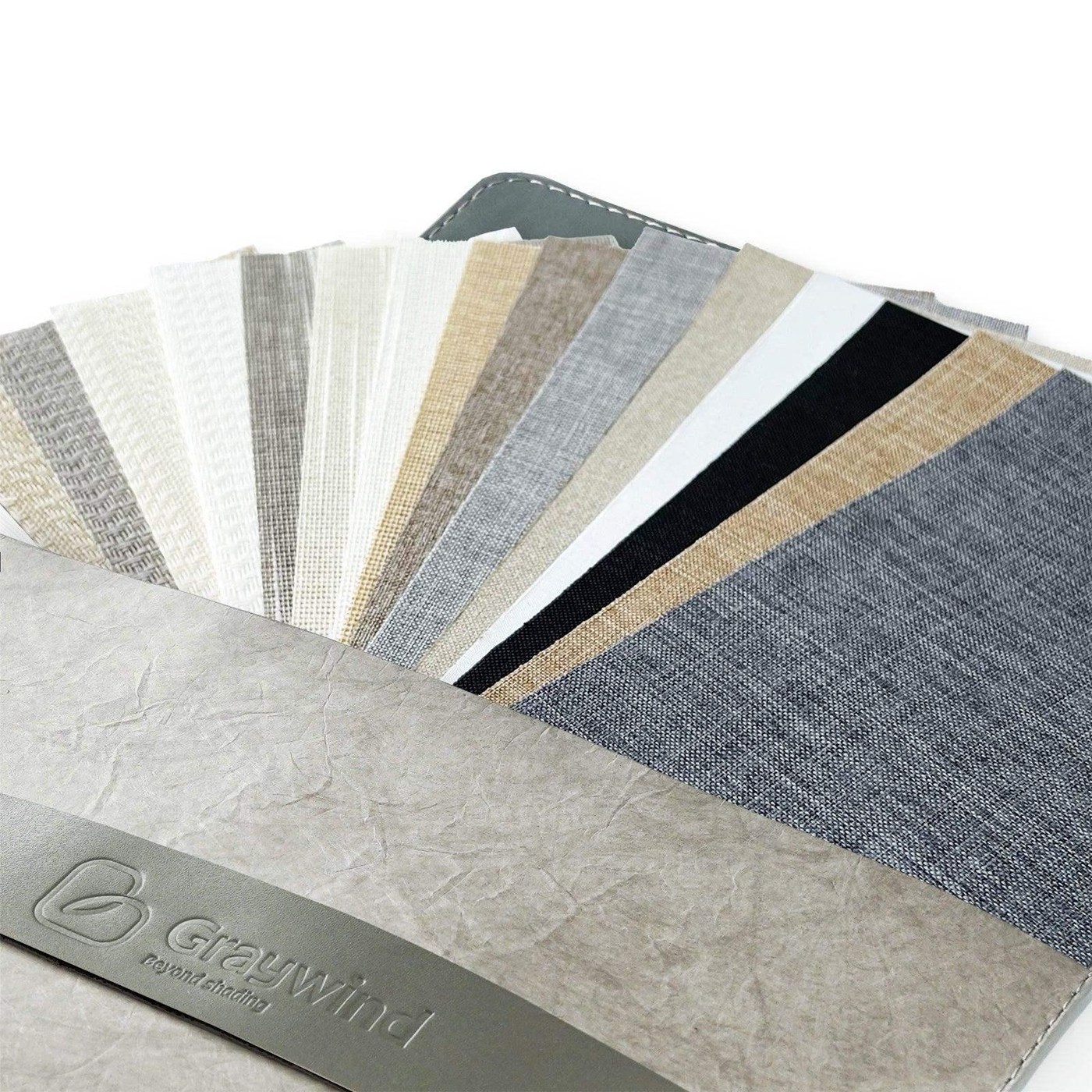
Want to see fabrics in your own lighting? Order swatches from World Wide Shades.
Best for: design-forward spaces where you want softness and you can accommodate curtain stacks.
Drapery can visually span the corner even though shades can’t physically wrap it. Many designers use roller shades for function, then drapery to make the corner feel intentional.
For deeper layering ideas, see roller shade valance options and roller shades vs roman shades.
Measuring corner windows: the mistakes that create ugly gaps
Accurate measurement is the difference between “custom” and “close enough.” Corner windows punish sloppy measurement because the gap is right where your eye goes.
- Butt-glass corner (glass meets glass): the hardest to fully close without overlap or layering
- Structural post/mullion corner: easier because you have a physical divider
- Drywall return corner: gives you wall space for outside-mount overlap
- Measure top, middle, and bottom width for each window
- Use the smallest width as your ordering width (so the shade fits)
- Confirm your depth is enough for the look you want
If you need a full refresher, World Wide Shades has a complete guide: how to measure windows for roller shades.
- Decide the coverage goal: full trim coverage, glass-only coverage, or overlap coverage
- Confirm you have room for the bracket footprint and a straight mounting surface
If you’re debating installation complexity, read how to install roller shades before you order.
Choosing the right fabric for corner windows
Corner windows often mean more light, more heat, and more visibility. Fabric choice matters.
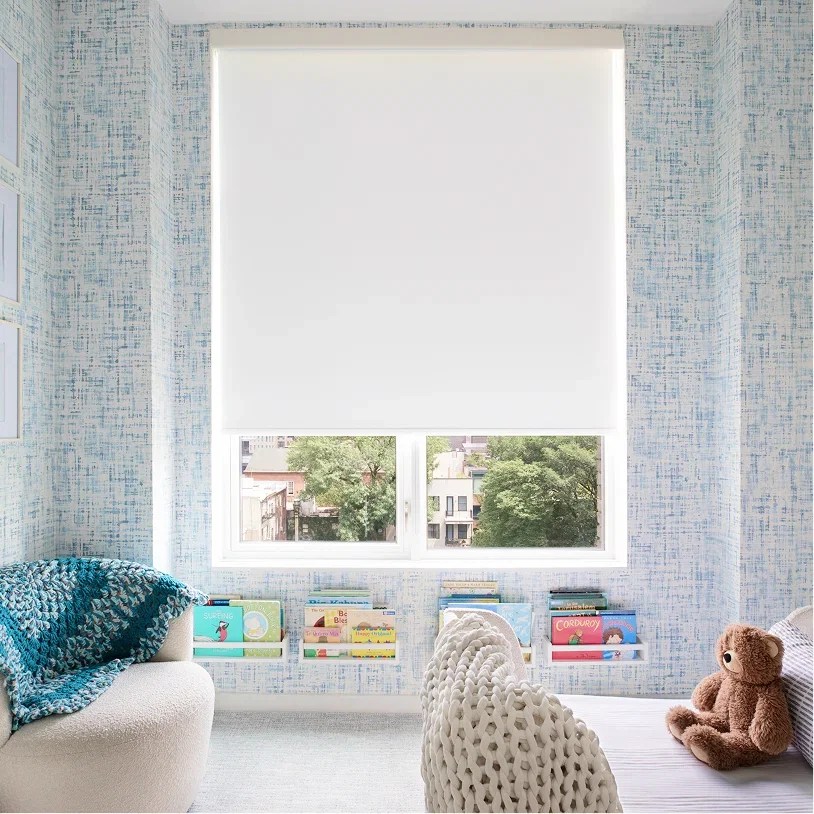
Light-filtering shades soften the room and reduce glare without making the space feel closed off.
They’re especially good for:
- Living rooms
- Dining areas
- Open-plan spaces where you want daytime privacy
If you’re not sure how “see-through” different options are, use our light filtering shades guide as a baseline.
If a corner window is in a bedroom or media area, blackout is usually worth it.
To get closer to “no light anywhere,” plan for:
- An outside mount when possible
- Side channels if your design allows
- A fabric/color that supports the darkness you want
Our related comparison can help you set expectations: blackout curtains vs blackout shades.
Corner glazing can increase solar gain, especially if one side faces south/west. A better shade strategy can reduce heat gain and help rooms feel more consistent.
For energy-focused rooms, see energy efficient window shades.
Want a recommendation for your exact orientation and glass size? Contact World Wide Shades or call (844) 674-2716.
Hardware decisions: fascia, valances, and cleaner sightlines
Because corner windows are often architectural focal points, the top of the shade (not just the fabric) is more noticeable.
A fascia or valance can:
- Hide the roller tube
- Make two separate shades feel like one design decision
- Visually align head heights across the corner
Explore style directions in roller shade valance options.
Corner windows are frequently tall, wide, or both. Even when they’re reachable, two shades can feel annoying to raise and lower daily.
Motorization helps you:
- Move both shades at the same time
- Keep the corner looking symmetrical
- Avoid inconsistent “one shade half up” moments
If you’re already planning a smart home, you may like motorized shades Alexa and Google Home and smart home motorized shades setup.
To price out motorization quickly, start a build: World Wide Shades Builder.
Synchronizing two motorized shades so the corner looks intentional
A common complaint with corner windows is that two shades never sit at the same height, especially in open-plan rooms.
A simple strategy:
- Use two motors from the same ecosystem
- Create a “corner windows” group
- Set presets like 0% (closed), 50% (glare control), and 100% (open)
If you want the easiest version of this, tell World Wide Shades your goal (symmetry, privacy, or view) and we’ll guide the configuration. Contact us or call (844) 674-2716.
Corner window privacy strategies by room
Different rooms tolerate different amounts of meeting-point gap.
- Solar/light-filtering is often enough
- Prioritize clean lines and easy daily use
- Consider motorization for “one-touch” adjustments
Start your design: Build your shades.
- Lean blackout or layered blackout
- Consider outside mount for better edge coverage
- If light gaps drive you crazy, ask about side-channel approaches
For blackout fundamentals, reference best window shades for bedrooms.
- Aim for glare control during video calls
- Choose colors that keep skin tones natural
- Consider openness factors and screen reflections
Compare strategies with best shades for a home office.
FAQ: corner window shades and the meeting-point gap
A small gap is normal with two inside-mount shades because the fabric cannot physically occupy the same space at the corner. If privacy is critical, plan an outside-mount overlap.
Usually no—roller shade tubes must be straight. Two shades or a layered design is the practical solution.
Two coordinated shades with aligned head heights, matching hems, and a fascia/valance when appropriate. World Wide Shades can help you design the pair so the corner reads as one system.
Inside mount looks minimalist, but outside mount often performs better for privacy and light control. If you’re unsure, see inside mount vs outside mount shades.
Motorized grouping and presets are the easiest approach. If you already use voice control, you can tie the corner shades into routines; see smart home motorized shades setup.
Next steps: get a corner-window plan that looks custom
Corner windows deserve a plan, not a guess.
- Start with measurements and fabric exploration in the World Wide Shades Builder.
- If you want to see textures and opacity first, order swatches.
- For layout advice on overlap, hardware, or motorization, contact World Wide Shades or call (844) 674-2716.