Roller shades are one of the few window treatments that fit RV realities: tight clearances, curved walls, and constant vibration. In this guide, the World Wide Shades Team breaks down what actually works for Airstreams, RVs, and campers — and what usually fails after one season.
Ready to price your exact windows? Start in the World Wide Shades online shade builder and get a clean quote in minutes.
For house-window fundamentals that still apply on the road, start with our measuring primer: how to install roller shades and our deep dive on pricing: how much do custom roller shades cost.
RV and Airstream window constraints (and why standard shades fail)
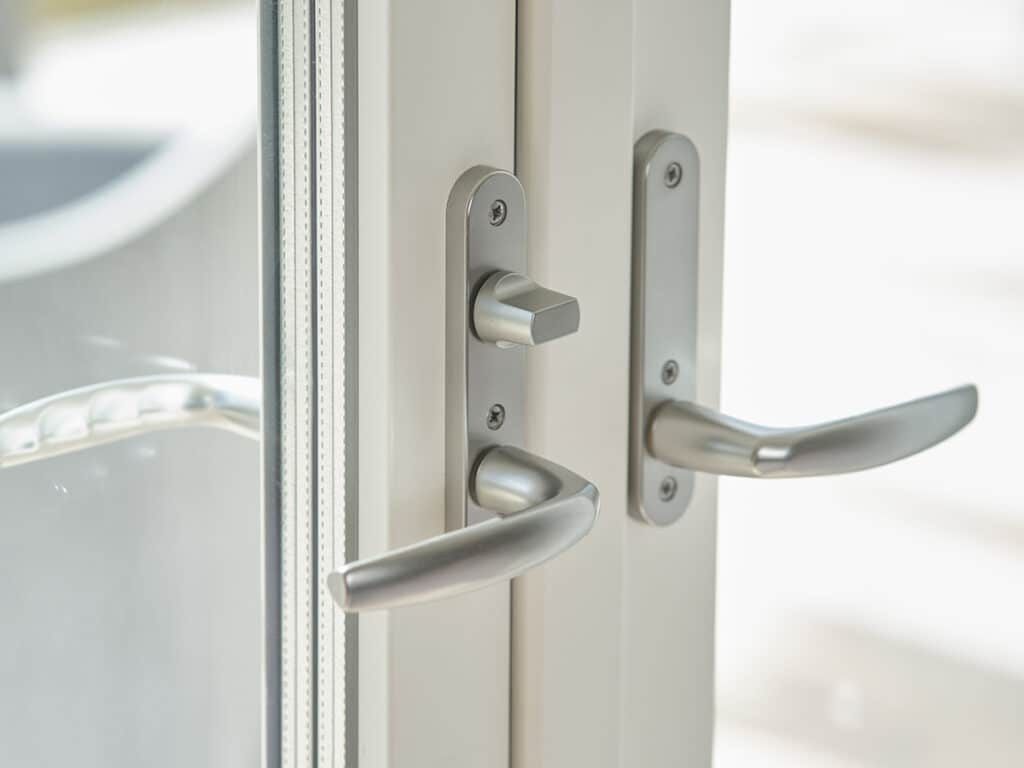
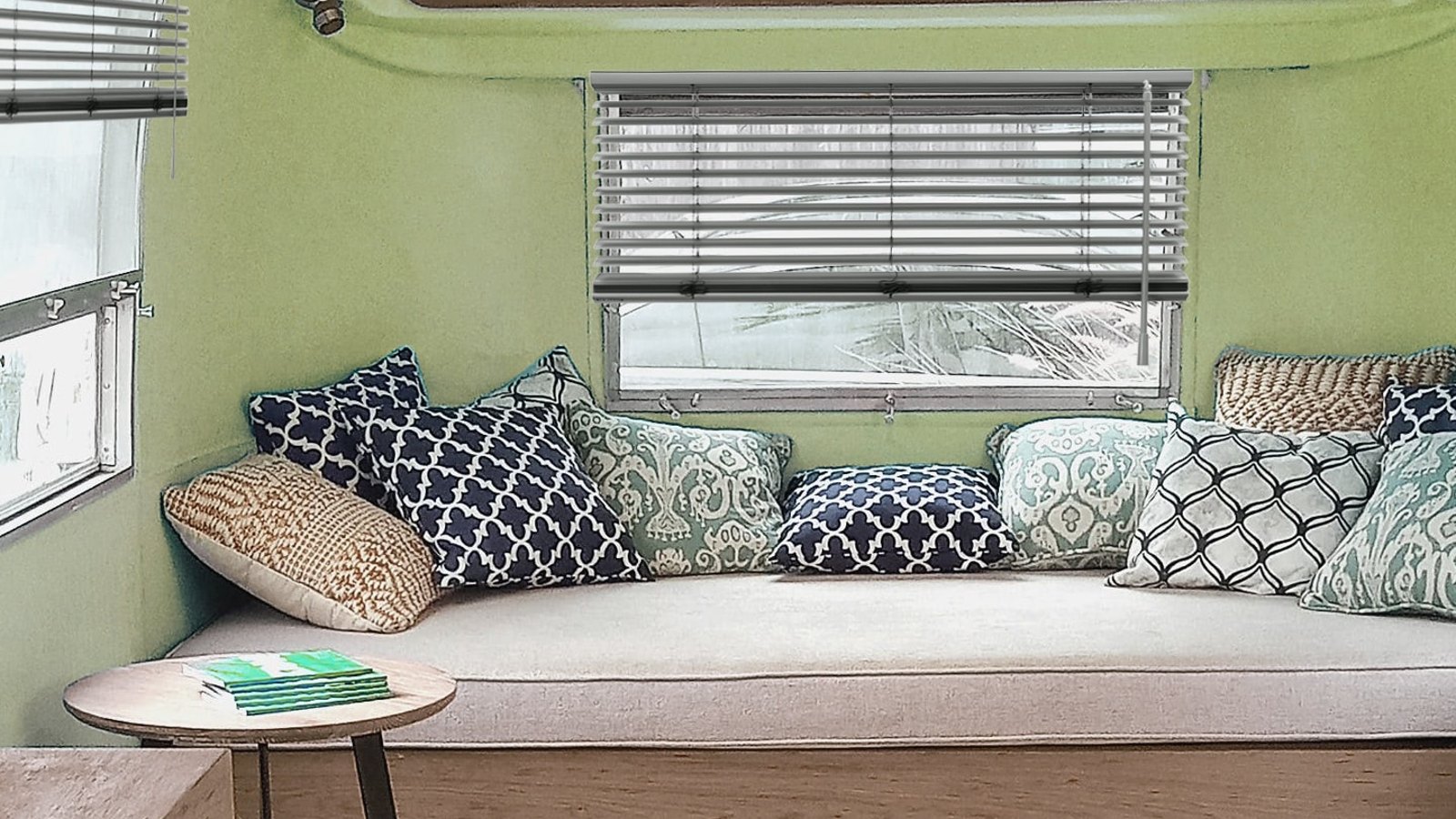
Most RV windows are smaller but harder to treat because the window area often includes trim rings, blackout frames, crank handles, and emergency egress latches. A typical RV window may only have 1–1.5 inches of flat mounting surface, and some Airstream frames have curved interiors that reduce usable depth even further.
Key failure modes the World Wide Shades Team sees in DIY RV installs:
- Side-light leaks from loose fits (a 1/8 inch gap per side can be noticeable at night)
- Warped tubes from heat buildup on south- or west-facing RV sides
- Mildew or odor from fabrics that trap humidity in bathrooms and kitchens
- Rattle from brackets that aren’t tightened into solid backing
Need help measuring or choosing mounts? Call (844) 674-2716 or reach out on our contact page — the World Wide Shades Team can walk you through it.
Best roller shade types for RVs (what to choose and when)
A true blackout RV shade is about more than fabric opacity. You also need tight sizing and a light-blocking edge strategy. If you’re sensitive to light, pair blackout fabric with a valance or side-channel style approach. For a detailed look at edge light control, read roller shades with side channels.
Solar shades are measured by openness factor (commonly 1%, 3%, 5%, or 10%). Lower openness blocks more glare and UV, but also reduces view-out. A practical RV rule:
- 1%: strongest glare control for desert sun
- 3%: balanced for most climates
- 5–10%: best view-out when heat is moderate
For an in-depth UV conversation, see UV protection window shades.
If your rig is in campgrounds with close neighbors, light-filtering shades provide daytime privacy while still letting daylight in. For room-by-room planning, our core guide is light filtering shades.
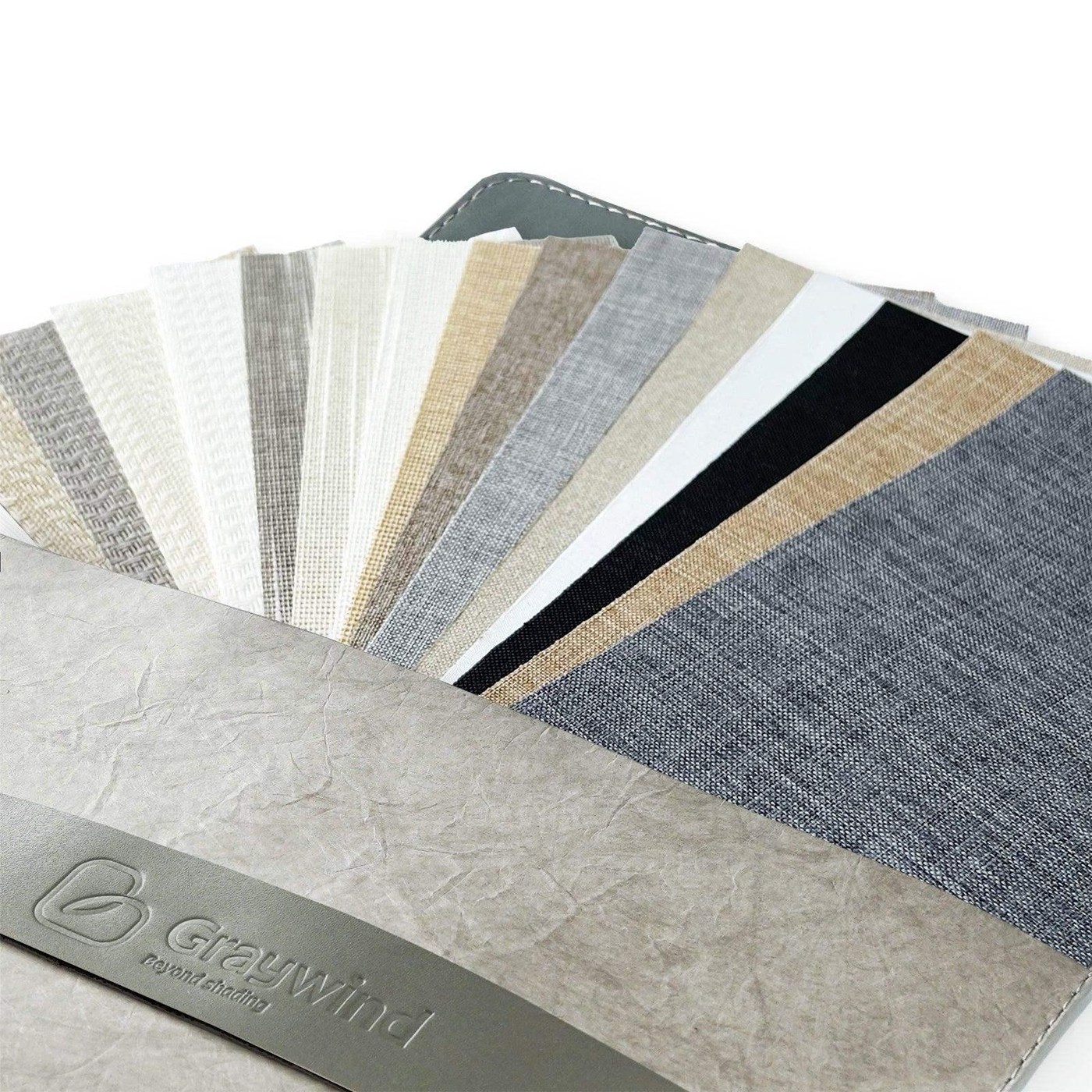
Want fabric options mailed to you? Order World Wide Shades swatches and match color in your space before you buy.
Inside mount vs outside mount in an RV
Inside mount looks cleaner and protects the shade from bumps, but only works if you have enough depth for the bracket and roll. If you have less than about 1 inch of reliable depth, inside mount can become a rattle problem on the road.
Outside mount covers irregular frames and reduces side light gaps. It’s also the easiest way to clear crank handles and window latches. Outside mount can increase “blackout performance” because the fabric overlaps the frame by 1–2 inches per side.
If you already have measurements, build your shade in a few clicks at World Wide Shades and choose light filtering vs blackout with confidence.
Measuring RV windows: the 3 numbers that matter
To avoid ordering the wrong size, measure:
- Top width (inside frame or desired overlap)
- Drop/height to the sill or below the window
- Depth/clearance for roll diameter and bracket
On many RV windows, the top width and bottom width can differ slightly due to frame taper; if they differ, order to the smaller width for inside mount.
If you want a more traditional home-window measuring walkthrough, the principles are similar to our guide on best window shades for bedrooms and the install steps in how to install roller shades.
Materials for RV roller shades: what holds up to heat, humidity, and vibration
In RVs, material matters because you’re dealing with constant temperature swings. As a general guide:
- Vinyl/PVC-coated fabrics: easiest to wipe clean; strong in kitchens and bathrooms
- Polyester weaves: stable, good color range; choose tighter weaves for durability
- Woven wood: beautiful, but can be sensitive to humidity and warping
If you’re choosing between these, compare our material guide: best fabrics for roller shades and our deeper comparison on polyester vs vinyl roller shade fabric.
Practical RV upgrades that make shades feel custom
A simple valance makes RV shades look like built-ins and reduces top light leaks. Start here: roller shade valance options.
Small spaces show color mistakes faster. Ordering swatches first is the cheapest insurance policy. The World Wide Shades Team recommends checking samples at mid-day and at night with interior lights on.
Want fabric options mailed to you? Order World Wide Shades swatches and match color in your space before you buy.
FAQ: RV, Airstream, and camper roller shades
Often, yes. Roller shades handle vibration better because the fabric is supported by a tube. Pleated shades can sag over time in heat. If you want a broader comparison, read roller shades vs pleated shades.
For most RVs, 3% openness is the best all-around choice: noticeable glare reduction with usable view-out. Go to 1% in high-sun climates or if you work on a laptop near the window.
Use outside mount overlap (1–2 inches per side), add a valance, and consider side-channel style solutions. Our dedicated guide is roller shades with side channels.
Yes, but plan power. Some motors charge via USB and are RV-friendly. If you want voice control at home, see motorized shades with Alexa and Google Home.
Call (844) 674-2716 or message the World Wide Shades Team with a photo and measurements — we’ll help you choose a bracket and mount style.
Have a tricky window (angles, tight clearances, or hardware)? Call (844) 674-2716 or message the World Wide Shades Team and we’ll help you spec it correctly.