A balanced look starts with the room
Transitional style brings traditional comfort together with modern simplicity. At the window, that can mean a clean roller-shade profile against classic trim, a natural fabric beside painted millwork, or a tailored shade layered with drapery panels. The goal is not to make every detail match; it is to choose a few finishes that connect the room’s old and new elements.
World Wide Shades helps homeowners translate that balance into practical choices: how the shade should filter light, whether it needs to disappear into the trim, and what fabric will look right next to upholstery and flooring. If you are still defining the palette, explore the World Wide Shades builder and order a few fabric swatches to compare in place.
Why roller shades work with transitional interiors
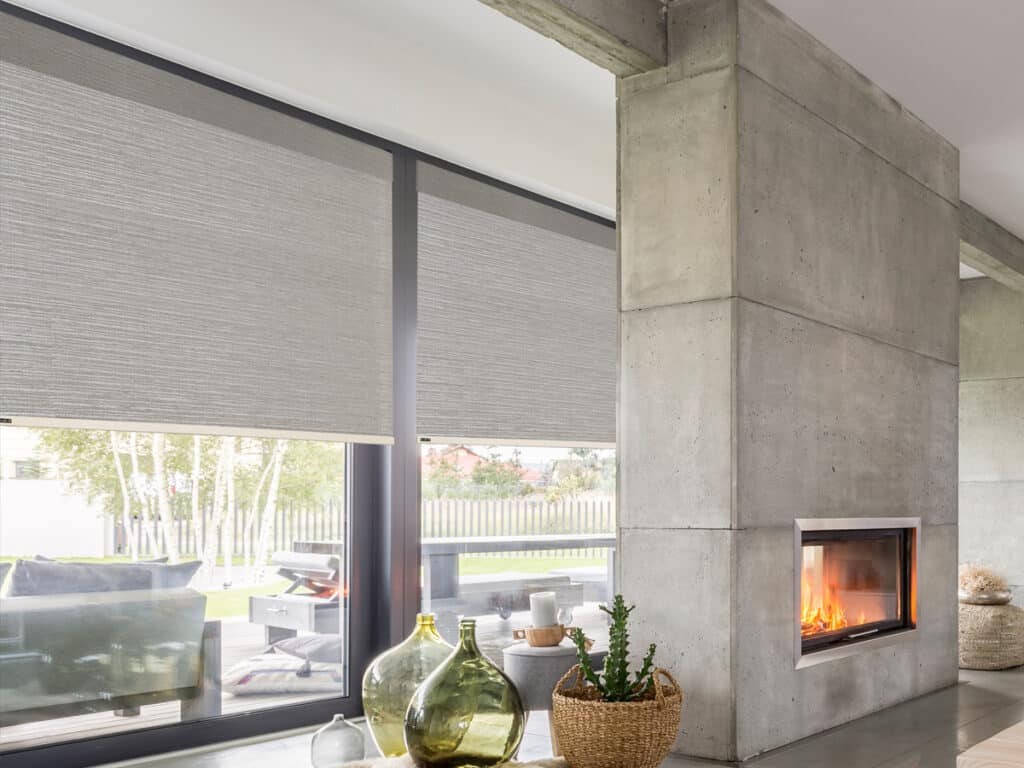
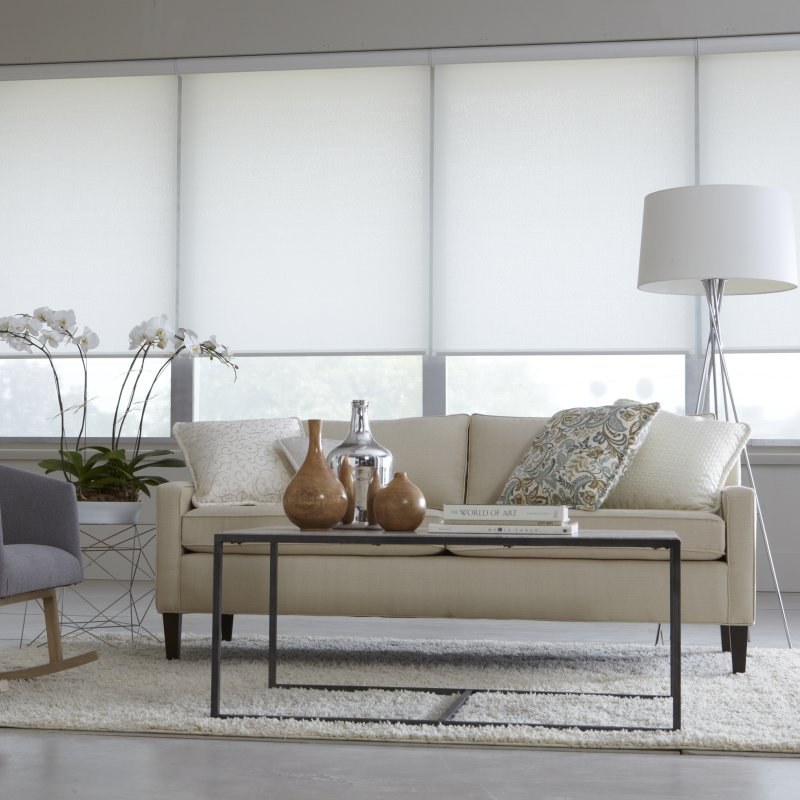
A roller shade gives a window a simple, straight-edged shape. That restrained form can sit comfortably beside carved trim, paneled doors, antique furniture, or a traditional rug without adding another pattern. It can also keep a newer room from feeling overly stark when the shade fabric has a visible weave or a warm undertone.
Transitional rooms often combine:
- Classic architecture: crown molding, baseboards, shutters, paneled walls, or divided-light windows.
- Updated furniture: lower profiles, simplified silhouettes, or mixed wood and metal finishes.
- Quiet colors: warm white, taupe, stone, mushroom, navy, olive, charcoal, or restrained blue-green.
- Layered texture: linen-look upholstery, wool rugs, wood grain, woven baskets, and matte hardware.
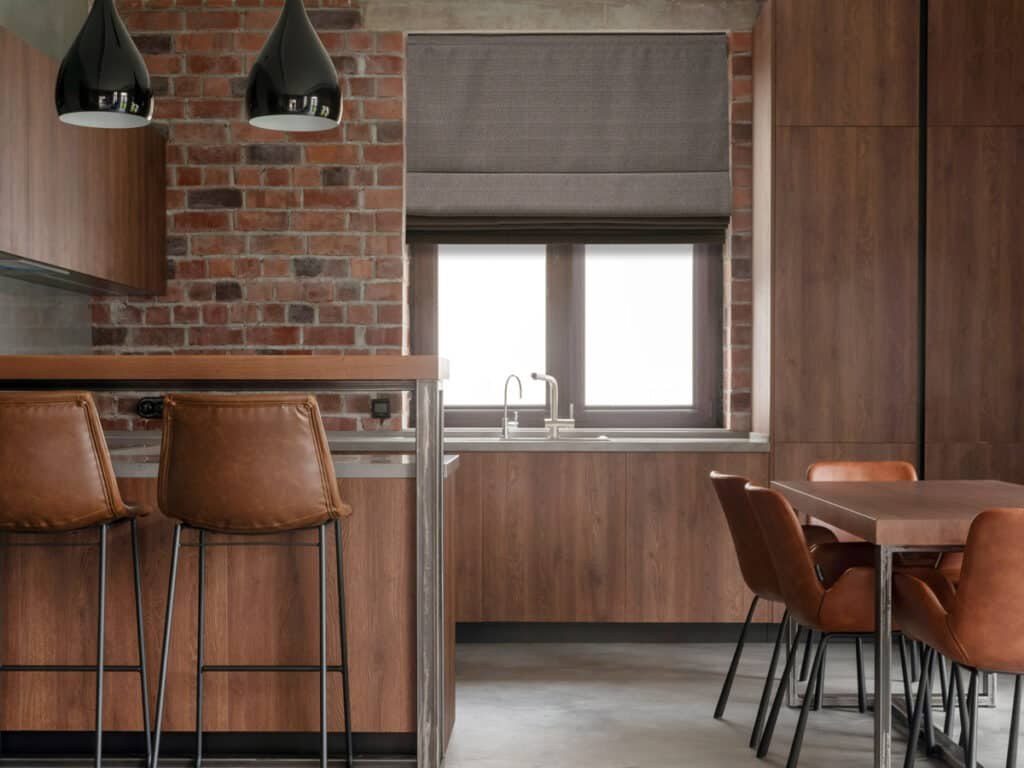
The shade can echo one of those elements instead of trying to match all of them. A warm gray fabric might connect a cool stone counter with honey-toned floors. A soft white shade can repeat the trim and let furniture supply the contrast. For a room that leans more industrial, compare industrial-style-window-shades; the shared idea is to align the shade with architecture rather than choose a generic “modern” look.
Choose the level of texture
The fabric surface determines whether a roller shade feels crisp, soft, or almost invisible.
Smooth fabrics suit rooms with patterned upholstery, detailed millwork, or strong visual accents. They also make a tidy backdrop for artwork. A smooth fabric may show dust or handling marks more clearly than a textured weave, so ask about care recommendations before choosing a very pale surface for a high-use room.
A subtle slub or crosshatch can warm up white walls and modern furniture. Keep the scale small if the room already has a patterned rug or wallpaper. If the room has natural materials, compare roller fabrics with woven wood shades; a roller shade is more tailored, while woven wood makes the material itself a stronger design feature.
Transitional style can accommodate a small geometric, stripe, or border when the rest of the room is calm. Use pattern selectively: one strong motif at the window can compete with a traditional rug or a detailed chair. World Wide Shades recommends viewing a fabric against the largest nearby surfaces—wall, sofa, and trim—before placing a multi-window order.
Match color to undertone, not just brightness
Two fabrics that both look “beige” in a catalog may lean yellow, pink, green, or gray when they sit beside a wall. A shade also covers a much larger area than a swatch, and strong daylight can change how its undertone reads.
Use a simple comparison:
- Hold the swatch vertically next to the window frame.
- Compare it with the wall paint, floor, and the largest piece of upholstery.
- Check it in morning light, midday light, and after sunset with lamps on.
- Look from across the room as well as close to the window.
- Narrow the choice to two or three fabrics before asking for a final review.
Warm white, flax, and sand tend to blend with cream trim and warm wood. Cool gray, slate, and soft white can pair with chrome, black metal, and cooler stone. A medium neutral often hides small marks more gracefully than a bright white, but the best color depends on the room’s finishes. For more color coordination ideas, see window-shades-color-guide.
World Wide Shades can help evaluate swatches for a full room instead of judging them from a phone screen; request samples here.
Select light control by room use
The shade’s appearance matters, but its daily performance matters more. Before choosing the weave, describe what happens at that window.
- Living room: A light-filtering fabric can soften daylight while keeping the room bright. A solar screen may be useful for glare on a television or laptop, though nighttime privacy can be limited.
- Bedroom: A more opaque fabric is appropriate when sleep or shift-work schedules call for a darker room. An inside mount can leave side gaps, so consider coverage and placement.
- Dining room: If evening privacy matters, select a fabric that remains private with interior lights on. A decorative drapery layer can add softness without replacing the shade’s everyday control.
- Home office: Choose based on the position of monitors and the direction of direct sunlight. A shade that preserves the view but still causes reflected glare may not solve the actual problem.
- Kitchen or bath: Confirm that the chosen material suits moisture and cleaning needs, and keep fabric clear of sinks, cooktops, and moving hardware.
The Efficient Window Coverings Collaborative describes interior roller shades as a way to control solar heat gain and glare, with performance varying by fabric. It also notes that conventional interior treatments provide only modest thermal insulation, so avoid assuming that a decorative shade alone will fix a draft or an inefficient window (interior blinds, shades, and drapes). For sun-facing rooms, compare energy-efficient-window-shades and best-shades-south-facing-windows.
If you have a design direction but need help balancing privacy and daylight, World Wide Shades can help compare fabrics in the builder.
Decide whether to layer with drapery
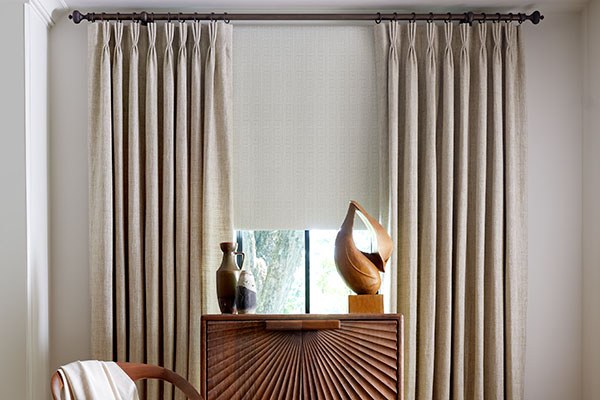
Layering a roller shade with drapery panels creates two distinct jobs: the shade manages daily light and privacy, while the panels bring softness, color, and visual height. This pairing works well in formal living rooms, bedrooms, and tall spaces where bare windows feel unfinished.
Before adding drapery, check:
- Stack space: Panels need room to move beside the glass without blocking a door or a large part of the view.
- Rod or track height: A higher mounting point can make the wall feel taller, but it must clear trim, beams, and other hardware.
- Color relationship: Repeating a shade undertone in the panels or upholstery usually creates a calmer result than using identical fabric everywhere.
- Control routine: Decide which layer is opened each morning and closed at night; motorization may be useful if both treatments are used frequently.
- Cleaning and care: Shade fabric and drapery fabric may have different cleaning instructions.
For a direct comparison of what each layer does, read roller-shades-vs-drapery-panels. If you prefer one fabric and one top treatment, explore roller-shade-valance-options.
Finish the headrail and operating details
Transitional rooms often mix old and new hardware, so a shade’s top treatment should feel deliberate. A fabric-wrapped valance can soften a contemporary mechanism; a slim cassette can look architectural; exposed hardware can work when its metal finish repeats a nearby light fixture or cabinet pull. Do not choose the headrail by appearance alone—confirm its depth, projection, and clearance with the window opening.
Lift choices also change the feel of the room. A cordless manual lift keeps the controls visually quiet. Motorization can help with tall, hard-to-reach, or frequently adjusted windows. If several adjacent shades need to align, discuss whether separate controls or a shared routine is more convenient.
World Wide Shades can help you compare the visual profile and operating system together. For a motorized setup, read motorized-shades-alexa-google-home, smart-home-motorized-shades-setup, and motorized-shades-vs-cordless-shades. Call (844) 674-2716 or contact World Wide Shades to talk through a multi-window room.
Budget for the complete window plan
The total cost of a transitional window treatment depends on the size and number of windows, the fabric, lift style, headrail, mounting conditions, and whether drapery or installation is part of the project. Compare complete proposals rather than judging by a single per-shade number. A quote should say which fabric is included, what control type is specified, whether brackets or fascia are included, and how the size is defined.
For a practical comparison, list each opening separately and identify any specialty needs, such as a deep valance, unusually tall window, doorway clearance, or motor. If a room needs both a shade and panels, keep those components itemized so you can adjust one without changing the other. The custom roller shade cost guide explains common price drivers; custom roller shades vs. big-box options can help you compare fit and finish.
World Wide Shades can prepare options around the priorities that matter to you, rather than forcing a one-size-fits-all package. Start with the World Wide Shades builder, or call (844) 674-2716 if you need a person to review unusual trim or a layered plan.
FAQ: transitional roller shades
The balance comes from pairing a simple shade shape with materials, colors, and finishes that relate to both traditional and modern parts of the room. A textured neutral, understated headrail, or tailored drapery layer can help bridge those styles.
Neither color is universally best. Compare undertones beside the trim, wall, flooring, and upholstery; a warm beige can look pink next to one paint color and golden beside another.
Yes. The shade can handle daily light control while the panels add softness and style. Confirm that the stack will clear the window, door handle, and any furniture.
Privacy depends on the fabric and lighting. Some light-filtering materials conceal clear details but can still show silhouettes when a room is lit after dark, so test the sample or request the fabric’s privacy description.
Repeat one element rather than matching everything: pick up the trim color in the shade, or echo the furniture’s metal with the headrail. Keep the fabric neutral if the room already has strong patterns.
Bring the style together one sample at a time
A successful transitional window does not need complicated hardware. Start with the room’s light and privacy needs, choose a fabric undertone that ties the finishes together, and add a second layer only when it has a clear job. World Wide Shades can help you coordinate that plan across one room or an entire home.
Compare configurations in the World Wide Shades builder, order swatches, or contact the team to ask about a specific window. For a personalized review, World Wide Shades is available at (844) 674-2716.