The quick distinction
Roller shades move vertically and roll into a compact headrail. Drapery panels hang from a rod or track and stack to the sides when open. A roller shade is usually the more compact, tailored choice; drapery makes fabric, folds, and color a larger part of the room. Neither is automatically better for privacy, insulation, or cost—the fabric, fit, and hardware determine the outcome.
World Wide Shades helps homeowners match the treatment to how a room works. If you want a clean line at the glass, start with the World Wide Shades builder. If the room needs softness as well as light control, compare shade fabrics and request World Wide Shades swatches.
Compare what each treatment changes
A roller shade can be stopped at a chosen height, but most roller fabrics do not tilt to direct light. A solar screen can preserve part of the outside view while reducing glare; a more opaque fabric can block more light but also removes more of the view. With inside mounting, some light may pass around the sides.
Drapery panels can be drawn apart to reveal nearly the full glass, or closed across it. The fabric’s weave and lining affect how much light passes through, while gaps at the rod, floor, and center overlap affect how well the room darkens. For bedrooms or media rooms, compare the specific system rather than relying on the word “blackout.” See blackout-curtains-vs-blackout-shades for edge-gap tradeoffs.
Privacy is a fabric decision, not just a product-category decision. An opaque roller fabric usually offers more nighttime privacy than a solar screen. A lined drapery panel can provide strong coverage when closed, while a sheer may preserve daylight but reveal silhouettes after dark. If privacy matters on a street-facing window, test a swatch with a lamp on behind it.
Both treatments can change how a room feels, but do not expect an ordinary interior shade to act like insulation in a wall. The Efficient Window Coverings Collaborative notes that the thermal-insulation benefit of conventional interior blinds, shades, and drapes is generally modest—normally not greater than R-1—and that heavier, thermally lined drapes can perform somewhat better than conventional shades when fully closed (interior coverings overview). The same source explains that performance depends on factors such as color, fabric, window type, and whether the covering is deployed.
For a more precise evaluation, check available product ratings instead of comparing marketing terms. The U.S. Department of Energy points consumers to the Attachment Energy Rating Council and the Efficient Window Coverings Collaborative for window-attachment product and selection information (DOE window and attachment resources). For sunny rooms, World Wide Shades also recommends reading energy-efficient-window-shades and best-shades-south-facing-windows.
Roller shades use little side-to-side space when raised. That matters beside a bookcase, kitchen counter, door, or narrow wall pier. Drapery requires stack room outside the glass; when closed, panels also become a major color and texture in the room. That is an advantage if you want softness, but it can be inconvenient when the wall is short or the glass is already narrow.
Height is another design lever. Mounting a rod or track above the frame can make the wall feel taller, but the hardware must clear crown molding, beams, and door trim. In a room with low ceilings, a simple roller shade can keep the window from feeling crowded.
Roller fabric is a single plane, so routine care is usually gentle dusting or vacuuming with a brush attachment, following the maker’s instructions. Drapery can be more demanding: some fabrics are washable, while lined, delicate, or structured panels may require professional cleaning. Ask for care instructions before ordering, especially for kitchens, pet areas, or a room with frequent open windows.
Cost: compare the full installation, not one unit
There is no universal price rule that makes shades or drapery less expensive. Roller-shade cost changes with opening size, fabric, lift type, headrail, and whether the project needs custom widths or motorization. Drapery cost depends on fabric price, yardage, lining, fullness, hardware, and the number of panels. Taller windows use more fabric; wider coverage may require additional panels, a longer track, or a motor.
When reviewing quotes, put the same scope beside each option:
- Number and finished size of each opening
- Fabric or shade collection and lining
- Manual, cordless, or motorized operation
- Headrail, fascia, rod, or track included
- Installation, programming, and removal of old treatments
- Cleaning or maintenance expectations
The custom roller shade cost guide can help identify shade-specific price drivers. A custom comparison should state whether the measurement is an opening size or finished treatment size; product deductions and hardware dimensions vary.
World Wide Shades can help compare the complete project before you place an order. Use the builder to explore shade configurations, or call (844) 674-2716 and contact World Wide Shades with the window count and rough sizes.
When to choose roller shades
Roller shades are a strong fit when you want:
- A compact, uncluttered profile around windows or doors.
- A consistent treatment across several rooms.
- A choice among screen, light-filtering, and opaque fabrics.
- Easy operation at large spans or high windows.
- A base layer that can pair with curtains later.
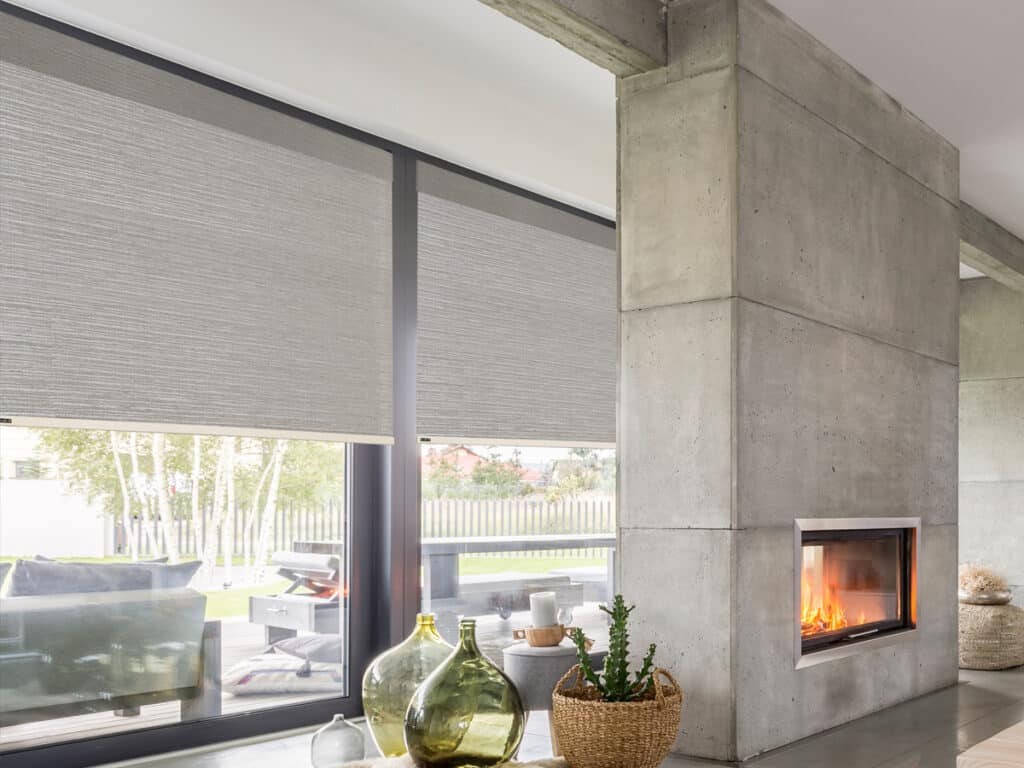
They are often practical in kitchens, offices, contemporary living rooms, and rooms with limited side-wall space. The main compromises are lack of slat-style directional control and possible light gaps around the edges, especially with an inside mount.
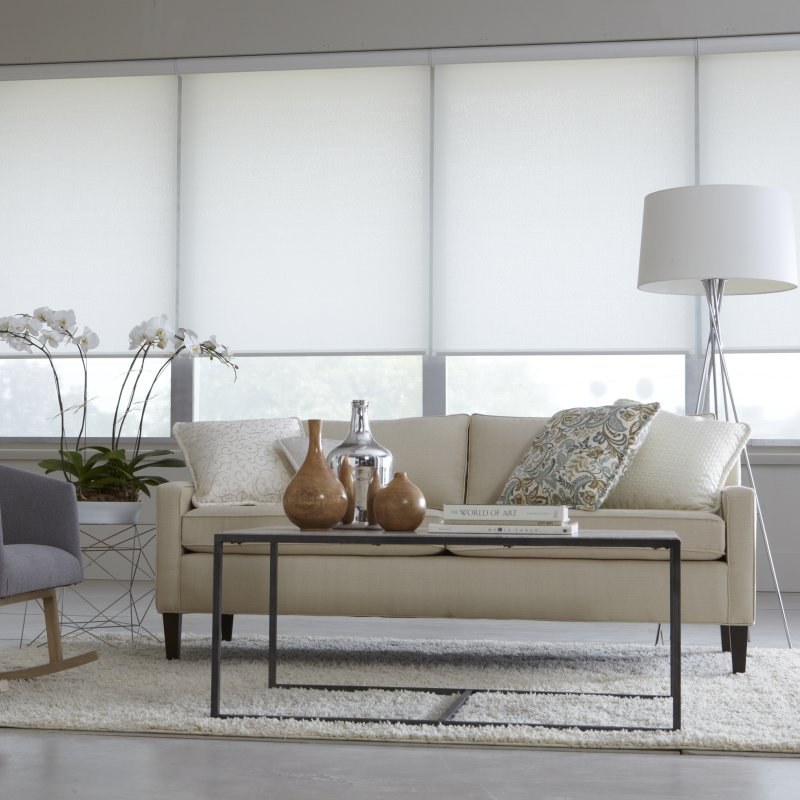
If the room has strong traditional elements but you still want a clean treatment, transitional-roller-shades explores how fabric texture and color can soften the profile. For living-room options, see best-roller-shades-living-room.
When to choose drapery panels
Drapery is worth considering when you want:
- Soft folds, pattern, color, or a more formal finish.
- A treatment that can stack clear of the window.
- More textile presence in a large room.
- A second layer over a shade for flexible light and privacy.
- Coverage that extends beyond the window trim.
Panels are less convenient when there is no room for the stack or when fabric would interfere with a door handle, heater, or furniture. A continuous track can make operation easier on a wide opening, but hardware, fullness, and panel weight should be considered together. For a clean combination, roller-shades-for-french-doors offers ideas for maintaining door clearance.
World Wide Shades can help if you are choosing between one layer and two; send the window layout through contact and explain where the panels would stack.
A layered pair can solve two different jobs
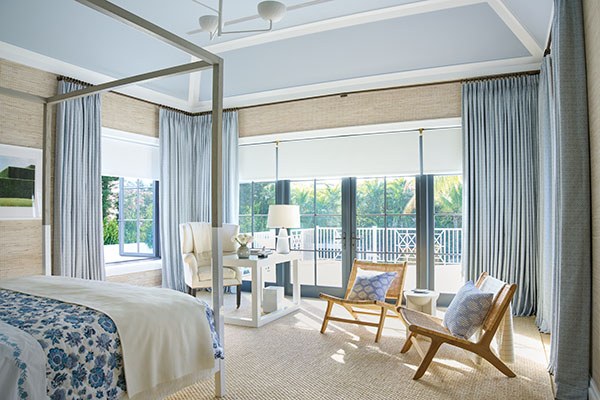
A roller shade and drapery panel are not mutually exclusive. The shade can provide the daily light-control layer close to the glass, while stationary or operating panels add color and softness. In a bedroom, an opaque shade can manage light while panels finish the wall. In a living room, a solar screen can reduce daytime glare and panels can add texture.
To keep the combination functional, check that:
- The shade hardware fits inside the frame or has a planned outside mount.
- The rod or track projects far enough to clear the shade and its brackets.
- Panels stack beyond the glazing instead of covering a large section of the view.
- The open panel does not block a door, handle, or walkway.
- The shade can still be reached and operated independently.
If both treatments will move daily, consider whether the controls should remain manual or be motorized. Motorized-shades-alexa-google-home explains smart-control considerations, and motorized-shades-vs-cordless-shades compares the two lift approaches. World Wide Shades can compare a one-layer and layered quote; start your design or call (844) 674-2716 for guidance.
How to measure for a fair comparison
Measure the opening before requesting a proposal, but confirm whether each supplier wants the exact opening or the final product size. Do not subtract for brackets or fabric roll unless the supplier specifically asks you to. A professional measuring guide recommends taking width in three places, keeping the smallest for an inside mount, and measuring height in three places, keeping the longest; it also stresses checking clearances and stating whether a measurement is the opening or finished size (measuring shades, drapery, and sliding doors).
Drapery is generally planned around its hardware, not only the glass. Measure the rod or track length, note the desired stack side, and decide whether the panels should float above the floor or break onto it. Roller shades need frame depth, bracket clearance, and handle clearance. Those details can change the recommendation even when the two products cover the same opening.
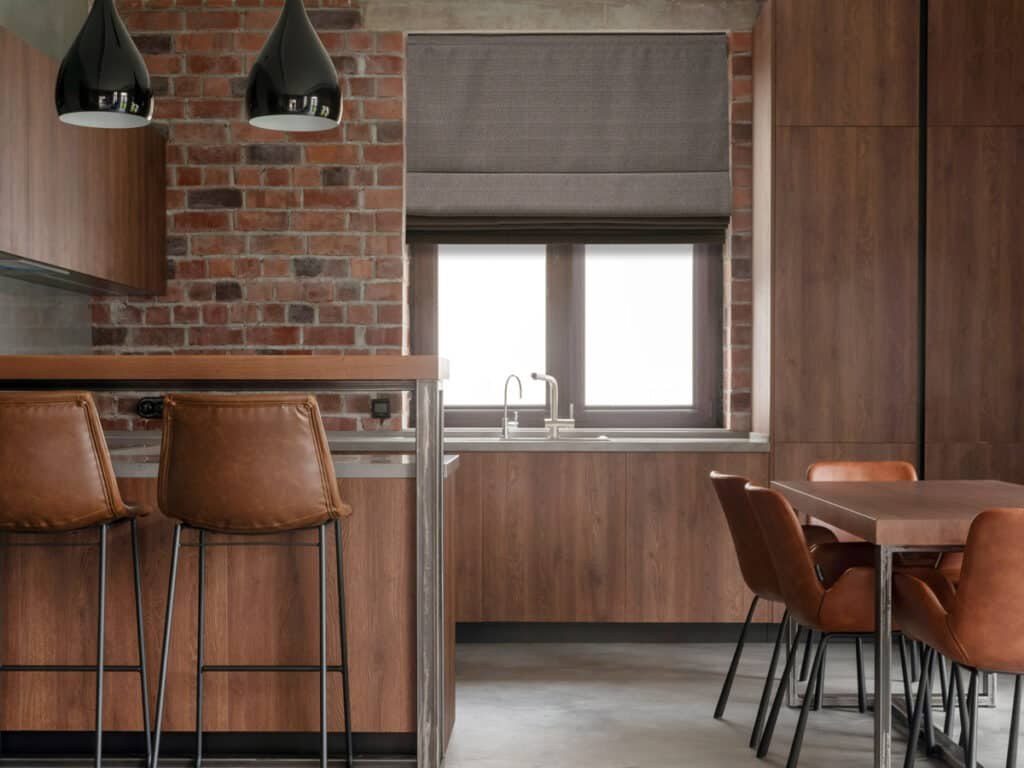
For homes with varied architecture, cross-reference window-shade-trends-2026 and industrial-style-window-shades; both show how the window treatment can support rather than compete with the room.
FAQ: roller shades vs. drapery panels
They can, if you choose an opaque fabric and the installation controls edge gaps. Properly lined drapery can also darken a room, but light may enter at the sides, top, or center overlap. Compare the fabric and mounting system.
Heavier, thermally lined drapes can offer somewhat more insulation than conventional interior shades when fully closed, but the overall effect is modest and depends on the window and installation. Check product-specific information rather than expecting a large energy reduction.
Roller shades often suit limited wall space because they roll up close to the window. Drapery can still work if the panels stack outside the glass without interfering with furniture or doors.
Yes, in many rooms. Check that there is enough space for a rod or track above the shade hardware and that the panels can clear the window when open.
Roller shades are often simpler for routine dusting, while some drapery fabrics require laundering or professional cleaning. The care method depends on the selected material, so review its instructions before ordering.
Choose for the way you use the room
If the priority is a clear, compact profile, roller shades are a practical starting point. If you want textile warmth and a decorative frame around the window, drapery may be the better lead layer. If you need both daily control and a softer finish, combine them and plan the hardware together.
World Wide Shades can help you compare fabrics, operation, and fit for the same opening. Use the World Wide Shades builder, order swatches, or contact the team with a room photo and rough dimensions.