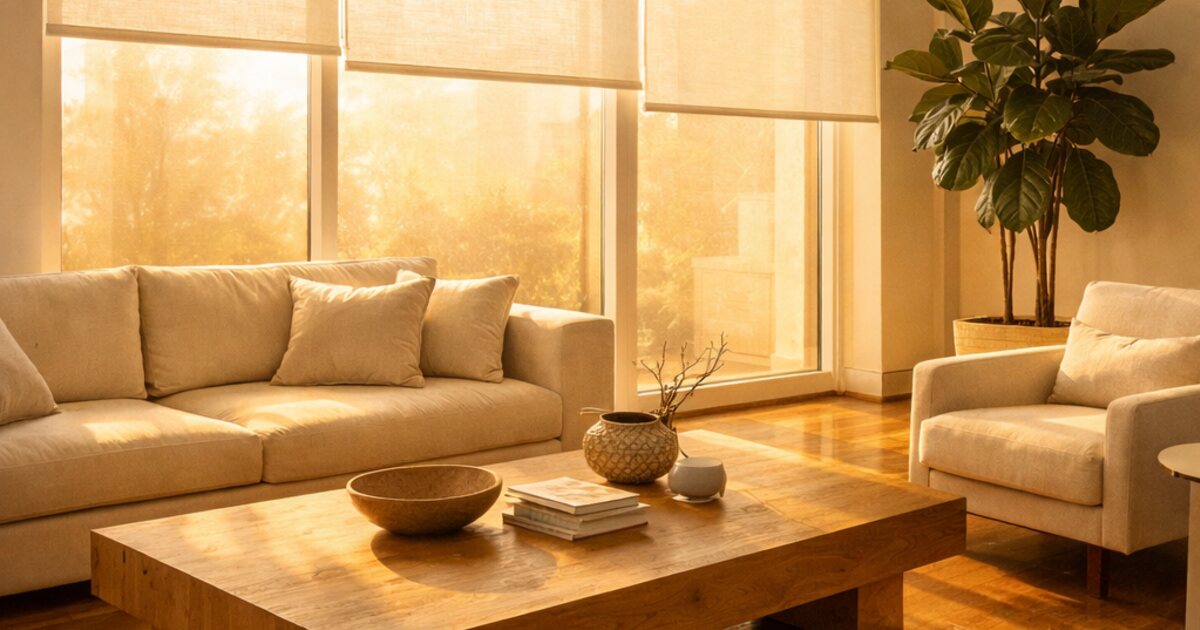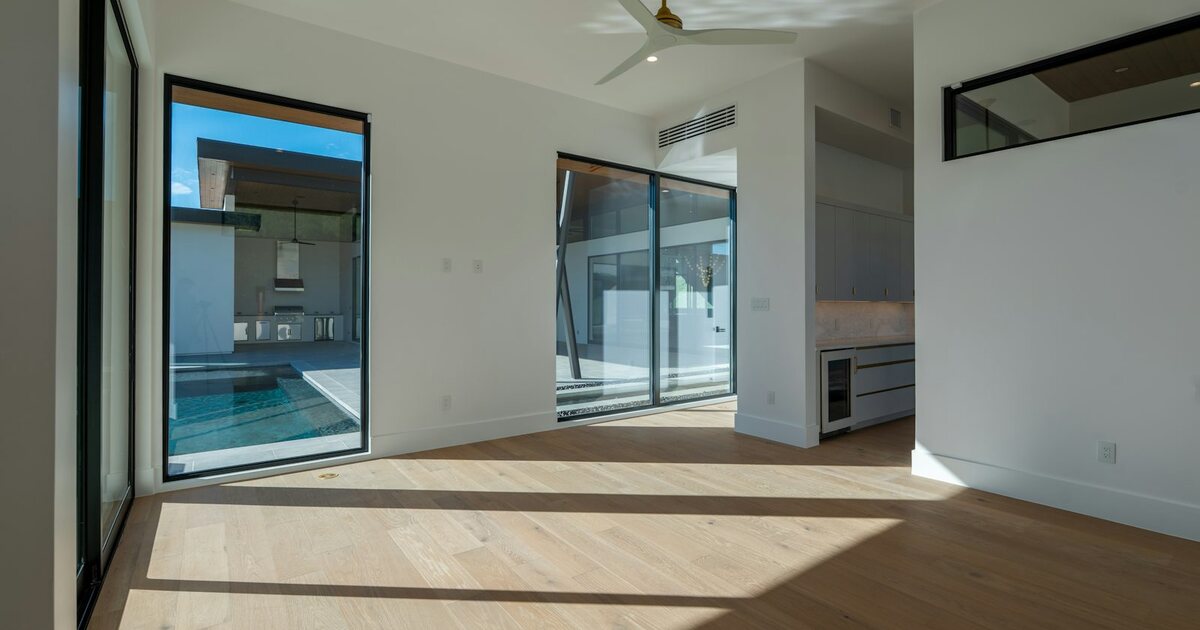
For Pittsburgh homes, choose roller-shade fabric by room: light-filtering for everyday living spaces, solar fabric for direct glare with a desired view, and blackout fabric for bedrooms or media rooms. Pittsburgh International Airport's 1991–2020 normal daily high and low are 36.3°F and 21.4°F in January, compared with 82.9°F and 63.4°F in July; those seasonal normals are context, not a reason to use the same shade throughout the home (National Weather Service Pittsburgh monthly normals).
Last updated: 2026-11-25
| Rank and option | Best use | Main trade-off |
|---|---|---|
| 1. Light-filtering roller shade | Living rooms that need daylight with less direct glare | A lit room may still show silhouettes |
| 2. Solar roller shade | Bright windows where view-through matters | Not dependable for nighttime privacy |
| 3. Blackout roller shade | Bedrooms and rooms where darkness is important | Light can still enter at the perimeter |
| 4. Motorized roller shade | High windows or repeated adjustments | Requires a remote and a charging plan |
| 5. Outside-mounted roller shade | Shallow or uneven openings and extra frame coverage | Covers more trim and needs wall clearance |
The best product depends on whether the complaint is glare, privacy, difficult operation, or heat loss. A roller shade is strong for appearance, light, and privacy; a cellular shade or storm product may be a better answer if insulation is the primary goal. Start with the best roller shades for living rooms and the fabric guide for related decisions.
1. Light-filtering fabric for everyday rooms
Light-filtering fabric is the most versatile starting point for a living room, dining space, or home office when you want daylight but not harsh brightness. It softens the window without hiding it entirely, so the room keeps a connection to the outdoors. It can be a better fit than a solar shade when you do not need a clear view-through and prefer an even glow.
Its main drawback is privacy at night. If lights are on inside and the street or a nearby house is dark, silhouettes may remain visible through a translucent fabric. Decide whether that level of privacy works for the actual window, not just for the room's name. A front room near a sidewalk may require more opacity than a room that faces a private garden.
World Wide Shades offers more than 500 colors across 40-plus fabric families from Phifer, Mermet, Ferrari, Copaco, Senbesta, and Texstyle. The product information includes a genuine fabric photo and the mill's published openness factor. Compare those specifics in the World Wide Shades fabric library, especially when choosing between two close neutral tones.
2. Solar fabric for direct sun and preserved views
Choose solar fabric when sunlight causes screen glare or discomfort, but the outside view is still important. It is a practical choice for windows that face a bright street, garden, or hillside, where closing the view completely would be a poor trade. Compare the published openness factor: it is a more meaningful selection input than choosing a fabric by color alone.
A more open weave typically allows more view-through and light; a denser fabric tends to screen more. The exact look depends on the material and its color. Use the fabric photo and published information together, then decide whether the shade needs to provide evening privacy as well. Solar fabric should not be treated as a full-day privacy layer when room lights are on.
For rooms with a direct sun problem, note when the glare occurs and where it lands. A window that causes afternoon reflections on a television may call for a different fabric than a bedroom window used at night. The guide to south-facing shades can help explain why orientation matters, while the roller-shade fabric guide compares material choices.
3. Blackout fabric for bedrooms and media rooms
Blackout fabric limits light passing through the fabric itself, making it appropriate for bedrooms, nurseries, or media rooms where darkness is more important than a view. It is often a better choice for an east-facing bedroom than a shared living area. If you have several bedrooms, consider the use of each one and whether anyone needs daylight during the day before selecting the same material everywhere.
Fabric opacity is only one part of the result. An inside mount may leave side or bottom gaps where light enters around the fabric. An outside mount can cover more of the opening, but it also covers part of the trim and requires a suitable mounting surface. Decide whether you want to reduce early-morning light or make the room much darker; avoid assuming that one material alone will create complete darkness.
World Wide Shades custom orders are made to the opening dimensions entered by the customer. Because those orders are not returnable, review the fabric description, mount choice, and measurements together. If you need a second opinion before submitting the order, use the fit-check option described below.
4. Motorization for hard-to-reach windows and daily routines
Motorization can be helpful on high windows, behind furniture, or anywhere the shade is adjusted repeatedly during the day. It is also convenient when several shades should operate together. Choose the fabric first, then decide if a remote is enough or if you want app, voice, and schedule control.
World Wide Shades uses battery-powered Automate motors by default, which do not require new wiring. A remote is required. If you already have a Somfy remote and want a shade paired to it, confirm its model and select Somfy only for that specific purpose. Automate Pulse 2 adds app, voice, and schedules for Automate motors, but does not remove the remote requirement.
There is no charger in the box. Any USB-C charger works, or you can add the motor charger when ordering. Allow for the recommended 2.5 inches of inside depth when choosing a motorized shade. Read smart-home motorized shade setup if you are deciding which windows should move together, and roller shades for tall, narrow windows if the opening is an unusual proportion.
5. Outside mounting for limited depth or a more covered frame
An inside mount can preserve the frame's appearance, but it depends on enough depth and a clear place for the brackets. World Wide Shades requires at least 1.5 inches of depth for an inside mount and recommends 2.5 inches for a motorized shade. Check the frame and any locks or handles at each window rather than assuming that every opening in the home is alike.
Measure width at the top, middle, and bottom and use the narrowest measurement. Measure height at the left, center, and right and use the tallest. Enter those exact opening measurements in the builder; the factory makes the deductions, so do not subtract from them yourself.
If the frame is shallow or uneven, choose an outside mount and plan to add 2–3 inches to each side and 3 inches above the opening. That overlap can improve coverage around the frame, but it may cover decorative trim or create a conflict with a nearby wall. For a project with a narrow or raised window, compare guidance in custom shades for waterfront condos.
When cellular shades or storm products are the better choice
If your biggest concern is cold air or heat loss through the window, a cellular shade or storm-window product may outperform an interior roller shade for that job. The Department of Energy explains that cellular shades trap air in honeycomb cells and can reduce nighttime heat loss and cold drafts; its factsheet summarizes controlled tests and models, not a promise of identical results in every Pittsburgh home (DOE's cellular-shades factsheet).
World Wide Shades specializes in custom roller shades. A roller shade may still be a good fit if you want a clean profile, a fabric choice, daylight control, or privacy, but it is not an insulating cellular product. If the principal problem is winter comfort, compare those specialist products first; if the window mainly needs glare control or a finished appearance, a custom roller shade may be a better match.
Compare fabric, fit, and terms before ordering
For each window, note room use, strongest sun period, view preference, and privacy requirement after dark. Then compare the published openness factor for solar fabrics and review the genuine fabric photo against the room's paint, flooring, and trim. World Wide Shades does not have a physical sample program, so use the catalog's material details and ask for assistance if the online photos are hard to distinguish.
A free Zoom or Google Meet fit check is available as a second review. It is useful for discussing an inside or outside mount, but it is not a substitute for accurate measurements. Custom orders are not returnable. If a measurement error occurs, World Wide Shades provides one free recut, with shipping paid by the customer. A manufacturing defect reported within 30 days is remade at no charge; motors have a one-year warranty.
Delivery is typically 2–4 weeks; limited-stock fabrics can take 3–4 weeks. U.S. shipping is free. To compare fabrics and see live pricing in the World Wide Shades builder, configure the window measurements exactly as taken. If the frame has unusual trim or you want help comparing opacity, contact World Wide Shades or call (844) 674-2716.
Frequently asked questions
Light-filtering fabric is a good starting point when you want softer daylight. Solar fabric is better when glare is the issue and you still want a daytime view; blackout is usually reserved for bedrooms and media rooms.
Not necessarily. Cellular shades or storm-window products may be a better fit when reducing heat loss and cold drafts is the primary objective; a roller shade is more directly suited to light, glare, privacy, and appearance.
Not reliably. When a room is illuminated and the outdoors are darker, silhouettes may be visible through the fabric, so consider an opaque option if nighttime privacy matters.
For an inside mount, measure width in three places and use the narrowest; measure height in three places and use the tallest. Enter the exact opening size and let the factory make its deductions.
Use the World Wide Shades fabric library, then configure the opening and see live pricing in the builder. If you have a question about fit or motorization, contact World Wide Shades or call (844) 674-2716.
Choose the outcome before the fabric
In Pittsburgh, seasonality is a reason to choose shades by room rather than to buy the same opacity for every window. Light-filtering material suits everyday living spaces, solar fabric balances glare and view, and blackout fabric is best when limiting light is the lead requirement. If winter heat loss is the problem, compare cellular or storm products before a roller shade. Use the World Wide Shades builder to configure the window and see live pricing.