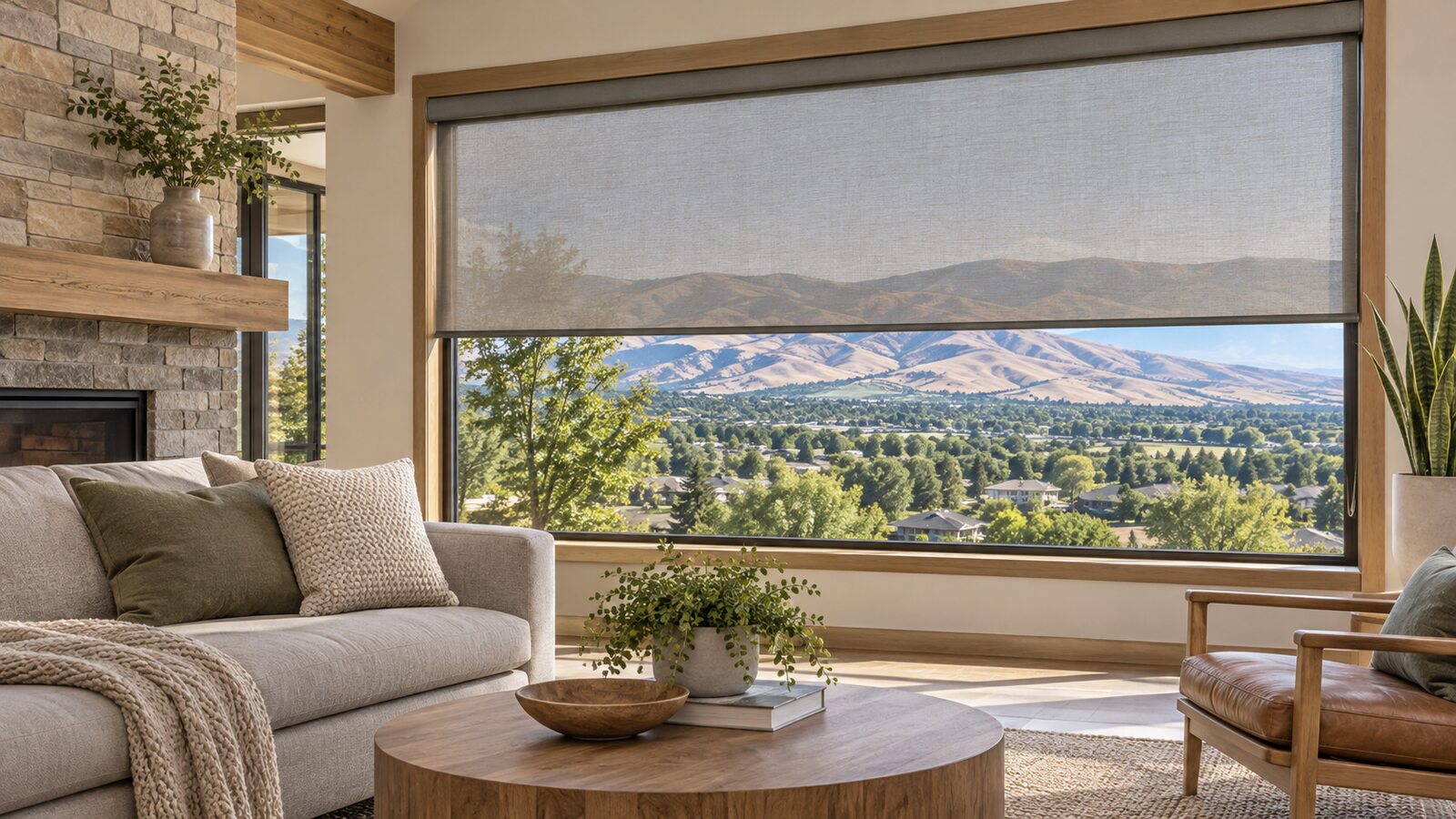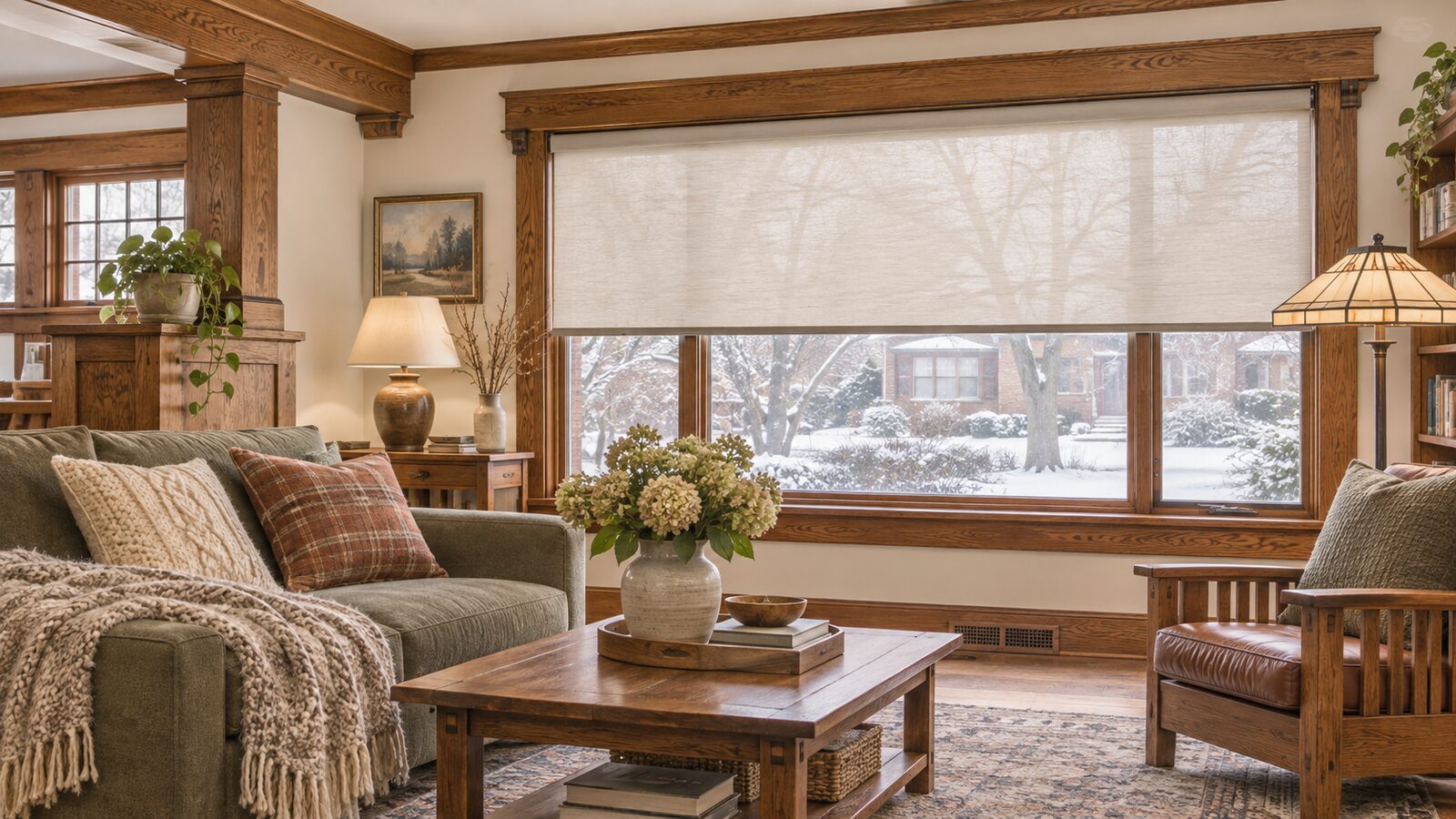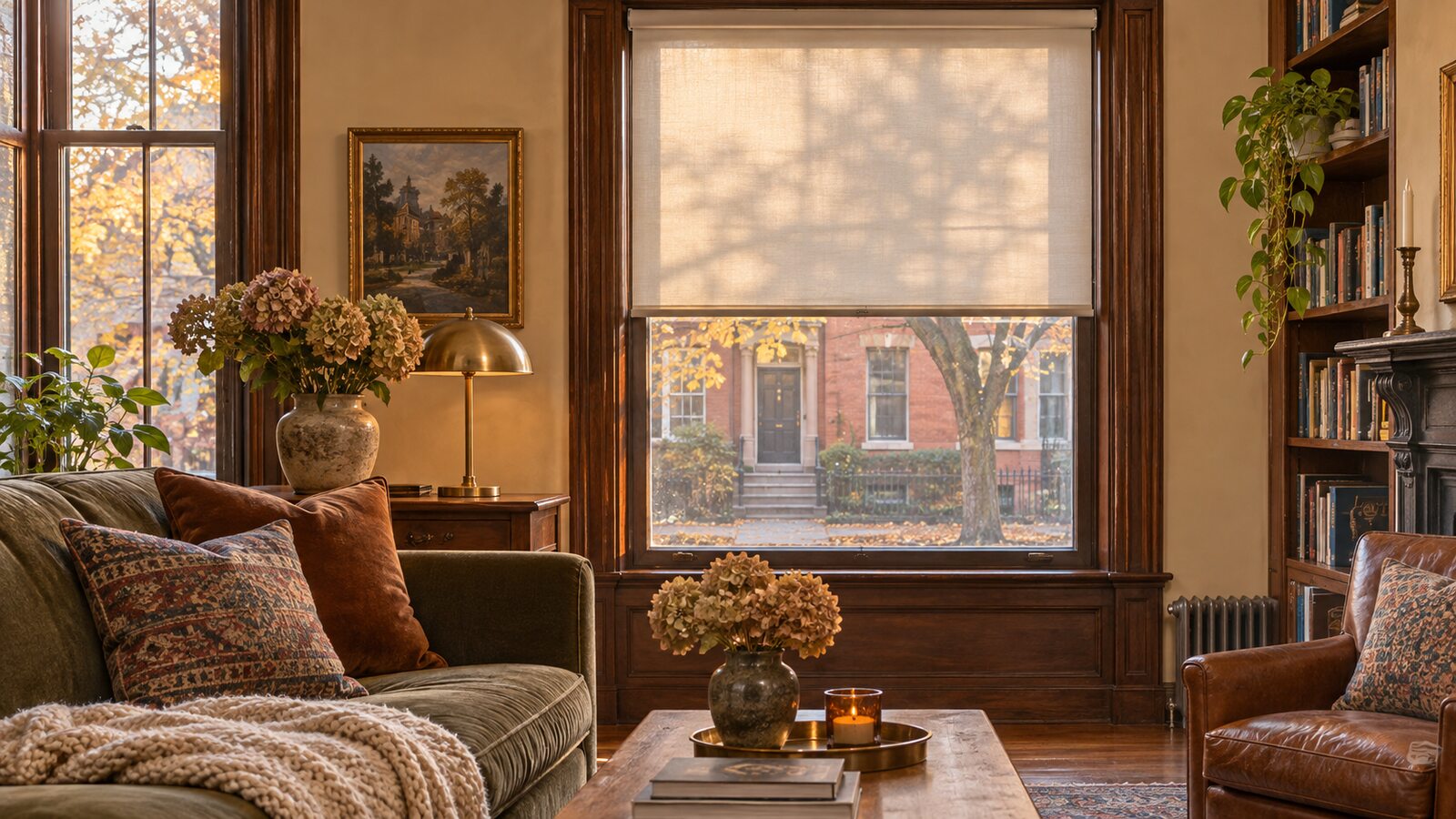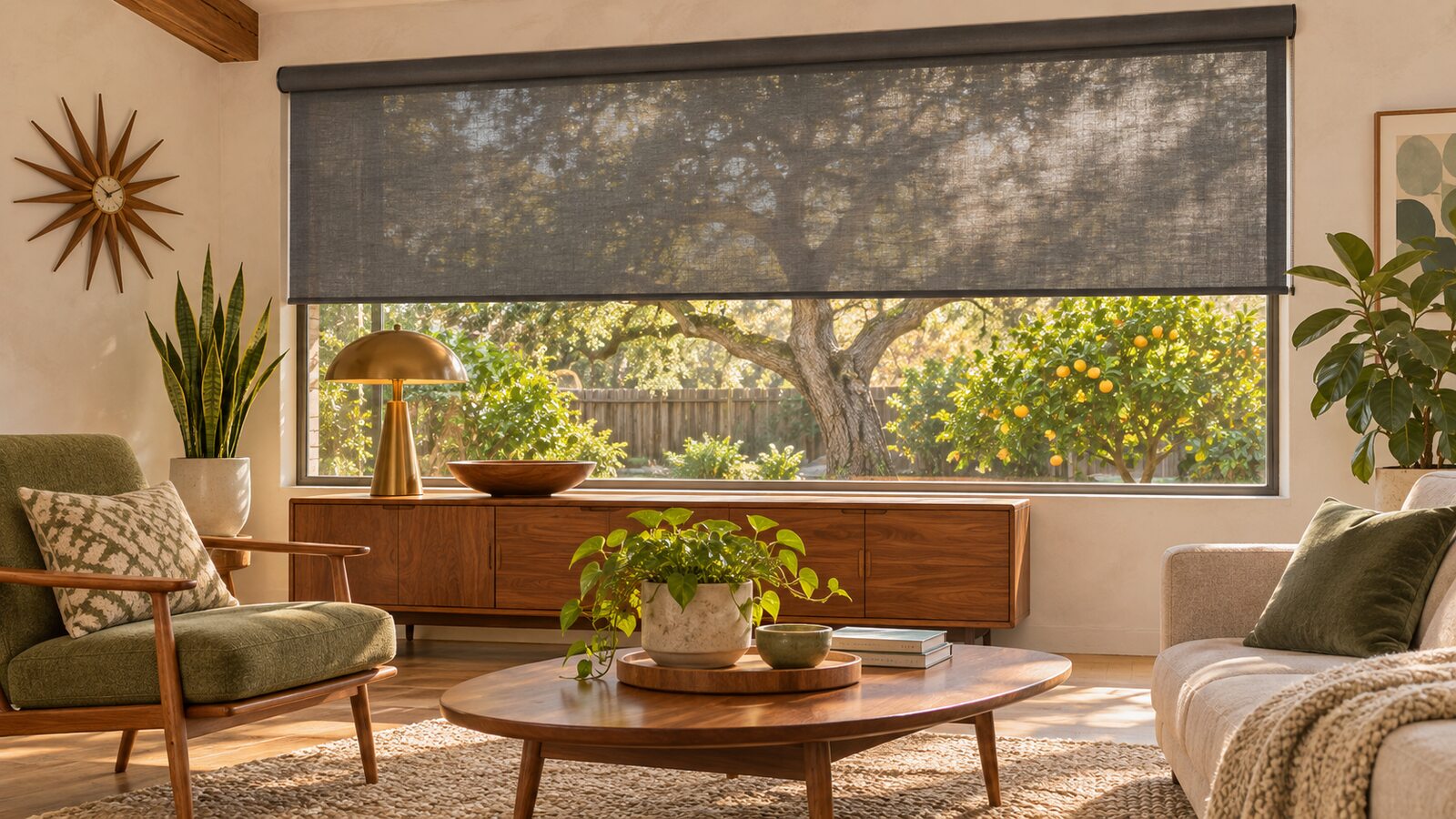
For most Sacramento homes, a solar-screen roller shade is the best choice on sunny windows where you want to keep the view while cutting glare. Use light-filtering fabric where you want softer, more even daylight, and add blackout only in rooms where real darkness matters.
Last updated: 2026-11-26
Sacramento's sun is the design problem here. The National Weather Service's climate narrative for the area describes abundant sunshine most of the year and a nearly cloud-free sky through the summer months. That means a shade in a west-facing living room or a kitchen nook is working on bright, low-angle light for long stretches, not just on the occasional sunny afternoon.
| Rank | Option | Best use | Trade-off |
|---|---|---|---|
| 1 | Solar-screen roller shade | Sunny living areas, views you want to keep, afternoon glare | Less daytime privacy than denser fabrics, and privacy shifts after dark with lights on |
| 2 | Light-filtering roller shade | Rooms that need softer daylight and more privacy | Brightens the room more than a solar screen at the same color |
| 3 | Blackout roller shade | Bedrooms, nurseries, and media rooms | No view when closed, and light can show at the edges |
| 4 | Motorized roller shade | Tall, wide, or hard-to-reach windows and sun that changes through the day | Needs a remote and a charging plan |
| 5 | Exterior sun screen (from another maker) | Glass that takes direct sun and heat all afternoon | Mounted outside, so it is a different product and install |
1. Best for sun and glare: solar-screen roller shades
A solar-screen fabric is a woven material with a stated openness factor, and that number is the one to look at. A tighter weave lets less light through and cuts glare more. A more open weave keeps the view clearer. Sacramento homes with big back-yard sliders, west-facing family rooms, and front windows that catch the late sun are where this fabric earns its place.
The real decision is how much view you are willing to trade for comfort. Darker colors generally preserve the outside view better when the shade is down, because they reduce the bright contrast of the window. Lighter colors look cleaner against the wall but let the glow of the glass show more. Read the mill's openness factor on each fabric page rather than guessing from a photo.
World Wide Shades is 100% hand-built custom, and the fabric library currently has 497 colors across 40 families from Phifer, Mermet, Ferrari, Copaco, Senbesta, and Texstyle. Browse the fabric library to compare openness factors and genuine photos, then start a shade in the builder. For a deeper look at orientation, see our guide to shades for south-facing windows and UV protection shades.
2. Best all-around comfort: light-filtering roller shades
Light-filtering fabric is denser than a typical solar screen. It diffuses daylight instead of cutting through it, so a room feels calm rather than dimmed. In a Sacramento living room it works well on north- and east-facing windows, where the light is bright but not harsh, and on any window where neighbors or a street are close.
The trade-off is the view. A light-filtering shade gives you privacy and soft light, but you will see less of the yard when it is down. If you want the best of both, many homeowners use solar screens on the sunny view windows and light-filtering fabric on side or street-facing windows, in a matching color so the house reads as one design.
Our light-filtering shades guide walks through opacity and color in more detail, and the roller shade fabrics guide compares fabric types. If you are not sure which side of the house needs which, call World Wide Shades at (844) 674-2716 and we will talk it through.
3. Best where darkness matters: blackout roller shades
Bright summer evenings can run late, and early light can arrive before you want it. Blackout fabric is the right call for bedrooms, nurseries, shift-work sleepers, and any room used for screens. It is not the right call for a main living area, since you lose both the view and the daylight when it is down.
Keep expectations realistic: a roller shade blocks the fabric area, but light can still appear around the edges. If total darkness is the goal, an outside mount that overlaps the opening helps, and so can a valance or a deeper headrail cover. We compare the options in blackout curtains vs. blackout shades, and window shades for the bedroom covers fabric and color choices for sleep.
A common Sacramento setup is a dual approach: a blackout shade in the bedroom and a light-filtering or solar shade elsewhere. That keeps each room doing the job it needs without a one-size-fits-all fabric.
4. Best for changing sun: motorized roller shades
The sun angle changes through the day and through the seasons, and a shade you have to walk to is a shade you leave in the wrong position. Motorization helps most on tall windows, wide sliders, and rooms where you want the shade down by early afternoon without thinking about it.
World Wide Shades motorized shades use a rechargeable battery, so there is no wiring. Automate is the default motor. Somfy is offered only if you already have a Somfy remote. A remote is required with every motorized shade. The Push 5 remote controls up to 5 shades. The Pulse 2 hub adds app control, voice control, and schedules, and it works with Automate motors only. A charger is not included, but the motor charges with a USB-C cable or a Motor Charger.
If you plan to motorize, give the opening extra depth. The minimum inside depth for an inside mount is 1.5 in, and 2.5 in is recommended for motorized shades. A shallower window can take an outside mount instead. For setup details, see smart-home motorized shades and motorized shades with Alexa and Google Home.
5. When an exterior screen is the better answer
An interior roller shade handles glare and fades light, but it works after the sun has already come through the glass. An exterior screen sits outside the window, so it addresses sun before it reaches the glass. For a window that takes strong direct sun for hours, such as a large west-facing pane or a patio door, an exterior screen can be the better tool for heat. World Wide Shades makes interior roller shades, so an exterior screen would come from another maker.
The trade-offs are practical. An exterior screen changes the outside of your home, may need HOA or landlord approval, and is a separate install. It also does not give you the privacy and finished look of an interior shade, so many homeowners pair the two: an exterior screen on the hottest glass and an interior roller shade for privacy, color, and evening control.
For a broader look at how interior shades fit into home comfort, read our energy-efficient window shades guide. For sliders and French doors, see roller shades for French doors.
How to choose by room
Start with the problem in each room, not the fabric. In a family room with afternoon glare, choose a solar screen and a color that keeps the view. In a kitchen with a window over the sink, a light-filtering fabric is easier to live with, and roller shades for kitchens and bathrooms covers moisture and cleaning. In a bedroom, choose blackout. In a living room with a big view and strong sun, start with a solar screen and consider motorization.
Color matters as much as fabric type. Warm whites and creams look inviting but brighten the glass. Grays, bronzes, and charcoals recede and often keep the view clearer. Our window shade color guide helps you match the shade to walls, trim, and flooring.
Measuring is where a custom order succeeds or fails, so take it slowly. Measure the width at the top, middle, and bottom and use the narrowest. Measure the height at the left, center, and right and use the tallest. Enter the exact opening, since the factory makes the deductions and you should never subtract anything yourself. For an outside mount, add 2 to 3 in on each side and 3 in above the opening.
How World Wide Shades handles your order
Every shade is hand-built to your measurements. Orders typically take 2 to 4 weeks, or 3 to 4 weeks for limited-stock and specialty fabrics, and shipping within the US is free. We do not run a sample program, so rely on the mill's openness factors and genuine fabric photos to choose.
Every order includes a free fit check over Zoom or Google Meet. Defects are remade free within 30 days, and motors are covered for 1 year. If a window was mismeasured, we will recut the shade once at no charge, and you cover the shipping. Custom orders are nonreturnable, which is why we encourage the fit check before you order. You can read about the fit process and ask questions through our contact page.
Frequently asked questions
A solar shade is usually better on windows with direct sun and a view you want to keep. A light-filtering shade is better where you want soft, even light and more privacy. Many homes use both.
Not reliably. With interior lights on and the sky dark, people outside can see in through most solar fabrics. For evening privacy in a bedroom or bathroom, choose light-filtering or blackout fabric.
Only where darkness matters to you, such as a nursery, a shift-worker's room, or a room with a bright street light outside. Elsewhere, light-filtering fabric is often enough.
Inside mount looks cleanest when your window has enough depth: at least 1.5 in, and 2.5 in is recommended for motorized shades. If the window is shallower, or you want more light blocked at the edges, choose an outside mount.
World Wide Shades orders typically take 2 to 4 weeks, or 3 to 4 weeks for limited-stock and specialty fabrics. Shipping is free in the US.
Every order includes a free Zoom or Google Meet fit check. If a shade was cut for the wrong measurement, we will recut it once for free, and you cover shipping. Defects are remade free within 30 days.
Start your Sacramento shades
Ready to choose? Compare fabrics in our fabric library, configure your shades in the builder, or call World Wide Shades at (844) 674-2716 or reach us through the contact page for a fit check before you order.