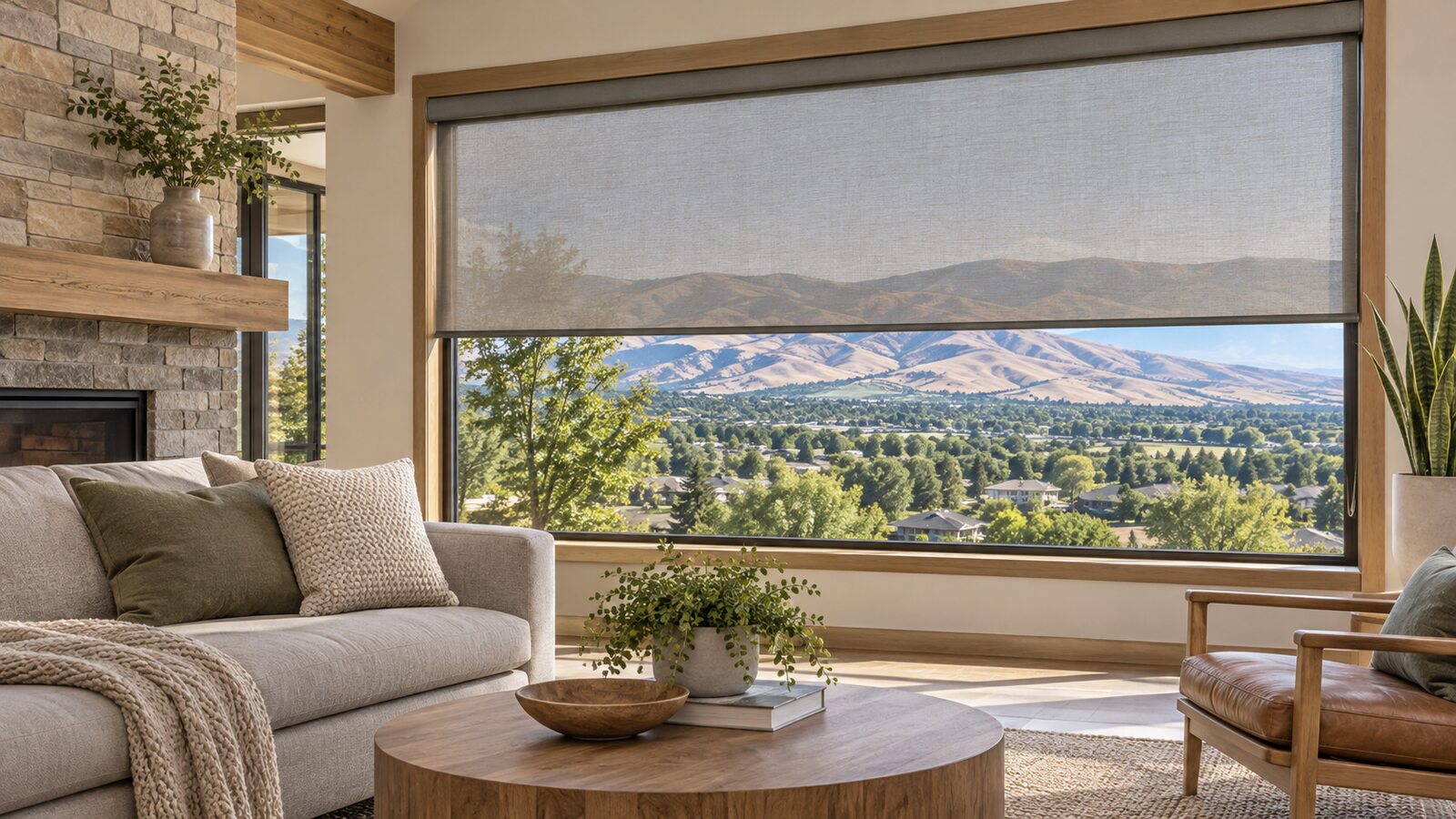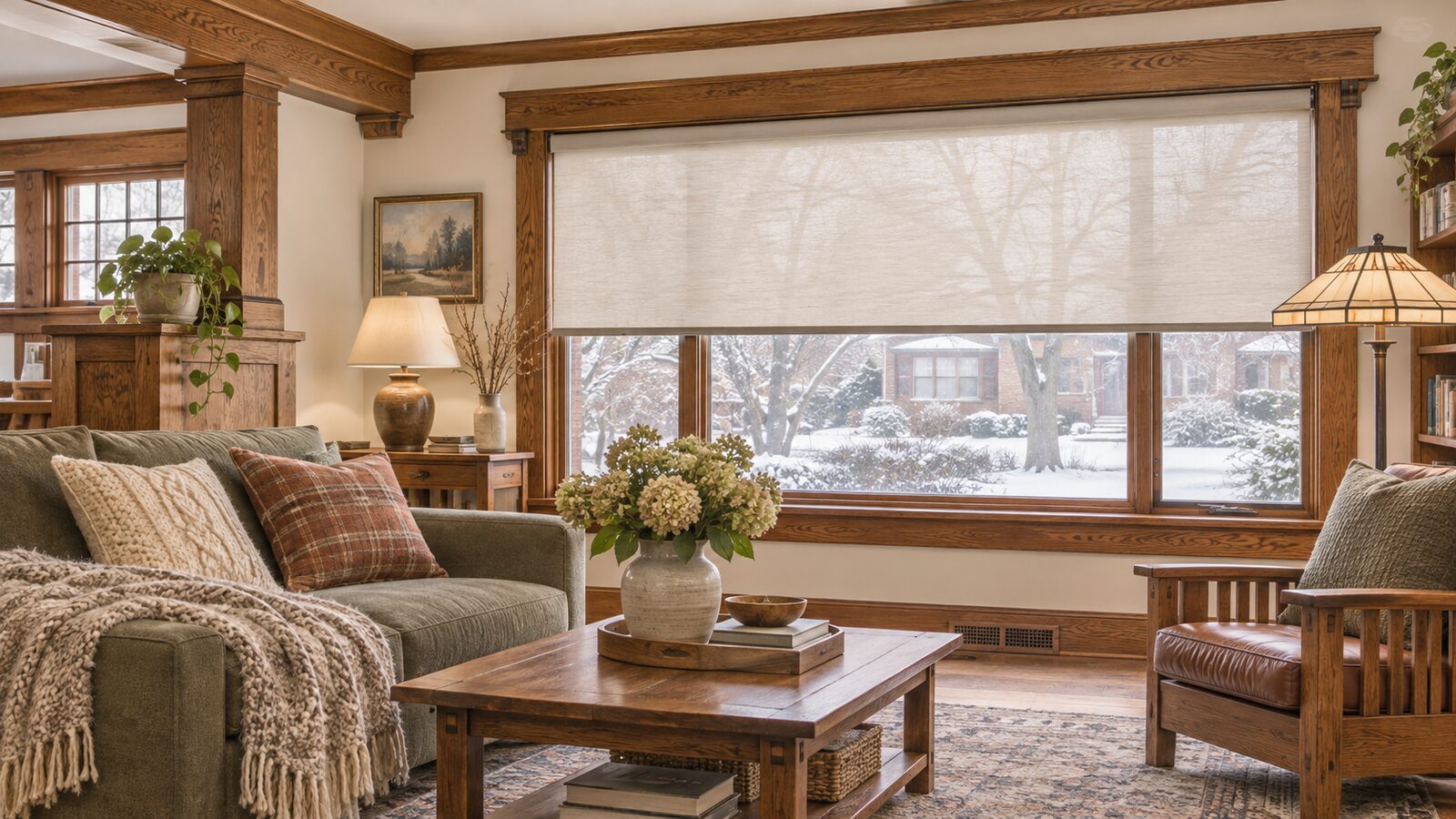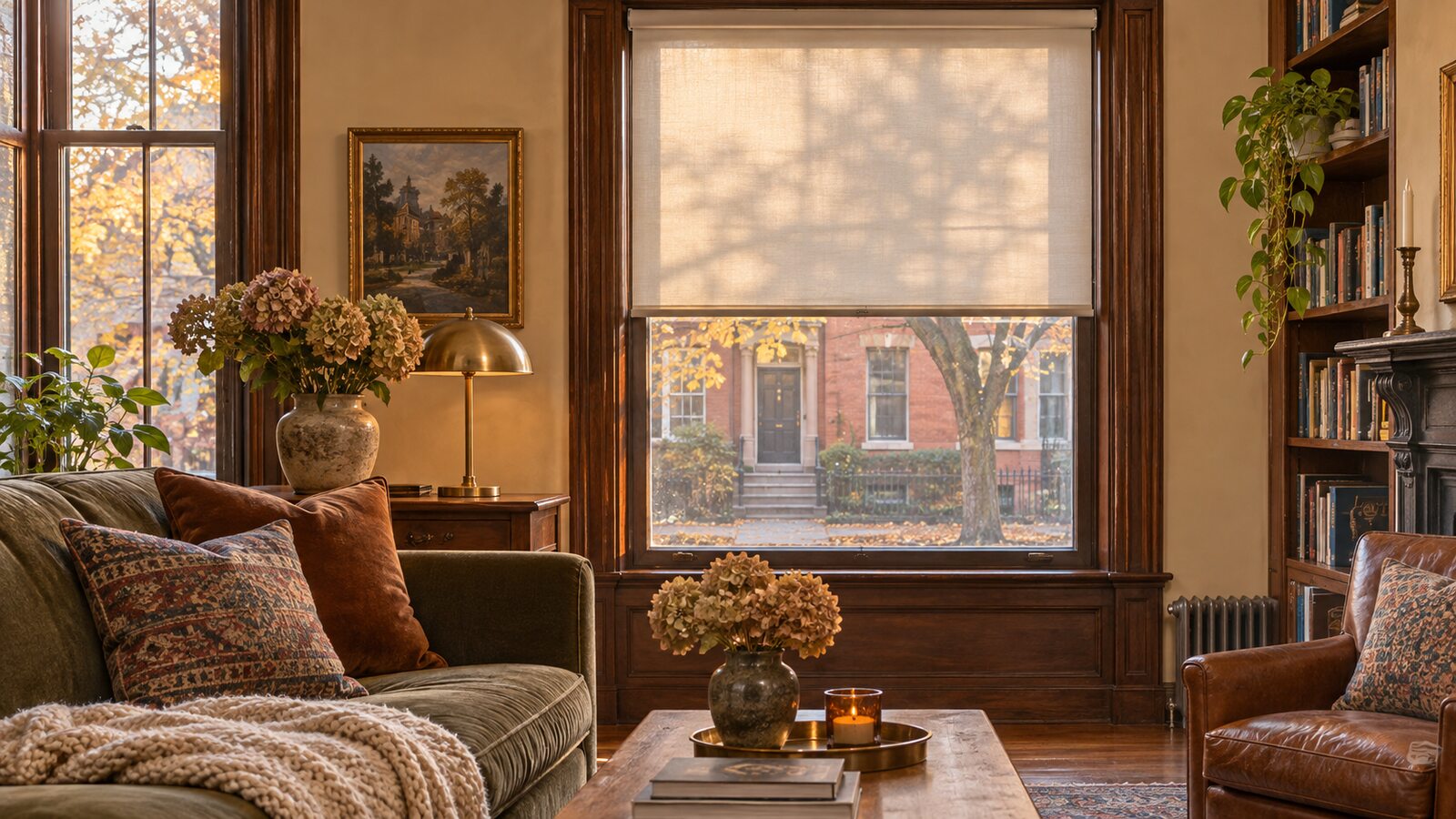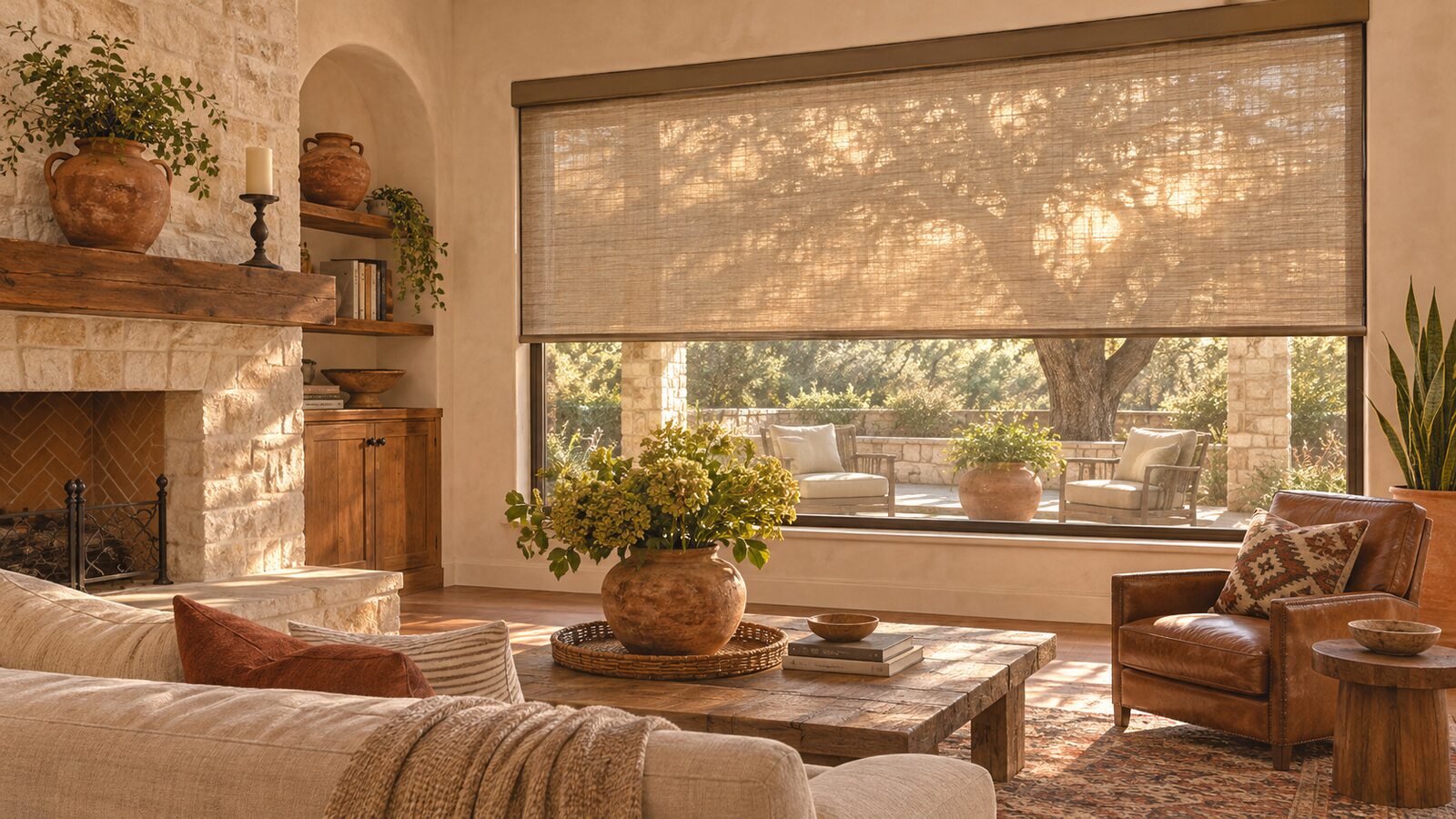
For most San Antonio homes, the best custom roller shade is a low-openness solar-screen fabric on the sunniest windows, paired with a light-filtering or blackout shade where privacy matters more than the view. That combination tames afternoon glare and heat while keeping the yard, patio, or hill-country skyline visible during the day.
Last updated: 2026-11-26
| Rank | Option | Best use | Main trade-off |
|---|---|---|---|
| 1 | Solar-screen roller shade (lower openness) | West- and south-facing living areas, sunrooms, large patio glass | Privacy softens after dark when interior lights are on |
| 2 | Light-filtering roller shade | Kitchens, dining rooms, home offices, and everyday daylight | Reduces glare but does not stop strong sun completely |
| 3 | Blackout roller shade | Bedrooms, media rooms, nurseries, daytime sleepers | No view when lowered |
| 4 | Battery-motorized roller shade | Tall windows, wide glass, and sun that changes through the day | Needs a remote and a control choice up front |
| 5 | Dual-shade pairing (screen plus blackout) | Primary suites and rooms that need both a view and darkness | Two shades mean two sets of decisions and more headrail depth |
Why San Antonio Sun Changes the Decision
San Antonio shade choices start with heat and light intensity. According to the National Weather Service Austin/San Antonio climate rankings, the 1991–2020 average is 18 days a year at or above 100°F, and the area has logged a run of 23 consecutive 100-degree days (July 30 to August 21, 2023). Those long stretches mean many homes live with bright, hard light from late spring into early fall, not only for a few afternoons.
Three consequences shape a good purchase:
- Glare is a daily problem, not a seasonal one. A screen on a television wall or a desk window earns its place well before July.
- The view is part of the home. Many San Antonio properties are built around a covered patio, a pool, live oaks, or a ridge line. A shade that erases the view all day works against the architecture.
- Privacy needs differ by side of the house. Street-facing glass often needs more opacity than rear-yard glass that is fenced.
If you want a deeper look at orientation, the guide to the best shades for south-facing windows covers how sun angle changes the fabric you should choose.
1. Best Overall: Solar-Screen Roller Shades
A solar-screen fabric is a woven material with small, controlled openings. The mill's openness factor describes how tightly woven it is: a lower number admits less light and gives a stronger glare cut, while a higher number preserves more of the outdoor view. For west-facing rooms in San Antonio, a lower openness is usually the right starting point, because late-afternoon sun is where most glare complaints begin.
Color matters as much as openness. Darker fabrics tend to give a clearer, less washed-out view through the weave, while lighter fabrics look brighter from the inside and blend with pale trim. Test your own preference by viewing the real fabric photos against your wall and flooring colors, and keep in mind that the daytime view out is better than the nighttime view in.
World Wide Shades lists 497 colors across 40 families from mills including Phifer, Mermet, Ferrari, Copaco, Senbesta, and Texstyle, with mill openness factors and real fabric photos shown for comparison. Browse the fabric catalog and filter your short list by the rooms that get the harshest light. For a broader comparison of weaves and materials, read the best fabrics for roller shades article, and for sun-damage concerns see UV protection window shades.
Trade-offs: A screen shade is not a privacy shade at night. If a street-facing room is lit in the evening, plan on a second layer or choose a different fabric for that window.
2. Best for Everyday Rooms: Light-Filtering Roller Shades
Kitchens, dining rooms, home offices, and family rooms often need softer light and daytime privacy more than a full view. A light-filtering fabric diffuses sun, calms reflections on screens and glossy floors, and gives a cleaner look than a bare window. Pick a lighter color for a bright, airy room, or a mid-tone if you want less contrast against the glass.
In a San Antonio kitchen with a window over the sink, a light-filtering roller also keeps the headrail compact and the opening easy to wipe around. If moisture and cooking are a concern, see roller shades for kitchens and bathrooms. For a full explanation of how these fabrics behave, the light-filtering shades guide is the companion read.
Trade-offs: Light-filtering fabric lets daylight through by design. It will not give you a dark room, and in the strongest sun it may still feel bright.
3. Best for Sleep: Blackout Roller Shades
Bedrooms are where blackout fabric earns its place. Shift workers, nurseries, and anyone who sleeps late on weekends benefit from a shade that blocks morning light from an east window or the long evening glow from a west one. A wider outside mount can reduce light around the edges if you are sensitive to it.
If you are weighing a roller against fabric panels, blackout curtains versus blackout shades lays out the practical differences. For bedroom-specific advice, see the best window shades for bedrooms. Households with small children should also review child-safe window treatments before choosing controls.
Trade-offs: Blackout fabric cuts the view entirely when lowered, so it is better as a bedroom or media-room choice than for a main living area.
Questions about which fabric suits a specific room? Contact World Wide Shades or call (844) 674-2716 and the team will talk through your windows.
4. Best for Tall or Wide Glass: Battery-Motorized Shades
Large patio doors, picture windows, and tall stair-landing glass are common in San Antonio homes, and sun on those surfaces moves quickly. A motor makes it easy to lower shades as the light shifts, rather than leaving them half-set for the day.
The motors from World Wide Shades are rechargeable and battery powered, so no wiring is needed. Automate is the default motor choice; Somfy is offered only if you already own a Somfy remote. A remote is required with every motorized shade. The Push 5 remote controls up to 5 shades, while the Pulse 2 hub adds app control, voice control, and schedules for Automate motors only. No charger is included in the box, so you can charge by USB-C or add a Motor Charger to your order.
Schedules are especially useful here: lowering west-facing shades before the late-afternoon sun arrives keeps glare down without needing to be home. For setup details, read the smart home motorized shades setup guide and the guide to using motorized shades with Alexa and Google Home.
Trade-offs: A motorized shade needs a remote and a rechargeable battery that you will charge from time to time. Decide on the control approach before you place the order.
5. Best for Primary Suites: Dual-Shade Pairings
When one room needs both a view and darkness, a dual-roller setup puts two fabrics on one opening: use a solar screen for daytime and a blackout layer for night. World Wide Shades offers a dual system for standard rectangular openings, with two rolls on one double bracket under a shared 3- or 4-inch metal fascia. The screen and blackout fabrics can be assigned to the front or back position; each shade has its own chain or motor, and a motorized pair uses two motors with one remote. Optional side channels can be fitted to the front shade, back shade, or both. See the dual roller shades page for the configuration.
Plan the depth first. An inside mount needs at least 1.5 inches of frame depth, and 2.5 inches is recommended for motorized shades. If the frame is shallower, use an outside mount, which means adding 2 to 3 inches on each side and 3 inches above the opening. With two shades, an outside mount often gives the neater result.
Trade-offs: Two shades require more planning and take more space at the top of the window. If you want only one layer, a roller versus Roman shade comparison may help you decide whether another style fits better.
Protecting the View While Controlling Glare
A few choices make the biggest difference for view retention:
- Choose openness by room, not by house. A low-openness screen on the west wall and a higher-openness screen on the shaded north side give different results from the same product family.
- Match fabric color to the view. Darker fabrics generally preserve a crisper outlook; lighter colors reflect more light but can look hazier from inside.
- Use the right mount. Outside mounts cover more of the surrounding glass and trim, which reduces light leaking at the edges.
- Think about the sliding door. Large sliders need a wide shade that is easy to raise and lower. See roller shades for French doors for door-specific ideas.
If you are not sure which sun-control strategy to prioritize, the energy-efficient window shades guide puts the heat question in context.
How to Order From World Wide Shades
World Wide Shades makes every shade 100% custom by hand. Delivery is 2 to 4 weeks, or 3 to 4 weeks for limited-stock and specialty fabrics, and shipping within the US is free.
When you enter your size, give the exact opening size and let the factory make the deductions. Measure the width at the top, middle, and bottom and use the narrowest. Measure the height at the left, center, and right and use the tallest.
Every order includes a free video fit check by Zoom or Google Meet. Defects are remade free within 30 days, and motors are covered for one year. If a mismeasurement occurs, you get a one-time free recut and pay shipping. Custom orders are nonreturnable, so use the fit check before you finalize.
Ready to configure? Open the shade builder, or call World Wide Shades at (844) 674-2716 to talk through your windows.
Frequently Asked Questions
A low-openness solar-screen fabric is usually the best starting point for a west-facing window, because it reduces glare during hot late-afternoon sun and keeps the daytime view. Add a blackout layer if the room also needs to be dark at night.
During the day, a screen shade generally gives good privacy from outside. After dark, with lights on inside, people outside can see in more easily. For street-facing rooms, choose a light-filtering or blackout fabric, or pair a screen with a second shade.
Yes. Rechargeable motors need no wiring, and a remote is required. Push 5 handles up to 5 shades, and Pulse 2 adds app control, voice control, and schedules for Automate motors. You can charge by USB-C or add a Motor Charger.
No. There is no swatch or sample program. Instead, the fabric catalog shows 497 colors across 40 families with real fabric photos and mill openness factors, and every order includes a free video fit check by Zoom or Google Meet.
Delivery is 2 to 4 weeks, or 3 to 4 weeks for limited-stock and specialty fabrics. Shipping in the US is free.
Defects are remade free within 30 days, and motors are covered for one year. A mismeasured order gets a one-time free recut, with shipping paid by the customer. Custom orders are nonreturnable, so review the fit check carefully.
Next steps: compare fabrics in the catalog, start a design in the builder, or call World Wide Shades at (844) 674-2716.