The dining room is one of the few spaces in a home that has to work for both everyday breakfasts and formal dinner parties, and the window treatment you choose plays a bigger role in that flexibility than most homeowners expect. Harsh afternoon glare can wash out a beautifully set table, while the wrong fabric can feel too casual for entertaining or too formal for a quick weeknight meal. World Wide Shades designs roller shades specifically suited to this dual purpose, and this guide walks through the fabrics, opacities, and styling choices that make a dining room feel elegant at every hour of the day.
Why the Dining Room Needs Its Own Window Treatment Strategy
Unlike a bedroom or home office, dining rooms are used in short, intense bursts — usually during meals when lighting quality actually matters. A dining room window facing west, for example, can flood the table with blinding late-afternoon sun right during dinner, while a north-facing window might leave the room feeling flat and under-lit for morning coffee.
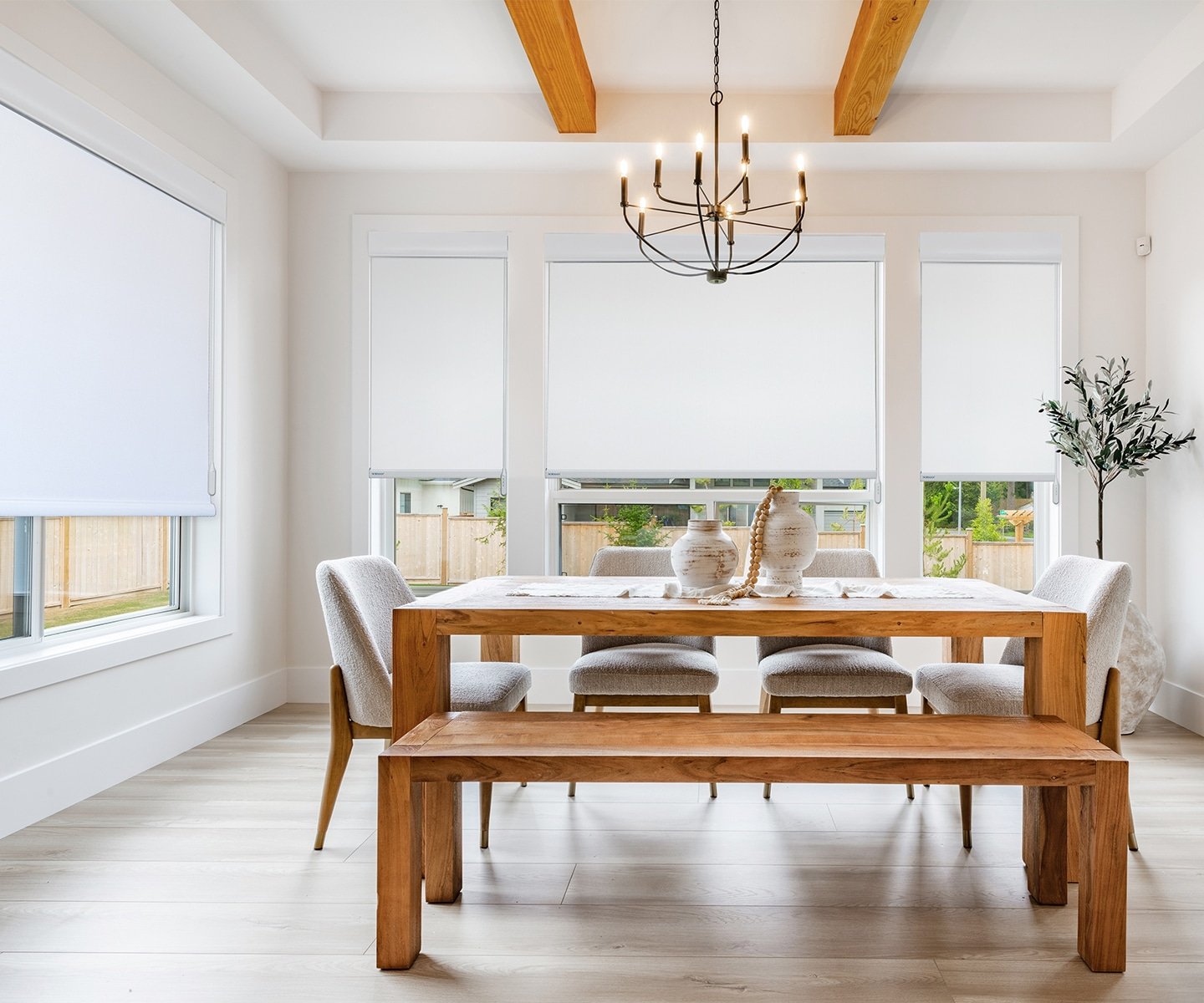
Roller shades give you precise control over that light without the bulk of drapery panels, which can interfere with a sideboard, bar cart, or built-in cabinetry common in dining rooms. A flat-mounted shade also keeps sightlines clean when you're seated at the table, since there's no fabric pooling or hardware competing with a chandelier or pendant light above. World Wide Shades builds each shade to the precise width of your dining window so the fit looks intentional rather than like an afterthought.
Because dining rooms are highly visible entertaining spaces, the fabric and color also carry more design weight than in a utility room. Getting this right elevates the whole room instantly.
Best Fabrics for Elegant Light Control
For most dining rooms, a light-filtering shade with 5% to 10% openness strikes the right balance: it softens harsh sun during meals while keeping the room bright enough to read a menu or admire table settings. These fabrics diffuse direct light into a soft, even glow rather than blocking it outright, which flatters both food presentation and skin tones under candlelight or pendant fixtures.
If your dining room gets intense afternoon sun, especially on west-facing windows, consider a solar screen fabric instead. Solar screens with 3% to 5% openness block up to 95% of solar heat and glare while preserving your view of a garden or street — ideal for households that entertain often and want the room usable right through golden hour. Our best shades for south-facing windows guide covers how to handle particularly intense exposure if your dining room shares that orientation.
For a fully blacked-out look during formal evening events or media presentations in a combined dining/living space, review blackout curtains vs blackout shades to see which delivers a cleaner result for a dressier room.
Color and Texture: Matching Dining Room Style
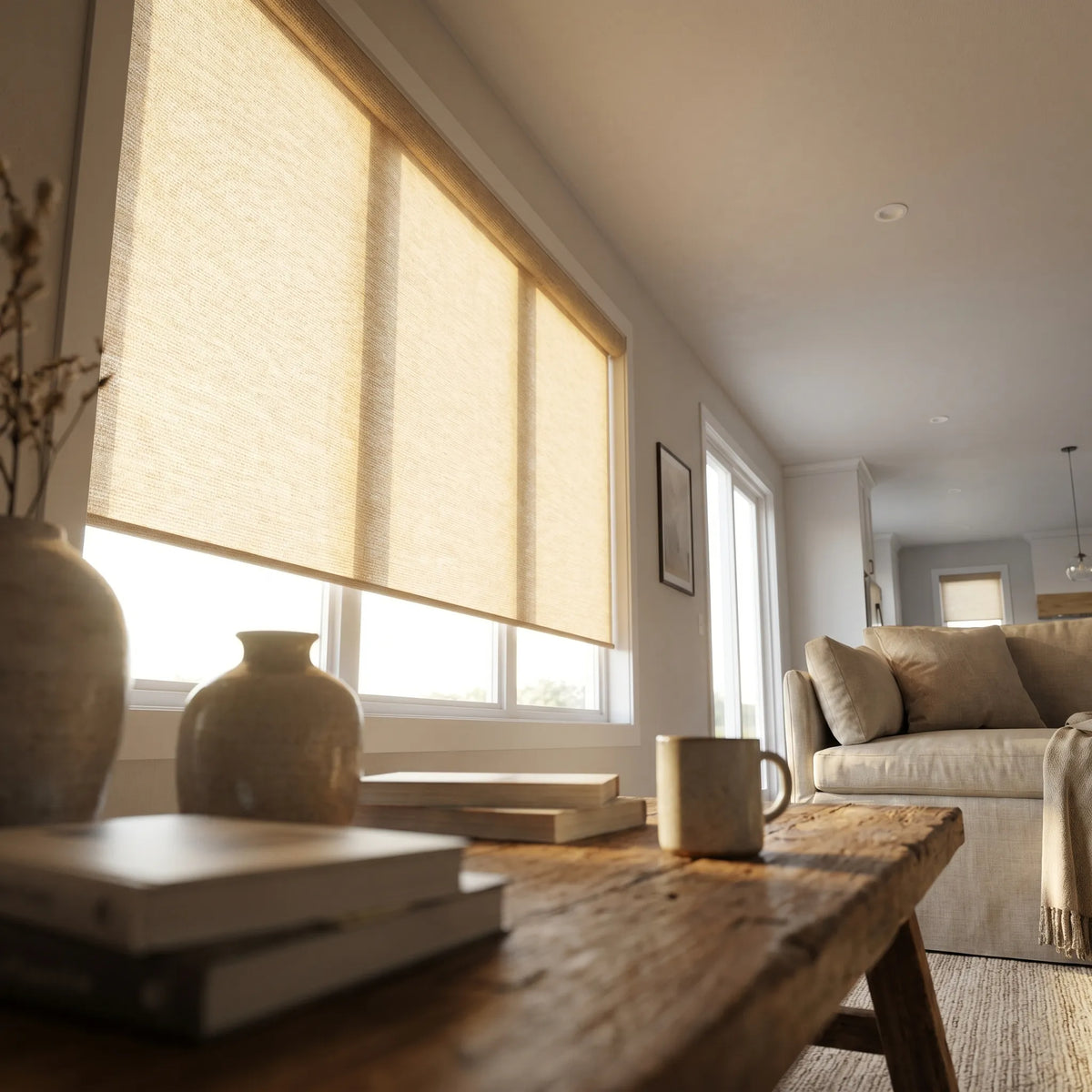
Dining rooms tend to showcase bolder design choices than bedrooms, since they're seen primarily by guests. Neutral linen-textured fabrics in ivory, warm gray, or soft taupe are the most popular picks because they complement wood tones in dining tables and cabinetry without competing with statement light fixtures or artwork.
For more traditional or formal dining rooms, a subtle woven texture adds depth without looking busy, while a smooth matte fabric suits modern and minimalist dining spaces. Our full window shades color guide breaks down which tones pair best with common wall colors and wood finishes. If your dining room leans toward a natural or organic aesthetic, the woven wood shades guide offers an alternative texture worth comparing against smooth roller fabrics.
Order free swatches from World Wide Shades before deciding — dining room lighting (especially evening pendant or chandelier light) can shift how a fabric color reads compared to how it looks in daylight photos.
Roller Shades for French Doors and Large Dining Windows
Many dining rooms open onto a patio or backyard through French doors or oversized picture windows, both of which need specialized shade configurations. French doors require shades that clear door handles and swing paths, while wide picture windows may need multiple shade panels or a single wide-format shade on heavy-duty hardware.
Our dedicated guide to roller shades for French doors covers mounting options that keep the door fully operable while still delivering coverage. For picture windows over 80 inches wide, World Wide Shades fabricates on reinforced tubes to prevent sagging — design your shade and our system will automatically recommend the right hardware based on your exact measurements.
Motorized Shades: A Natural Fit for Entertaining
Few things disrupt the flow of a dinner party like getting up mid-meal to manually adjust a shade because the sun shifted. Motorized roller shades solve this with a remote or smart home command, letting hosts adjust light instantly without leaving the table.
Motorization also adds a layer of polish that guests notice — smoothly lowering shades as the sun sets during a dinner party creates an experience that feels considered and high-end. Pairing your dining room shades with a broader smart home setup is covered in our guide to smart home motorized shades setup, and if you already use Alexa or Google Home for other entertaining tech like lighting or music, see motorized shades with Alexa and Google Home for integration details.
Get a quote from World Wide Shades on motorized options — many dining room installations qualify for group scheduling that syncs shades with a single remote for the whole downstairs entertaining area.
Noise and Acoustics for Open-Concept Dining Rooms
In open-concept homes where the dining room connects directly to the kitchen or living room, sound can travel and make conversation harder during larger gatherings. While roller shades aren't primarily acoustic products, a heavier fabric with a thicker facing does absorb some ambient noise compared to a bare window.
If noise reduction is a priority alongside light control, our noise-reducing window shades guide explains which fabric weights and layering options perform best without sacrificing the light-filtering benefits your dining room needs.
Cost Expectations for Dining Room Roller Shades
Dining room shade costs vary based on window size, fabric choice, and whether you add motorization:
- Standard light-filtering roller shade (up to 48 inches wide): approximately $110 to $200 per window.
- Solar screen fabric for sun-heavy dining rooms: approximately $130 to $230 per window.
- Large picture window or French door configuration: approximately $250 to $450 depending on width and hardware.
- Motorized upgrade: adds roughly $150 to $300 per shade.
For a complete cost comparison across shade types and rooms, see how much do custom roller shades cost. Homeowners considering off-the-shelf alternatives should review custom roller shades vs. Home Depot — dining rooms in particular benefit from precise, gap-free measurements that big-box standard sizes rarely achieve.
Frequently Asked Questions
A light-filtering shade with 5% to 10% openness is ideal for most dining rooms because it softens glare during meals while keeping the space bright and inviting. If your dining room faces west or gets intense afternoon sun, a 3% to 5% solar screen fabric will block more heat and glare while still preserving your view. World Wide Shades can recommend the exact opacity based on your window's orientation.
Yes. Roller shades mount flat against the window frame and don't interfere with overhead fixtures, unlike heavier drapery that can visually compete with a statement chandelier. This flat profile is one of the main reasons roller shades are popular in formal dining rooms.
Motorized shades are especially useful in dining rooms because they let hosts adjust light instantly during meals without leaving the table. They also add a polished, high-end feel during dinner parties. Contact World Wide Shades or call (844) 674-2716 for motorization pricing specific to your dining room windows.
Neutral tones like ivory, warm gray, and soft taupe are the most versatile choices because they complement wood furniture and don't compete with table settings or artwork. For a full breakdown of color pairings, see our window shades color guide.
Choose a shade mounted to clear the door handle and swing path, typically using a top-mount bracket sized to the exact door frame width. Our roller shades for French doors guide covers specific mounting configurations. Design your shade with World Wide Shades and we'll confirm the right setup for your doors.
Large dining room windows or French door configurations typically range from $250 to $450 installed, depending on width and whether you add motorization. Get a quote from World Wide Shades or call (844) 674-2716 for pricing based on your exact measurements.
Ready to upgrade your dining room for effortless entertaining? Design your shade with World Wide Shades, order free fabric swatches to see how they look under your dining room lighting, or get a quote by calling (844) 674-2716 today.