Blackout roller shade fabric needs a gentler cleaning method than washable curtains. The front face may be woven, coated, or laminated, while the back can contain a light-blocking acrylic or foam layer. Scrubbing, soaking, steam, or aggressive chemicals can crack that backing, create a shiny patch, curl the edges, or leave permanent water marks. Regular light cleaning is safer than waiting for a heavy stain to build.
World Wide Shades can help identify a fabric-care approach before you experiment on a custom shade. Use the World Wide Shades builder when replacing a damaged treatment, order swatches to compare cleanable fabric options, or contact World Wide Shades with a fabric label and photo. The method below is conservative for most blackout roller fabrics; always follow the product's care instructions if they are more specific.
Know what you are cleaning
Blackout performance comes from the fabric construction, not just the color. A white or pale shade may be blackout because an opaque layer is bonded behind the decorative face. A dark shade may still be only room-darkening if its weave admits light. The backing is the part most likely to be harmed by heat, water, solvents, and friction.
Check the label, invoice, or care sheet for “spot clean,” “vacuum,” or a professional-cleaning instruction. Identify whether the shade is polyester, vinyl, fiberglass-coated, or a laminated textile. If the construction is unknown, treat it as delicate: dry dust first, spot-test in a hidden area, and avoid saturating the panel.
Take a photo of the stain before cleaning. Note whether it is dry dust, grease, food, crayon, pet residue, or water spotting. Different soils need different approaches. A 2-inch dry fingerprint may respond to a barely damp cloth; a grease mark can spread if rubbed with plain water.
The light-filtering shades guide explains why fabric construction changes light transmission. Contact World Wide Shades if your shade has a peeling backing, cracked coating, or a stain that reaches the laminate.
Dust before spot-cleaning
Lower the shade to a comfortable height and support the bottom rail if it is large. Use a clean, soft microfiber cloth or a vacuum with a brush attachment on the lowest suction setting. Move from top to bottom in straight, overlapping passes. Do not pull the fabric sideways or press hard enough to deform the roll.
Clean both sides only when the back is approved for gentle dusting. On a blackout backing, keep the brush light and avoid catching the bottom edge. A fabric edge can fray or separate from the backing when a vacuum nozzle is dragged across it.
Dust the cassette, headrail, chain, and sill separately. Grit on the sill can transfer back to the fabric when the shade is lowered. A quick weekly dusting in a kitchen or high-traffic room may take 2 to 5 minutes; a monthly dusting is a reasonable baseline for a bedroom or guest room.
Do not use compressed air close to the panel. It can drive dust into the roll and blow debris behind the fabric. Do not shake a mounted blackout shade, because the tube can telescope or the fabric can develop a diagonal crease.
Test a mild cleaning solution
For a spot that remains after dry dusting, mix a small amount of mild, pH-neutral soap with lukewarm water. A practical starting ratio is about 1/4 teaspoon of soap in 2 cups of water. Stir without creating a thick foam. Keep a second cloth available with plain water for a very light rinse.
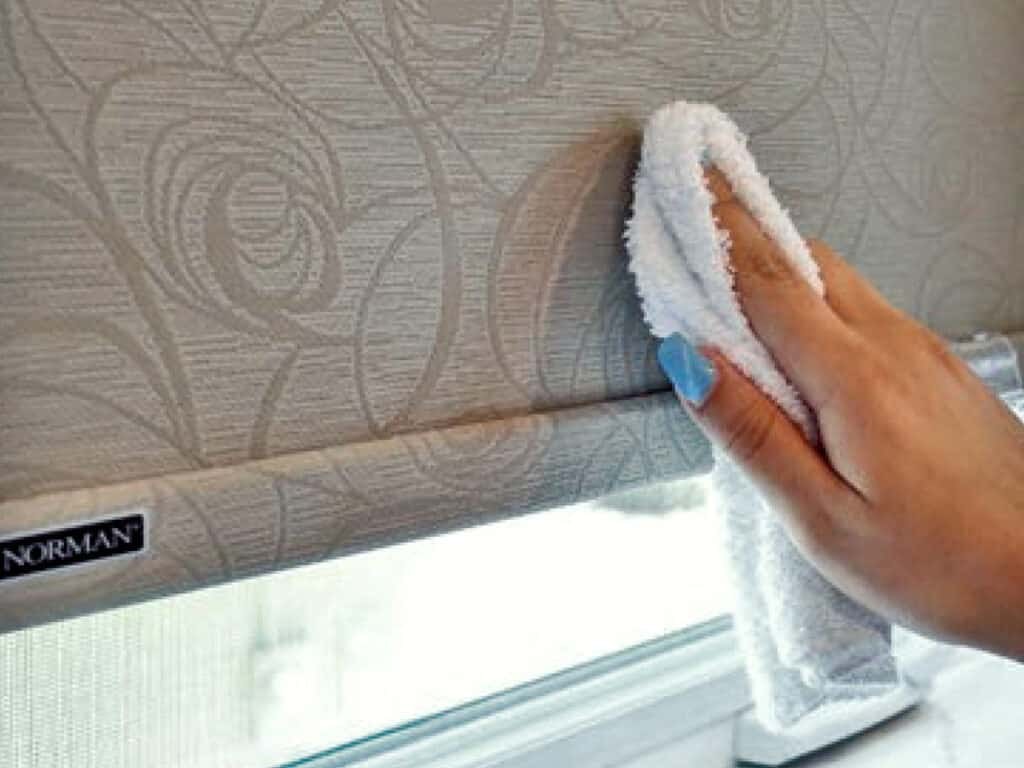
Test the solution on the back edge or behind the roller where it will not be seen. Dampen a white microfiber cloth until it is barely moist; it should not drip when squeezed. Blot a 1-inch area once, wait 10 minutes, and check for color transfer, tide marks, tackiness, or a change in sheen.
If the test fails, stop. Do not increase the soap concentration or use a stronger chemical. Contact World Wide Shades with the fabric name and the test result. A replacement panel may be less expensive than repairing a damaged blackout laminate.
The best fabrics for roller shades guide can help you compare fabric constructions when it is time to replace a difficult-to-clean shade. Order swatches from World Wide Shades to evaluate texture and backing before choosing the next fabric.
Blot, do not scrub
Start at the outside edge of the stain and work inward with light dabs. Use one small section of cloth for each pass so you do not redistribute soil. Keep the shade as flat as possible. A 2-inch mark may need 3 to 6 gentle blotting passes, with a few seconds between passes.
Never scrub across the fabric. Friction can raise the face fibers, create a lighter patch, or separate the face from the blackout layer. Do not use a circular motion on a coated back. Keep the cloth damp, not wet, and stop if the liquid begins to wick beyond the stain.
For greasy food residue, first lift any solid material with the edge of a plastic card. Then use a barely damp cloth with the mild soap solution. Avoid household degreasers, alcohol, acetone, bleach, ammonia, and disinfecting wipes unless the manufacturer specifically approves them. Those chemicals can soften coatings or change color.
For crayon or ink, do not reach for a solvent automatically. Solvents can dissolve a coating and make a small mark larger. Photograph the problem and ask World Wide Shades or the fabric maker for a compatible treatment.
After blotting, use a separate cloth lightly dampened with plain water only if the care instructions permit it. One gentle pass can remove soap residue. Do not rinse by pouring water onto the shade.
Dry the fabric without warping it
Leave the shade fully lowered or in the position recommended by the manufacturer so the fabric can dry flat. Keep the window open for gentle ventilation, but avoid direct heat. A fan can circulate room air from several feet away; do not aim a hair dryer at the panel.
Allow at least 30 to 60 minutes for a small spot to dry, and longer for a large panel or humid room. Do not roll the shade while it is damp. Moisture trapped inside the roll can create odor, transfer the stain to another layer, or stress the blackout backing.
Check the cleaned area in daylight and with the room lights on at night. A damp patch can look even while drying and develop a ring later. If a tide mark appears, stop repeating the treatment; more water often enlarges it. Contact World Wide Shades for a replacement or professional-care recommendation.
Keep the bottom rail level while the shade dries. A tilted rail can pull the fabric diagonally and create tracking problems. The roller shade fabric edge curling guide explains why edge stress can become a rolling issue.
Clean the mechanism and surrounding area
Do not spray cleaner toward the tube, motor, clutch, or chain. Apply any cleaner to a cloth away from the shade. Wipe the sill, casing, and handle first so fresh dust does not fall onto the clean fabric.
For a chain-operated shade, wipe the beaded chain with a dry cloth and check the tension device. Do not lubricate the chain unless the manufacturer says to; oil can transfer onto the fabric. For a motorized shade, keep liquids away from the motor and charging port. A remote should be wiped separately.
Check whether the shade rolls straight after cleaning. Lower it about 12 inches and raise it again. If the fabric begins to telescope or rub, stop and read the uneven tracking troubleshooting guide. Cleaning should never require pulling the fabric sideways to “help” it roll.
For kitchens, reduce future buildup by using the exhaust fan during cooking and keeping the shade raised when steam or grease is high. In bedrooms, a weekly dusting prevents skin oils and dust from building at the bottom rail. In homes with pets, keep wet noses and claws away from the lower edge.
When cleaning is not the answer
Replace or seek professional advice when the blackout backing is cracked, peeling, bubbling, delaminating, or permanently yellowed. A seam that is separating can catch on the tube. A shade that has developed a crease across the roll may not recover from wet treatment.
If a stain covers more than about 10% of the panel, if the fabric is water-damaged, or if the shade is a specialty woven or printed material, ask before cleaning further. The cost of a replacement fabric panel varies by size and collection, but a small custom shade may be less expensive than repeated failed repairs.
World Wide Shades can help decide whether to replace the fabric, the complete shade, or only the operating hardware. Build a replacement configuration, compare physical swatches, or contact World Wide Shades with width, height, fabric name, and photos. Call (844) 674-2716 if the shade is still under warranty. For a second care review, call (844) 674-2716 before using a stronger cleaner.
Prevent new stains and light leaks
Keep the shade raised during messy cooking, painting, sanding, or home projects. Do not tape labels directly to the face or backing. If furniture touches the bottom rail, move it back so the fabric can hang without rubbing.
Use a consistent cleaning schedule. Dust weekly in a kitchen, nursery, or entry; every two to four weeks in an average bedroom; and whenever visible grit appears. A 5-minute dry-cleaning habit is less risky than a 30-minute wet cleaning session.
If privacy is the reason for the shade, remember that blackout fabric does not automatically close side gaps. An outside mount, cassette, or side channel may be needed. Read the roller shade light-gap guide before replacing a clean shade because of nighttime glow.
When selecting a new fabric, ask about stain resistance, approved cleaners, and whether the backing is laminated. Use the World Wide Shades builder to compare options, order swatches to inspect the face and back, and contact World Wide Shades for room-specific advice.
FAQ
Usually no. Soaking can damage the blackout backing, leave tide marks, distort the fabric, and trap moisture inside the roll. Dry dusting and cautious spot cleaning are safer unless the manufacturer specifically says the fabric is washable.
Start with a soft microfiber cloth or low-suction brush attachment. If a mark remains, test a barely damp cloth with a very mild soap solution on a hidden area, then blot gently and dry the shade flat. Never scrub, steam, or saturate the panel.
Do not use them unless the fabric maker approves them for that exact construction. Bleach, alcohol, ammonia, and disinfecting wipes can discolor or soften the face and blackout layer. Ask World Wide Shades for compatible-care guidance.
Lift solid residue carefully, then blot with a barely damp white microfiber cloth and a very dilute mild-soap solution if the care instructions allow it. Work from the outside inward and stop if the mark spreads or the finish changes.
A water ring forms when moisture wicks soil or soap to the edge of a damp area. Avoid adding more water, let the panel dry fully, and ask for fabric-specific advice. Repeated wetting can make a laminate or coating worse.
Keep blackout performance intact
The safest blackout-shade cleaning routine is dry, light, and consistent: dust before soil builds, test any moisture in a hidden place, blot rather than scrub, keep chemicals and heat away, and dry fully before rolling. When the backing or fabric is damaged, replacement is usually wiser than aggressive repair.
Choose a replacement with the World Wide Shades builder, request swatches, or contact World Wide Shades for a care and warranty review. World Wide Shades can help you protect the next shade's appearance, blackout performance, and operating life.