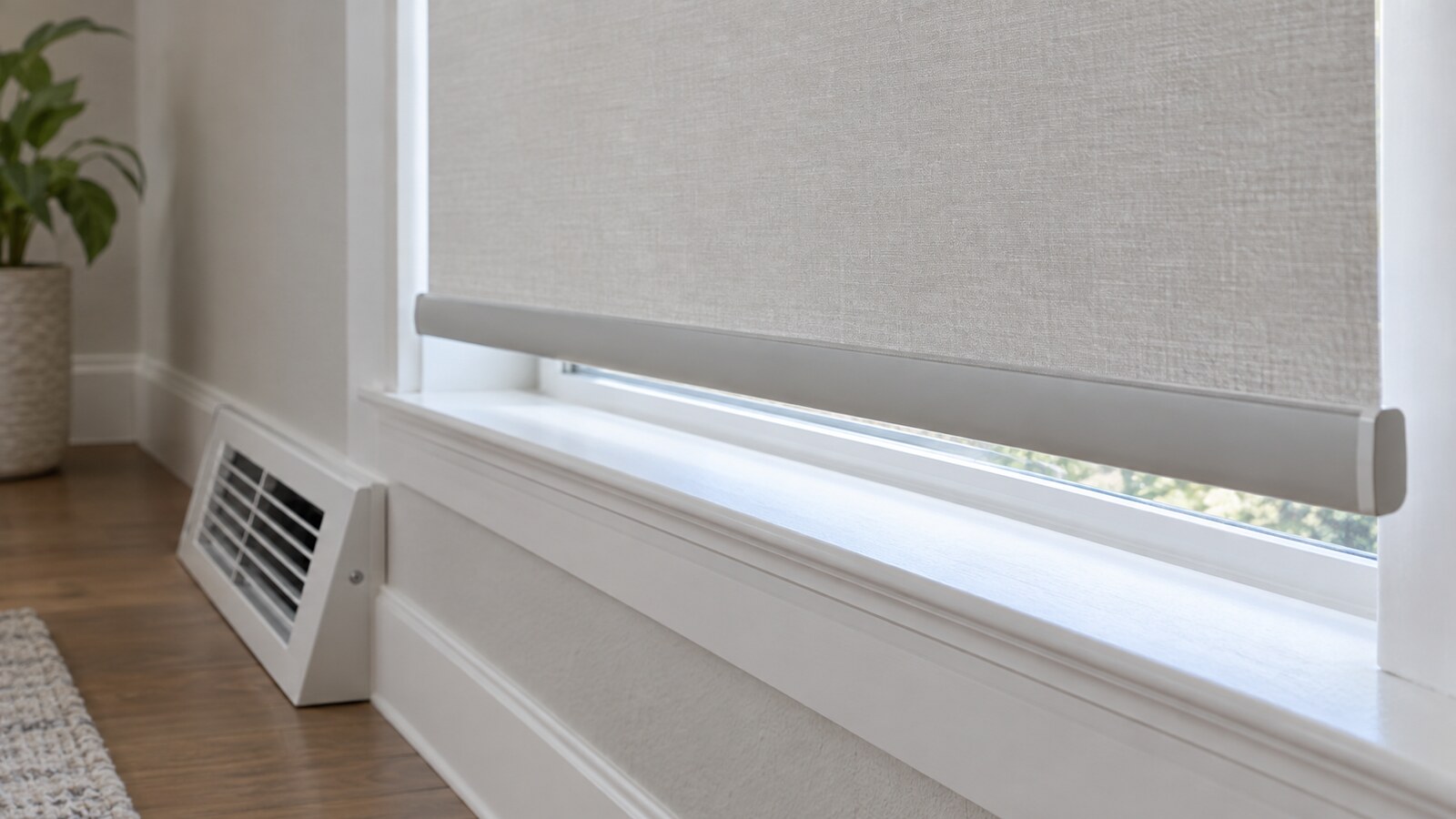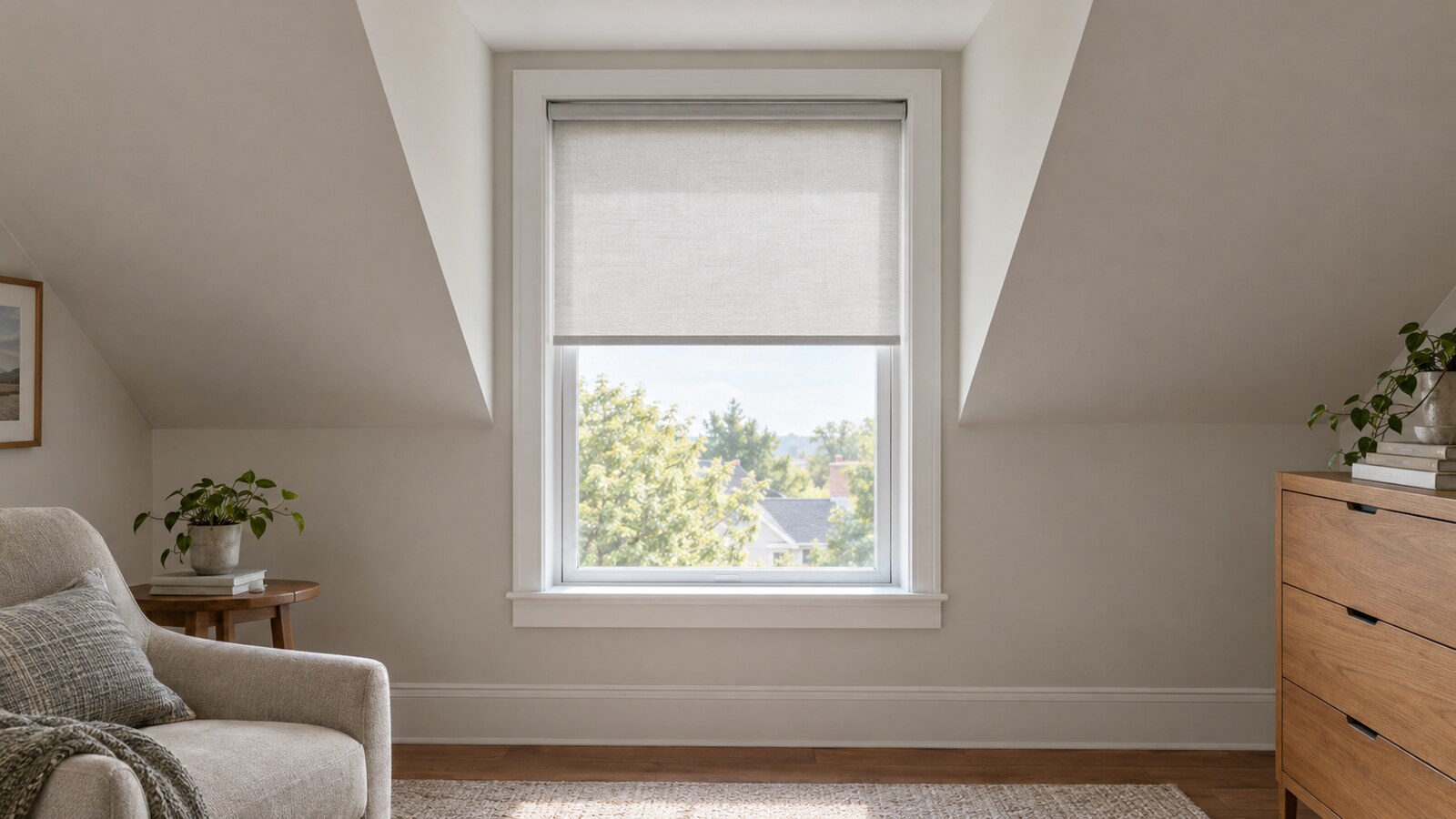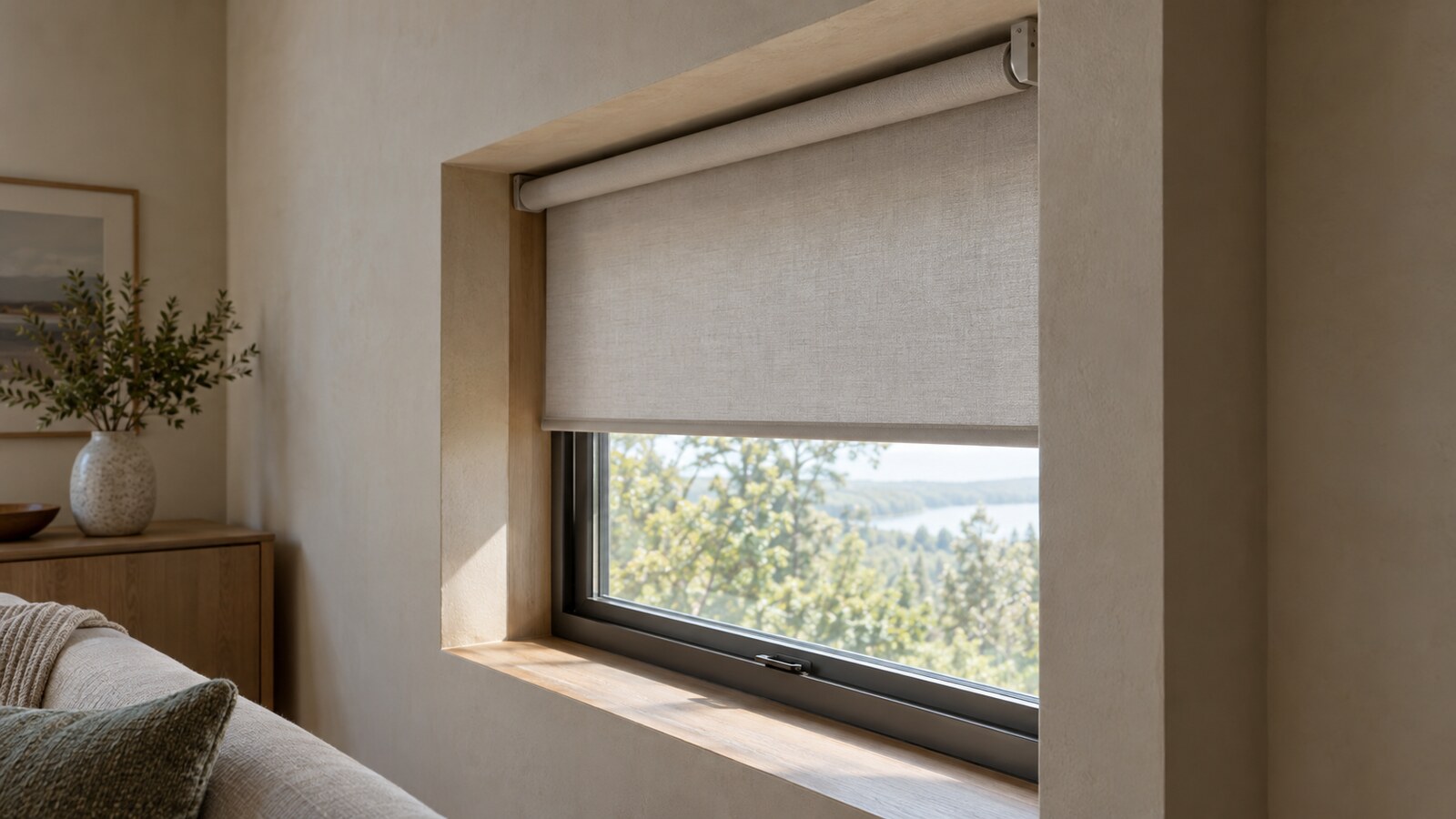
Deep window openings can give a room character, but they also raise an important question: where should the shade sit? A roller tucked near the glass creates a different look from one placed near the room-facing edge. Neither position is automatically right for every window.
Choosing roller shades for deep window wells starts with the actual shade system, not the recess depth alone. You need room for secure brackets, a moving fabric roll, window hardware, and future service. World Wide Shades recommends settling those details before you commit to a fabric or a finished size.
In this guide, “window well” means the deep interior opening around a vertical window. An exterior basement window well is a separate structure. If your window serves as an emergency exit, keep its required opening and operating path clear.
Understand the two depths that matter
Minimum mounting depth and full-recess depth answer different questions. Minimum mounting depth concerns the space needed to attach the approved brackets securely. Full-recess depth concerns whether the complete installed shade stays behind the front edge of the opening.
A bracket might fit while the roller or cassette still projects into the room. That does not necessarily rule out an inside mount, but it changes the finished appearance. Ask for both dimensions rather than assuming that “inside mount” means “flush.”
Manufacturer drawings matter because space requirements vary by system. Lutron’s measuring guide lists different mounting spaces for different roller sizes and manual tube sizes, rather than one universal depth for roller shades (Lutron measuring guidelines).
A deep opening can still have a shallow usable mounting area. Sloped plaster, narrow trim, a projecting screen frame, or a handle may limit where the brackets and fabric can go.
Sample numbers only: imagine an opening that is 7 inches deep, but the chosen bracket location offers only a 1-inch-wide flat surface. The 7-inch depth does not prove that the bracket can attach there. You would still need the selected product’s mounting drawing and a suitable supporting surface.
World Wide Shades can help you separate available space from usable space. Contact the team or call (844) 674-2716 before ordering if your recess has an unusual shape.
Decide where the fabric should hang
Think about the shade as a vertical plane within the opening. Its position should work with your window, your sightlines, and the way you use the sill.
A rearward position may suit a room where you want the surrounding recess to remain visible. It can also leave more of the sill on the room side of the fabric. Before choosing that position, consider whether plants, books, or other objects would interfere with the shade.
Check the window in its operating positions, not only when closed. Lutron instructs installers to allow clearance for cranks, lock levers, trim, and other objects (Lutron installation instructions).
Do not press fabric against glass or hardware simply to hide the roll. Follow the selected shade’s clearance requirements and any applicable window instructions.
A forward position may create a simpler visual plane across the opening. It can be worth considering when rear-mounted fabric would cross a handle or when several windows need a consistent room-facing alignment.
That position may leave less usable sill space in front of the shade. It may also place the bottom bar where someone sitting at a window seat could bump it. Imagine the shade fully lowered before deciding where it belongs.
An outside mount is another option, even when the recess is deep. Consider it if the inside surfaces lack suitable support or if your light-control plan calls for fabric overlap beyond the opening.
Do not choose overlap from a generic rule alone. Work backward from the desired fabric coverage, then confirm the overall hardware width and approved mounting locations. For the installation sequence, see how to install roller shades.
Match the mounting position to the actual opening
Deep openings are not always straight or square. The width close to the glass can differ from the width closer to the room. Lutron specifically notes that opening width may vary along the jamb depth and directs inside-mount measurements to the intended bracket location (Lutron measuring guidelines).
Keep the proposed mounting plane consistent when recording dimensions. A width taken at the front and a depth judged at the back may describe two different spaces. Follow the chosen product’s ordering instructions for which dimensions to submit and whether the manufacturer makes any deductions.
Sample numbers only: suppose an opening measures 48 inches across near the front and 47¾ inches near the glass. A shade planned for the front position cannot automatically move rearward after ordering. The narrower location needs its own fit review.
World Wide Shades recommends resolving the mounting plane before finalizing the order. Start a configuration in the shade builder, then ask for help if the available choices do not clearly match your opening.
Choose a roll direction and top finish together
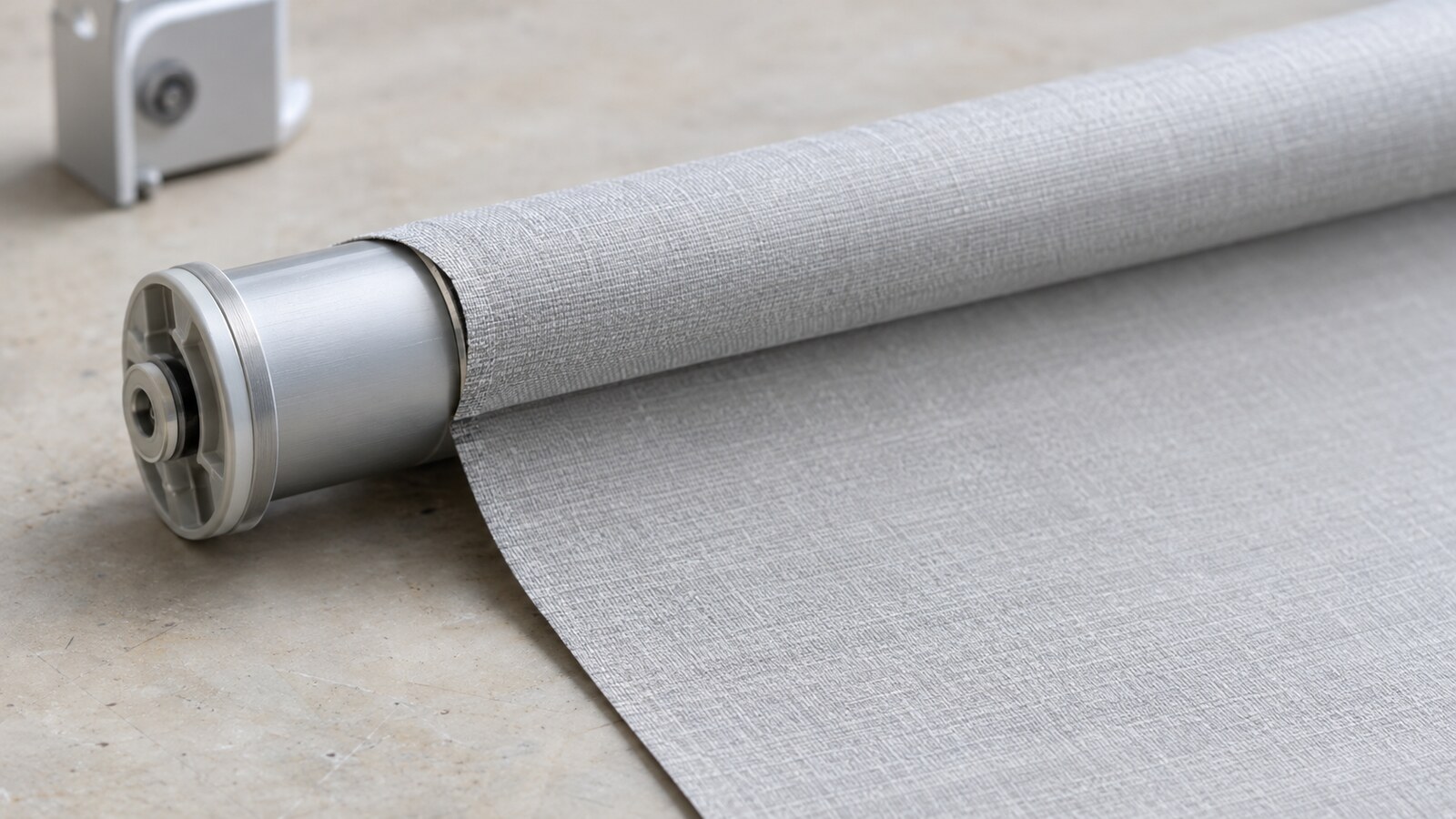
The fabric drop, roller, and decorative cover need to work as one assembly. Choosing them separately can leave you with a look you like but a layout that does not clear the window.
Lutron explains that reverse roll can move the fabric away from window hardware, but its guide also notes that reverse roll is not compatible with its fascia configuration (Lutron measuring guidelines). Treat that as a reminder to check your selected system, not as a rule for every brand.
An exposed roll may appeal to you if you want a simple finish. A cassette may suit a room where you prefer the mechanism covered. Compare roller shade valance and cassette options before choosing the top treatment.
For either look, request dimensions that include the whole assembly. The relevant space can change with the bracket, cassette, roll diameter, fabric thickness, shade drop, and motor. Confirm clearance when the fabric is rolled up as well as when it is lowered.
Ask World Wide Shades to review the proposed finish with your window photos. Contact the team or call (844) 674-2716 to discuss a cassette, exposed roll, or unusual handle clearance.
Select fabric for the room, not just the recess
Depth alone does not tell you how bright, private, or comfortable the room will feel. Consider the glass area, orientation, outdoor views, wall colors, fabric choice, and where you spend time.
Start by naming the main problem. Is afternoon glare reaching a desk? Do you want softer daylight in a living room? Is nighttime privacy the priority? Then compare fabric options against that specific goal.
Use the guide to roller shade fabrics to organize your choices. Ask which available materials match your needs instead of choosing from a small screen image alone.
World Wide Shades suggests examining samples in the actual recess. Order fabric swatches and view them near the glass and near the room-facing edge at different times of day.
Do not treat blackout fabric as a promise that the whole opening will become light-tight. Roller hardware can leave side gaps; Lutron’s measuring guide discusses light gaps as part of the system’s dimensions (Lutron measuring guidelines).
Ask how the proposed mount addresses the edges and top of your particular opening. For a sleep space, discuss whether approved side treatments, an outside mount, or another shading approach better fits your expectations.
Likewise, avoid assuming that a deep recess guarantees an energy benefit. Use the energy-efficient window shade guide as a starting point for questions, and request product-specific performance information rather than relying on recess depth.
Keep controls and service points within reach
A shade should remain practical after installation day. Before choosing a motor, identify how you will reach the charging connection, replace batteries, use a local button, or remove the assembly for service.
Some battery systems have explicit restrictions around pockets and recesses because of service clearance. Lutron’s Triathlon Select instructions, for example, warn against pocket or recess mounting that prevents the required battery access (Lutron installation instructions).
A deep open jamb is not automatically the same as an enclosed architectural pocket. Still, neither should be approved by appearance alone. Request written confirmation that the proposed mounting position meets the selected motor’s installation and maintenance requirements.
For a manual design, consider whether you can comfortably reach the control from the floor. Avoid a layout that makes you lean across a wide sill or climb onto furniture for routine use.
Before you settle on controls, review your options with World Wide Shades. Include photos showing nearby walls and furniture, not just a close-up of the glass.
Budget for the complete installation
Compare quotes for the same scope. Ask whether the price includes the chosen fabric, top finish, control system, mounting hardware, and installation work. If the opening needs blocking, electrical work, or a different mounting surface, resolve who will handle it before ordering.
Do not assume that a deep recess needs a more expensive shade. Equally, do not assume that extra depth removes every installation challenge. The right budget depends on the selected system and the work your opening actually needs.
Read how much custom roller shades cost for planning questions. The custom roller shades versus Home Depot comparison can also help you frame questions about fit and available configurations.
World Wide Shades can help narrow the choices once the mounting position is clear. Use the builder to explore your preferred look, then confirm the product specifications before submitting final dimensions.
Related guides for other shade problems
Related situations include dormer windows with sloped surrounding walls, narrow front-door sidelights, a bottom rail that moves in airflow, and fabric that has detached from its roller tube.
For more specialty installations, see the recent guides to steel window frames, triangular gable windows, aligning adjacent shades, office glass partitions, and glass-block windows.
Frequently asked questions
There is no single depth that applies to every roller shade. Minimum secure mounting depth and full-recess depth are different, and the required space changes with the hardware and configuration; manufacturer space tables illustrate those differences (Lutron measuring guidelines). Use the specifications for the exact product you intend to order.
Choose the position that clears the window hardware and suits your room. Compare the appearance, available sill space, control reach, and service access at both positions before finalizing dimensions.
Do not assume it will. Roller systems can have gaps between the fabric and surrounding opening, so ask how your proposed configuration addresses them (Lutron measuring guidelines). State your darkness expectations before choosing the mount.
Only when the selected system permits that installation and retains the required access. Battery access can limit recessed placement, as shown in Lutron’s product-specific installation warnings (Lutron installation instructions). Have the actual motor and mounting layout reviewed together.
Plan the arrangement so nothing touches the fabric, bottom bar, or moving window hardware. Test the full operating path and keep plants easy to remove for watering, window cleaning, and shade service.
Make the recess part of the design
The best fit starts with a clear mounting plan. Choose where the fabric should hang, confirm structural support and product clearances, and then settle the finish and controls.
World Wide Shades can help turn those decisions into a configuration that suits your opening. Contact World Wide Shades with your photos and proposed mounting position, or order swatches to begin comparing fabrics in the room.