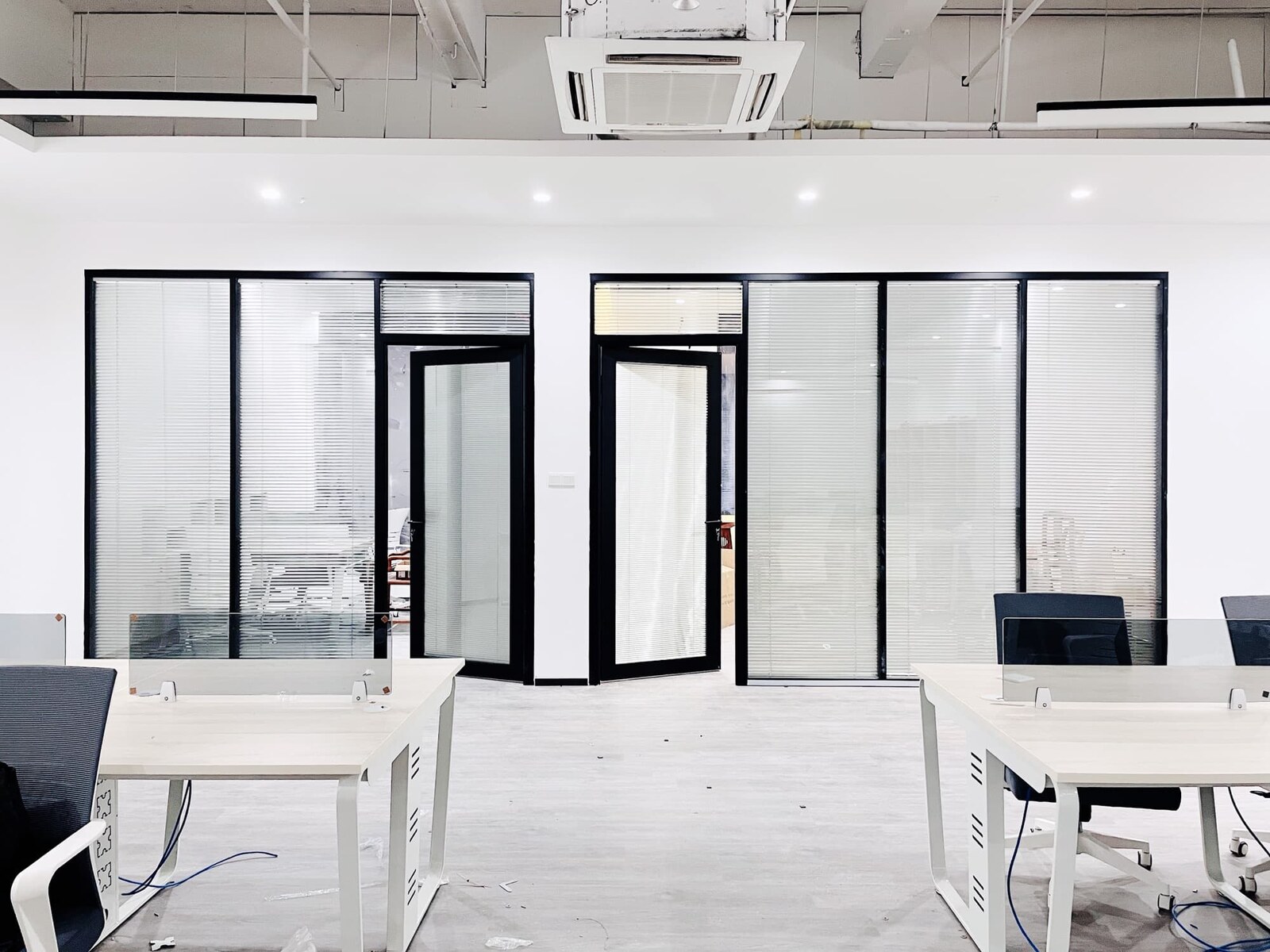
Glass meeting rooms make an office feel connected until a sensitive conversation, candidate interview, or screen presentation calls for less visibility. Replacing the partitions may be unnecessary when the real problem is deciding who can see into a room and when.
Roller shades offer an adjustable layer rather than a permanent change to the glass. Raise them for an open appearance, lower them for a scheduled meeting, and return the room to its usual condition afterward. The right approach starts with the partition system, not simply a fabric color.
World Wide Shades can be part of that planning conversation, but mounting suitability and building approvals should come before an order. Contact World Wide Shades or call (844) 674-2716 to discuss your office layout and the questions to bring to your facilities team.
Start With the Privacy the Room Actually Needs
A conference room beside a busy corridor has different requirements from a private office facing another workstation. Identify whether the priority is concealing faces, protecting information on screens, softening visual distractions, or temporarily separating a training area.
For interview rooms and confidential meetings, prioritize preventing recognizable views through the fabric. For an office that mainly needs relief from passing movement, a more translucent material may be acceptable. Do not treat either choice as a guarantee without reviewing samples in representative lighting.
Consider the whole sightline, too. A shade across the main pane will not address a clear sidelight beside the door, an uncovered transom, or a neighboring glass panel. A person walking down a corridor may see through an edge that is invisible when viewed straight on.
Give World Wide Shades a description of the use case rather than asking only for an “office shade.” Our commercial roller shades guide offers a broader starting point, while this project needs particular attention to internal glazing and movement between rooms.
Choose Fabric for Both Sides of the Glass
Interior partitions do not always behave like exterior windows. Lighting on both sides may change throughout the day, and the corridor can become darker than the occupied meeting room after hours.
A light-filtering fabric can keep an enclosed room from feeling visually sealed off. It may still reveal silhouettes or movement, particularly with strong light behind the occupants. Use a real sample against the partition and view it from the corridor, the seated area, and an oblique angle before deciding whether the result is private enough.
Our light-filtering shades guide explains the broader fabric category. For this application, ask whether the sample conceals the specific activities you need to protect rather than assuming the label describes confidential-meeting performance.
An opaque fabric may be a better starting point when occupants should not be recognizable through the covered area. However, fabric opacity does not eliminate the installation’s side gaps or make the entire room light-tight.
Compare the fabric width with the actual glass coverage, including the clearances required by the selected brackets and control system. A wide shade mounted across several panes might reduce intermediate gaps, but it also changes support requirements and the size of the assembly.
Read our roller shade fabric guide and blackout curtains versus blackout shades comparison for useful distinctions between fabric choice and complete coverage. Then request swatches from World Wide Shades so the office team can review privacy, color, and appearance together.
Mount to a Suitable Structure, Not an Assumption
The visible frame is not automatically an approved fastening location. Some partitions use removable covers, shallow channels, concealed services, or components that were never intended to carry an added shade.
A head-mounted or jamb-mounted installation may work when the partition manufacturer or qualified installer confirms a suitable load-bearing location. The review should address bracket placement, fastening methods, shade weight, and operating forces.
Mounting above the partition may be another possibility if an appropriate structural surface is available. Do not assume a suspended ceiling grid or decorative trim can provide the required support. A clean-looking location still needs a compatible attachment detail.
Our guide to installing roller shades on steel window frames addresses a related substrate problem. Steel framing and office partition framing are not interchangeable, so use it as a prompt for questions rather than a universal fastening recipe.
Do not improvise brackets by bonding standard hardware directly to the pane. Consider glass mounting only when the hardware maker explicitly approves the system for the particular glass, shade assembly, installation conditions, and operating loads, with the partition manufacturer’s approval where required.
An adhesive that holds a lightweight sign is not evidence that it can support a moving roller shade. Avoid drilling or otherwise modifying glass as a field workaround; refer any proposed alteration to the glazing system manufacturer and an appropriately qualified installer.
Before choosing a product, ask World Wide Shades about the intended mounting arrangement. Send the partition identification and installer-approved attachment information so the discussion starts with a feasible installation rather than a preferred appearance alone.
Be Cautious With Adhesives and Privacy Film
Privacy film can seem simpler than a moving shade, but it changes the glass continuously rather than only during meetings. Review whether permanent frosting would undermine the openness the office was designed to provide.
Before applying film, tape, adhesive brackets, or adhesive-backed tracks, ask the glazing supplier about compatibility with the specific glass, coatings, seals, and warranty. Request the product maker’s preparation and removal instructions rather than assuming every clear pane accepts the same treatment.
For leased offices, obtain written permission before changing either the glass or the framing. Even a removable product should have an agreed restoration process, including who is responsible for residue, finish damage, or replacement if removal does not go as planned.
The same principle applies to unusual glazing elsewhere in a building. Our article on roller shades for glass block windows explores why the surrounding structure often matters more than the glass surface itself.
Treat Doors as Moving Assemblies
A partition door is not just another rectangular pane. Its handle, closer, hinges, seals, and full swing path all need to remain usable with the shade raised and lowered.
Decide whether the shade belongs on adjacent fixed glazing, on a separate approved support, or on the door itself using a specifically compatible system. Do not bridge a moving door and fixed panel with one lowered shade that occupants would have to lift before leaving.
Check the roll and bottom bar against nearby walls and hardware throughout the door’s travel. A motor or control location also needs to stay accessible without placing an occupant behind an opening door.
For related clearance considerations, see roller shades for French doors. The architectural details differ, but the useful habit is the same: evaluate the whole moving assembly, not only the glass area.
Keep Safety Reviews Separate From Style Decisions
Have the facilities team review the proposed installation before finalizing it. OSHA requires exit routes to remain unobstructed and exit-route doors and signs to remain visible, so shade placement must not interfere with those conditions (OSHA exit-route maintenance requirements).
The same standard requires emergency safeguards, including sprinkler systems, alarms, and fire doors, to remain in proper working order (OSHA 1910.37). Ask the building’s fire-protection professional to review the shade’s relationship to sprinkler discharge, detectors, and any rated glazing or door assembly rather than relying on a generic clearance rule.
Request documentation for the exact proposed fabric if the project has flame-performance requirements. A fabric test report is not approval to modify a fire-rated partition, and neither a decorative cassette nor a shade should be described as restoring a compromised rated assembly.
World Wide Shades recommends resolving these project-specific questions with the responsible building professionals before ordering. Contact the team or call (844) 674-2716 when you are ready to discuss options within the approved scope.
Coordinate Adjacent Panels and Daily Operation
Glass office fronts often have repeating narrow bays. Decide whether each bay needs independent control or whether several sections should operate together, then consider how the room will look when some shades are down and others are raised.
Consistent roll direction, cassette appearance, and bottom-bar stopping positions can make the installation feel deliberate. Our guide to aligning roller shades across adjacent windows discusses coordination that is also useful across a partition wall.
Keep the controls straightforward for people who use the room occasionally. A clear wall control may be preferable to an arrangement that depends on an individual employee’s phone or account.
If considering motorization, establish power access, maintenance responsibility, and the desired behavior during a power interruption before choosing equipment. Explore our motorized shade setup guide, but confirm any proposed controls with the office’s IT and facilities policies.
Once the layout is approved, start a World Wide Shades configuration to explore the available product choices. Keep the installer’s confirmed mounting requirements alongside the selections.
Plan for Cleaning and Understand Acoustic Limits
Ask for cleaning instructions for the exact fabric and hardware. Establish whether routine care means dusting, gentle vacuuming, or an approved spot-cleaning method, and do not assume the office’s glass cleaner is suitable for the shade.
Keep sprays away from the fabric, controls, and motor components unless the manufacturer specifically permits their use. Cleaning crews should know how to raise the shade safely and which surfaces must not be scrubbed or saturated.
Visual privacy also needs a separate conversation from sound privacy. Do not specify an ordinary roller shade as soundproofing or promise that it will keep a confidential discussion from being heard outside the room; require appropriate acoustic evidence for any claimed performance.
For confidential spaces, ask an acoustic professional to assess the complete enclosure, including doors, seals, ceilings, and other sound paths. Our noise-reducing window shades guide provides additional context, but a fabric layer is not a substitute for evaluating the room itself.
Frequently Asked Questions
They can provide adjustable visual screening when the selected fabric and coverage suit the room. Review samples under realistic lighting and inspect edges, sidelights, and uncovered panes before treating the result as sufficient for sensitive meetings.
Only consider that approach with hardware explicitly approved for the specific application and the necessary glazing-system approval. Do not substitute general-purpose adhesive or adapt a standard screw-mounted bracket into a homemade glass mount.
Opaque fabric addresses visibility through the fabric, not every opening around it. Side clearances, adjoining panels, transoms, and the door can still create sightlines that require a coordinated plan.
Possibly, with a compatible mounting design that preserves safe door operation. The shade must not become something occupants need to move out of the way before using the door, and building review should address any egress or rated-assembly implications.
Do not count on a standard roller shade for acoustic confidentiality. Evaluate visual screening and sound isolation separately, with professional acoustic advice when conversations must not be intelligible outside the room.
Give Glass Rooms an Adjustable Boundary
The best partition shade is one that fits the office’s actual routines without fighting its architecture. Choose the level of visual screening, secure an approved mounting approach, and keep door operation, safety, and maintenance part of the same decision.
World Wide Shades can help you explore that adjustable layer once the building requirements are clear. Browse fabric swatches or contact World Wide Shades to move from an exposed glass room toward a more flexible workspace.