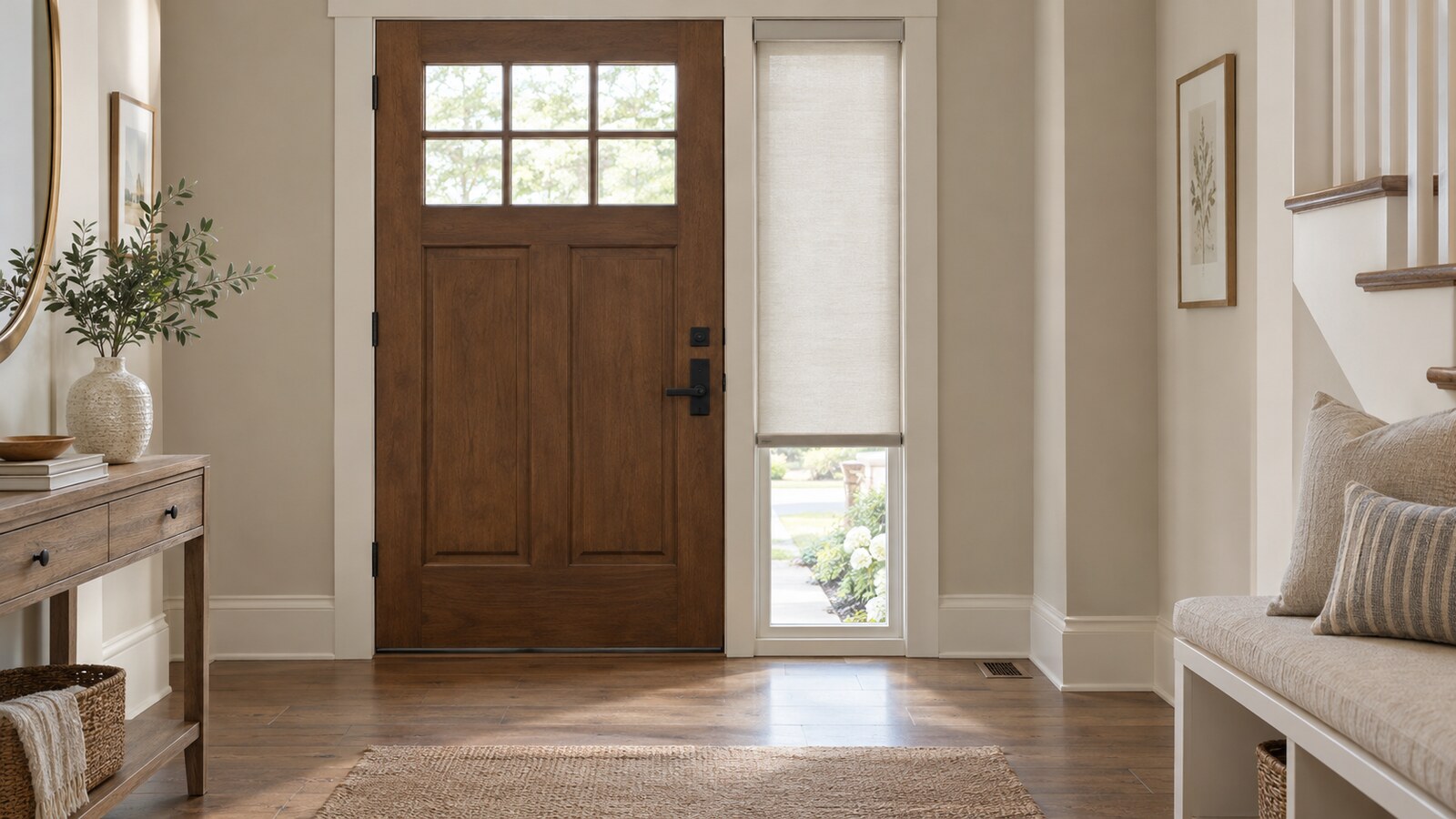
The narrow glass beside your front door brings light into the entry, but it can also leave you feeling on display. You want to answer the door, grab a package, or walk past the foyer without wondering who can see inside.
Choosing shades for front door sidelights starts with three decisions: how much privacy you need after dark, where the brackets can attach, and whether the selected shade can be built narrow enough. Treat those as separate questions instead of choosing a color first.
At World Wide Shades, we suggest starting with the way you use the entry. A bright hallway near the sidewalk calls for a different plan than a shaded porch with a deep setback.
Explore your options in the World Wide Shades builder, then compare the proposed shade with your actual opening. If the fit looks close, ask for help before placing an order.
Choose privacy for the evening, not just the afternoon
Think about your most exposed moment. It might be an early morning departure with the foyer lights on, or the hour after sunset when you come home from work.
Solar screen fabric is not a dependable answer for that situation: Hunter Douglas explains that when interior lights are on at night, people outside can see through solar shades (Hunter Douglas solar shade guide). Do not choose an open-weave screen simply because it looks private in a bright showroom.
For an entry, consider these priorities:
- Soft daylight: Start by comparing privacy-oriented light-filtering samples, then judge the actual fabric under your evening lighting.
- Stronger visual coverage: Consider an opaque fabric if preventing views through the material matters more than keeping the sidelight bright.
- A clear daytime view: Plan to raise the shade when you want an unobstructed view rather than expecting one fabric to do everything.
Our light-filtering shades guide can help you frame the fabric discussion. Before committing, hold a sample against the glass and have someone view it from the normal approach to your door.
Run that test after dark with the lights you normally use. Look for visible detail, outlines, and any sightline around the sample; a fabric name alone should not settle your privacy decision.
Request World Wide Shades swatches to compare your preferred colors at the entry. Check them beside the door finish and against both daytime and evening light.
A narrow opening needs a hardware-first plan
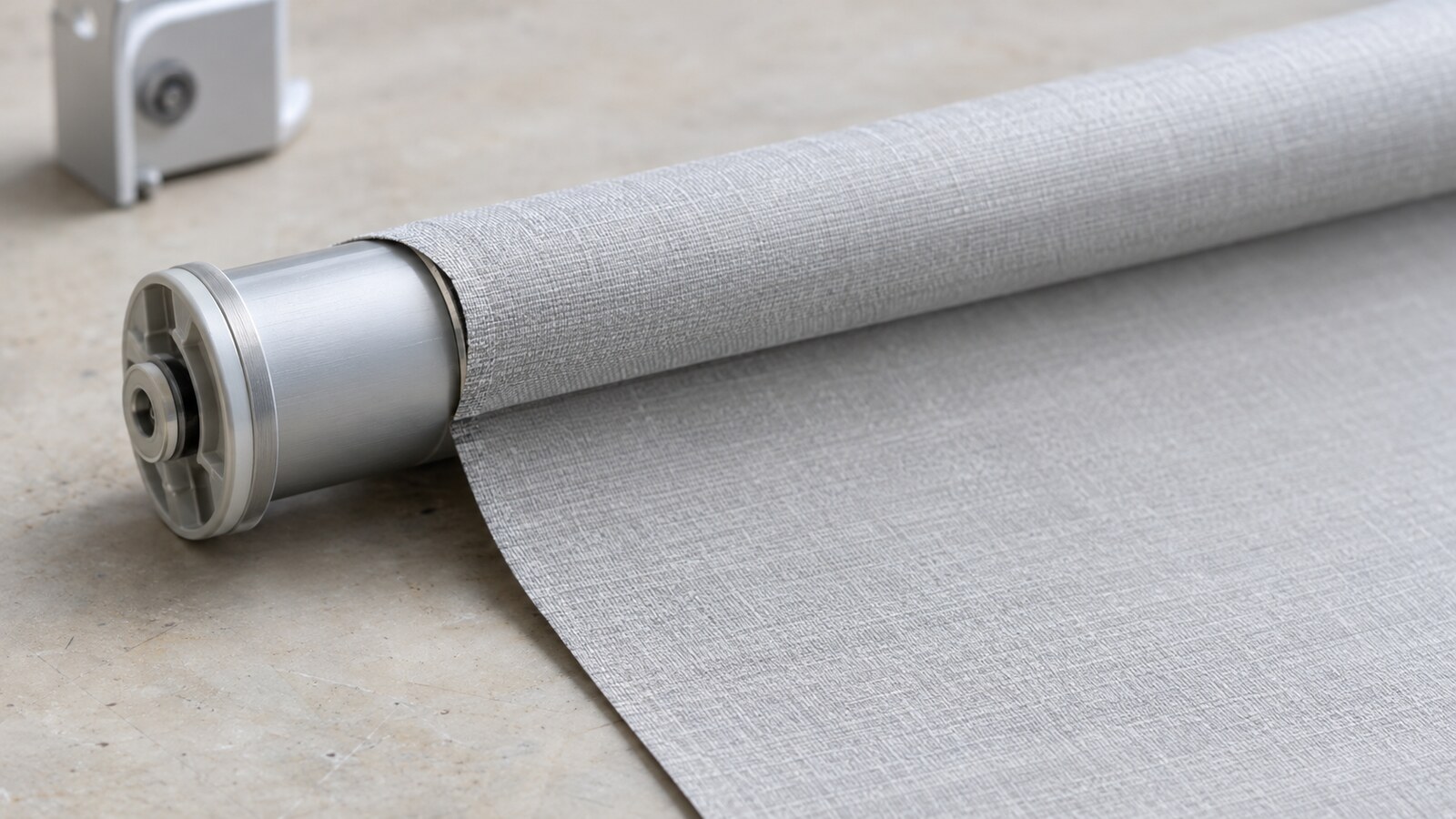
Do not assume that a shade available for a bedroom window can be made for a sidelight. Ask for the minimum finished width for the exact fabric, control, tube, and top treatment you intend to order.
Give the opening width and height together. A proposed shade that is 12 inches wide and 72 inches tall has a 6:1 height-to-width ratio; that is a useful description of the project, not a promise that any particular product will work.
Narrow, tall shades deserve specific review: Lutron's measuring guide identifies height-to-width ratios of 4:1 or greater as a condition that increases light gaps on its systems (Lutron measuring guidelines). Those are Lutron's system rules, not universal limits or World Wide Shades specifications.
This distinction matters when the glass is only a narrow strip. Lutron defines bracket-to-bracket width as the fabric width plus the gaps at the operator and idler ends (Lutron measuring guidelines).
For a simple planning example, imagine a 14-inch-wide assembly with fabric that is 1 inch narrower overall. Its fabric would be 13 inches wide, but the location of each edge would still depend on the actual hardware. This is hypothetical math, not a standard deduction to use when ordering.
Ask for both finished assembly width and finished fabric width. Then compare the fabric edges with the glass, not just the trim, and discuss whether a person standing at an angle could look around the shade.
Contact World Wide Shades with a straight-on photo and a side view of the opening. Call (844) 674-2716 if you want help identifying which fit questions to resolve before ordering.
Inside or outside mount: protect the doorway first
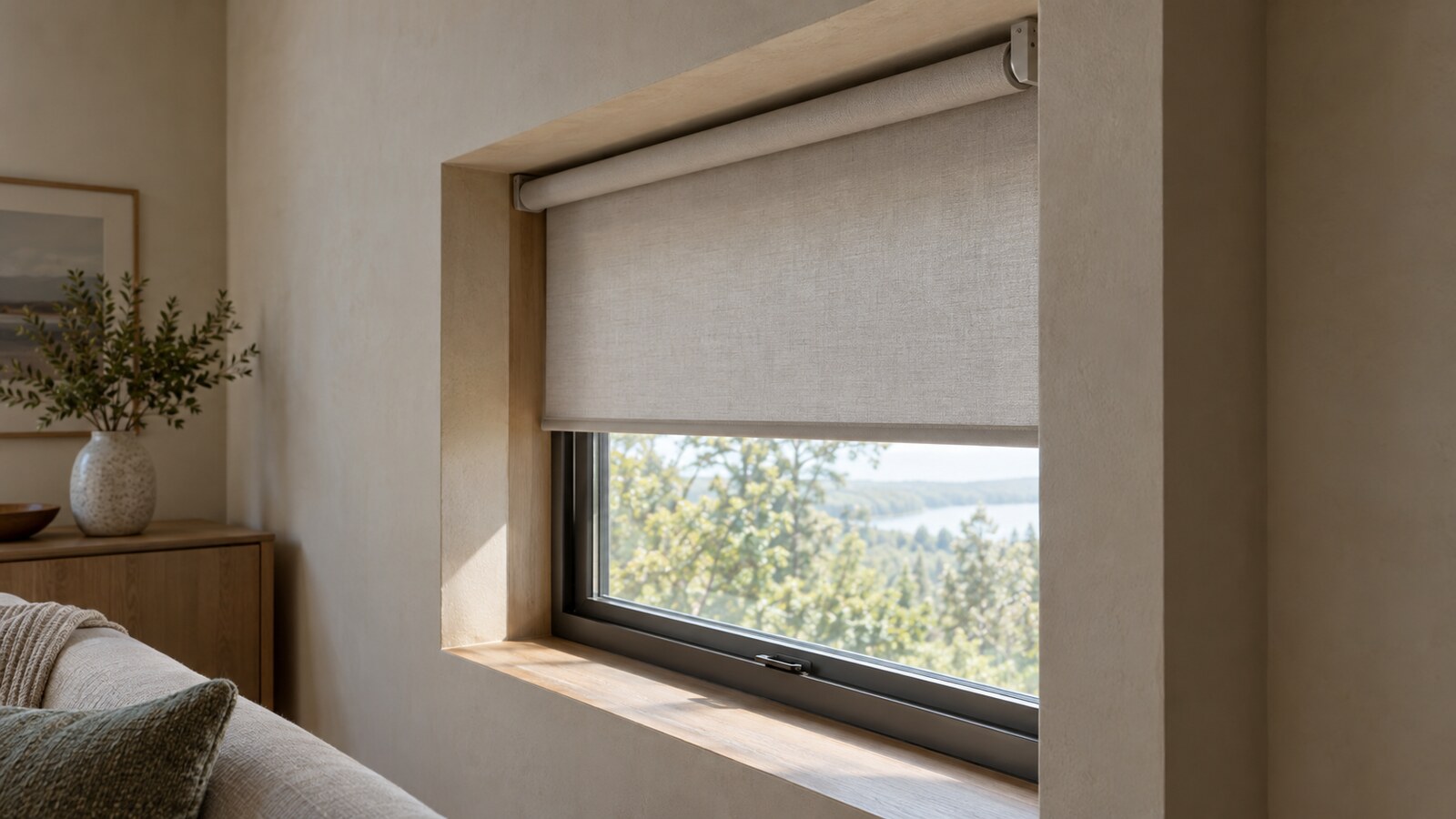
An inside mount is worth exploring when you want the surrounding trim to remain visible. An outside mount is worth considering when the recess cannot accept the selected brackets or when you want to discuss wider coverage.
Neither approach should be chosen from appearance alone. Sketch the proposed roller, brackets, fabric, and bottom bar, then check how they relate to the moving door.
Measure the flat area where the bracket would actually attach, rather than counting every inch between the room and the glass. Raised molding and sloped trim are reasons to ask for a mounting review.
As one model-specific example, LEVOLOR's cordless open-roll guide calls for 1½ inches of depth for a partially recessed headrail and 2½ inches for a fully recessed mount (LEVOLOR installation guide). Do not apply those numbers to another system; obtain the exact drawing and depth requirements for your selected shade.
Also confirm how the manufacturer wants the order dimensions supplied. Avoid making your own deductions unless the ordering instructions tell you to do so.
Mark the planned hardware position with removable tape. Open the door through its full normal swing and check the handle, lock, closer, and any storm-door arrangement.
Consider the shade both raised and lowered. You should be able to unlock the door, carry groceries through, and reach the controls without brushing against fabric or working around a projecting bracket.
If you are comparing treatments for glass on the door itself, read our roller shades for French doors guide. Keep that project separate from the fixed glass beside the door when discussing installation.
Fixed sidelights and moving doors need different advice
A sidelight beside the door is not the same mounting situation as a glazed panel that travels with the door. Tell your shade supplier which surface will carry the brackets and whether that surface moves.
LEVOLOR describes optional hold-down brackets as useful for doors because they prevent the shade from swaying (LEVOLOR installation guide). That does not mean every fixed sidelight needs them, or that every roller shade accepts the same hold-down kit.
If restraints are proposed, ask how the bottom bar connects and what you must release before raising the shade. Use only the arrangement approved for the selected product, and make sure it suits how often you plan to open the shade.
Do not treat a glass bead, thin decorative trim, or an unknown door-frame material as an approved screw location. Before drilling near entry glass, ask the door manufacturer or installer to identify suitable attachment points and any warranty restrictions.
For the broader sequence, review how to install roller shades. Use that as preparation for the product-specific instructions, not as a substitute for them.
Ask World Wide Shades about your mounting plan before buying extra brackets or drilling the frame. Include photos of the proposed attachment area and explain whether the shade will sit on fixed trim or a moving panel.
Choose controls with safety and reach in mind
The entry is a shared space, including for visiting children. The U.S. Consumer Product Safety Commission recommends cordless window coverings and identifies going cordless as the way to eliminate the window-covering cord strangulation hazard (CPSC window covering safety guidance).
Start your selection with a cordless design and confirm that it can be built at the required narrow width. If considering motorization, ask about the minimum width, accessible charging or battery service, and any exposed power lead.
Think through the daily reach as well. Can every adult who needs to use the shade reach its control comfortably without leaning into the doorway?
A shade hold-down and a cord tension device serve different purposes. For existing continuous-loop cords, CPSC advises anchoring the loop to the floor or wall and keeping it taut but operable; it also warns that these measures reduce rather than eliminate the hazard (CPSC window covering safety guidance).
Our child-safe window treatments guide is another place to start your planning. Keep safety ahead of a preference for one particular control style.
Coordinate the pair without overcomplicating the entry
For two sidelights, begin with matching fabric, top-treatment style, and intended bottom-bar positions. Measure each opening separately rather than assuming the left and right sides are identical.
Try a quiet neutral against busy wood grain or decorative glass. If the doorway is simple, a subtle texture may give you the detail you want without adding a strong pattern.
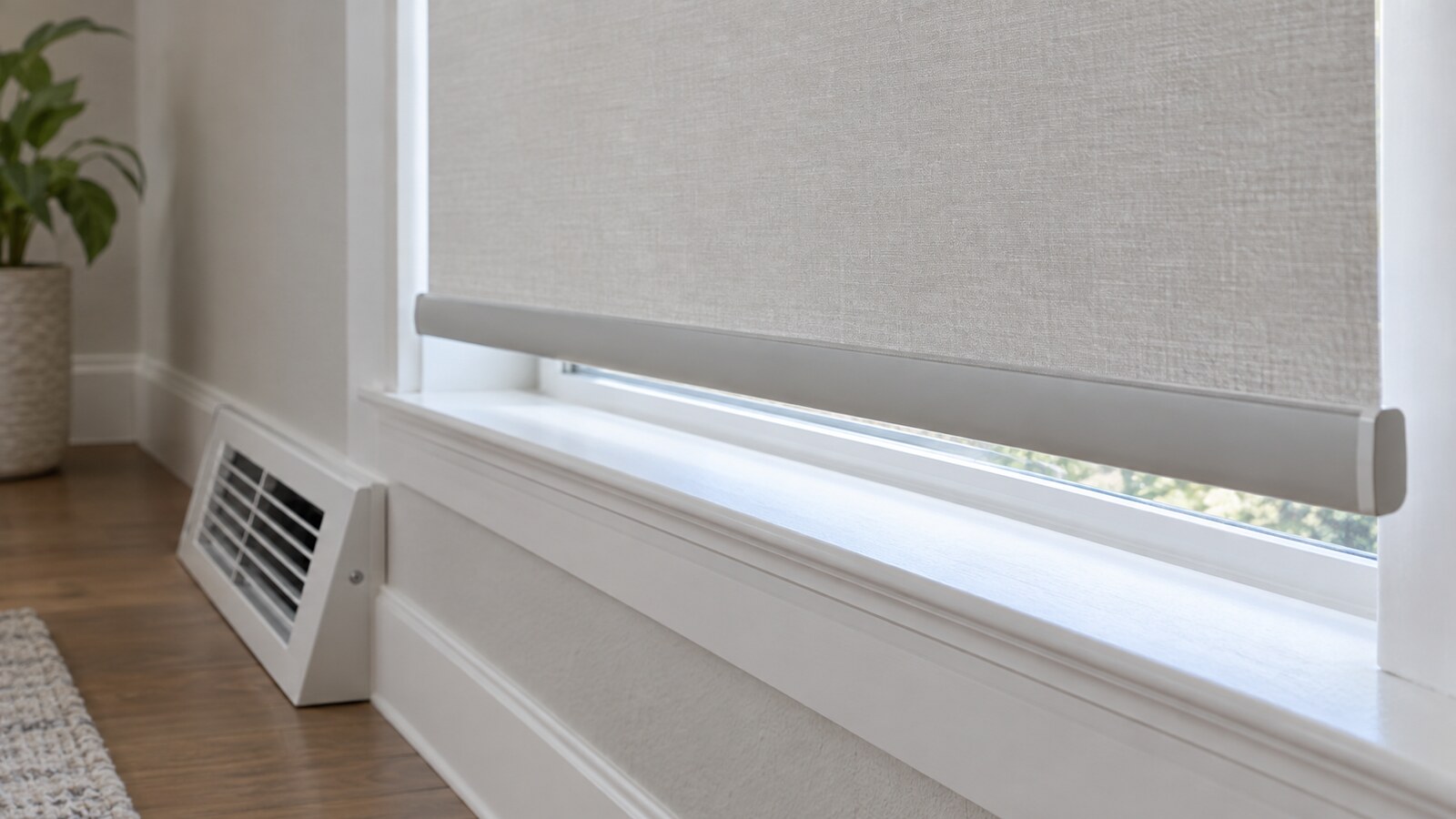
Avoid choosing a large cassette solely to match shades elsewhere in the house. First compare its proportions with the narrow glass and confirm that the projection works beside the door.
Build a starting configuration with World Wide Shades, then revisit fabric and controls once fit is confirmed. Call (844) 674-2716 if you need help keeping the paired sidelights visually consistent.
For budget planning, see how much custom roller shades cost. Compare complete configurations, including controls and top treatments, instead of assuming the smallest panel will always be the least expensive option.
Related guides for other shade problems
For other unusual openings and repair questions, see roller shades for dormer windows, shades for deep window wells, why a bottom rail rattles in airflow, and what to do when fabric comes loose from the tube.
For more specialty installations, see the recent guides to steel window frames, triangular gable windows, aligning adjacent shades, office glass partitions, and glass-block windows.
Frequently asked questions
Treat the answer as product-specific until the supplier confirms it. Submit the exact width and height, preferred control, and mounting location together, and ask whether the configuration is supported before ordering.
Do not decide from the label alone. Test the actual sample at night with your foyer lights on and ask an outside observer whether they can make out detail or silhouettes.
Do not use fabric opacity as a promise about the whole installation. Roller hardware leaves a difference between assembly width and fabric width, so edge coverage needs separate attention (Lutron measuring guidelines). Our blackout curtains versus blackout shades comparison can help you consider the broader light-control goal.
Ask based on the selected product and location, rather than adding them automatically. LEVOLOR's guide describes hold-downs as an optional way to stop swaying, especially on doors (LEVOLOR installation guide).
For this project, start by planning separate sidelight shades so the door remains easy to use. Only consider a treatment across the full entry after an installer reviews its position, operation, and clearance.
Give the glass privacy, not the doorway an obstacle
The best plan begins with your evening privacy needs and ends with a fit review. Confirm the fabric coverage, narrow-width compatibility, mounting surface, and door clearance before focusing on decorative details.
Start your World Wide Shades project when you are ready to compare configurations. If any dimension or mounting choice is uncertain, contact the team before ordering so the finished entry can feel private without becoming harder to use.