Shade fabric edge curling is one of the most visible window-treatment defects: one or both sides turn inward, lift away from the glass, or develop a wavy profile after repeated use. It is not always a bad fabric. An uneven roll, tight jamb, bent tube, heat exposure, humidity, or incorrect fabric orientation can create the curl. Finding the cause matters because trimming the edge usually makes the problem worse.
World Wide Shades can help determine whether the shade needs alignment, service, a different tube, or a better fabric specification. Start a custom shade plan, order World Wide Shades swatches, or contact World Wide Shades with a side-view photo. Call (844) 674-2716 if the curl is causing abrasion, blocking a door, or leaving a large light gap.
First, describe the curl accurately
Look at the shade fully lowered, halfway lowered, and fully raised. Record whether the curl appears:
- On one edge only or on both edges.
- Along the whole height or only near the bottom.
- When the fabric is rolled up or only when it hangs down.
- As a smooth inward curl, a wave, a diagonal “railroad,” or a frayed edge.
A single edge that rubs a bracket points toward tracking or clearance. Both edges curling evenly may indicate fabric memory, a tight roll, or a material that does not suit the width. A diagonal wave suggests the fabric is not winding squarely. These observations are more useful than simply calling the shade “warped.”
For a technical overview of edge curl and railroading, see Draper’s window shade design discussion. For general fabric selection, compare the best fabrics for roller shades before ordering a replacement.
The most common causes
If the tube is not level, the fabric walks toward one side each cycle. The edge then rubs the bracket, cassette, wall, or window frame. A difference of even 1/16 inch at a contact point can become visible wear after dozens of cycles. Inside mounts are especially sensitive because the opening may be slightly narrower at the top than the bottom.
Watch the top roll from a few feet away. The fabric should build a neat cylinder rather than piling on one side. Do not tug the bottom bar sideways to correct it; that can stretch the fabric and bend the tube. World Wide Shades can specify inside or outside mounting after reviewing the opening.
A long shade puts more leverage on the tube. If the tube bows or was damaged during handling, the fabric tension changes across the width. The motor or clutch may still run, but the fabric will not roll evenly. A tube that is too small for the width and fabric weight can show the same symptom.
This is a hardware issue, not a cleaning issue. Stop cycling the shade if the bottom bar tilts or the curl grows quickly. Request a window-specific design so the tube and drive are selected for the span, not only the fabric color.
Strong direct sun can warm the fabric unevenly, especially next to a dark window frame or a sealed glass unit. After storage or tight packaging, some textiles also retain a temporary roll memory. Heat can make a problem look better for a moment while weakening coatings or adhesives over time.
Never iron, steam, hair-dry, or press a coated solar screen or blackout fabric unless the manufacturer expressly permits it. Many shade fabrics contain stiffeners, PVC, acrylic coatings, or laminated layers that can deform. The UV protection shades guide explains why exposure control should start with the fabric specification rather than a risky home treatment.
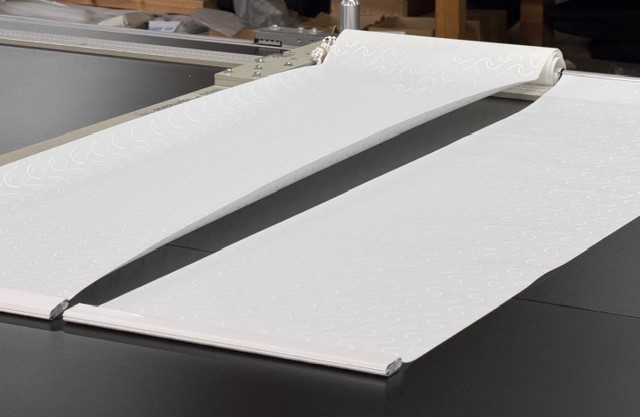
Some fabrics are designed to run with the pattern or weave in a particular direction. A wide shade may use railroaded fabric, with the textile turned 90 degrees to cover the span. That can change how the edge behaves and how the material relaxes. If the fabric was cut or installed against its intended orientation, curling or edge instability may follow.
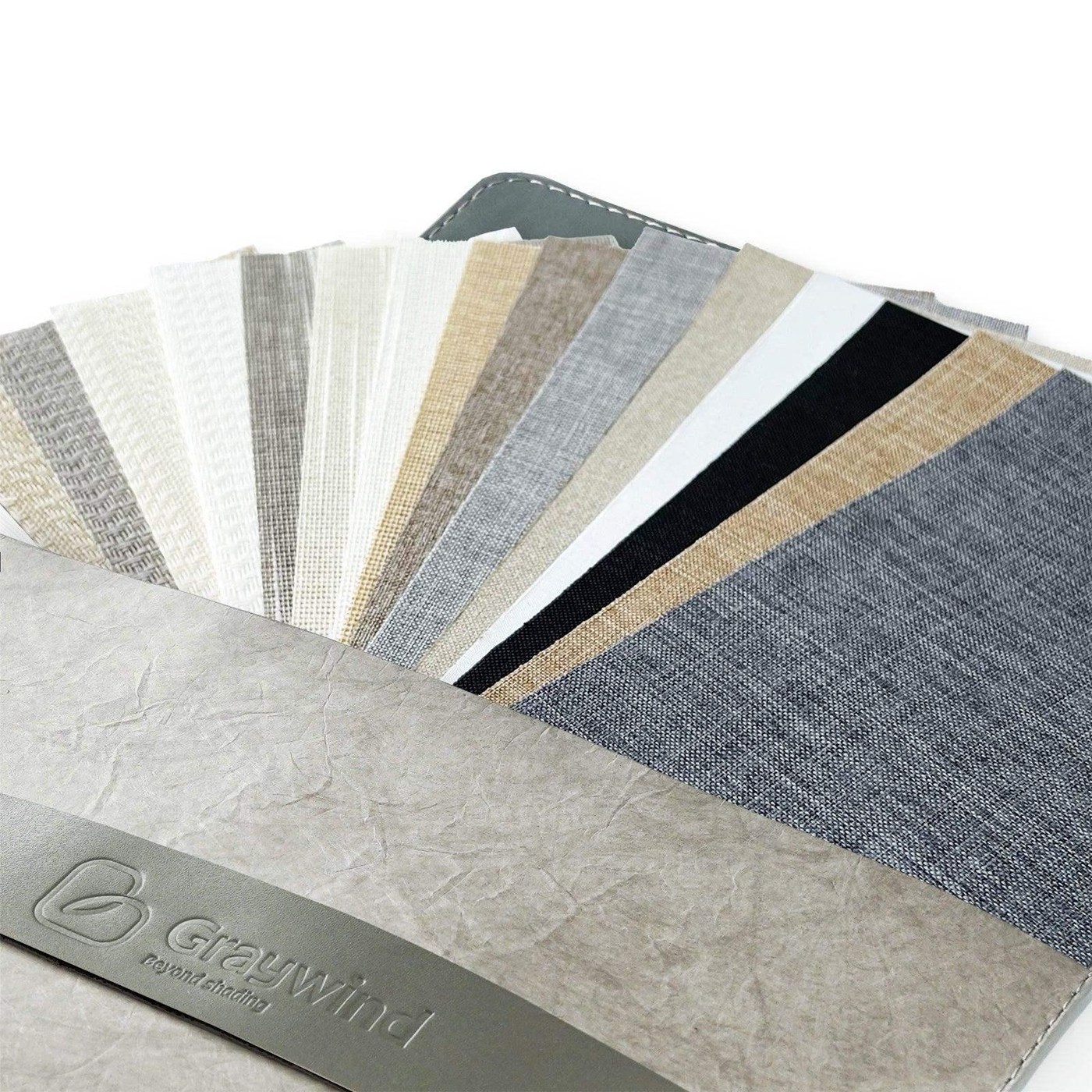
Ask the supplier for the fabric’s width, orientation, and recommended maximum shade size. World Wide Shades can help compare a standard orientation with a railroaded construction for a large picture window, slider, or French door. Send the dimensions and visual goal before committing to a replacement.
Bathrooms, kitchens, unconditioned porches, and damp storage areas can affect textiles and adhesives. A shade does not need to be soaked to change shape; repeated condensation and drying can stress an edge. In a humid room, provide ventilation and keep fabric from touching wet glass or a sink backsplash.
If the shade arrived curled, leave it installed at room temperature for the time recommended by the manufacturer and avoid forcing it flat. If it worsens after several cycles, document the condition and ask for service. Read roller shades for kitchen and bathroom for material and clearance considerations.
A safe diagnostic sequence
- Lower the shade and photograph both edges in even light.
- Check for contact with handles, trim, mullions, screens, and the sill.
- Watch the top roll during one slow cycle; stop if it walks sideways.
- Confirm the tube and bottom bar are level without removing hardware.
- Note sun exposure, room humidity, and whether the issue is new or gradual.
- Clean dust gently with the method approved for the fabric; do not add heat.
- Send the photos, width, height, mount type, and fabric name to the supplier.
Do not trim the curl away. Removing 1/8 inch from one side can make the finished width uneven, expose a raw edge, and change how the fabric tracks. A technician can decide whether the edge can be stabilized or the fabric needs replacement.
How the correction usually works
If the shade is otherwise healthy, a technician may correct bracket level, add an approved shim, adjust the mount, or reset the roll. The exact fix depends on the hardware and should not compromise the manufacturer’s bracket engagement. A controlled retest should show a level bottom bar and a centered roll.
A bent tube, failed clutch, or damaged cassette usually needs a matching replacement part. Replacing only the fabric on a damaged tube can recreate the curl. Conversely, replacing a good tube because of a loose bracket wastes money. World Wide Shades can help separate these variables before you order.
If the fabric has a permanent curl, melted coating, broken edge, or severe fading, replacement is the reliable path. Choose openness and construction for the exposure: a 1%, 3%, 5%, or 10% solar screen will manage view and glare differently, while a blackout fabric needs edge and mount planning to reduce light leakage. Compare privacy and screen performance in the light-filtering shades guide.
For a bedroom, also review blackout curtains versus blackout shades. For a large view, window shade trends for 2026 can inspire a cleaner cassette or hem-bar finish without hiding the real performance requirements.
Prevent edge curl on the next shade
- Confirm the opening is square and the intended mount before fabrication.
- Use a tube rated for width, fabric weight, and motor torque.
- Keep the shade away from handles and leave operating clearance.
- Select a fabric whose width and orientation suit the opening.
- Avoid heat, steam, solvents, and aggressive scrubbing.
- Keep wet-room ventilation working and prevent condensation contact.
- Save the fabric name and care instructions for future service.
World Wide Shades can review the whole window rather than selling a color in isolation. Compare fabrics in the World Wide Shades swatch library, configure the hardware, or contact the team when an edge is already showing wear. Call (844) 674-2716 for help with a wide or unusually shaped opening.
Frequently asked questions
Usually no. Heat can damage coatings, adhesives, solar screens, and blackout layers, even if the curl temporarily looks better. Follow the fabric maker’s care instructions and have a persistent curl assessed.
Not necessarily. Uneven tracking, a tight mount, a bent tube, heat, humidity, storage memory, or incorrect orientation can all create curling. Inspect the roll and clearance before blaming the textile.
No. Trimming can expose a raw edge, change the finished width, and make tracking worse. A technician should decide whether the edge can be stabilized or whether the fabric needs replacement.
One-sided curl commonly points to the fabric winding off-center or rubbing a bracket, wall, handle, or window jamb. Check the roll during movement and stop if the edge is being abraded.
Yes. Motorization does not correct an out-of-square mount, a bowed tube, or the wrong fabric orientation. A motor can repeat the same misalignment more consistently, so correct the mechanical cause before changing settings.
Correct the cause, not just the symptom
A curled edge is an early warning that the fabric, mount, or tube is not working as a system. World Wide Shades can help you preserve the shade if a simple alignment change is enough or choose a replacement built for the opening. Start your design or contact World Wide Shades for a practical recommendation.