What Causes Light Gaps Around a Roller Shade?
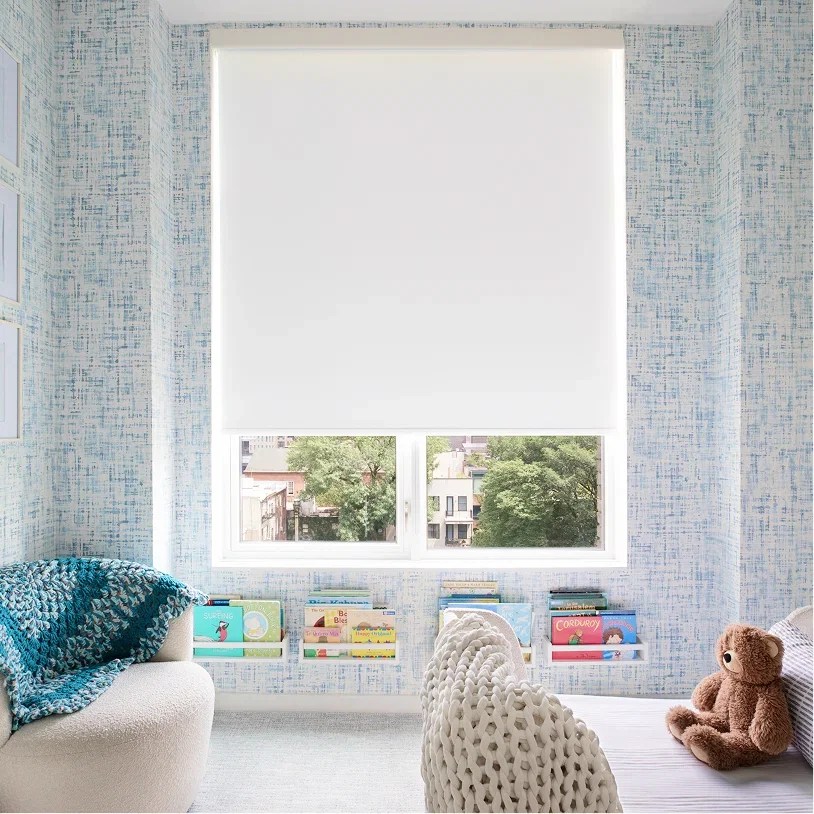
Roller shade light gaps are the bright strips that appear along the sides, bottom, or top of a shade when sunlight passes between the fabric and the window opening. They are usually a geometry issue, not a defect in the cloth. An inside-mounted shade must leave operating clearance, and even a 1/2-inch gap on each side can create a visible beam in a dark bedroom.
Fabric opacity and edge design solve different problems. A blackout fabric can stop light through the material, but it cannot block light that travels around the material. World Wide Shades designs the complete treatment—mount, fabric, cassette, and optional side channels—so you can choose the right level of darkness instead of paying for a fabric upgrade that leaves the perimeter bright.
For a room that needs dependable sleep darkness, compare shades with our best window shades for bedrooms guide, then use the World Wide Shades builder to price the exact width, height, fabric, and control style.
The Four Main Light-Gap Locations
Side gaps are most obvious on inside mounts. The shade fabric must roll freely, and the tube or brackets may require a small deduction from the ordered width. Depending on the product, fabric width can be narrower than the overall headrail by about 1/2 to 2 inches. Measure the visible opening, not just the glass, and ask how the manufacturer defines finished width.
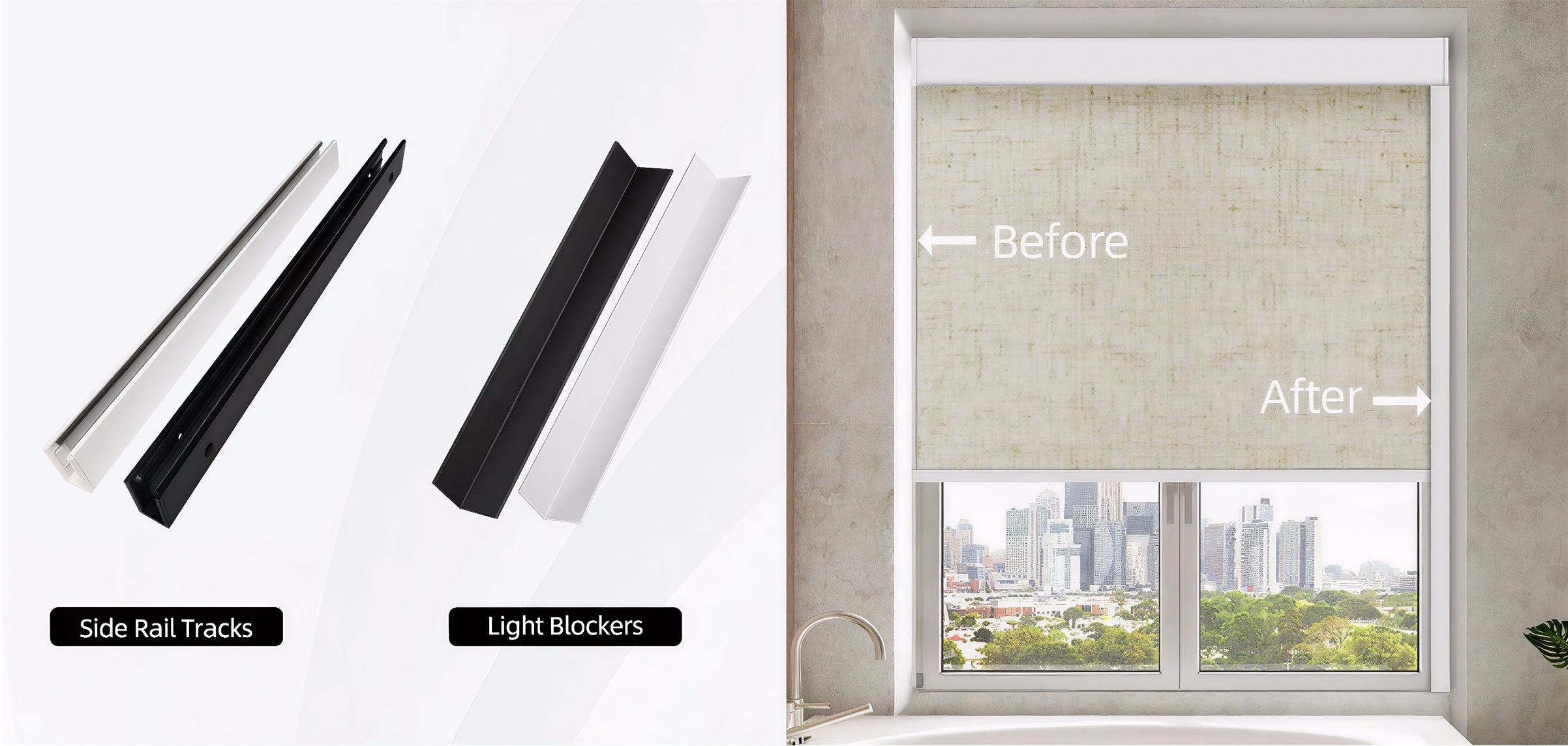
Side channels, also called side tracks or light blockers, create vertical guides that overlap the fabric edges. They can cut direct perimeter light substantially when installed straight and tight to the frame. They work best when the shade runs flat and the window jambs are reasonably square.
A bottom gap appears when the shade stops above the sill, when the sill is uneven, or when the fabric hangs outside the opening. A cassette or hembar does not automatically seal the bottom. For maximum darkness, an outside mount that extends below the opening, a sill-mounted guide, or a full light-gap system may be more effective.
Do not force a hembar against the sill. Friction can create noise, wear the fabric, and make a motor stall. A small intentional clearance is safer than a tight fit that binds every cycle.
Inside mounts can leave a narrow strip above the roll, particularly with a shallow frame or a cassette that cannot sit completely inside the recess. Outside mounting raises the headrail above the opening and lets the fabric overlap the top trim. A fascia or cassette can hide the roll and reduce the visual path for light.
An uneven frame, loose trim, or a window that is out of square can create changing gaps from top to bottom. Check the opening at three heights and both diagonals. If the difference between width measurements is more than 1/4 inch, a professional should determine whether the treatment should follow the opening, the trim, or a corrected mounting surface.
Side Channels: When They Make Sense
Side channels are the most direct solution when the priority is darkness rather than a completely minimal profile. They are useful for bedrooms, nurseries, media rooms, and street-facing windows where light leakage or nighttime privacy is especially distracting. White, black, and finish-matched options can make the tracks blend with the frame or intentionally disappear into a dark wall.
A track is not a magic seal. The fabric must fit inside the channel, the channel must be plumb, and the top and bottom transitions must be planned. A 1/8-inch deviation over a tall window can be enough to create a visible wedge of light. World Wide Shades can review the window depth and select a compatible light-blocking system; contact the design team before ordering if you are unsure whether your trim can accept tracks.
Side channels also change the visual and operating feel. They add roughly 1 to 2 inches of structure on each side depending on the product and may be noticeable when the shade is raised. For a wide picture window, split shades or a center support may be preferable to one oversized panel. See our best shades for south-facing windows guide for how orientation affects the fabric and mounting decision.
Choose the Right Fabric for the Goal
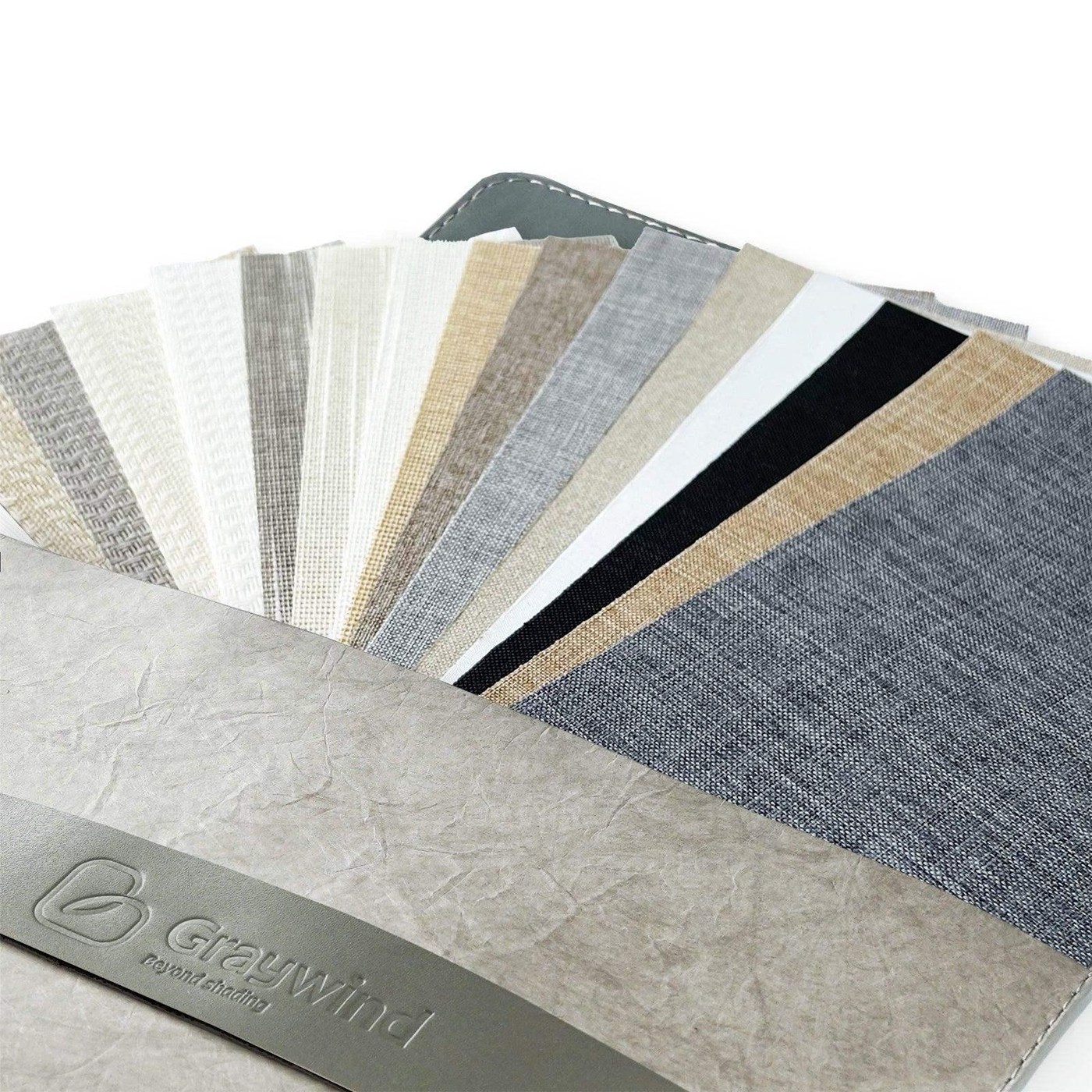
Blackout fabric blocks most light through the shade itself, but “blackout” does not mean the room will be perfectly dark without perimeter coverage. White or light-colored blackout fabric can reflect heat and look soft from the room side; darker colors may absorb more solar energy. Ask about the fabric’s room-side color, openness, backing, and cleaning method.
Room-darkening fabric reduces light and glare but may intentionally glow at the window during the day. It can be the better choice for living rooms, guest rooms, or offices where you want privacy without a cave-like effect. Pair it with an outside mount for more overlap if the goal is reduced edge glow rather than full blackout.
Solar screen shades are often described by openness percentages such as 1%, 3%, or 5%. A 1% screen has a tighter weave than a 5% screen and typically provides more glare control and daytime privacy, though the view and nighttime privacy depend on indoor and outdoor light levels. Solar screen fabric is not a blackout fabric; use our UV protection window shades guide when furniture and flooring protection matter more than darkness.
Measuring and Installing for Fewer Gaps
- Measure the inside width at the top, middle, and bottom to the nearest 1/8 inch.
- Measure the inside height on the left, center, and right.
- Record the smallest width and height, but do not apply deductions unless the order instructions require you to.
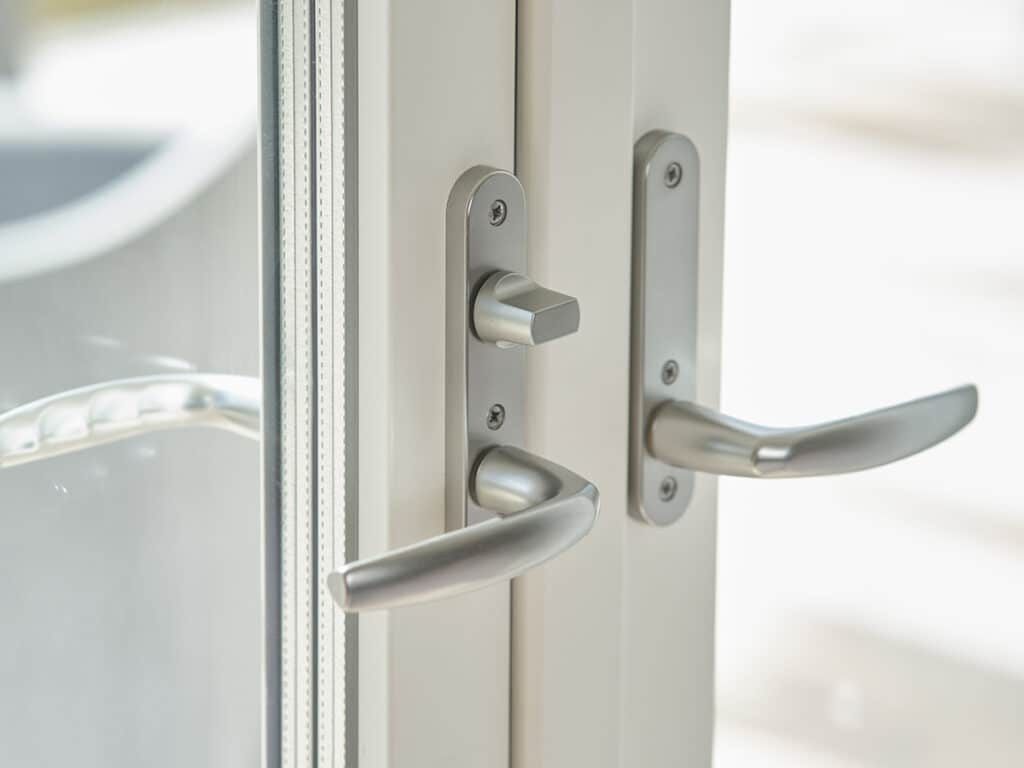
- Check for handles, cranks, tile, backsplash, and trim that could interfere with a side track or hembar.
- Decide whether the shade should follow the glass, the window frame, or the outside trim.
- Mark the bracket line level before drilling; a tilted tube changes the gap from one side to the other.
- Test the shade at 25%, 50%, and 100% lowered positions before adding covers or track caps.
A 1/8-inch measurement error is insignificant on a casual living-room shade but can be visible in a narrow, bright bedroom. If several windows share a wall, measure every opening; production tolerances do not make two apparently identical windows the same size.
World Wide Shades offers free fabric swatches so you can compare blackout backing, texture, and color before committing. When the window is unusually deep, angled, or out of square, ask World Wide Shades for a fit review and include photos with a ruler in the frame.
Practical Alternatives to Full Side Tracks
If side channels are not possible, use an outside mount with at least 2 to 3 inches of overlap on each side when the trim allows it. A cassette can cover the top roll, while a hembar that extends below the glass reduces the bottom path. Layering a roller shade with drapery adds softness and can cover the edges; our roller shades with drapery layering guide explains the spacing needed for both treatments to operate.
For rental apartments, removable mounting may be more important than a perfect seal. Explore roller shades for rental apartments before using adhesive or drilling into a lease-restricted frame. For French doors, handles and narrow stiles change the clearance calculation; see roller shades for French doors.
FAQ: Roller Shade Light Gaps
No. Blackout fabric blocks light through the material, while light can still pass around the sides, top, or bottom. An outside mount, cassette, and compatible side channels provide more complete room darkening than fabric alone.
They are usually worth considering for bedrooms, nurseries, and media rooms where a bright edge affects sleep or screen viewing. The value is lower for a living room where daylight and a slim profile matter more. Ask for a complete installed comparison rather than comparing fabric prices alone.
A common planning range is 2 to 3 inches of overlap beyond each side of the opening, but trim, handles, and wall space determine the safe dimension. World Wide Shades should confirm the overlap and bracket clearance for your window before production.
Sometimes, but the channel must match the fabric width, hembar, cassette, and mounting geometry. A channel that is too narrow can bind the fabric; one that is too wide will still leak. Measure the finished shade and ask the original manufacturer or World Wide Shades before retrofitting.
The frame may be out of square, the brackets may be uneven, or the fabric may not be centered on the tube. Check level and plumb before replacing fabric. If the gap changes from top to bottom, a fit or frame issue is more likely than a fabric-opacity issue.
Build a light-blocking shade configuration with World Wide Shades, or call (844) 674-2716 if you want a specialist to review a stubborn gap.
For a second opinion on an unusual frame, call (844) 674-2716 before drilling; a five-minute fit conversation can prevent an expensive remake.