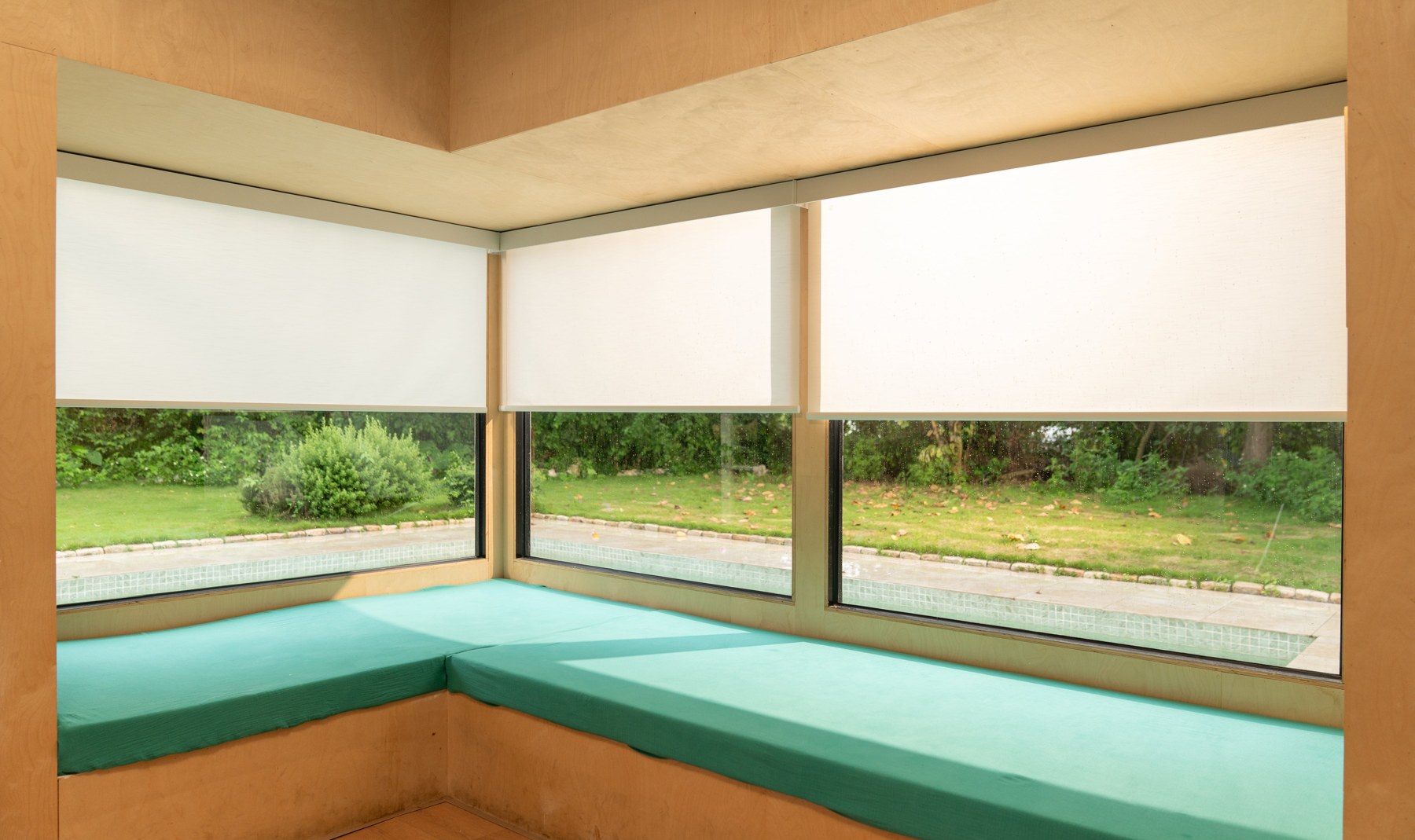
Dual shades for corner windows let each pane do more than one job. A solar or light-filtering layer can soften daylight and preserve the view, while a room-darkening layer can close for evening privacy or television glare. The corner makes the project more demanding because two shades meet on adjacent planes, often with a narrow return, a shared trim line, or a post that changes how far each roller can project.
World Wide Shades plans the fabric, roller orientation, mount, and control together instead of treating the joint as an afterthought. Start with the custom shade builder, order swatches to see openness and color at the corner, or contact World Wide Shades with photos and rough dimensions. For a hard-to-reach corner, call (844) 674-2716 before ordering so the hardware can be reviewed with the room layout.
Why corner windows need a two-layer plan
A corner window usually turns through 90 degrees, although angled projections can be wider or tighter. The glass may face two different sun paths, and the center joint can create a bright line even when both shades are fully lowered. A single fabric may look coordinated but cannot always provide both a clear daytime view and true night privacy.
Dual shades divide the performance goals:
- View layer: a 1%, 3%, 5%, or 10% openness solar fabric filters direct brightness while maintaining some outward view.
- Privacy layer: a light-filtering, room-darkening, or blackout fabric closes the view when interior lights are on.
- Independent movement: each layer can rise, lower, or stop without forcing a daytime screen to remain closed.
- Shared appearance: matching fascia, rollers, and fabric colors make the two planes read as one installation.
The correct percentage depends on orientation, room use, and desired view. Compare the trade-offs in the best fabrics for roller shades, light-filtering shades, and UV protection window shades before selecting a sample.
World Wide Shades can also help decide whether the layers should be stacked in one dual cassette or installed as separate coordinated shades. A dual cassette can save wall space, while two independent systems may offer more flexibility when the corner has unequal depths.
Solve the corner joint before choosing the cassette
At an inside corner, the two headrails may meet close to the corner line, stop short of a post, or return around a trim condition. The goal is clearance without leaving an oversized strip of uncovered glass. A joint that looks fine from straight on may reveal the hardware when viewed from the side.
Leave room for brackets, fabric roll, fascia, and installation tolerance. Depending on the selected system, a small gap around 1/4 to 1/2 inch may be practical, but the exact clearance must come from the manufacturer’s bracket dimensions. Do not promise a zero-gap condition unless the product is designed for it.
Measure from the glass to the nearest obstruction on both legs of the corner. Record trim depth, drywall return, casing, sill projection, handles, and any mullion. A dual shade may project several inches farther than a single roller, especially when a cassette and fascia are included.
If the corner is too tight for two cassettes, an outside mount above the trim can create a cleaner top line. The compromise is more visible hardware and a larger stack when the shades are raised. World Wide Shades can compare inside, outside, and mixed mounts from the same photos.
Corner windows rarely have perfectly matched widths. One pane may be 36 inches wide and the other 48 inches, or one side may be taller because the floor or header steps. Use separate shade measurements for each plane; do not divide the overall width in half.
Align the top edges where possible, then decide whether the bottom edges should follow the glass or share a visual line. Matching bottom edges can look intentional in a seating area, but following each pane’s height may provide better coverage. Use the roller-shade valance options guide if the top needs a finished, unified treatment.
Choose fabrics by sun direction and room activity
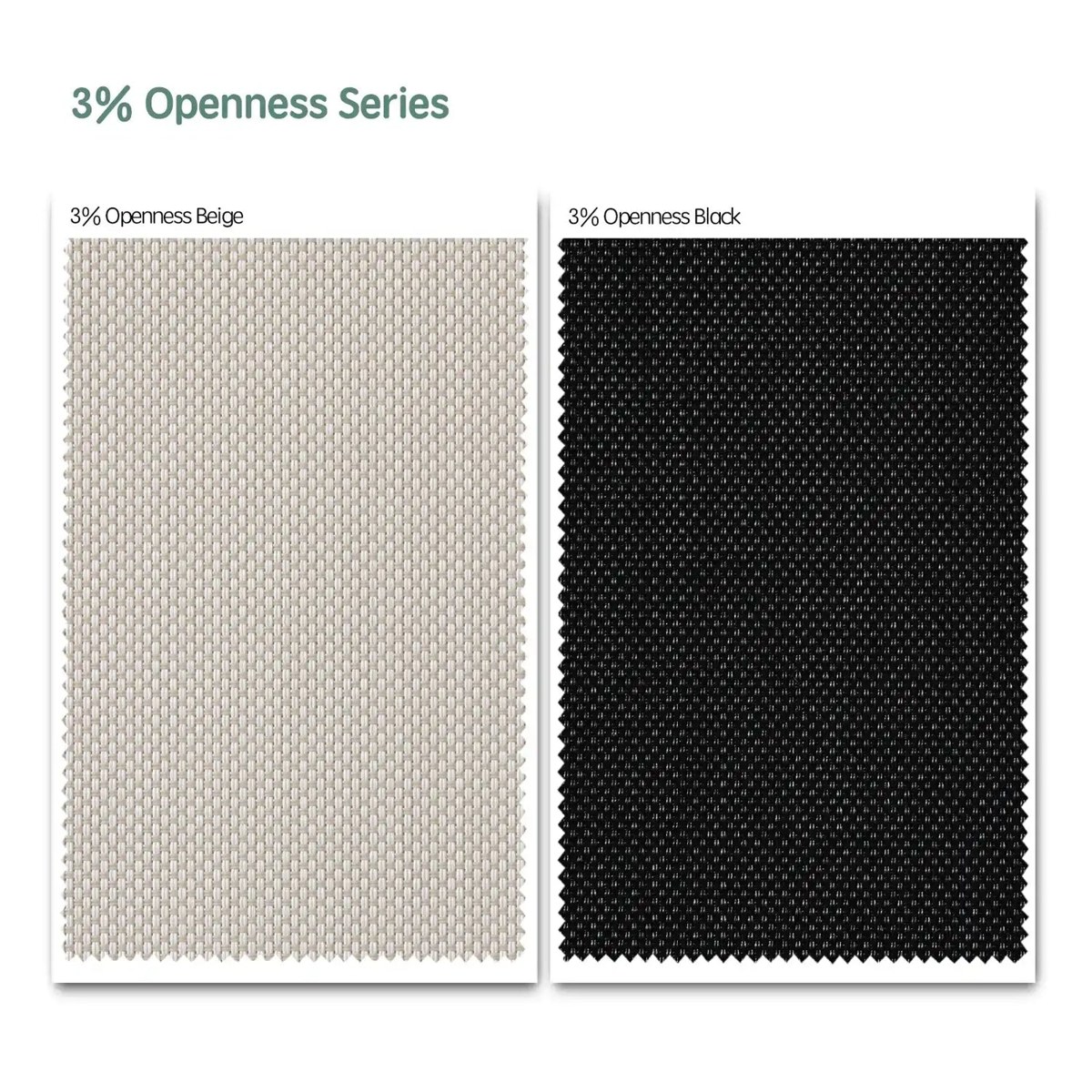
A 1% solar shade has a tighter weave and typically gives stronger glare control than a 5% or 10% fabric, but it also darkens the view more. A 3% fabric is a useful middle point for many offices and living rooms. Darker solar fabrics can preserve a clearer outward view by reducing reflected interior light, while lighter colors may reflect more solar energy and feel brighter.
If one leg faces west and the other faces north, the same openness factor may not be ideal on both sides. A 3% fabric on the west pane and a 5% fabric on the north pane can be visually coordinated while responding to different brightness. Order World Wide Shades swatches and view them at morning, noon, and late afternoon before finalizing.
Solar shades that feel private during the day can show silhouettes after sunset when lamps are on inside. A second room-darkening layer solves that limitation. If the corner is in a bedroom, use a fabric and side coverage that reduce light leaks at the joint; a blackout label does not mean every perimeter gap disappears.
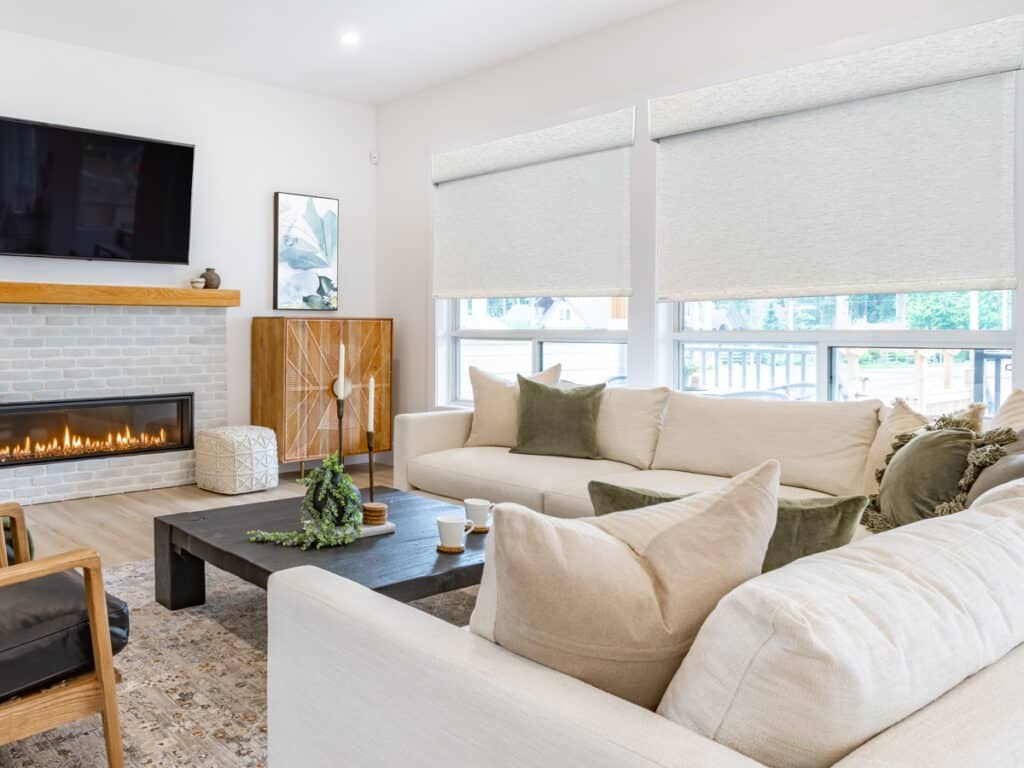
For a living room, light-filtering may be enough if the window is not directly visible from the street. For a bedroom or bathroom, room-darkening or a true blackout layer is a safer privacy choice. Review the best shades for south-facing windows when the corner receives intense midday sun.
The joint makes small color differences obvious because the two planes are seen at an angle. Use the same fabric color and openness on both day layers when a calm architectural look matters. If the layers differ, keep the cassette and fascia finish consistent and test both fabrics together under the room’s actual lighting.
World Wide Shades can help compare warm white, gray, and charcoal options against trim, flooring, and wall paint. A shade that matches the wall can make the corner recede; a contrast fabric can frame the glass as a deliberate feature.
Motorization makes dual corner shades easier to live with
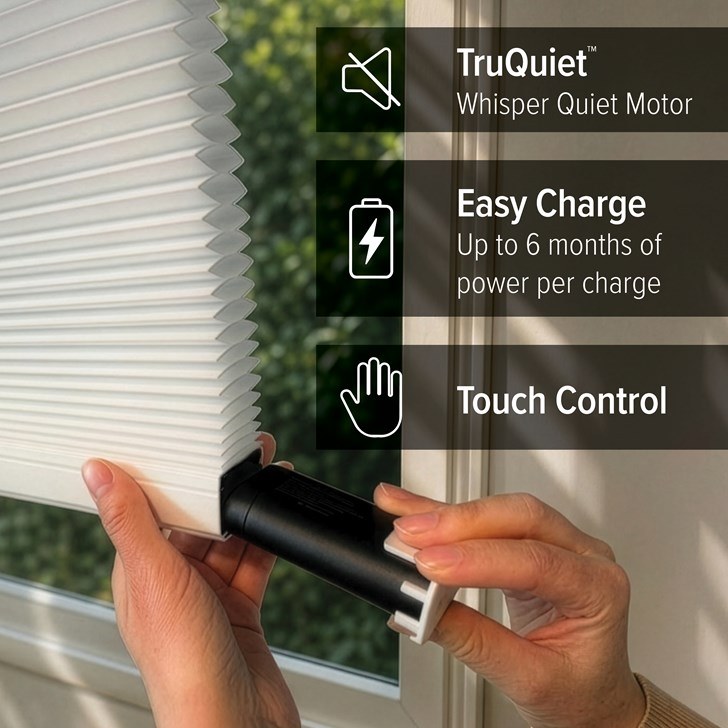
Manual chains can be awkward where the two sides meet, and a corner seat or desk may block access. Motorization lets you raise the solar layers together in the morning, lower only the west-facing layer before afternoon glare, and close both privacy layers at dusk.
Use separate names such as corner_day_left, corner_day_right, corner_privacy_left, and corner_privacy_right. A simple schedule might open the day layers to 70% at sunrise, lower the west layer to 30% when the sun reaches the room, and close privacy layers to 0% at sunset. Add a manual override so a movie, nap, or guest can change the scene without fighting the schedule.
For a full smart-home plan, read smart home motorized shades setup and motorized shades with Alexa and Google Home. World Wide Shades can specify the shade and motor, while the final bridge or hub should be confirmed for the exact motor model.
Child and pet safety still matter at a corner because two operating paths can create extra temptation or entanglement risk. Choose cordless or motorized products and review child-safe window treatments before installation. Contact World Wide Shades through the project page if the corner is near a play area or climbing furniture.
Measure and photograph a corner window
Record the finished opening width and height for each leg, not only the glass size. Measure at the top, middle, and bottom; differences of more than 1/8 inch can influence an inside mount. Record recess depth at the shallowest point, the corner angle, casing width, and the distance from the corner line to the first obstruction.
Take a straight-on photo of each pane, a wide photo showing both legs, and a close photo of the joint. Include a tape measure in at least one image. Note whether the frames are square, whether trim continues around the corner, and whether the floor or countertop prevents a full drop. World Wide Shades can use those details to recommend a split, dual cassette, outside mount, or a mixed solution.
What dual corner shades cost
Custom dual shades commonly budget at roughly $700–$1,800 per window opening before installation, depending on width, height, fabric, cassette, and motor. A two-leg corner with four shade layers may land around $1,400–$3,600, while large glass, specialty brackets, premium blackout fabric, or hardwired power can raise the project total. These are planning ranges, not a quote.
The cheapest-looking option may create a joint that leaks light, rubs fabric, or leaves the control inaccessible. Use the builder to outline each leg, request swatches, and contact World Wide Shades for a coordinated review. Call (844) 674-2716 with the number of panes, approximate widths, and whether you want manual or motorized control.
Dual shades for corner windows FAQ
Not every system can. Brackets, roller diameter, fascia, fabric thickness, and the angle of the walls determine the required clearance. A small intentional joint is usually safer than forcing hardware together and causing rubbing.
No. Different sun directions may justify 3% on a bright west-facing leg and 5% on a less exposed leg. Match color and cassette finish if you want the two planes to look unified.
Dual shades fit close to each pane and provide independent day and night control. Curtains can soften the architecture and cover a larger area, but they need room to stack and may not solve glare at the corner as precisely.
It can reduce light substantially, but fabric and installation gaps at the joint and perimeter still matter. Use accurate mounts, adequate overlap where the system allows it, and realistic expectations about a true blackout result.
It is often worthwhile when chains are hard to reach, the corner is behind furniture, or four layers would otherwise require repeated adjustments. Grouped control keeps the installation simple while independent control handles different sun angles.
World Wide Shades can coordinate the two planes, fabric openness, cassette, joint clearance, and motorization so the shades perform as one room system. Start with the builder, order swatches, or contact World Wide Shades; call (844) 674-2716 for a detailed corner review.