Bedrooms rarely need one light level all day. Morning may call for soft daylight, afternoon may bring glare, and nighttime may demand a dark, private room. The choice between dual shades vs. blackout shades for bedrooms comes down to flexibility: a dual system offers two fabrics in one opening, while a blackout shade offers a simpler path to darkness.
World Wide Shades helps homeowners match the shade to sleep schedules, streetlights, window orientation, and the room’s design. Compare bedroom configurations in the World Wide Shades builder, order World Wide Shades swatches, or contact World Wide Shades for a window-by-window recommendation. Call (844) 674-2716 if the bed, headboard, or nightstand limits the mounting space.
Quick answer: dual or blackout?
Choose a dual roller when the bedroom needs a view and glare control during the day but near-darkness at night. A common combination is a 3% solar or light-filtering front layer with a blackout back layer. Choose a blackout-only roller when sleep, privacy, or projection is the clear priority and you want fewer parts to operate.
Neither option automatically eliminates every light leak. Blackout fabric blocks visible light through the cloth; the side, top, and bottom gaps still depend on the mount, cassette, and window geometry. An outside mount with approximately 2 to 3 inches of side overlap or a side-channel system can improve the result.
For the basic difference between curtain and shade materials, read blackout curtains versus blackout shades. World Wide Shades can help you decide whether flexibility is worth the extra headrail and depth. Start the comparison before measuring the whole bedroom.
What a dual shade does well
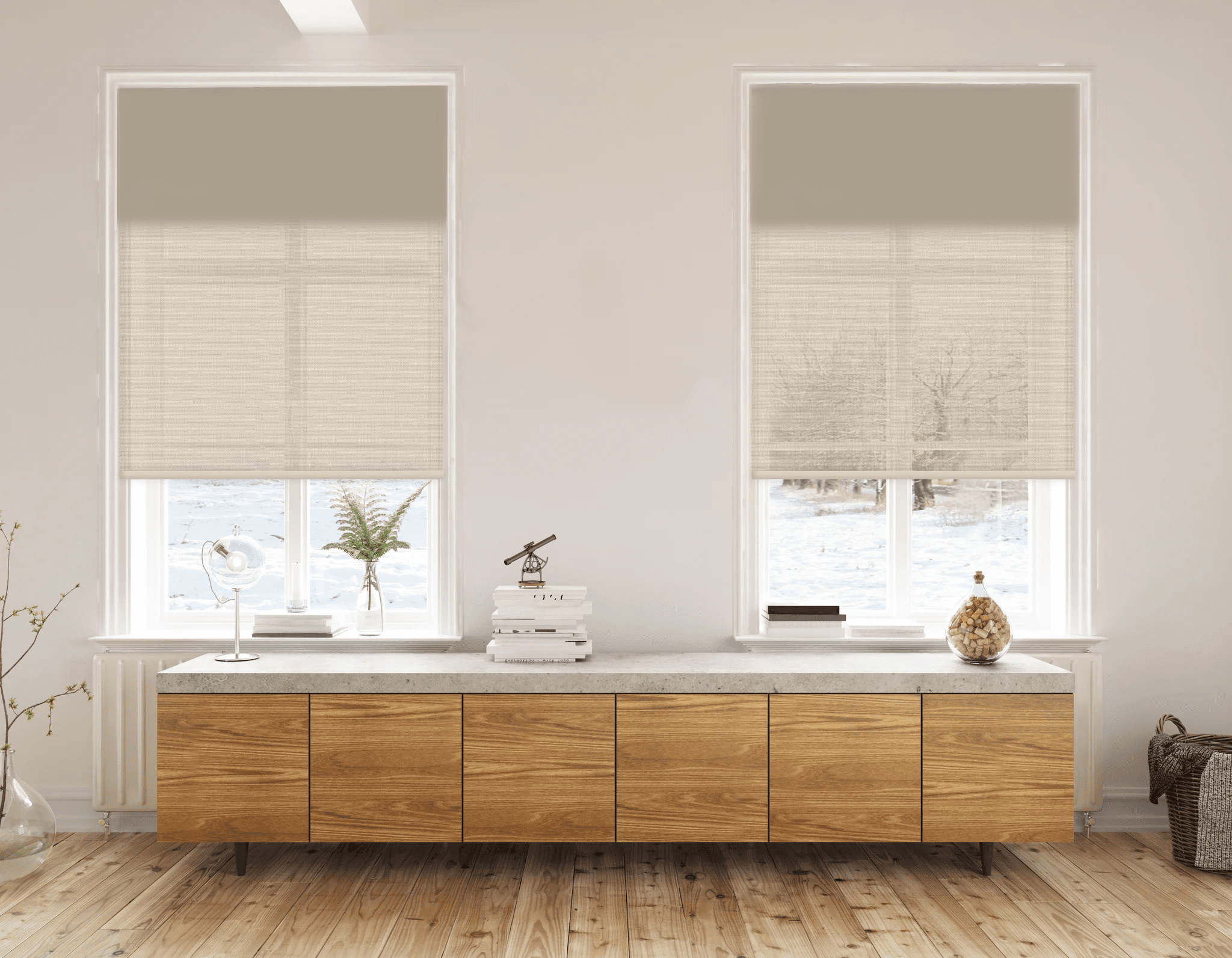
A dual shade places two rollers at one window, usually with a solar or light-filtering layer toward the room and a room-darkening or blackout layer behind it. You can lower the front screen during the day, raise it for a view, and close the blackout layer at bedtime. The two fabrics can also be positioned at different heights when the room needs privacy below but daylight above.
Dual systems are useful for bedrooms with a television, a desk, or a large west-facing window. The sheer layer reduces contrast without forcing artificial light at noon. The blackout layer can make a 6:00 a.m. sunrise or a neighbor’s floodlight less disruptive. The tradeoff is a larger headrail, more moving parts, and more cost than a single roller.
Use the best window shades for a bedroom guide for sleep, privacy, and fabric ideas. World Wide Shades can coordinate the two layers so colors, hems, and control channels feel intentional. Order samples and test both layers with the bedside lamp on.
What a blackout shade does well
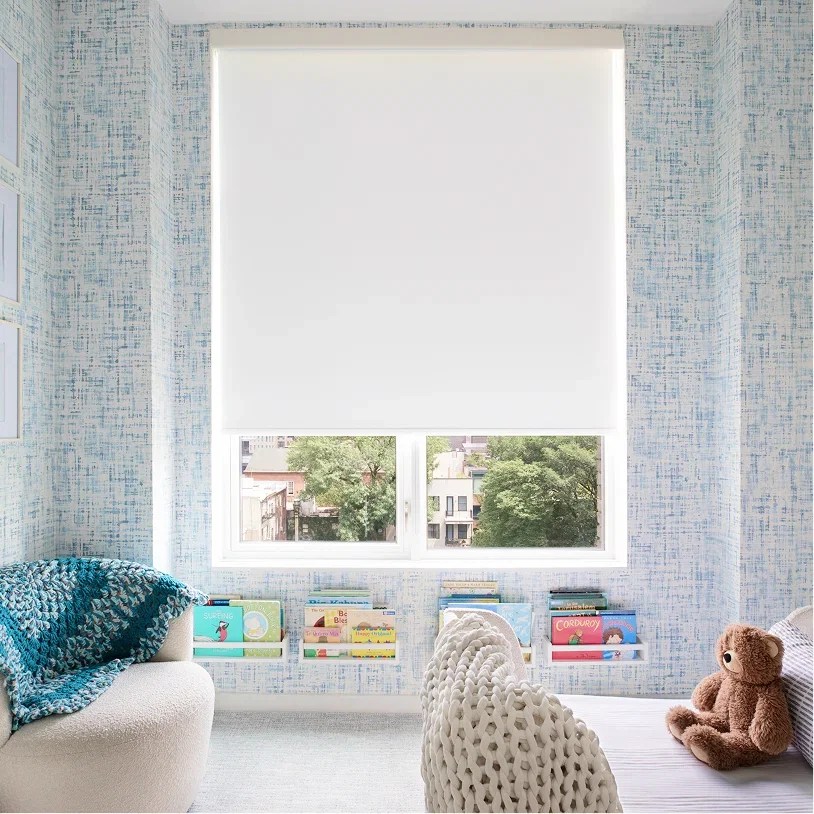
Blackout fabric gives a direct, simple answer when a bedroom needs darkness. It is useful for shift workers, children who nap, nurseries, projector rooms, and windows facing parking lots or bright signage. A cassette can hide the roll and provide a finished top line. A cordless lift or motorized system keeps the window free of a hanging chain.
Blackout does not mean soundproof or thermal-proof. The fabric can block light through the cloth, but it cannot remove traffic noise or correct an inefficient window. A side channel can reduce perimeter light but will not make an old single-pane window perform like a new one. The noise-reducing window shades guide explains the limits of a shade in a noisy room.
If the bedroom also needs a daytime view, a single blackout roller may stay raised most of the day, leaving glare uncontrolled. Ask World Wide Shades whether a solar layer, light-filtering layer, or separate treatment will be more comfortable. Contact the design team with the room’s schedule.
Compare darkness and privacy
A dual shade is more adaptable. Raise the blackout layer and lower a 1%, 3%, or 5% screen to reduce glare while preserving some view. A blackout-only shade must be raised for a view, which may expose the room or produce a strong contrast at the glass.
A blackout-only shade is usually sufficient when the mount covers the opening well. A dual shade can provide the same darkness, but the larger headrail and second control need to be positioned so the layers close fully. Test privacy with the bedroom lamp on behind the fabric.
A dual system can open the solar layer while keeping blackout closed, or it can raise both for a gradual transition. A motorized blackout shade can also open to a preset 15% instead of snapping the room from dark to bright. Choose the behavior that supports the sleeper’s routine.
World Wide Shades can set different priorities for a child’s room, primary bedroom, and guest room. Plan the schedule in the builder or ask for a recommendation.
Account for mounting depth and handles
Single blackout rollers usually need less depth than dual systems. Measure the recess depth from the front trim to the glass or obstruction, and check for window handles, cranks, screens, and curtains. The manufacturer’s bracket and cassette dimensions determine whether an inside mount is possible.
Outside mount is often better when the recess is shallow or edge light is a serious concern. Plan a starting range of 2 to 3 inches of overlap per side and enough top clearance for the cassette. A dual headrail may project farther into the room, which can affect a door, headboard, or curtain rod.
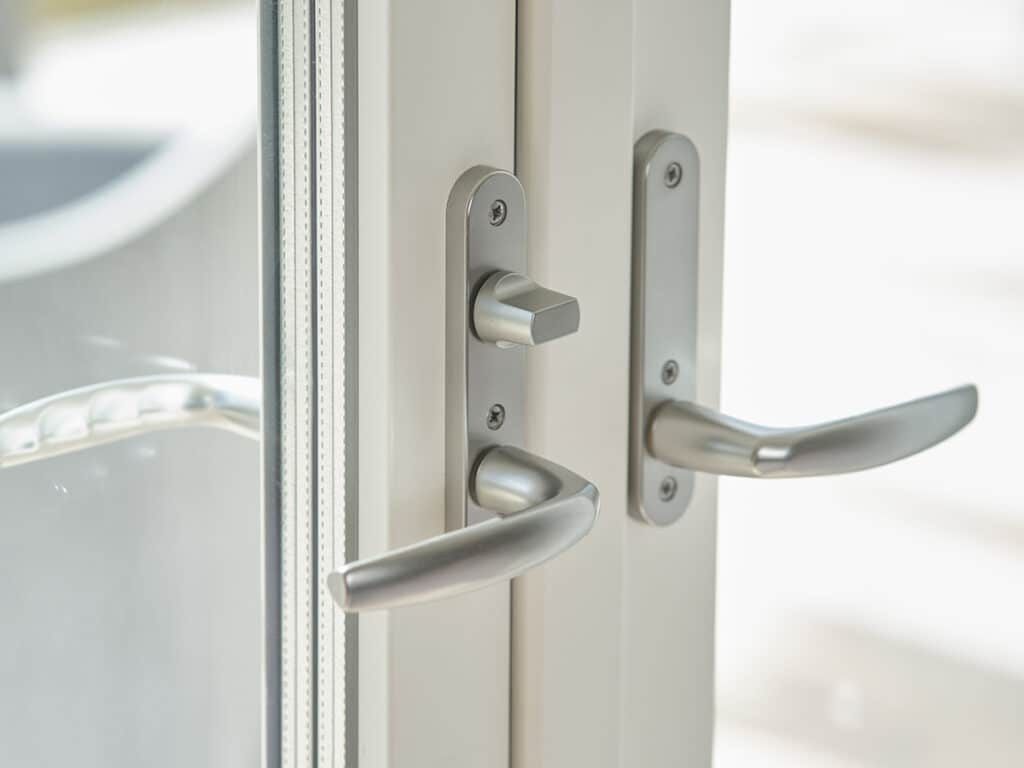
For French doors or narrow glass, split units need careful handle clearance. See roller shades for French doors. For skylights, see the skylight shades guide. World Wide Shades can validate the mount before ordering. Send your measurements through the contact page.
Choose color and texture for sleep comfort
Dark fabric can make a room feel visually dimmer, but it does not alone determine blackout performance. A pale blackout fabric with a coated backing may block more light through the cloth than a dark open screen. For a calm bedroom, warm white, linen, oatmeal, soft gray, and muted taupe work with changing bedding.
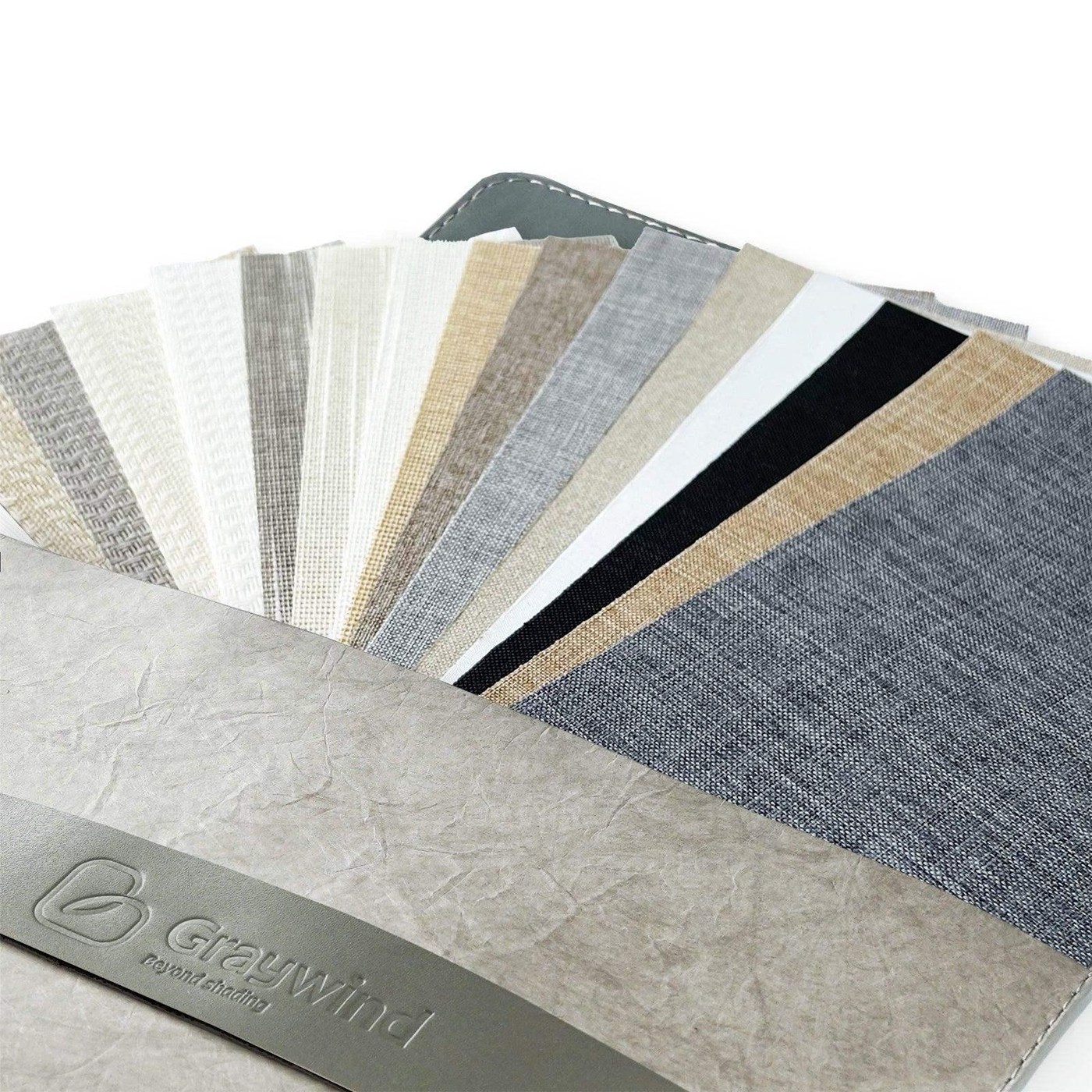
A dual shade should not make the window look busy. Keep the two face fabrics in the same family or let the front screen blend with the trim. If the room has a patterned wall, use quiet solids. The window shades color guide covers undertones and testing. Order World Wide Shades swatches and view them beside the wall, floor, duvet, and night lighting.
Decide on cordless or motorized control
Cordless lift is simple for reachable windows and removes an operating loop from a bed or crib area. Motorization is useful when a shade is behind a nightstand, over a headboard, or too high to reach. It also makes routines possible: blackout closed at 9:30 p.m., solar layer at 40% at noon, and a gradual open at 7:00 a.m.
Rechargeable motors fit finished rooms. Hardwired motors suit new construction or remodels. Keep a physical remote accessible even if the shades join a smart-home platform. Review smart-home motorized shades setup and motorized shades with Alexa or Google Home.
World Wide Shades can coordinate two-layer controls so the solar and blackout fabrics do not get confused. Talk with World Wide Shades about the simplest control your household will use.
Compare cost and maintenance
A small manual blackout shade may fall around $175 to $400 as a planning range. A larger blackout cassette may run approximately $350 to $850. Dual shades often cost about 1.5 to 2 times the price of a comparable single manual roller because they include two fabrics, rollers, and operating systems. Motorization commonly adds $250 to $600 per motorized shade, with dual systems potentially using additional hardware.
These are planning ranges, not quotes. Width, height, fabric coating, cassette, side channels, power, and quantity change the total. The how much custom roller shades cost guide explains the variables. Build the bedroom configuration and request a quote using actual dimensions.
Dust both layers with a soft brush or low-suction vacuum. Spot-clean according to each fabric’s care instructions. Do not pull one layer against the other or force a hem bar that has become uneven. If a motor starts to strain, stop operating it and contact World Wide Shades before the fabric edge or tube is damaged.
FAQ: dual shades vs. blackout shades for bedrooms
Dual shades are better when the bedroom needs daytime view and glare control plus nighttime darkness. A blackout-only shade is often better when the main goal is simple, reliable darkness with fewer components.
They can block light through the blackout fabric, but perimeter gaps still depend on the mount, cassette, and window geometry. Outside overlap and side channels can reduce edge light.
They can reduce direct sunlight entering through the covered area, but cooling depends on glass, orientation, fabric performance, and installation. A shade is not a substitute for insulation or air conditioning.
A 3% solar screen is a balanced starting point for glare and view. Choose 1% for stronger glare control or light filtering when a softer, brighter room is more important.
They are useful behind beds, above nightstands, on tall windows, and for scheduled wake and sleep scenes. Rechargeable motors suit finished rooms; hardwired systems suit new construction.
A small manual blackout shade may cost about $175 to $400, while a larger blackout cassette may be $350 to $850. Dual systems often run about 1.5 to 2 times a comparable single roller, and motorization adds roughly $250 to $600 per shade.
Choose the darkness strategy you will use
The right bedroom window treatment balances darkness with daytime comfort. World Wide Shades can specify a dual system for flexibility or a blackout roller for simplicity, then coordinate the mount, color, and control. Start in the builder, order swatches, or contact World Wide Shades. Call (844) 674-2716 when the room needs reliable sleep without sacrificing morning light.