First, confirm what “not responding” actually means
Motorized roller shades fail in a few predictable ways, and the fix depends on which one you’re seeing:
- No movement at all (no sound, no jog, no LED on the remote)
- Motor sounds, but the shade won’t move (possible jam or disengaged drive)
- Moves in one direction only (limit settings or obstruction detection)
- Works from the remote, but not the app/voice (hub/Wi‑Fi/integration)
- Works sometimes (battery voltage, interference, or weak RF signal)
World Wide Shades recommends starting with the simplest checks first, because the majority of “dead” shades are either a power issue or a pairing issue.
CTA: If you’d rather skip guesswork, contact the World Wide Shades Team at (844) 674-2716 or visit /contact.
Safety and setup basics before you troubleshoot
Before you start pushing reset pins or removing brackets:
- Keep hands clear of the roller and brackets during movement.
- If the shade is hardwired, switch the breaker off before touching wiring.
- If the shade is high up (foyer, stairwell), use safe access or hire help.
If your shade is installed in a tall space, you may also like our planning guide for shades for double-height foyer and great room.
CTA: Planning a new install or replacement? Use the World Wide Shades builder to configure the right motor, fabric, and size.
Step 1: Check power (the most common cause)
Battery shades are convenient, but low voltage is the #1 cause of inconsistent response.
Do this:
- Recharge or replace the battery (even if it “worked last week”).
- If you have a battery wand, reseat it firmly—loose connections can mimic a dead motor.
- Test again from close range (within 3–6 feet).
A battery that’s near empty may still power the receiver but not have enough torque to lift the shade, especially on larger windows.
Hardwired motors can fail because of:
- A tripped breaker
- A switched outlet turned off
- A loose low-voltage connection at the power supply
If the motor has an indicator LED, confirm it lights during commands.
CTA: If you’re deciding between battery and hardwired, World Wide Shades can help you match power to your usage—call (844) 674-2716 or start at /contact.
Step 2: Make sure the remote is working (and aimed at the right shade)
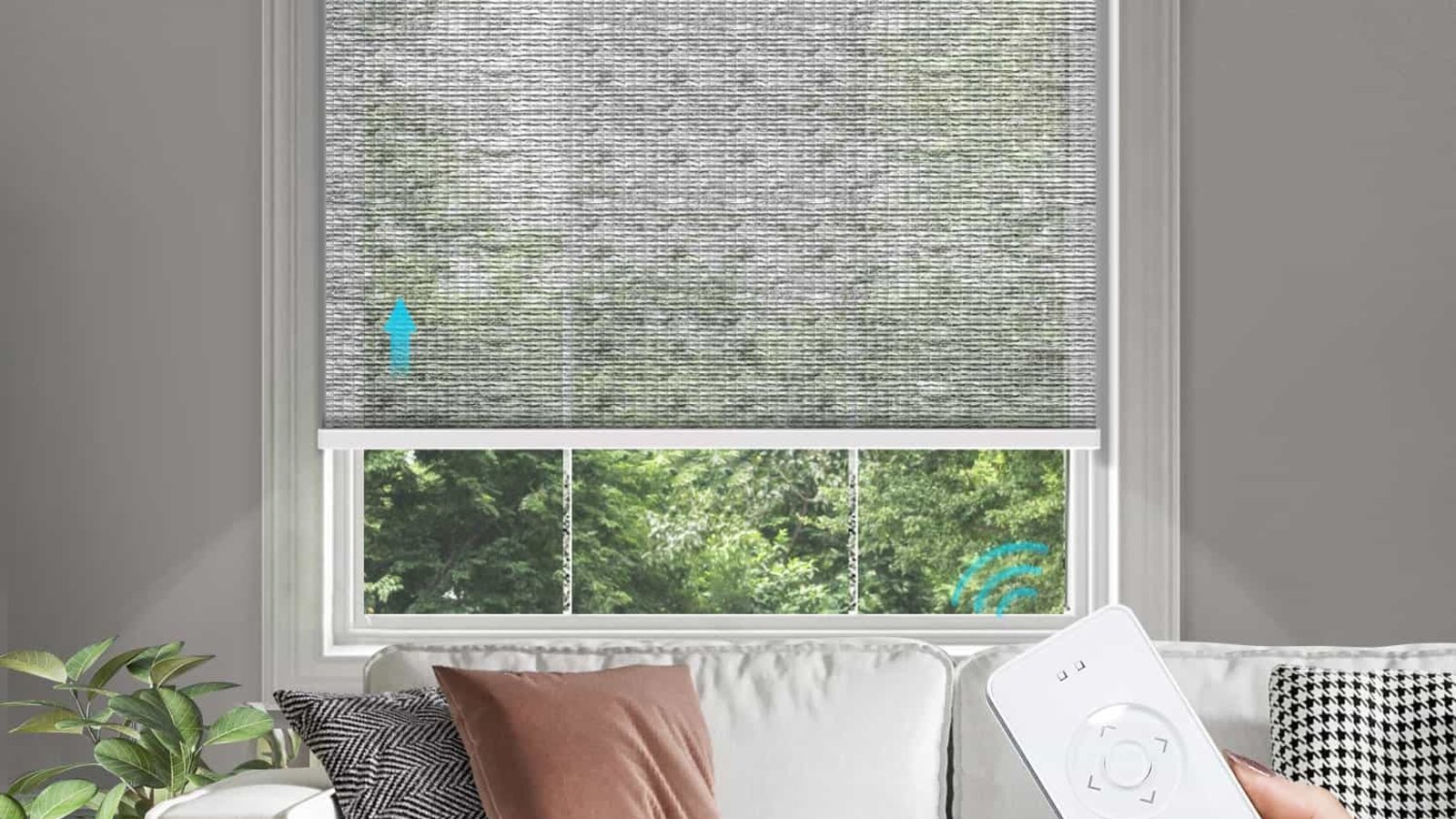
Handheld remotes are often coin-cell powered. If the LED is dim or inconsistent, replace the battery.
Multi-channel remotes can appear “dead” if you’re on the wrong channel. Cycle channels and try:
- Up
- Down
- Stop/Favorite
RF remotes are generally reliable, but range can be reduced by:
- Metal window frames
- Dense masonry walls
- Appliances and electronics
Try standing close to the shade and re-test.
Step 3: Inspect for obstructions or mechanical binding
If the motor hums but the shade doesn’t move, look for:
- The hem bar caught on trim or a window crank
- Fabric telescoping hard to one side and rubbing the bracket
- A valance or fascia pressing on the roll
- Side channels (if used) pinching the fabric
If you suspect telescoping, a level bracket install is key. Review bracket alignment in how to install roller shades.
CTA: Need a cleaner fit (or a better valance solution)? Explore options in roller shade valance options and then configure yours in /builder.
Step 4: Power-cycle the motor (simple reset)
Many motors recover from a temporary glitch after a power cycle.
- Remove the battery pack/wand.
- Wait 10–15 seconds.
- Reconnect and test.
- Turn off power at the breaker for 30–60 seconds.
- Restore power.
- Test again.
If it resumes but fails again later, you likely have a low-voltage supply issue, a weak battery, or an interference/pairing problem.
Step 5: Re-pair the remote (when commands do nothing)
If power is confirmed and the remote works, the next suspect is pairing.
Most motors use a programming button or a small reset pinhole. When you enter pairing mode, the motor often “jogs” (a tiny up/down movement) to confirm.
General re-pair workflow:
- Put the motor in pairing mode (button/pinhole).
- Send a pairing command from the remote.
- Confirm jog.
- Test normal up/down.
Because exact steps vary by motor brand, keep notes of what worked. If you installed through World Wide Shades, your order details can help identify the motor family.
CTA: Want motorization that fits your smart home reliably? Start with motorized shades with Alexa and Google Home and build your system at /builder.
Step 6: Check limit settings (shade stops early or only moves one way)
Limit settings tell the motor where “top” and “bottom” are. If limits are wrong, you’ll see:
- Shade stops halfway
- Shade won’t move down (thinks it’s already at bottom)
- Shade won’t move up (thinks it’s already at top)
Typical causes:
- A reset erased limits
- The shade was manually moved during installation
- The fabric roll diameter changed after adjustment
If the shade is for a bedroom where blackout matters, limit accuracy is critical to prevent light leaks. See best window shades for bedroom for room-specific performance tips.
Step 7: App works but voice assistant doesn’t (integration troubleshooting)
If the shade moves from the app but not from voice commands, focus on the integration layer:
- Open the shade app and confirm the device shows “online.”
- If it’s offline, reboot the hub/bridge.
Common fixes:
- Disable and re-enable the skill/service in Alexa/Google Home
- Re-run device discovery
- Rename the shade to avoid duplicate names
For system-level guidance and best practices, use smart-home motorized shades setup.
CTA: If you’re planning a full smart-home rollout, World Wide Shades can help you standardize motors and control—call (844) 674-2716 or start at /contact.
Step 8: When a factory reset is appropriate (and when it isn’t)
A factory reset is a last resort because it can erase:
- Pairings
- Groups
- Limits
- Favorite positions
Reset is appropriate when:
- The shade won’t enter pairing mode normally
- The motor behaves erratically across multiple remotes
- A hub swap or move caused persistent errors
Before reset:
- Write down channel/group assignments
- Photograph your setup
- Confirm you know how to re-set limits
If you’re not comfortable resetting, it’s better to contact support and avoid turning a small issue into a full reprogramming project.
Step 9: Troubleshooting by symptom (quick map)
- Battery dead or disconnected
- Power supply off
- Remote battery dead
- Shade not paired
- Jam/obstruction
- Fabric binding or telescoping
- Drive disengaged
- Limits mis-set
- Obstruction detection triggering
- Hub offline
- Wi‑Fi issue (2.4 GHz vs 5 GHz requirements vary)
- Account/integration needs relink
- Weak remote battery
- RF interference
- Receiver position/shielding
When to call for service or replacement
If you’ve confirmed power and pairing and the motor still won’t run reliably, the likely culprits are:
- Failed motor capacitor/electronics
- Damaged wiring or power supply
- Internal mechanical wear
At that point, the fastest path is often a parts swap rather than continued experimentation.
CTA: Want help diagnosing whether it’s a motor issue or an installation issue? Call the World Wide Shades Team at (844) 674-2716 or reach us at /contact.
FAQ: Motorized shade troubleshooting
The most common causes are low battery voltage, the shade being on the wrong remote channel, or a hub/app connectivity issue.
Test from close range and look for a remote LED indicator. If the remote seems normal but the motor never “jogs” during pairing mode, the motor or power supply is more likely.
Usually you should not. Manually forcing movement can damage the drive or throw off limits. Use the remote/app unless the manufacturer explicitly allows manual override.
That’s commonly a limit setting problem or obstruction detection. Inspect for binding and then check/reprogram limits.
Document channel/group assignments and favorite positions, and confirm you know how to re-pair and re-set limits afterward.
CTA: If you want a system that’s easy to troubleshoot and service, build your motorized setup with World Wide Shades at /builder or call (844) 674-2716.