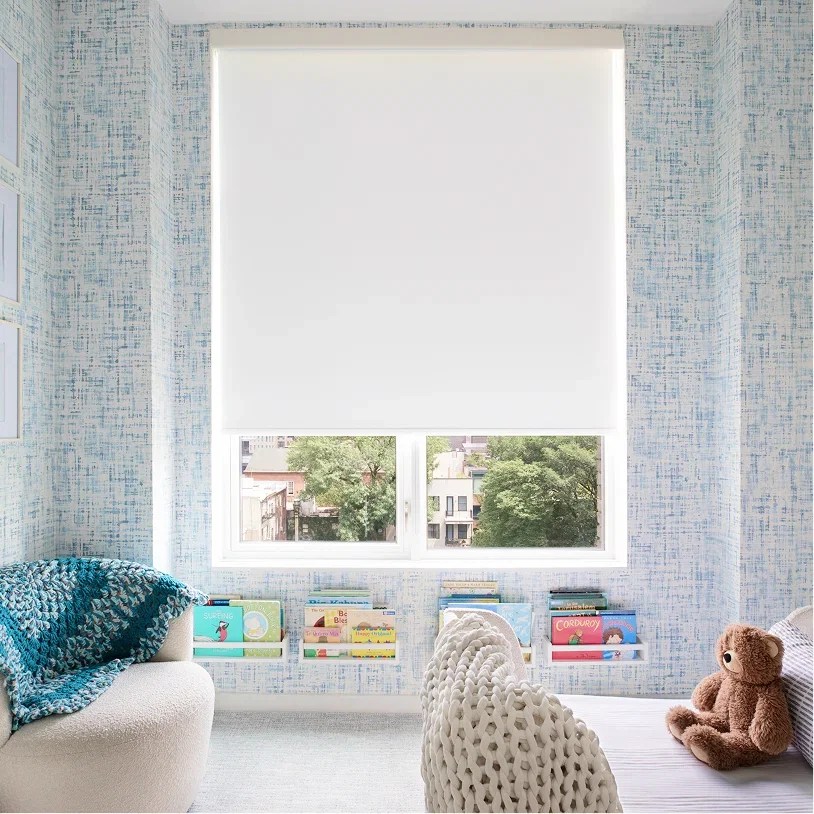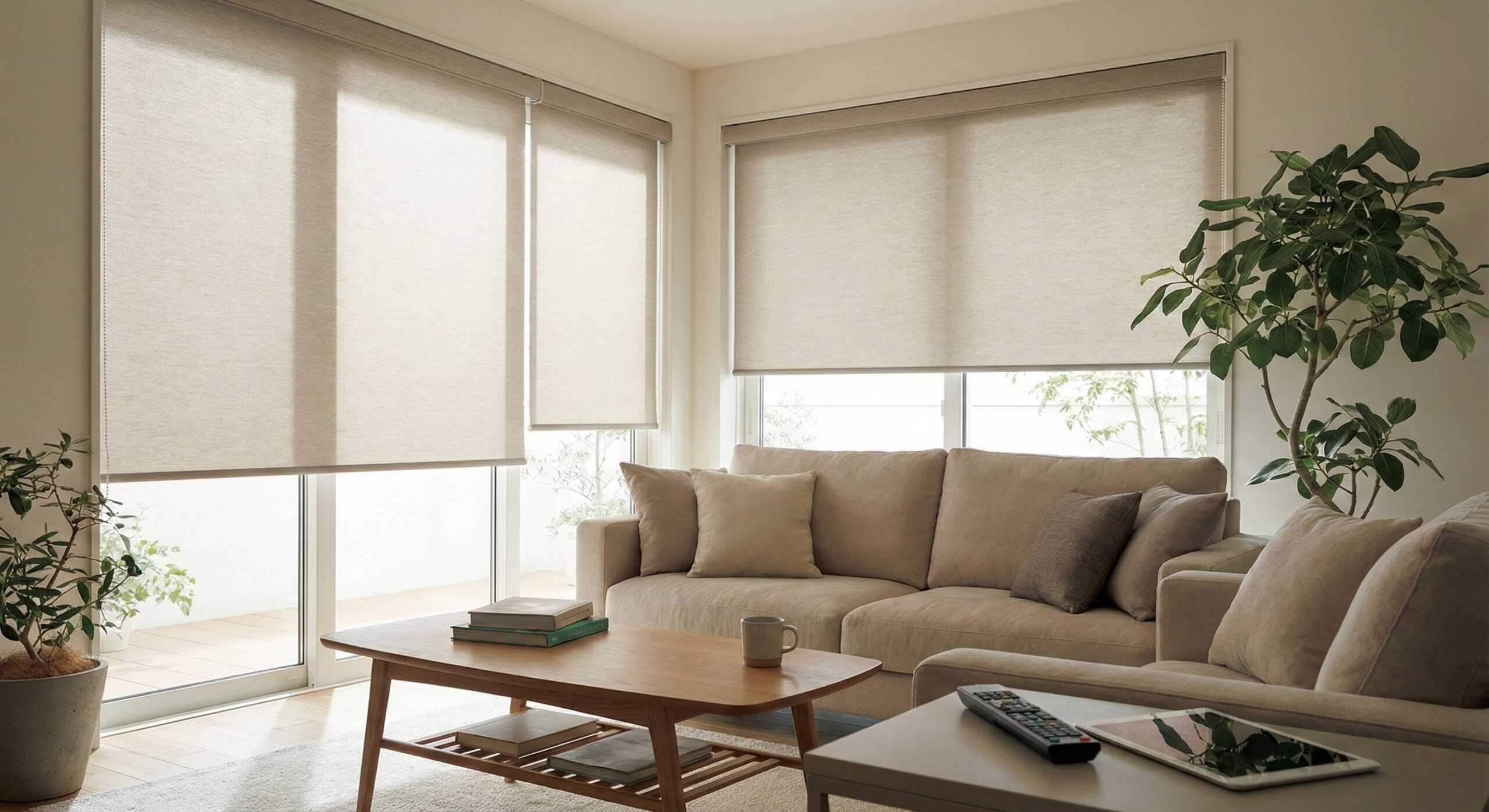
Manual and motorized roller shades solve the same basic problem—controlling daylight, privacy, and heat—but they do it in very different ways. A manual shade uses a chain, cordless lift, or spring mechanism. A motorized shade adds a tubular motor, battery or wiring, and a remote, wall control, app, or smart-home connection. The better choice depends on window size, reach, room use, budget, and how often the shade needs to move.
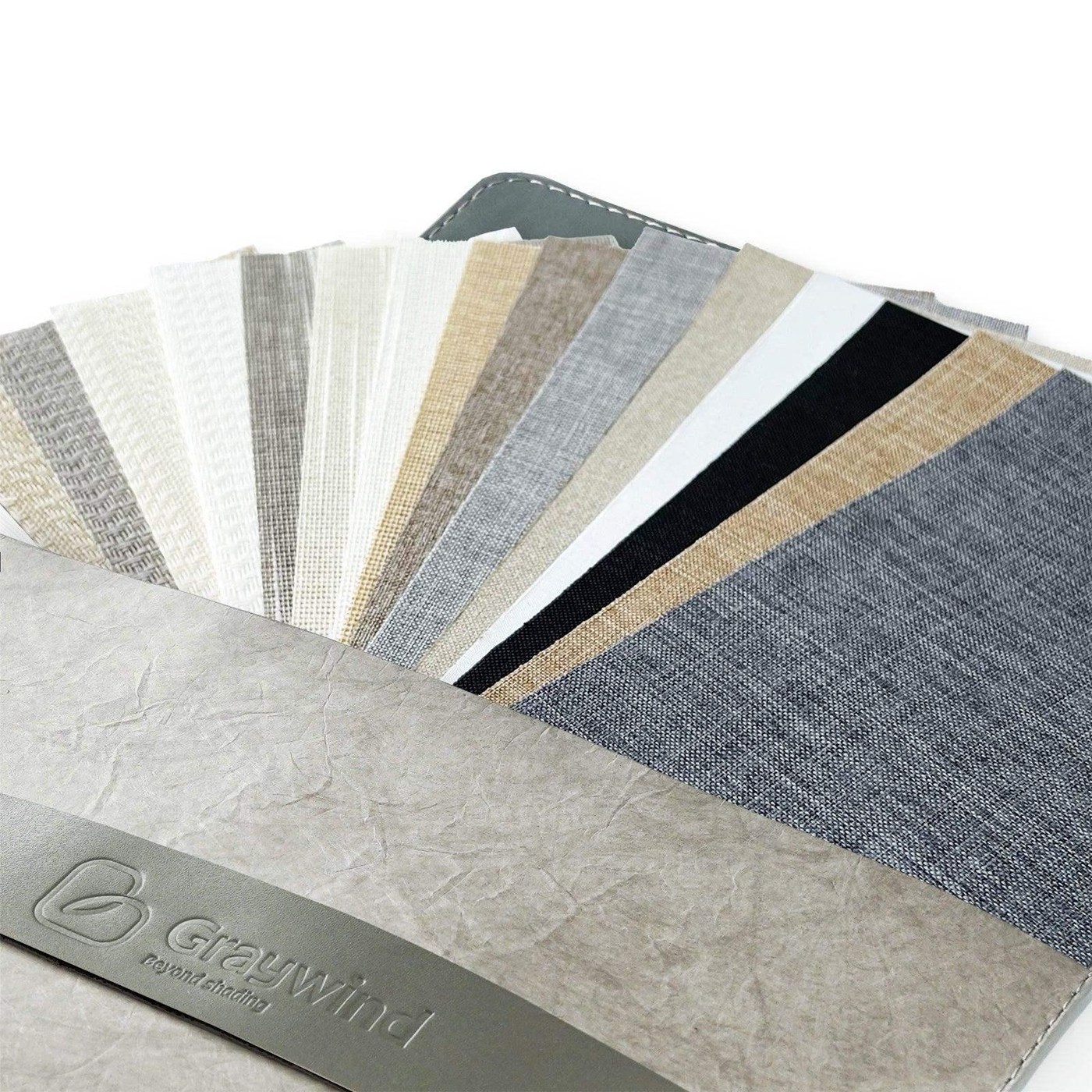
World Wide Shades helps homeowners compare the control method before they choose fabric. Build a custom roller shade with World Wide Shades, order fabric swatches, or contact World Wide Shades for a room-by-room recommendation. For a multi-window project, call (844) 674-2716 and ask about manual, rechargeable, and hardwired options.
Manual and motorized roller shades at a glance
A manual roller shade is usually the lower-cost, lower-complexity option. It can be operated immediately without charging, pairing, Wi-Fi, or a hub. A cordless manual shade is also quiet and simple for a guest room, rental, or window that will be adjusted only once or twice a day. A chain-operated model can be a practical choice when precise intermediate positions matter and the control is easy to reach.
A motorized roller shade replaces the lift action with a small motor. Depending on the system, one remote can control one shade or a group, and a smart bridge can add schedules or voice control. Rechargeable systems commonly use a low-voltage battery wand or integrated battery that is recharged periodically; hardwired systems need a planned power path. Exact battery life varies with shade width, fabric weight, cycles, temperature, and motor model, so World Wide Shades should confirm the expected service interval for the selected product.
| Decision factor | Manual roller shade | Motorized roller shade |
|---|---|---|
| Up-front cost | Usually lower | Usually higher because of motor and control |
| Power required | None | Battery, rechargeable pack, or low-voltage wiring |
| Group control | Not built in | Remote, wall control, or app can move several shades |
| Schedules | Not available | Available on compatible systems |
| Best for | Reachable, lightly used windows | High, wide, numerous, or frequently adjusted windows |
Cost: compare the whole installation
Manual pricing is driven mostly by width, height, fabric, cassette, liner, and mounting style. Motorized pricing includes those same shade components plus a motor and control hardware. A useful planning allowance is to expect a motorized shade to add roughly $150 to $600 or more per opening over a comparable manual shade, with premium motors, smart hubs, and wiring increasing the range. Treat that as a budgeting guide, not a quote: a very wide shade or a specialty blackout fabric can change the result substantially.
Do not compare only the price of a motor. Include installation, electrical work, a bridge if needed, charging access, and future replacement batteries. Five motorized windows may cost more than five manual shades initially, but the value can be higher when the windows are 12 feet up, 96 inches wide, or arranged in a bank that is awkward to operate one at a time. See how much custom roller shades cost and compare custom shades with home-center alternatives.
World Wide Shades can build a quote around the number of windows, not a generic per-window guess. Start a configuration in the World Wide Shades builder and send the room list to World Wide Shades support.
Convenience and accessibility
The strongest argument for motorization is not novelty; it is access. A motor can move a shade behind a sofa, above a tub, over a sliding door, or at the top of a tall stairwell without a ladder. Group control can close 10 windows in seconds. A schedule can reduce the number of daily commands, while a physical remote remains useful for visitors and for homes without a stable smart-home network.
Manual shades are convenient when the hand control is close and the shade is moved infrequently. They are also resilient: there is no battery to forget, pairing to redo, or app to update. For a single bedroom window, paying for automation may not improve everyday life. For a wall of glass, the calculation changes. Read roller shades for sliding glass doors and large-window roller shade planning before deciding.
For accessible design, place manual controls within comfortable reach and avoid furniture that blocks them. Motorized controls can be mounted at a consistent height, but they still need a local fallback. World Wide Shades can map the control locations before fabrication. Ask World Wide Shades to plan accessible operation.
Safety, cords, and family rooms
Cordless manual shades remove dangling lift cords, but every window covering still needs correct installation and safe use. Keep cribs, beds, and climbing furniture away from window openings. For motorized shades, keep remotes out of reach of small children and use the motor’s approved limits rather than forcing the fabric by hand. Review child-safe window treatments for a broader room-safety plan.
A motor does not automatically make a shade child-safe if the remote is misplaced or the opening is accessible. A manual chain also needs an approved tension device where applicable. World Wide Shades can recommend a control approach that fits the room’s occupants, furniture, and window height. Contact World Wide Shades before ordering a nursery or playroom shade.
Which rooms favor manual shades?
A cordless manual shade can be economical, intuitive, and independent of a homeowner’s network. Choose blackout fabric for sleeping spaces or light-filtering fabric where morning daylight is welcome. For rental-friendly ideas, see roller shades for a rental apartment.
A manual shade is often enough for a narrow bathroom, powder room, or closet window. Choose a moisture-appropriate fabric and keep the control clear of the sink or shower spray. World Wide Shades can help match a cleanable fabric to the exposure.
A sunroom or occasional office may not justify wiring or scheduled control. If the shade is reachable, manual operation keeps the system simple. For heat and glare decisions, compare energy-efficient window shades.
Which rooms favor motorized shades?
Motorization is the natural choice when a shade is above a staircase, over a tub, behind furniture, or wider than one person can comfortably operate. It also helps avoid uneven pulling on a large manual shade. Ask World Wide Shades about split shades when a single opening exceeds practical fabric or tube limits.
A remote can close blackout shades without walking across a dark room. Timed operation can support a consistent wake-up routine, while a second position can soften light during reading. Compare blackout shades with blackout curtains for edge-gap and layering considerations.
Motorized schedules are useful when many rooms face changing sun. A west-facing office can lower to 40% in late afternoon, while a north-facing room remains open. Use smart-home motorized shade setup to plan hubs, groups, and fallback controls. Have World Wide Shades design the control zones.
Manual override and maintenance
Every motorized project should answer three questions: What happens if the battery is low? What happens if Wi-Fi is down? How will a visitor operate the shade? Keep the approved charger accessible, label remotes, and test the local control twice a year. Do not substitute a random power adapter; voltage and connector requirements are motor-specific.
Manual shades need periodic dusting, inspection of the chain or cordless mechanism, and a check that the fabric rolls level. Motorized shades need the same fabric care plus battery and limit checks. If a shade begins to stop early, rolls crooked, or hums without moving, stop forcing it and ask for service. World Wide Shades can help separate a control issue from a mounting or fabric issue. Request help from World Wide Shades.
A practical decision rule
Choose manual when the opening is reachable, the shade moves less than four times a day, and the lowest complexity matters most. Choose motorized when the opening is high, wide, numerous, safety-sensitive, or part of a routine. Use a hybrid plan when only some rooms benefit from automation: manual shades in a powder room and motorized shades on a two-story living-room window can coexist when the fabric and control strategy are coordinated.
Before ordering, list every opening, record its approximate width and height, note the direction of sunlight, and write the desired position at morning, afternoon, and night. World Wide Shades can turn that list into a consistent plan. Compare fabrics and controls in the World Wide Shades builder, request swatches, or call (844) 674-2716 for help with a large project.
Frequently asked questions
They can be worth it for tall, wide, hard-to-reach, or frequently adjusted windows. The value comes from access, group control, schedules, and consistent positioning—not simply from having a remote. For one reachable window that rarely moves, manual operation may be the better value.
Manual shades have fewer components and do not need charging or pairing, so they are simpler. A well-installed motorized shade can be reliable when the motor, limits, charger, and control system are matched correctly. World Wide Shades can recommend a fallback control so a network outage does not make the window unusable.
A preliminary allowance is often $150 to $600 or more per opening above a comparable manual shade, before unusual wiring or premium automation. Width, fabric, cassette, motor type, installation, and hub requirements can move the final price. Request a project-specific estimate from World Wide Shades rather than relying on a generic number.
Often, yes, but width, roll direction, tube size, weight, and motor capacity limit which fabrics can be motorized. A fabric that works on a small manual shade may need a different tube or split configuration at a larger width. Send the opening details to World Wide Shades for a compatibility check.
Local remotes or wall controls may continue to work, depending on the system and power source. App and voice features generally require the relevant network path. Battery shades still need charged batteries, while hardwired shades need an appropriate electrical installation. Ask World Wide Shades to document the fallback before installation.