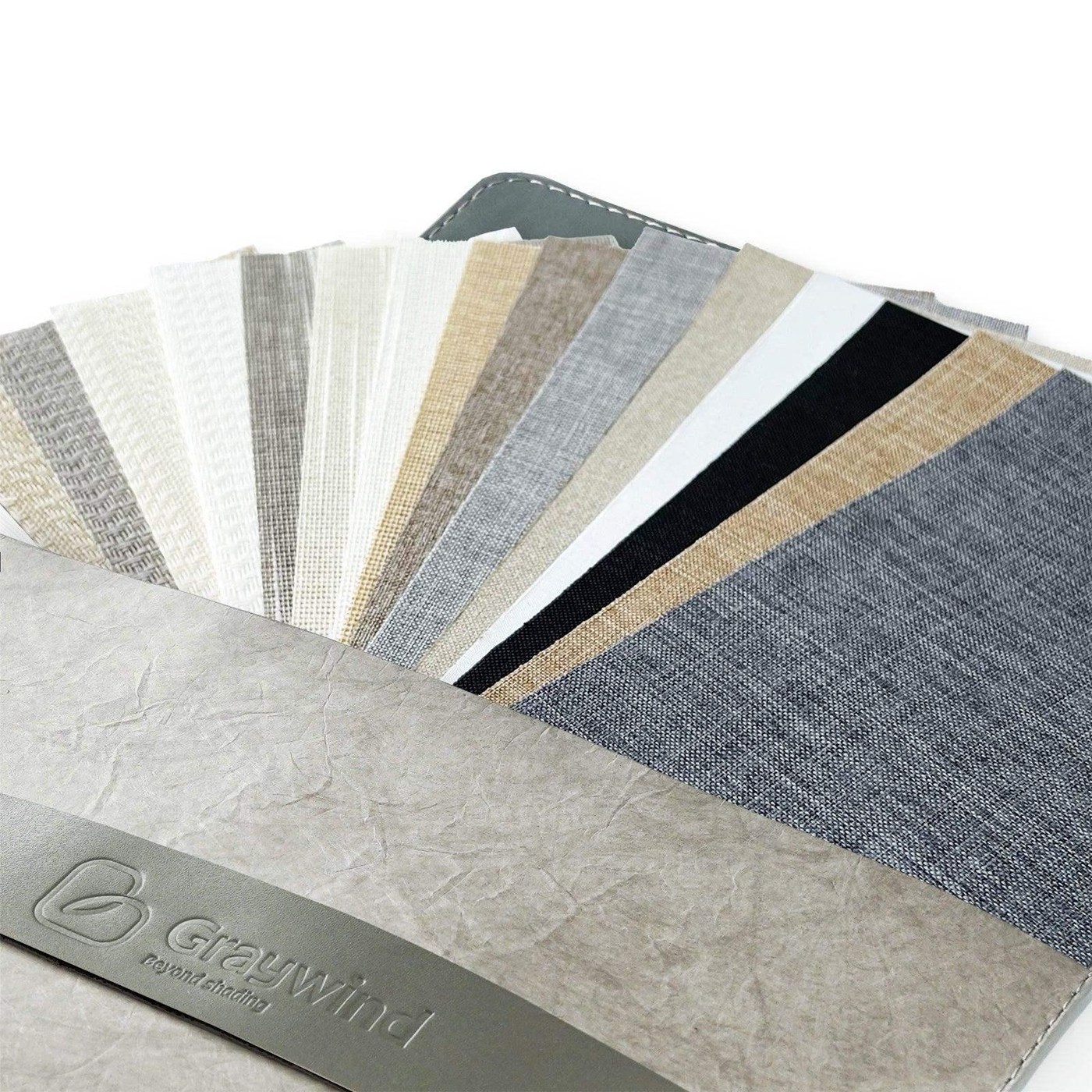
A screen image cannot show how a roller shade fabric looks against your trim at 7 a.m., how much glare reaches a monitor at noon, or how private a room feels after the lights come on. Ordering physical samples is the fastest way to turn a broad fabric search into a confident decision. This roller shade sample ordering guide explains what to request, how to test it, and when a sample reveals that you need a different opacity or color.
World Wide Shades helps homeowners compare fabric families without guessing from a tiny catalog square. Begin by requesting free fabric swatches, then use the World Wide Shades builder once you know the performance you want. If your rooms have different exposures, contact World Wide Shades or call (844) 674-2716 for a room-by-room recommendation.
What a roller shade sample can—and cannot—tell you
A physical swatch can show color, weave, hand feel, translucency, and how the fabric relates to paint or flooring. It cannot perfectly reproduce the effect of a full-width shade, the exact amount of edge light, or the final appearance of a headrail. Treat it as a decision tool, not a miniature finished installation.
Hold the sample vertically and at the same angle as the window. A flat sample on a table reflects light differently from fabric hanging over glass. World Wide Shades can help you interpret the sample when the room has unusual glazing, a deep recess, or strong afternoon sun.
For a primer on performance categories, read light-filtering shades guide, best fabrics for roller shades, and roller shade fabric openness 1% vs. 3% vs. 5% vs. 10%.
Step 1: Define the job each room needs the shade to do
Write one sentence for each opening before ordering samples. Examples:
- “Reduce west-facing glare in a home office without losing the neighborhood view.”
- “Make a nursery dark enough for a 2 p.m. nap and easy to clean.”
- “Add privacy to a bathroom while keeping natural light.”
- “Protect a wood floor and sofa from direct afternoon sun.”
- “Create a consistent neutral look across a three-panel bay window.”
This prevents a common mistake: selecting one attractive fabric and expecting it to solve every exposure. A 10% solar screen may be perfect for a view-focused living room but too open for a bedroom. World Wide Shades can build a short sample set around the job rather than sending an overwhelming catalog.
Use the best window shades for bedroom guide, roller shades kitchen bathroom, and UV protection window shades to identify the performance category first. Then request swatches from World Wide Shades.
Step 2: Order a useful sample set, not every color
A focused set of 4 to 8 samples is usually easier to compare than dozens. A practical set might include:
- Two colors in the same openness, such as warm white and a mid-tone gray.
- Two openness levels in the color you prefer, such as 3% and 5% solar screen.
- One light-filtering option for comparison with a screen weave.
- One denser room-darkening option if the room needs more privacy.
- One texture or pattern if the shade is part of the design statement.
Order extra copies of the finalists if you are comparing several rooms. A fabric can read differently against oak trim, white paint, and dark cabinetry. World Wide Shades can help you keep the set small enough to make a decision while still testing the meaningful variables.
If you already know you want natural texture, compare woven wood shades guide with a textured roller shade before choosing. If the project is cost-sensitive, custom roller shades vs. Home Depot explains why fit and service belong in the comparison.
Step 3: Test color against the actual window
Tape or clip each sample near the glass, not on a distant wall. View it with the shade open and backlit, then with an opaque surface behind it if possible. Note the result in morning, midday, and late afternoon light.
Warm whites can look creamy when sunlight passes through them. Cool grays may appear blue next to a north-facing window. A charcoal solar screen can look nearly black from the inside while preserving a surprisingly clear exterior view. Take phone photos, but trust your eyes because cameras auto-correct white balance.
Order swatches from World Wide Shades before matching a “white” or “greige” to trim. A 1-inch screen image cannot show the subtle undertone that determines whether the finished room feels calm or mismatched.
Step 4: Compare openness and privacy at day and night
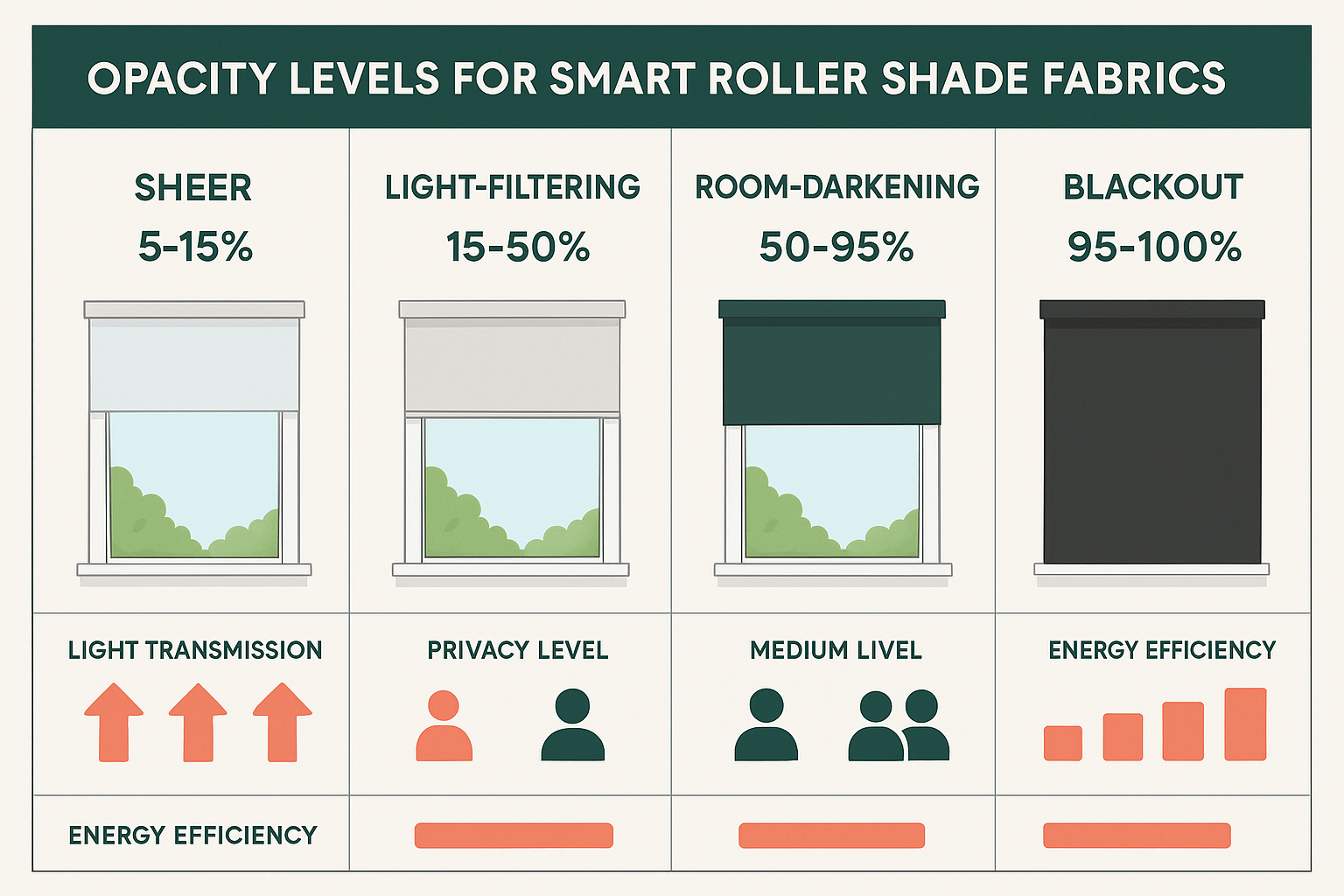
Solar screen openness is often described as 1%, 3%, 5%, or 10%. Lower openness generally reduces glare and increases daytime privacy, while higher openness keeps more view and daylight. Color changes the experience: darker fabrics may improve outward visibility, while lighter fabrics can reflect more light into the room.
Test privacy in both directions. During the day, stand inside and ask someone to stand outside if safe. At night, turn on the room lights and repeat the test. A fabric that feels private at noon may reveal silhouettes after dark. If nighttime privacy is essential, compare room-darkening fabric rather than relying on a screen alone.
The roller shades vs. Roman shades comparison can help when you are deciding whether a clean roller profile or a softer treatment suits the room. World Wide Shades can recommend a performance level without losing the look you want.
Step 5: Test glare where you actually work or sit
Place the sample between the glass and the position that suffers from glare. In an office, test the monitor and camera angle. In a living room, check the television and the favorite chair. In a kitchen, look at the countertop and floor reflection.
Watch for reflected glare, not just direct sun. A light fabric can diffuse the beam but still brighten a screen, while a darker solar screen can reduce contrast more effectively. Write down the time of the problem and the direction of the window. That information makes a recommendation more precise.
For offices, compare commercial roller shades office and home office shades for glare and video calls. Use the World Wide Shades builder once you know which sample performs best.
Step 6: Check texture, cleanability, and edge appearance
Run a clean finger over the fabric and inspect the weave from 6 inches away. A highly textured fabric may hide dust but can show a different shadow at the edges. Smooth polyester is often easy to maintain, while specialty materials may require gentler care.
Ask how the fabric should be dusted and whether a damp cloth is allowed. For kitchens, baths, and homes with pets, cleanability matters as much as color. See pet-friendly window treatments and roller shades fabric care cleaning by material.
Also view the fabric from the side. The roll, hem bar, cassette, and side channels can be visible depending on mount type. World Wide Shades can help coordinate a headrail finish or valance if the shade sits in a prominent sightline. Explore roller shade valance options for ways to make the top detail intentional.
Step 7: Compare samples at full-size expectations
A sample may appear darker or lighter than a full shade because the window creates backlight over a much larger area. To approximate the final result, hold two or three swatches side by side against the glass and imagine the entire opening covered. If possible, temporarily hang a larger paper or fabric panel behind the sample to simulate coverage.
For wide windows, consider whether one panel or multiple panels will change the visual rhythm. Read roller shades for wide picture windows and roller shades for large windows before assuming the shade will be seamless. World Wide Shades can help you balance a clean view with safe, practical span limits.
Step 8: Match each room without making the house feel random
You do not need one opacity everywhere. Use a shared color family to create continuity, then change performance: light-filtering in the living room, solar screen in the office, and room-darkening in the bedroom. Keep hem bars, cassette finishes, and control style consistent when possible.
The window shades color guide and window shade trends 2026 can help with palette direction, but your own light should make the final call. World Wide Shades can map a sample set across rooms so the home feels coordinated rather than identical.
Step 9: Use the finalists to confirm your order
Before ordering, write down the finalist’s color, openness, opacity, mount type, control method, and window location. Double-check that the sample you liked for daytime view is not the one you rejected for nighttime privacy. Confirm the measurements separately; a beautiful fabric cannot compensate for an incorrect width.
Enter the final choices in the builder, then contact World Wide Shades if your windows vary by more than a few inches or have specialty shapes. Call (844) 674-2716 when you want someone to talk through the final two options. World Wide Shades can help you move from “I like this sample” to a complete, room-ready specification.
FAQ: Ordering roller shade samples
Start with about 4 to 8 focused samples: two colors, two performance levels, and one or two texture or opacity alternatives. More is not always better because too many near-identical samples slow the decision. World Wide Shades can build a focused set through swatches.
Choose the performance category first, then compare colors within it. A beautiful fabric that is too open for a bedroom or too dark for a living room will not perform well. Use the builder and ask World Wide Shades for a room-specific recommendation.
Place them against the actual glass and view them in morning, midday, afternoon, and at night with the room lights on. Test glare at the monitor, television, or seat that matters most. Order free swatches so the test reflects your real lighting.
Yes. “White” fabrics can have warm, cool, bright, or translucent undertones, and backlighting changes each one. Compare the samples beside your trim and wall color rather than trusting a product photo. World Wide Shades can help you narrow the final two.
They show fabric opacity but not the complete effect of brackets, cassette, frame, and side gaps. For deeper darkness, discuss mount type and edge control with World Wide Shades. Read roller shade light gap side channel before finalizing.
You can, but it may not be the best performance choice. A coordinated color family with different openness levels often works better. World Wide Shades can help match the look while adapting privacy and glare control room by room; call (844) 674-2716.
Make the sample do the hard work
Samples are inexpensive compared with ordering the wrong fabric for every window. Test real light, privacy, glare, texture, and cleanability, then confirm fit and operation. World Wide Shades makes the process easier with focused swatches, custom configuration, and human guidance. Request swatches, build your options in the World Wide Shades builder, or contact World Wide Shades at (844) 674-2716.