Boho and eclectic interiors thrive on layers—woven textiles, plants, mixed metals, vintage furniture, and patterns that feel collected over time rather than matched from a single catalog. Window treatments in this style need to support that layered, lived-in feeling without becoming visually heavy or clashing with everything else in the room. Roller shades from World Wide Shades are a surprisingly strong fit for boho spaces because their clean base layer lets you build texture and pattern around them through curtains, macramé, and layered fabrics, while the shade itself quietly handles light control, privacy, and UV protection. This guide covers fabric texture, color, layering techniques, and practical light control choices for boho and eclectic rooms.
Why roller shades work well in boho and eclectic spaces
A common misconception is that boho style needs "boho-print" window treatments to feel authentic. In practice, an eclectic room already carries a lot of visual information—patterned rugs, mixed textiles, plants, and gallery walls—so a busy shade often competes rather than complements. World Wide Shades customers building boho interiors typically get better results from a textural, warm-toned solid roller shade used as a quiet base layer, with pattern and personality added through curtains, tapestries, or layered textiles hung alongside it.
This approach also solves a practical problem: boho rooms often have large or unusually shaped windows—arched openings, bay windows, or floor-to-ceiling glass doors leading to a patio—where a busy patterned shade can look overwhelming at scale. A textured neutral or warm-toned roller shade gives you flexibility to change out pillows, throws, and seasonal textiles without needing to replace the window treatment itself.
Choosing fabric texture for a collected, layered look
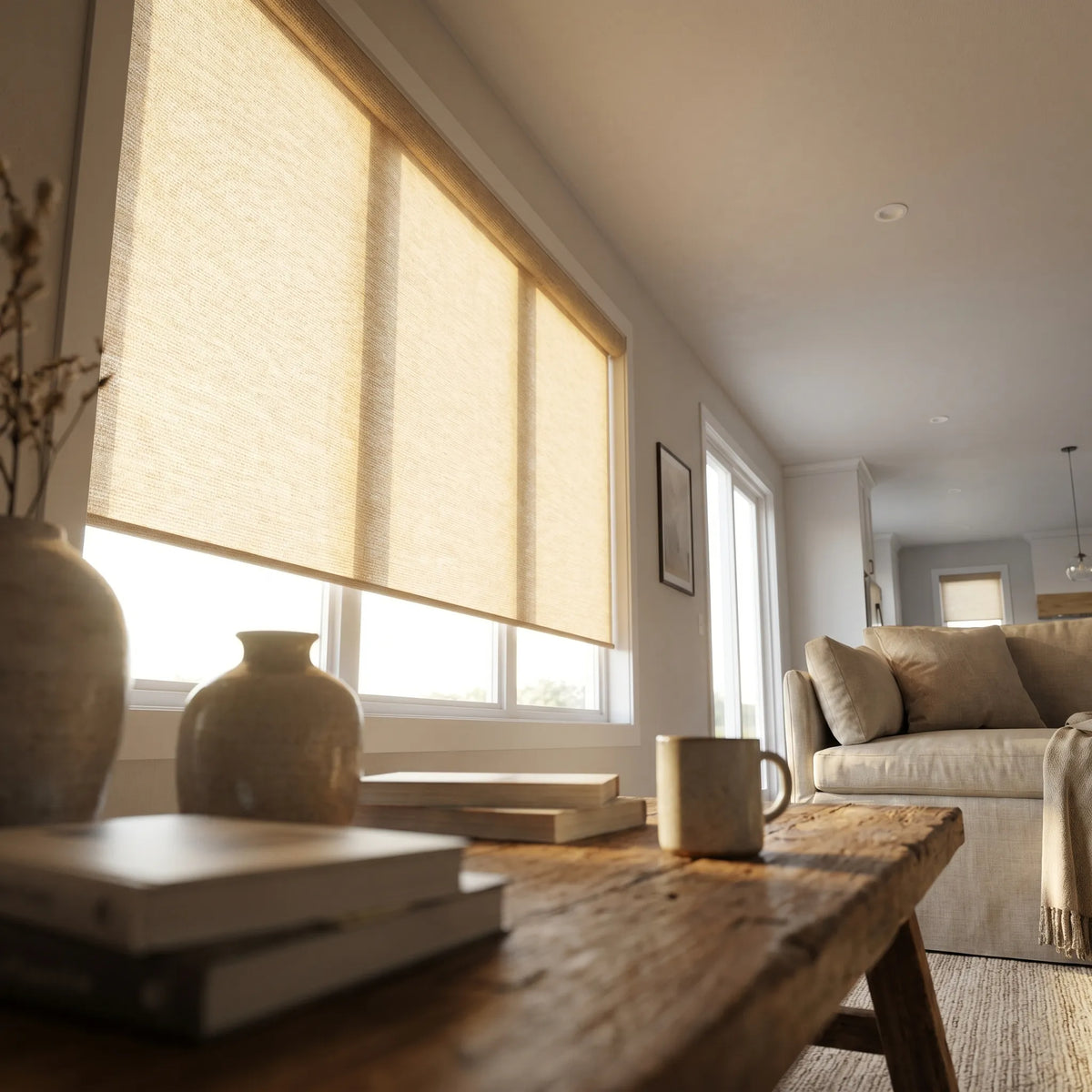
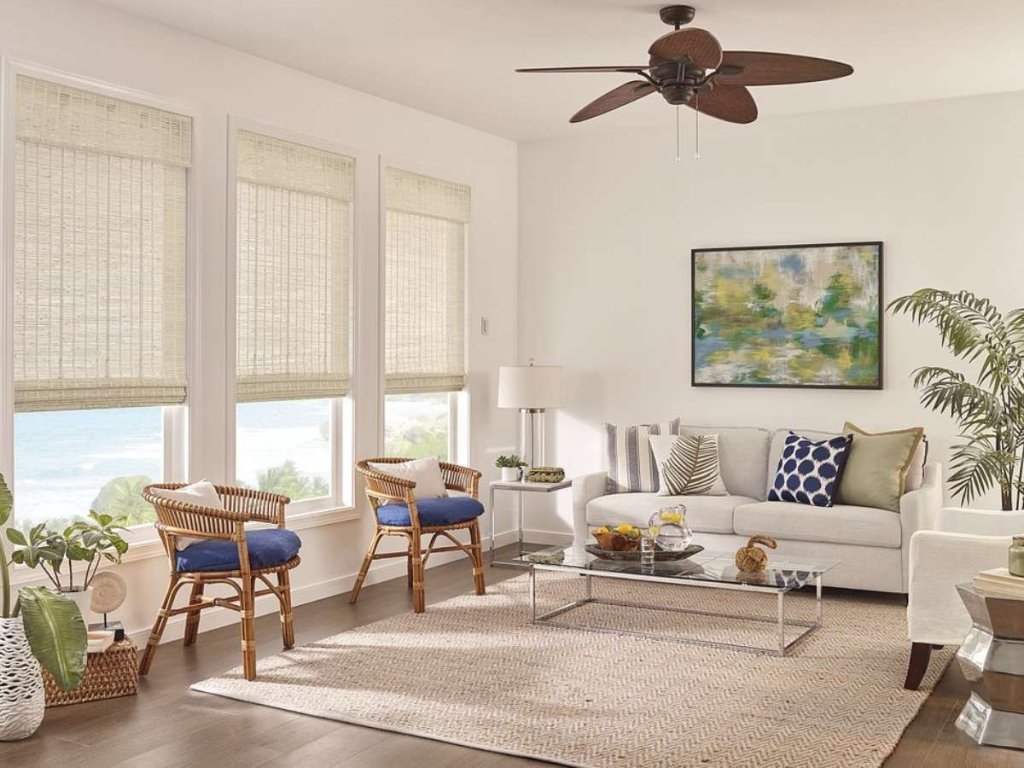
Texture does the heavy lifting in boho design, and roller shade fabrics have come a long way in offering that texture without sacrificing performance. Natural-look woven fabrics mimic the appearance of grasscloth or linen and pair naturally with rattan furniture, jute rugs, and macramé wall hangings. Slubbed or nubby weaves add a handmade quality that fits the eclectic aesthetic better than a perfectly smooth, flat fabric. Light-filtering fabrics with subtle texture keep a room glowing with warm, diffused light during the day, which is a hallmark of the boho aesthetic in photos and in person.
World Wide Shades offers texture-forward fabrics across both light-filtering and solar screen categories, so you don't have to sacrifice function for the handmade look. For a complete comparison of texture, weight, and performance across fabric families, see our guide to the best fabrics for roller shades. Because texture is difficult to judge from a screen, ordering swatches from World Wide Shades is the best way to feel the weave and see how it catches light in your actual room before committing to a full order.
Color palettes that support a boho or eclectic scheme
Boho color schemes range from warm earth tones to jewel-toned maximalism, so shade color should function as a flexible backdrop rather than a competing statement. Terracotta and rust tones support the warm, sun-baked palette common in boho living rooms and pair beautifully with mustard, olive, and cream accents. Natural jute and sand tones work as a near-universal neutral that complements almost any accent color scheme, making them a safe choice if you rotate décor seasonally. Warm off-white keeps a room feeling airy while still reading as intentional rather than stark, which matters in eclectic spaces that already have a lot going on visually. For rooms leaning into a richer, more maximalist eclectic look, a deep olive or clay roller shade can anchor the palette without introducing an additional pattern.
Our window shades color guide walks through undertone matching in more depth, and the window shade trends 2026 roundup highlights which warm neutrals are trending this year. If you're deciding between two close shades of terracotta or sand, request swatches from World Wide Shades or call (844) 674-2716 for guidance on which will read truest in your room's lighting.
Layering roller shades with curtains and textiles
Layering is the defining technique of boho window treatments, and roller shades are an ideal base layer precisely because they're flat and unobtrusive. A common approach pairs a light-filtering or solar roller shade mounted close to the glass with flowing curtain panels—linen, gauze, or a patterned textile—hung on a rod in front. The shade handles daily light control and privacy, while the curtain panels add movement, pattern, and softness that changes the room's mood morning to night.
For windows near a headboard or reading nook, layering a light-filtering roller shade with a macramé valance or woven trim along the bottom hem adds a handcrafted detail without affecting how the shade operates. If you're outfitting a bedroom specifically, our guide to the best window shades for bedrooms covers light control needs alongside style, and our roller shades vs. Roman shades comparison is worth a look if you're deciding between the two silhouettes for a softer, more textured base layer.
Light control choices for boho living spaces
Boho rooms tend to prioritize warm, filtered daylight over stark brightness or total darkness, which shapes the light control decisions that make sense for the style. Light-filtering fabrics are the most common choice for boho living rooms and sunrooms because they soften direct sun into the warm, glowing light that defines the aesthetic in photos. Solar screen fabrics in warm tones work well for rooms with strong afternoon sun, cutting glare and UV exposure by roughly 90-98% depending on openness percentage while maintaining a view of a patio, garden, or plant-filled balcony. Blackout fabrics are typically reserved for bedrooms, where they can be layered under a textured valance or curtain to preserve the boho look while still delivering full darkness for sleep.
If you have windows facing intense afternoon sun—common in boho spaces filled with plants that also need protection from harsh UV—see our dedicated guide on UV protection window shades for blockage percentages by fabric type. For general light-filtering options and openness ranges, our light filtering shades guide breaks down which percentage suits which room type.
Ready to see texture and color options for your specific windows? Start designing in the World Wide Shades builder or call (844) 674-2716 to talk through fabric choices with a specialist.
Mixing patterns without overwhelming the window
Eclectic style is often defined by confident pattern mixing, but the window is usually not the best place to introduce a bold print, especially on a large or focal window. Instead, keep the roller shade itself a solid, textured neutral or warm tone, and let pattern live in the curtain layer, pillows, and rugs around it. If you do want a printed element near the window, a patterned valance or a scalloped trim along the shade's hem introduces personality without requiring the entire shade to carry a busy print, which can look dated or overwhelming at full width on a large window.
For rooms with multiple windows in view of each other—common in open, eclectic floor plans—keeping the roller shades themselves consistent while varying curtains, pillows, and accessories window to window creates cohesion without sacrificing the collected, maximalist feel.
Mounting and hardware for an unfinished, natural look
Boho interiors often favor natural materials and visible texture over polished hardware, so mounting choices should support that aesthetic. An inside mount keeps the shade close to the glass, which works well when you're layering curtains in front and don't want the headrail competing for space. An outside mount gives you room to add a woven valance or fabric-wrapped cornice over the headrail, a popular boho detail that conceals hardware while adding texture. If you're new to installation, our step-by-step guide to installing roller shades covers both mount types and bracket options.
For a decorative finish that hides the headrail entirely, see our roller shade valance options guide—many of the fabric and trim-based valances shown there pair naturally with macramé and woven wall art common in boho rooms.
Budget and practical considerations for boho window treatments
Because boho rooms often layer a roller shade with curtains, budgeting for both pieces together helps avoid surprises. Light-filtering and textured natural-look roller shades typically fall in a moderate price range per window, while solar screen fabrics in warm tones are priced similarly depending on openness percentage. Blackout fabric for bedrooms costs more due to heavier construction but pairs well with a decorative valance to preserve the layered look. For households with children or pets—common in casual, collected boho homes—see our guide to child-safe window treatments and pet-friendly window treatments for cordless and motorized options that keep the space both stylish and safe.
For a full cost breakdown by fabric type and size, our guide on how much custom roller shades cost is a helpful starting point before you finalize a room-by-room plan.
Bringing it together in a boho or eclectic room
The most successful boho window treatments use roller shades as a flexible, textural base rather than the star of the room. Choose a warm, natural-toned fabric with visible texture, layer curtains or a woven valance in front for movement and pattern, and let the shade itself quietly manage daylight, privacy, and UV protection day to day. World Wide Shades builds every shade to the exact dimensions of your windows, which matters in eclectic homes where windows are often original, older, or non-standard sizes that off-the-shelf shades don't fit well.
Whether you're outfitting one accent window or a whole sunroom full of plants and layered textiles, get a walkthrough from World Wide Shades or call (844) 674-2716 to talk through fabric texture, color, and layering options for your space.
Frequently Asked Questions
No. Most successful boho window treatments use a textured, warm-toned solid roller shade as a base layer and introduce pattern through curtains, pillows, and wall textiles instead. This keeps the window from competing with the rest of the room's collected, layered look.
Yes, and it's one of the most common approaches for the style. A light-filtering roller shade mounted close to the glass handles daily light control, while flowing curtain panels or a macramé valance add texture and movement in front of it.
Natural-look woven fabrics, slubbed weaves, and light-filtering fabrics with subtle texture all support the handmade, collected feel of boho design better than a smooth, flat finish. World Wide Shades offers texture-forward options across several performance categories.
Warm neutrals like terracotta, sand, jute, and warm off-white work as flexible backdrops for boho color schemes, while deeper tones like olive or clay can anchor a richer, more maximalist palette without adding a competing pattern.
Yes—blackout fabric can be layered under a textured valance or curtain panel to preserve the boho look while still delivering full darkness for sleep. This is a common approach for bedrooms with strong morning sun.
An outside mount with a fabric-wrapped cornice, woven valance, or decorative trim conceals the headrail entirely, letting the shade blend into the room's natural, collected aesthetic rather than standing out as hardware.
Ready to bring texture and warmth to your windows? Design your shade in the World Wide Shades builder, order swatches to feel the texture in person, or call (844) 674-2716 to speak with a World Wide Shades specialist.