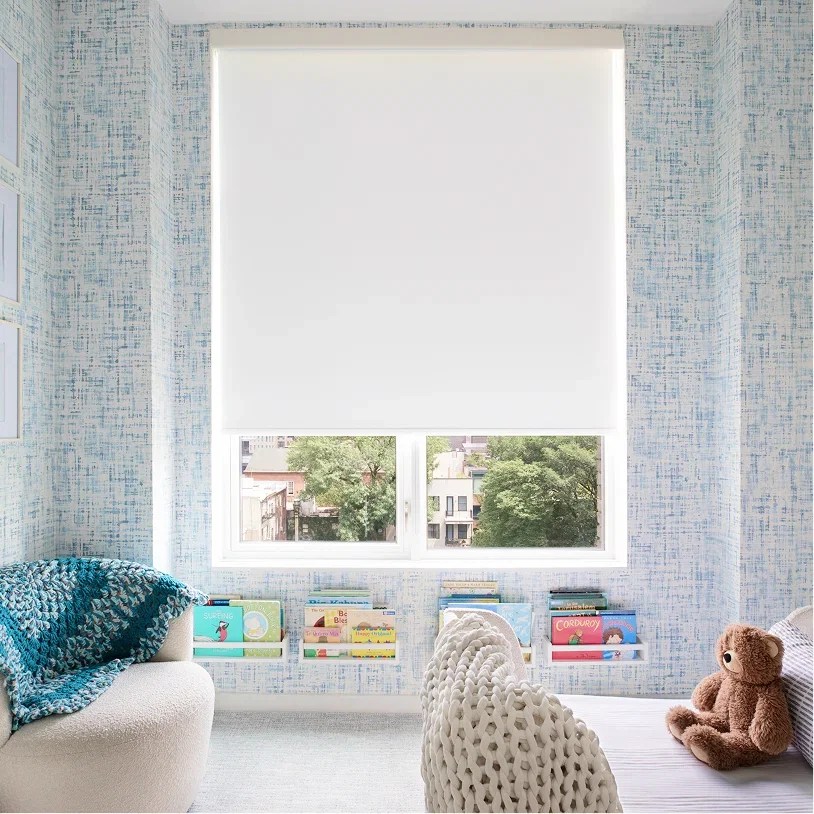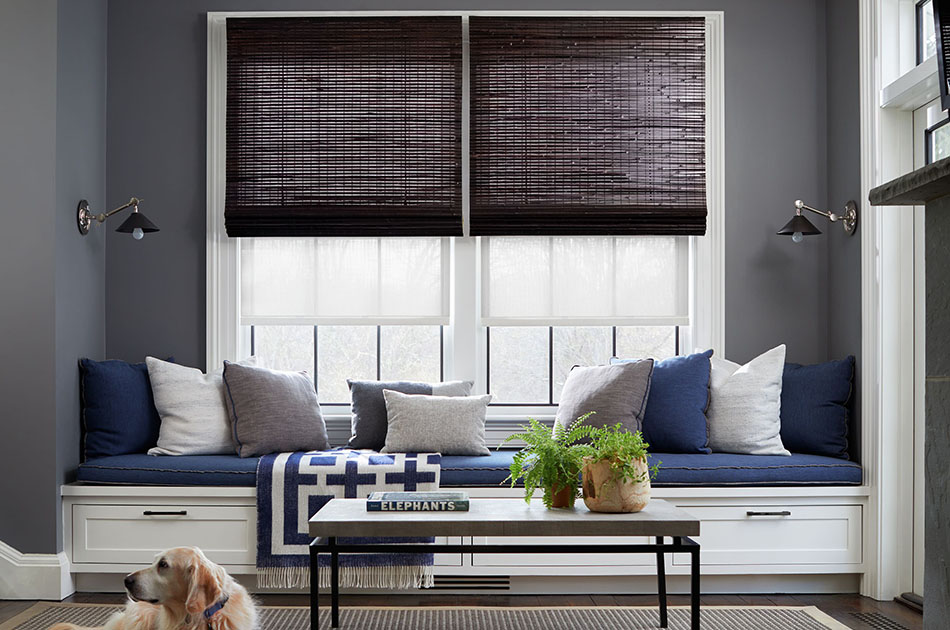
A bay window seat is part window, part furniture, and part favorite reading spot. That combination makes shade selection more specific than covering three ordinary windows. You need privacy at eye level, enough daylight for the room, and a bottom rail or hem that does not collide with cushions when the shade is lowered. Well-planned roller shades for a bay window seat can do all three while preserving the view that made the bay worth having.
World Wide Shades helps homeowners decide between one shade per panel, coordinated outside mounts, and fabric choices that protect upholstery from fading. Browse bay window roller shades and woven wood shades for adjacent ideas, then use the World Wide Shades builder. For a tight bay or built-in seat, contact World Wide Shades or call (844) 674-2716.
Why bay window seats are harder than standard windows
Bay windows change angles at the corners. The center panel may be deeper than the sides, and the seat can project 18 to 24 inches into the room. A shade that works on a flat wall can hit the seat lid, brush a cushion, or meet another shade at an awkward corner.
Sun also arrives from multiple directions. A south- or west-facing bay can create heat and glare in the center while side panels remain comfortable. Treat each pane as a separate exposure, but keep the fabric family and hem style consistent. The best shades for south-facing windows guide explains how orientation changes the fabric decision.
One shade per panel is usually the most flexible
Individual shades follow each window’s angle and let you tune privacy panel by panel. You can lower the center shade for a television glare problem while keeping the side panels open for a view. Separate panels also simplify replacement if one shade receives more sun or gets damaged.
The tradeoff is more visible hardware and more attention at the corner meeting points. Use matching headrails, aligned hem heights, and a consistent fabric. World Wide Shades can coordinate a three-panel set while accounting for the actual dimensions of each opening.
A single wide shade may be possible for a shallow bay, but it can look bulky and may not follow the angles. If the center opening is unusually broad, compare roller shades for large windows before selecting one panel.
Decide how much of the view you want to preserve
A shade that covers the lower portion of the glass can protect privacy while leaving the upper view open. This is valuable for a street-facing seat or a breakfast nook where people sit close to the window. Check whether the selected system supports the movement you want; many roller shades travel from the top down only.
A solar screen can reduce glare while preserving an exterior view in daylight. Common openness levels include 1%, 3%, 5%, and 10%; lower percentages generally reduce more glare and provide more daytime privacy. At night, interior light reverses the privacy effect, so close the shade or choose a denser fabric.
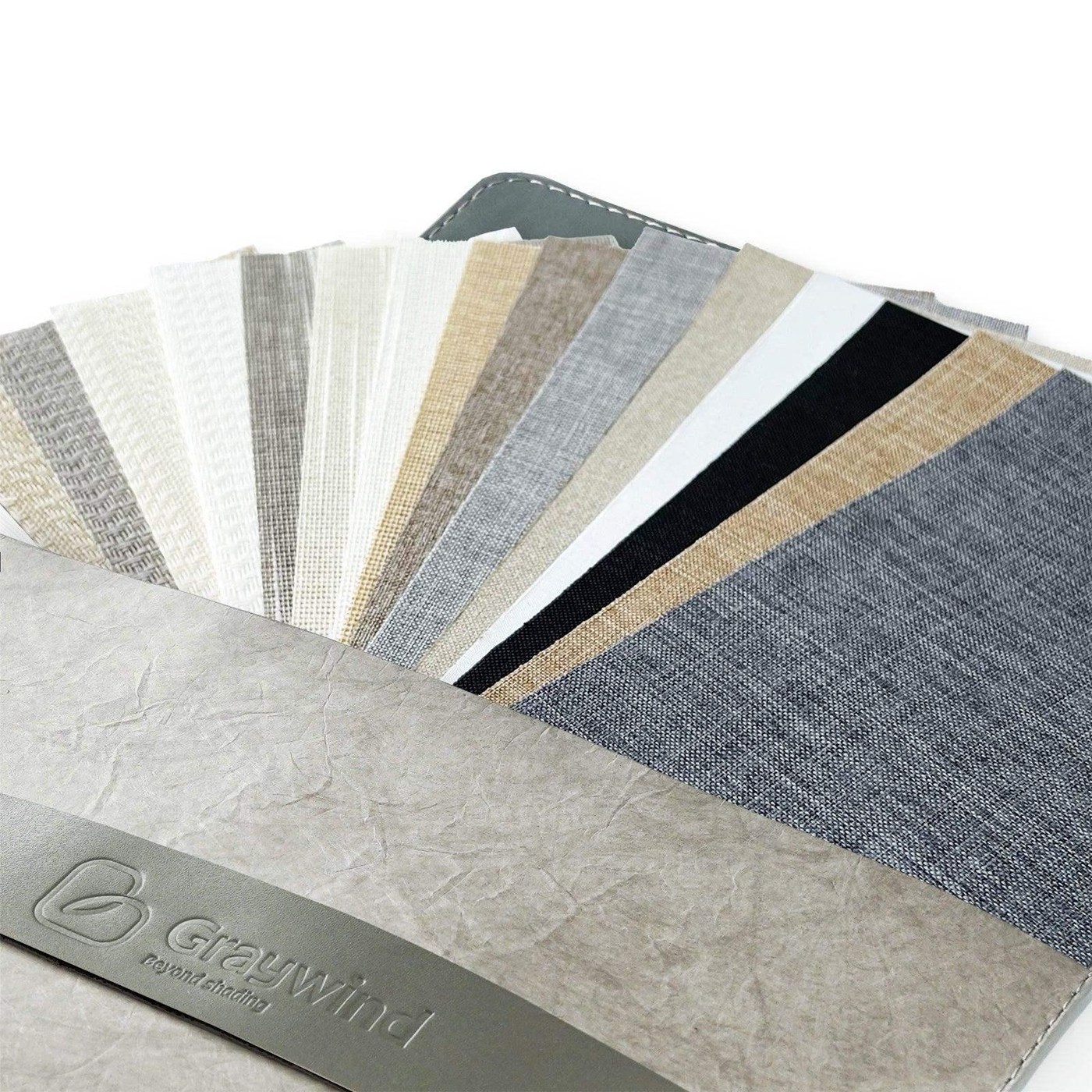
Light-filtering fabric reduces harsh contrast without making the bay feel closed. Warm neutrals complement wood seats, while gray or charcoal can create a sharper modern look. Compare a fabric against the seat cushion, wall, and trim rather than judging it alone.
Order fabric swatches from World Wide Shades and test them on the center and side windows. A sample that looks perfect on the center pane may appear too cool when the side pane receives lower-angle light.
Protect the window seat and everything on it
UV exposure can fade upholstery, books, artwork, and wood finishes. A shade is not a complete guarantee against fading, but closing it during direct sun reduces exposure. If the seat holds cushions, use a timer or sensor so the shade closes even when the room is empty.
For more on fading and solar exposure, read UV protection window shades and energy-efficient window shades. World Wide Shades can compare a solar screen with a light-filtering fabric when you want protection without losing the view.
Avoid a bottom rail that rests on the cushion. Leave enough clearance for the seat lid to open and for cushions to be removed. If the seat is built into the bay, photograph the hinge and trim details before finalizing the shade.
Measure the bay as three or more openings
A useful bay-window measurement record includes:
- Width at the top, middle, and bottom of each panel.
- Height on the left, center, and right side of each opening.
- Angle between the center and side panels, plus the depth of the return.
- Frame depth and trim projection for inside-mount clearance.
- Distance from the sill to the top of the cushion or seat lid.
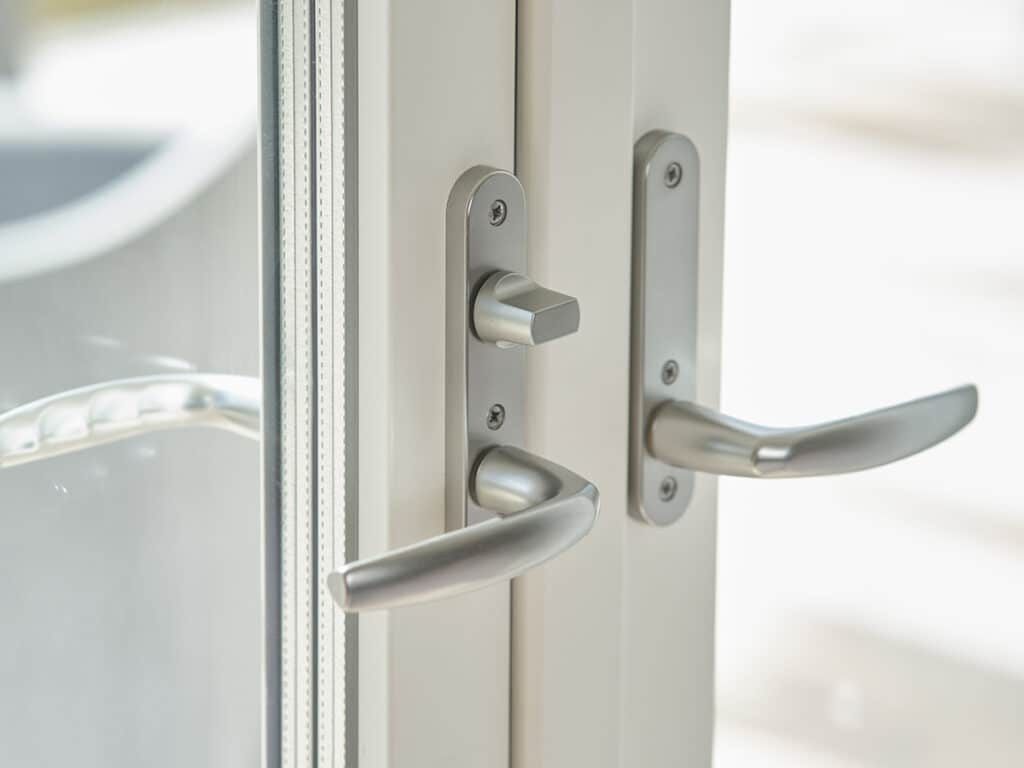
- Any crank, latch, or casement handle that could interfere with the shade.
Do not measure across the entire bay and divide by three. The center and side panes often differ by several inches, and even a small error changes how the corner shades meet. Use the how to measure windows for roller shades guide, enter each opening in the builder, and contact World Wide Shades if the angles are unclear.
Inside mount or outside mount at a bay seat
Inside mount keeps the treatment close to the glass and leaves the trim visible. It is attractive when the frames are deep enough, but shallow recesses can make the headrail crowd the glass or seat. Verify depth at all three sides.
Outside mount can cover trim and reduce side light gaps, but the brackets may project toward the seat. Keep hardware high enough to clear cushions and far enough forward to avoid the lid hinge. The inside mount vs. outside mount shades guide gives the general tradeoff; World Wide Shades can apply it to the bay’s actual geometry.
Corner seams need a visual strategy
Where the side and center shades meet, small lines are normal. The goal is alignment, not making three angled surfaces look like one flat wall. Match the hem heights and use a headrail finish that blends with trim. A narrow corner gap may be less noticeable than a shade that rubs every time it moves.
If glare at the corner is severe, compare a lower-openness screen or an outside mount that adds overlap. Do not add width blindly; confirm the frame, angle, and hardware clearances first. The roller shade light gap side channel guide covers strategies for reducing edge light without sacrificing movement.
Motorization makes a bay easier to manage
A bay window may have three shades, each at a different reach. Motorization lets you operate them together or separately, which is helpful when the center pane receives direct sun while the side windows stay shaded by the walls. A 10 a.m. close schedule can protect a seat from intense morning exposure; a sunset-open scene can restore the view.
Use a remote or wall switch as the everyday control, with smart-home integration as an optional layer. Read smart home motorized shades setup and motorized shades sunrise sunset schedule. World Wide Shades can help you decide whether the three shades should move as a group. Start at the builder or call (844) 674-2716.
Styles that work with a built-in seat
- Minimal: a low-profile solar screen in a warm gray, with aligned hem bars.
- Classic: a light-filtering neutral with matching white headrails and a cushion in a deeper accent.
- Natural: a textured roller shade coordinated with woven materials; compare woven wood shades if texture is central to the room.
- Reading nook: a medium-opacity fabric that cuts glare without removing daylight.
- Street-facing bay: a denser neutral or dual shade that provides privacy after dark.
The seat is already a visual focal point, so a shade that blends into the trim often works better than a high-contrast pattern. Use window shades color guide and physical swatches to keep the palette deliberate.
FAQ: Roller shades for bay window seats
One shade per panel is usually more flexible because each pane has its own angle, width, and sun exposure. A single shade may work for a shallow, nearly flat bay, but it can become bulky or fail to follow the corners. World Wide Shades can compare both options in the builder.
Leave enough clearance for cushions, cleaning, and any hinged seat lid; the exact amount depends on the frame and hardware. Measure from the sill to the highest cushion or hinge point. Contact World Wide Shades with a photo if the seat is built in.
A solar screen is the usual starting point, with 3%, 5%, or 10% openness as useful comparison points. Lower openness generally controls more glare, while higher openness preserves more view. Order swatches before choosing.
They can reduce direct solar exposure when closed, but fading also depends on glazing, orientation, and hours of sun. Use a schedule or sensor if the seat is exposed while the room is empty. World Wide Shades can suggest a solar-control fabric.
They can be worthwhile when three shades are hard to reach or need different daily positions. Group control keeps the look coordinated, while individual control handles unequal sun. Call (844) 674-2716 or use the builder to compare.
Use matched fabrics, aligned hem heights, consistent headrails, and hardware that respects each angle. Small gaps are preferable to rubbing or binding. World Wide Shades can review measurements for a coordinated fit.
Keep the view and make the seat usable
A bay window seat deserves more than a generic window treatment. Measure each panel, plan the bottom rail around cushions, and choose fabric based on glare, privacy, and fading—not a catalog photo alone. World Wide Shades can coordinate the set from samples to motorization. Build at the World Wide Shades builder, order swatches, or contact World Wide Shades at (844) 674-2716.