Palladian windows make a room feel taller and brighter, but their arched center and rectangular side windows create a shade problem that standard products rarely solve well. The most successful plan treats the window as one architectural composition while giving each section the coverage and operation it needs. For many homes, that means a shaped treatment in the arch plus matching roller shades on the lower rectangles.
This guide explains the practical choices: fixed versus operable arch coverage, inside versus outside mounting, fabric openness, measuring, motorization, privacy, and realistic costs. If you want a coordinated recommendation rather than a collection of mismatched pieces, World Wide Shades can review the window proportions and help you start with the online builder.
What makes a Palladian window different?
A classic Palladian window has a tall central opening topped by a semicircular or elliptical arch, with narrower rectangular windows on either side. The center may be 60–72 inches wide while the side lites are only 18–30 inches wide; those proportions create different mounting and light-control requirements in the same opening.
The arch is often fixed, high, and difficult to reach. The side windows may be at eye level and used every day for privacy. Treating all three sections with one rectangular shade can leave the curve exposed, cover trim, or force an unnecessarily large headrail. The better approach begins with the geometry, then chooses the operating method.
A specialist at World Wide Shades can help you decide whether the arch needs coverage at all. Call (844) 674-2716 or use /contact to share a photo and rough dimensions before ordering.
Three shade strategies that work
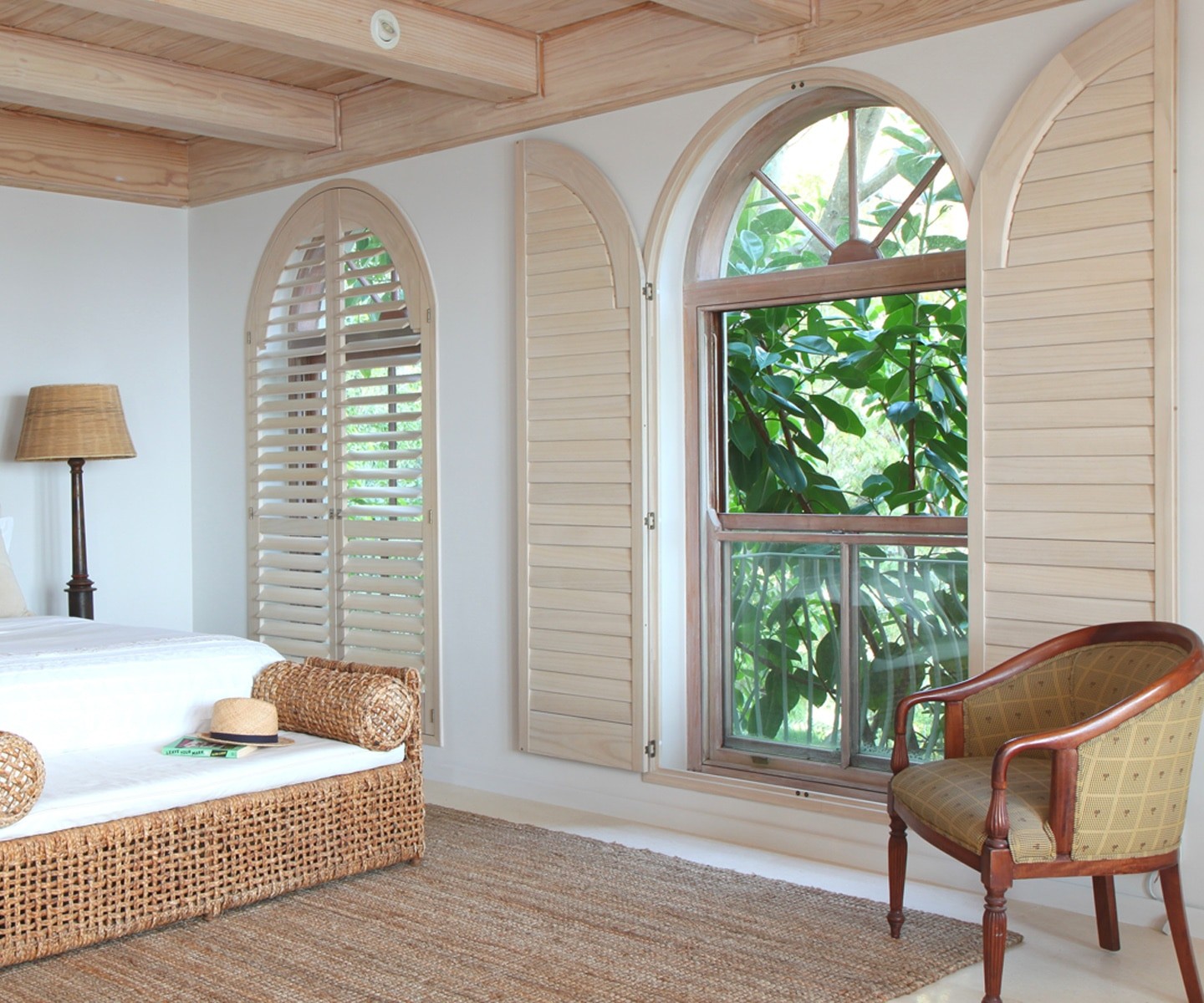
This is the most common Palladian solution. A shaped sunburst or custom arch insert follows the curve, while the rectangular sections receive roller shades that raise and lower independently. The arch can soften glare or filter UV without adding a hard-to-reach control, and the lower shades can provide privacy after dark.
Choose this plan when the arch is decorative, the room needs daily privacy, or the lower glass has different solar exposure from the upper glass. A 3% or 5% solar fabric on the lower sections preserves a view while cutting glare; a room-darkening fabric is more appropriate for a bedroom or media room. Compare fabric performance in the light-filtering shades guide.
If the arch is shallow and accessible, you may prefer a visually uniform treatment across the entire window. This can be elegant in a formal dining room or foyer, but it requires careful proportioning. The arch treatment and lower shades should share the same color and texture even if their operating hardware differs.
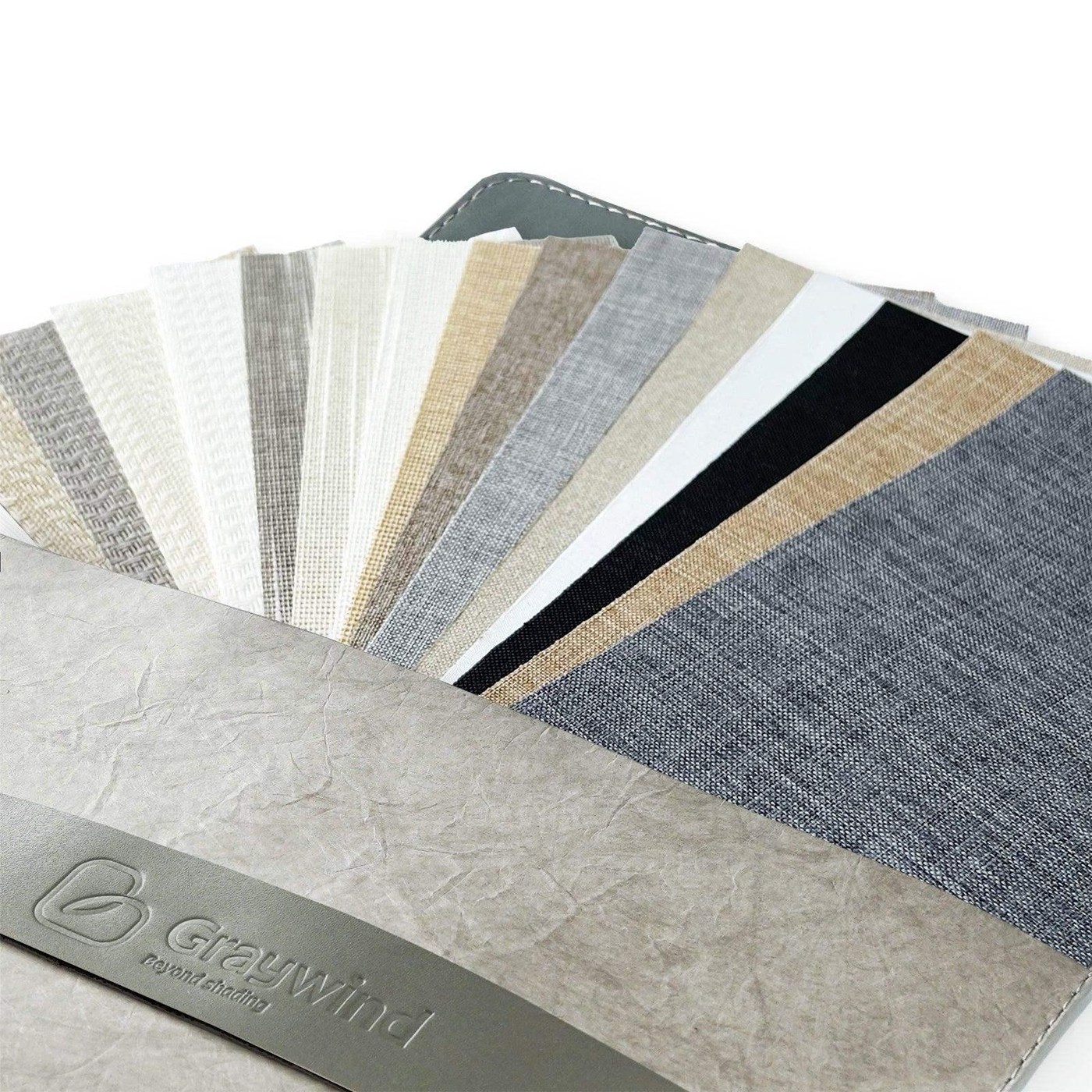
Use the window shades color guide to compare warm white, flax, taupe, and charcoal in the actual room light. World Wide Shades recommends ordering fabric samples before committing because a north-facing room can make a neutral look gray, while late-afternoon light can make it appear much warmer.
Not every Palladian window needs full coverage. If the arch faces north, is above a foyer, or is primarily an architectural focal point, lower shades may solve the practical problem without hiding the shape. This option also reduces cost and makes blackout or privacy control easier on the portions people actually see through.
For a south- or west-facing window, review the solar strategies in best shades for south-facing windows before leaving any glass uncovered. World Wide Shades will tell you when a fixed arch treatment is unnecessary; start with /swatches to find a fabric that controls glare without making the window feel heavy.
Fixed versus operable arch shades
Fixed coverage is usually the sensible choice for a high arch. It has fewer moving parts, avoids a visible cord or chain, and does not require a control to be reachable. A fixed panel can still be made with light-filtering or solar-control fabric, though the curved edge may allow more perimeter light than a rectangular shade.
Operable arch shades are worth considering when the arch is low enough to reach, faces intense direct sun, or needs privacy in a bedroom or bathroom. Motorization is especially useful when the center arch is more than 72 inches above the floor. Ask about motor noise, control location, and whether the shade can stop at preset percentages rather than only fully open or fully closed.
If the whole window is tall, motorization can make the daily routine easier. See smart home motorized shades setup and contact World Wide Shades through /contact for a plan that separates the arch from the lower window zones.
Inside mount or outside mount?
Inside mount keeps the window trim visible and makes the treatment look built into the opening. It works best when the arch has enough flat mounting surface and the jamb depth is consistent. Measure the deepest unobstructed point, not just the trim face; a handle, mullion, or inward-opening window can reduce usable depth.
Outside mount is more forgiving when the arch is irregular, the trim is decorative, or the goal is to reduce side light. It lets the shade overlap the opening by a planned amount, often 1–3 inches per side on a rectangle. On an arch, the overlap must follow the template and cannot be assumed from the lower section.
For the rectangular portions, the installation principles in how to install roller shades are useful. For a Palladian opening, however, the arch template and the relationship between the three shades should be reviewed together. World Wide Shades can check those details before fabrication; call (844) 674-2716 for guidance.
Fabric openness, privacy, and glare
Fabric openness is the percentage of the weave that allows light and view through. A 1% solar fabric blocks more glare and provides more daytime privacy than a 5% fabric, but both can reveal silhouettes at night when interior lights are on. For a street-facing room, light filtering or room-darkening fabric usually provides stronger after-dark privacy than solar screen fabric.
A practical Palladian combination is 3% solar fabric on a home office window, light filtering fabric in a living room, and room-darkening fabric in a bedroom. Use the same color family across sections so the arch reads as one design. If the arch is a major heat source, pair shade coverage with the energy ideas in energy-efficient window shades.
Measuring and planning the three sections
Start by photographing the window straight on and from each side. Note the overall width, center opening width, side-lite widths, sill height, trim depth, and where the arch begins. Record dimensions to the nearest 1/8 inch, but do not round a difficult opening up or down without confirming the manufacturer’s deduction rules.
The center arch needs more than a width and height. A template or measured curve documents the spring points, highest point, and whether the arc is symmetrical. Many older homes have small variations that are invisible from across the room but obvious when a shade edge is installed. Label every measurement by window section so left and right do not get swapped.
If the center is a true Palladian arch but the sides are angled, transomed, or unusually narrow, send the photos and dimensions to World Wide Shades at /contact. It is faster to resolve a 1/4-inch question before fabrication than after hardware arrives.
Design details that keep the window cohesive
Align the bottom rails of the lower shades when possible. A consistent horizontal line makes the window feel intentional even when the side lites are different widths. If the center shade has a different headrail or fixed panel, keep hardware finishes consistent and use a matching fabric face.
A valance can hide multiple headrails, but it is not always necessary. In a clean contemporary room, three low-profile headrails may look better than a decorative cover. In a traditional room, a shallow roller shade valance can unify the composition without covering the arch.
Use a privacy plan for evening. If the lower shades close but the fixed arch remains bright, silhouettes may still be visible from outside. Options include a translucent fixed arch panel, a separate operable arch shade, or an outside-mounted treatment that covers the entire window group. World Wide Shades can model those tradeoffs before you choose a fabric.
Cost expectations for Palladian window shades
A custom Palladian project commonly costs more than three standard roller shades because the arch requires a template, shaped fabrication, or specialized hardware. As planning ranges, a fixed shaped arch treatment may run $250–$700, while a custom operable arch can reach $500–$1,300. Rectangular roller shades often range from $180–$650 each depending on width, fabric, headrail, and motorization.
A three-section motorized project may total $1,200–$3,500 before unusual trim work or electrical changes. These are budgeting ranges, not a quote; the biggest variables are the arch shape, fabric performance, mounting access, and whether the side lites need separate motors. Use the custom roller shades versus Home Depot comparison to understand why fit and service affect price.
For a room-specific estimate, browse /swatches, then call World Wide Shades at (844) 674-2716 or request help through /contact.
Common mistakes to avoid
A rectangular shade can leave a crescent of uncovered glass or cut across the curve. Use a shaped solution or leave the arch intentionally open.
The arch, center rectangle, and side lites may need different positions during the day. Independent operation avoids closing a bright side lite just because the center is shaded.
Solar screen fabric can look private during daylight and transparent at night. Test the fabric with room lights on before selecting it for a bedroom or street-facing window.
An arch that is off by even 1/2 inch can show an uneven gap. Confirm the curve and spring points before fabrication.
FAQs about roller shades for Palladian windows
Yes. Most Palladian windows use a shaped fixed or operable treatment in the arch plus separate rectangular roller shades below. Leaving the arch open and shading only the lower sections is also a valid plan when glare and privacy do not require full coverage.
A fixed sunburst, custom-shaped cellular insert, or specialized operable arch shade can work. The best choice depends on whether the arch needs daily adjustment, how much glare enters, and whether the curve is a true semicircle or an irregular ellipse.
Yes. The center and lower sections can be motorized independently, which is useful when the arch is high or the window faces strong sun. Ask about preset positions, battery access, and smart-home compatibility before ordering.
Inside mount is attractive when the jamb has enough flat depth and consistent geometry. Outside mount is often more forgiving for irregular trim and can reduce perimeter light, but it must be planned around the curve and surrounding molding.
A fixed arch treatment may cost about $250–$700, while an operable shaped arch can cost $500–$1,300. A complete three-section project commonly falls around $1,200–$3,500, depending on fabric, size, motors, and installation access.
Start with the World Wide Shades online builder, compare fabrics in /swatches, and send photos or measurements through /contact. Call (844) 674-2716 if the arch or side lites are unusually shaped.