Patio doors and curtain walls combine wide glass, moving panels, strong solar exposure, and daily traffic. The right roller shades should control glare and privacy without catching on a door handle, blocking the walking path, or creating a row of uneven headrails. Planning is less about finding one “best” shade and more about coordinating several shades as a system.
World Wide Shades helps homeowners and designers separate fixed glass from moving panels, choose consistent sightlines, and match control to the opening. Start with the World Wide Shades builder, then contact World Wide Shades with a photo of the entire wall, not just one panel. The full elevation reveals mullions, tracks, handles, and the furniture that affects clearance.
Start by mapping the glass wall
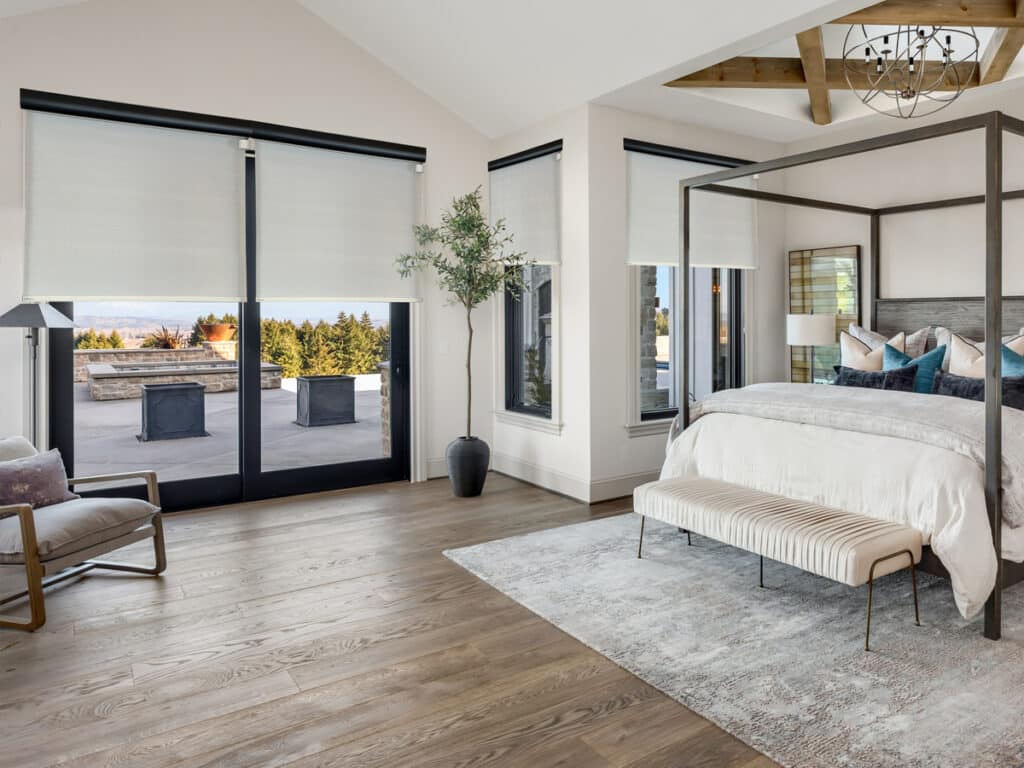
Draw or photograph the wall from straight on. Mark every fixed panel, sliding panel, hinged patio door, transom, mullion, and corner. Record the direction each door opens or slides and which panel is the active one. A 12-foot curtain wall may need four 36-inch shades, while a 12-foot opening with a slider may need a different split to keep the handle accessible.
Decide whether shades should operate individually or in groups. Individual shades allow one sunny panel to close while the others remain open, but they create more controls and more headrails. Grouped shades give a calm appearance and simpler scenes. The roller shades for French doors guide is useful when narrow operating panels sit beside fixed glass.
World Wide Shades can turn the elevation into a shade schedule. Send the wall plan to World Wide Shades before choosing fabric so the split points align with mullions rather than landing randomly in the view.
Inside mount, outside mount, or ceiling mount
An inside mount places each shade in the window or door recess. It preserves trim and can keep fabric close to the glass, but the recess must allow brackets, a cassette, and handle clearance. A slider often has a shallow frame, while a curtain wall may have deep mullions that vary from panel to panel.
Measure each bay separately. Do not assume a whole wall is square because the floor looks level. An inside mount can also show more side light, particularly on a wide opening where even a 1/4-inch gap is noticeable.
An outside mount covers the trim or mullion and can reduce side gaps. It is often practical for a broad glass wall with inconsistent recess depth. Confirm the projection from the wall so the fabric does not interfere with door handles, drapery, furniture, or a walking route. Use a cassette when a finished headrail is important, but reserve the needed height above the opening.
A ceiling mount can keep a curtain wall visually continuous and avoid shallow door recesses. Check for beams, sprinklers, HVAC grilles, pocket doors, and electrical boxes. If the ceiling changes height across the wall, establish a consistent sightline before fabrication. Ask World Wide Shades to review ceiling conditions when shades must span a long elevation.
Keep moving panels usable
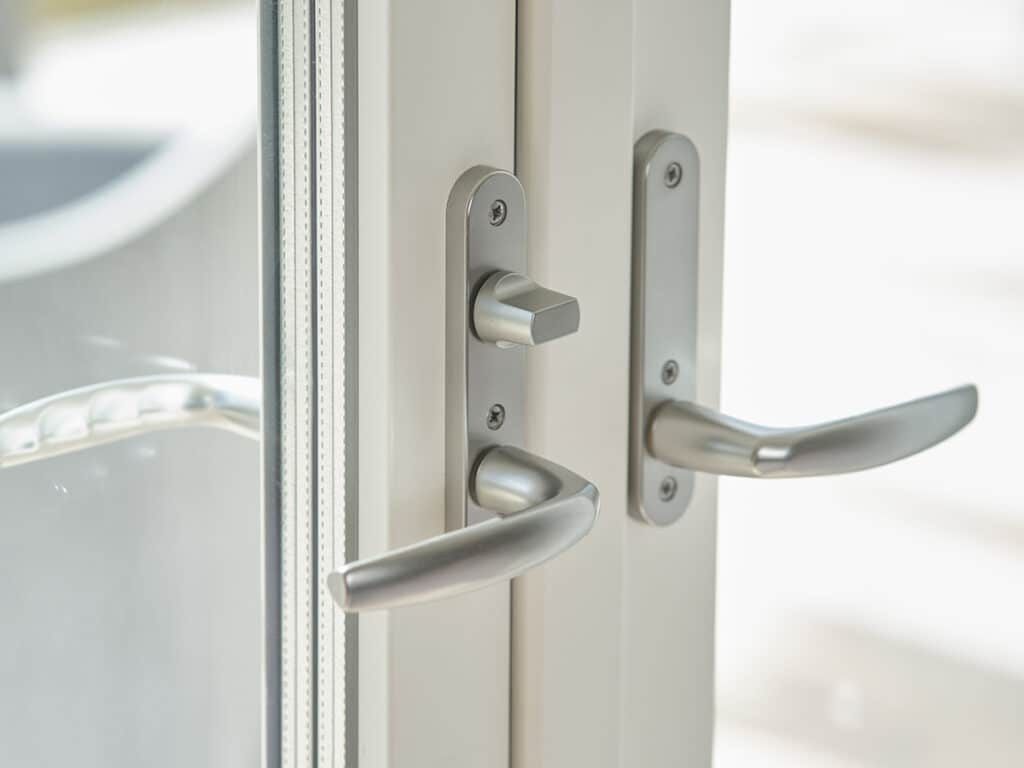
The active panel needs a clear handle path and enough room for fingers. If the shade hangs too close to the handle, everyday operation becomes frustrating. If it projects too far, it can catch on the panel as the door slides or swings. Mock up the shade depth with painter’s tape and operate the door slowly before drilling.
For hinged doors, check both the open and closed positions and the arc of the handle. For sliders, check the panel overlap, latch, track, and screen door. A shade can cover fixed glass continuously while the active door uses a separate narrower unit. Do not make a single extra-wide shade cross a moving joint unless the hardware is designed for it.
Call World Wide Shades at (844) 674-2716 with the door type, panel widths, and shade projection for a clearance review. The right split is usually cheaper than replacing an inconveniently oversized shade after installation.
Select fabric for large-area glare
Large glass can make glare obvious even when the room is not extremely hot. Common solar screen openness choices are 1%, 3%, 5%, and 10%:
- 1%: stronger glare and UV control, with a more filtered view.
- 3%: a balanced starting point for living rooms and offices with screens.
- 5%: more daylight and view, with less aggressive glare reduction.
- 10%: an open look when privacy and glare control are secondary.
Light-filtering fabric can soften the wall of light while keeping the room bright. Room-darkening or blackout fabric suits a media room or bedroom, but a large blackout shade must be correctly supported and may need side channels or an overlap. The energy-efficient window shades guide explains why orientation, glass, fabric color, and air movement all affect heat results.
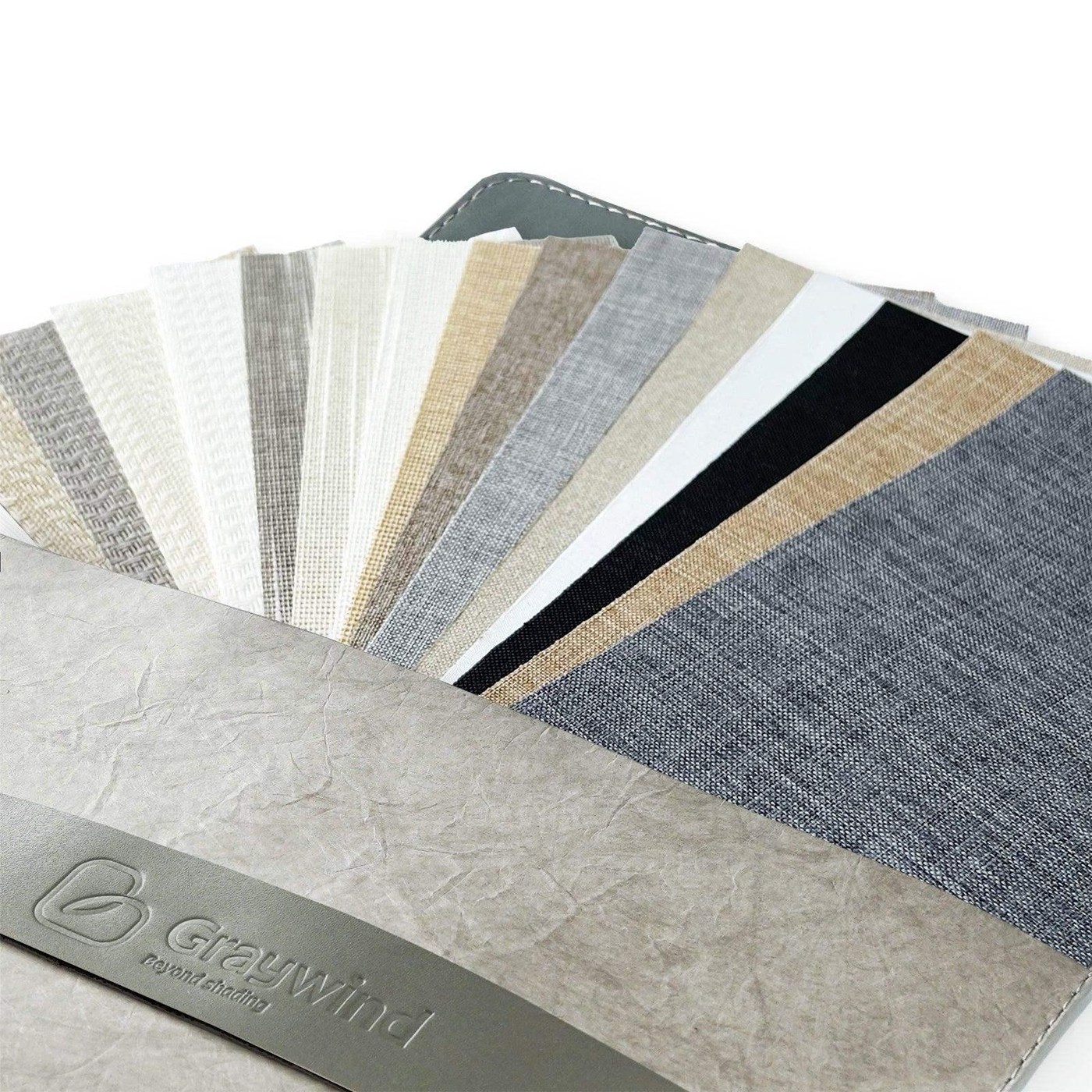
Order World Wide Shades swatches and compare them across the full wall. A shade that looks neutral on one panel may appear warmer beside a dark mullion or cool floor. Use the World Wide Shades builder to compare a single openness across the wall with a dual-shade approach.
One shade per panel or paired shades?
One shade per panel gives precise control and can keep a handle clear. It also creates more seams and more hardware. Paired shades can reduce the number of headrails and create a simpler visual line, but they add weight and may require a stronger motor. A paired shade should not cross a mullion that moves, flexes, or needs access.
For a curtain wall, align headrails at the same height and decide whether bottom bars should meet at one line. A 1/4-inch mismatch repeated across five panels can look like a wave. If the floor is out of level, prioritize a consistent top line and accept that bottom heights may follow the architecture, or coordinate a deliberate stagger. Contact World Wide Shades with a straight-on elevation for alignment advice.
Manual, battery, or hardwired control
Cordless manual shades work for reachable fixed glass, but a broad patio wall can involve many pulls every day. Motorization improves consistency and keeps controls away from handles and walking paths. Battery motors are practical for retrofit walls where opening drywall is undesirable; hardwired motors suit new construction, tall openings, or frequent schedules.
Estimate movements before ordering. A wall that closes at sunrise, opens at 9:00 a.m., drops for afternoon glare, and closes at sunset may move four times per day. Grouping six panels reduces control complexity, but ensure the motor and control system support the total load. The smart home motorized shades setup guide covers scenes, while the motorized shades with Alexa and Google Home guide covers voice-compatible routines.
Call World Wide Shades at (844) 674-2716 before specifying a motor for an extra-wide or blackout shade. Provide finished width, drop, fabric, cassette, and desired daily cycles.
Privacy, night glare, and layered treatments
Solar screens can preserve a daytime view but may reveal silhouettes at night when interior lights are on. If privacy is important, add a room-darkening or blackout layer, close the solar shade before dusk, or use drapery over the wall. A dual roller arrangement can provide a transparent screen by day and a privacy layer at night, but it needs enough headrail depth and clearance.
Curtains can soften the acoustics and frame the architecture, while roller shades handle glare. The roller shades versus Roman shades guide explains how profile and fabric fullness differ. For an outdoor extension, compare the outdoor roller shades patio guide rather than treating an interior shade as weather protection.
Measure and photograph before ordering
Measure every panel width at top, middle, and bottom and every height at left, center, and right. Record the smallest dimension, frame depth, mullion width, active panel direction, handle projection, and distance to furniture. For an outside or ceiling mount, measure the intended coverage and headrail projection instead of guessing from the glass.
Photograph the entire wall, each active door, the ceiling, floor track, handles, locks, outlets, and nearby vents. Include a tape measure for scale. Mark which doors are used hourly and which panels are fixed. Send the complete photo set to World Wide Shades for a panel-by-panel fit review.
Installation and alignment
Clear a working path and protect the glass and floor. For a large wall, install a level mounting surface or blocking before the shade team arrives. Verify that each bracket is fastened to a suitable material and not only drywall. Align headrails before setting motor limits.
After installation, test every door with shades raised, lowered, and at a 50% stop. Confirm that a slider does not rub, a hinged door clears its handle, and group commands move in the intended direction. Check that fabric rolls evenly and that bottom bars meet the planned line. Contact World Wide Shades if a shade telescopes, binds, or stops short.
Dust large shades with a soft brush or vacuum attachment. Avoid spraying cleaner onto fabric, motors, or glass-side components. Keep tracks and handles clear so the shade is not blamed for a door obstruction created by furniture or debris.
Budget and project timing
As a planning range, many manual custom roller shades cost about $150–$600 per opening. Large panels, cassettes, specialty fabrics, dual rollers, and motorization can add $150–$700 or more per opening. Professional installation may add $75–$250 per opening, with ceiling work, high access, and wiring increasing the total.
Allow roughly 3–8 weeks after measurements and final fabric approval, and add buffer for new construction or electrical work. Ask for a line-item quote showing each shade, motor, control, cassette, installation, and shipping. Request a project estimate from World Wide Shades before scheduling furniture delivery or a move-in date.
FAQ: roller shades for patio doors and curtain walls
Yes. Most curtain walls use several shades split at mullions or grouped into coordinated zones. The active doors should receive separate clearance planning so panels remain usable.
Inside mounts keep a clean profile when the recess is deep enough. Outside or ceiling mounts can provide more clearance and reduce gaps when door frames are shallow or inconsistent.
A 1%, 3%, 5%, or 10% solar screen can be selected by glare and view priorities. A 3% screen is a common starting point for rooms with televisions or workstations, but orientation and glass change the result.
They are often worthwhile for wide, tall, grouped, or frequently adjusted openings. Motorization keeps cords out of traffic paths and can coordinate many panels, but motor capacity must match the finished shade size.
Measure the handle projection and panel travel, mock up the shade depth with tape, and use separate shades for active panels when needed. Do not assume a single wall-wide shade will clear a moving joint.
Use room-darkening or blackout fabric, a dual roller system, drapery, or a schedule that closes the shade before interior lights turn on. Solar screen openness alone does not guarantee nighttime privacy.
Start with the World Wide Shades builder, order swatches, or contact World Wide Shades to design patio-door and curtain-wall coverage that protects both the view and the walking path.