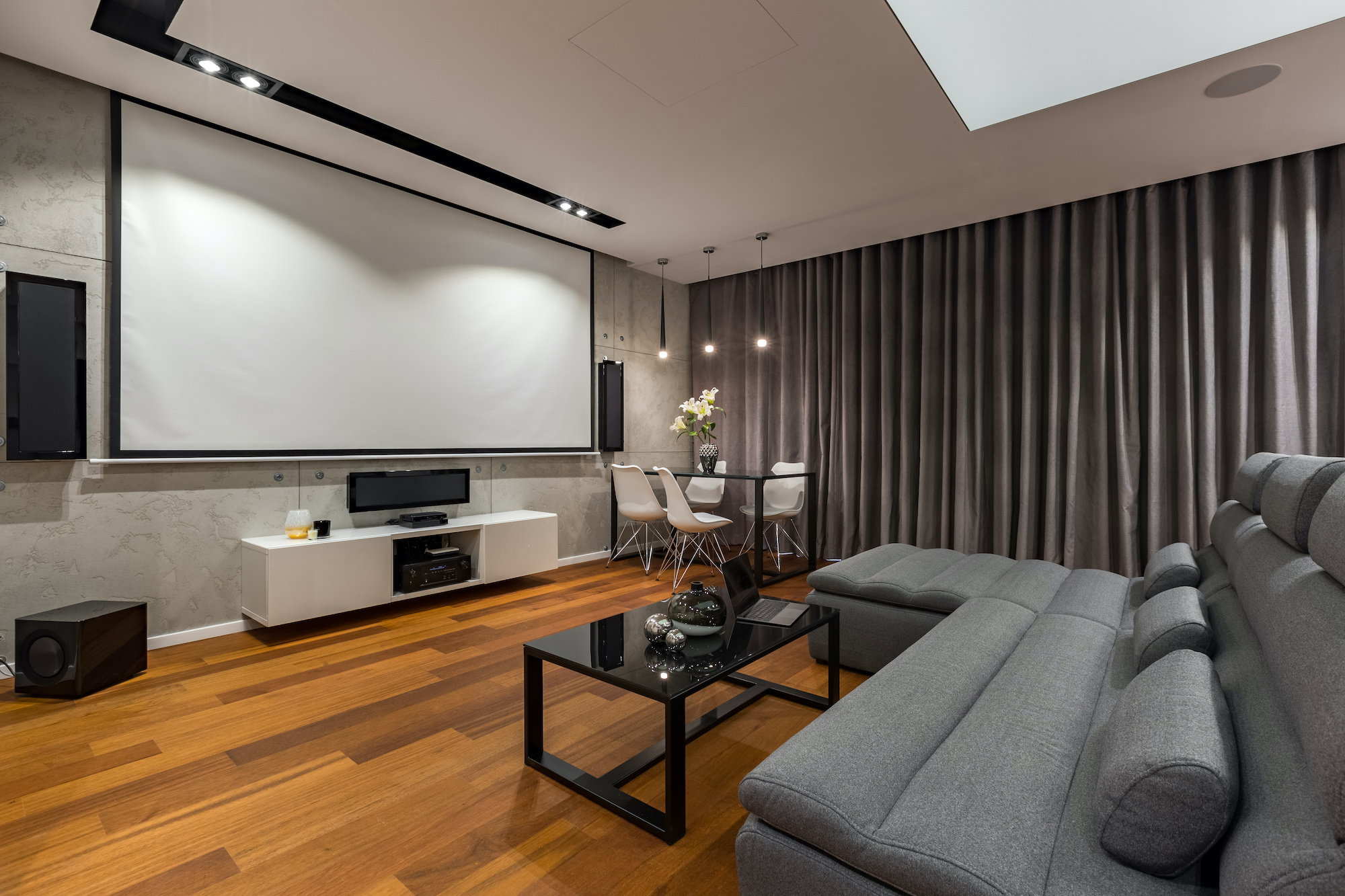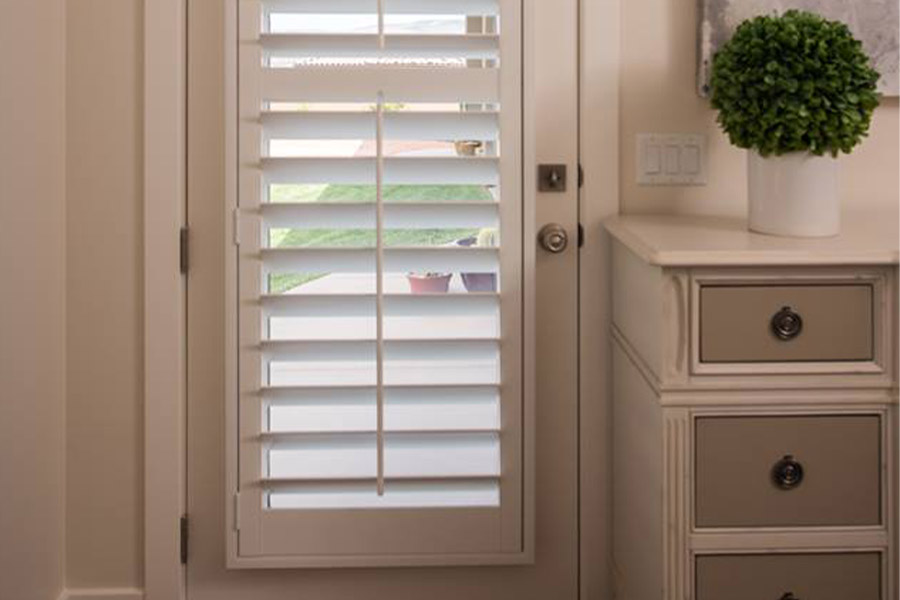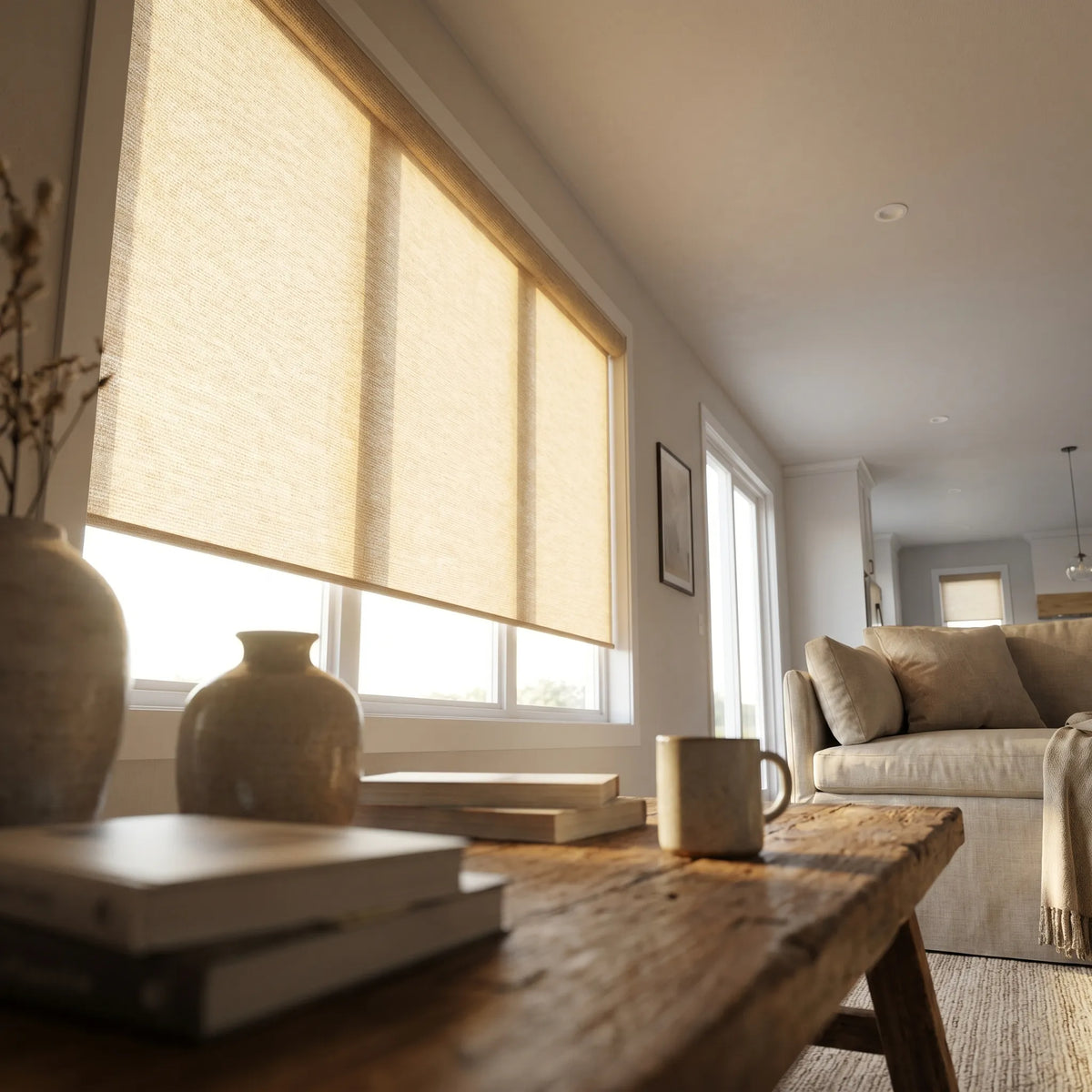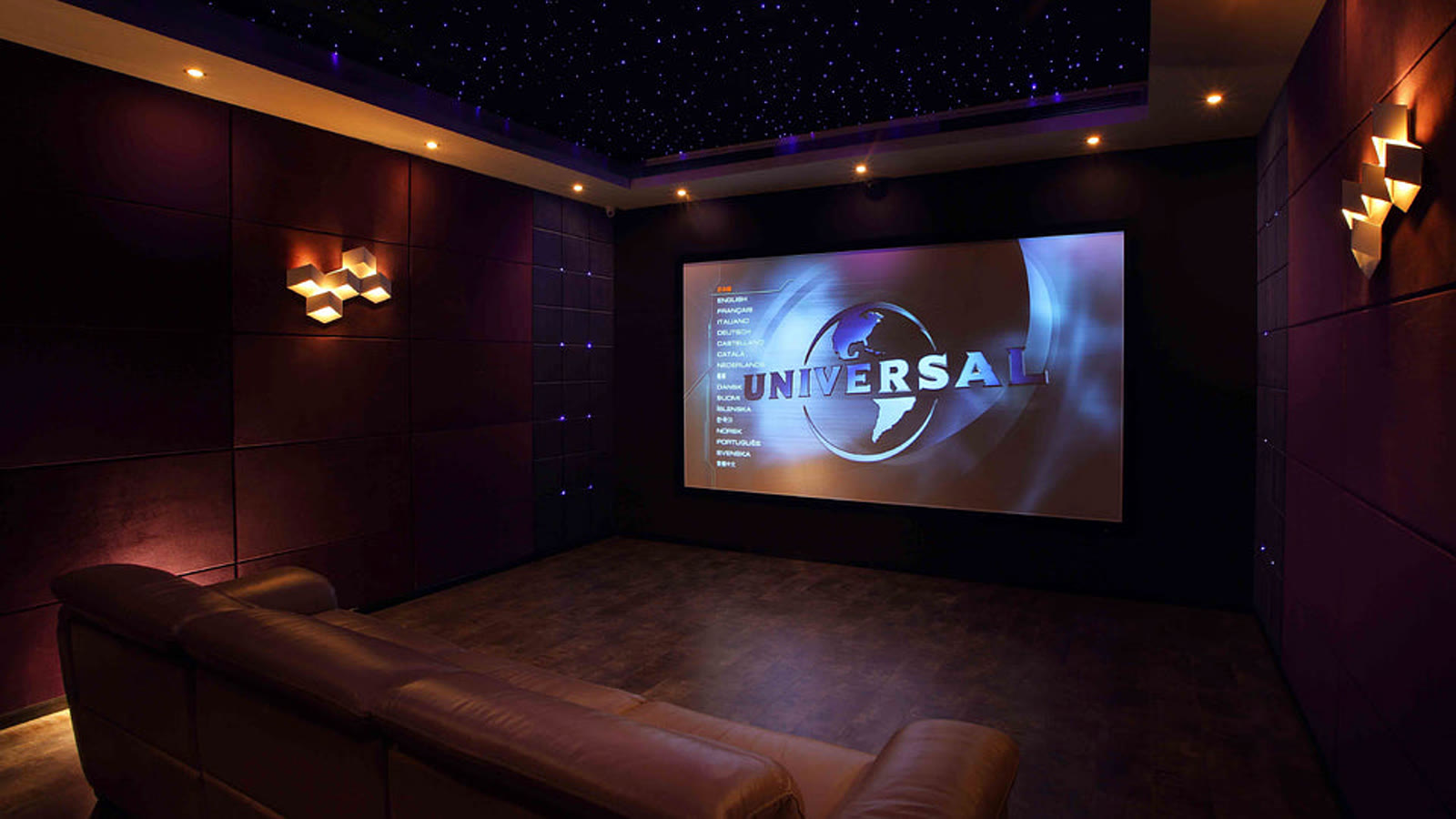
Why this topic matters (and what most home setups get wrong)
A home theater is one of the few rooms where small gaps and reflections are obvious: a 1% light leak can show up as a gray "haze" over dark scenes, and glare can reduce perceived contrast even when the screen itself is bright. World Wide Shades helps homeowners get to true dark-room conditions with measured blackout systems, tight side coverage, and materials chosen for both light control and comfort.
If you want a theater that feels like a commercial cinema, start with the window plan—not the projector settings. Design yours in the Custom Shade Builder and see options that match your exact window sizes.
What “true blackout” means for a home theater
"Blackout" gets used loosely. For home theaters, you’re aiming for two performance goals:
- Light transmission: ideally 0–1% visible light through the fabric (often called blackout or room darkening to blackout depending on the material family).
- Edge control: light leaking around the shade edges is often bigger than light through the fabric.
World Wide Shades recommends treating these as separate problems: pick a blackout-appropriate material, then choose a hardware approach that controls edge gaps.
Order color samples to compare blackout vs. room-darkening fabrics before you commit.
Measure first: the two dimensions that decide performance
In a theater, the difference between "pretty dark" and "wow" is usually measured in fractions of an inch.
- Many roller shade brackets need roughly 3/4–1 1/2 inches of mounting depth depending on the tube, valance, and chain/motor options.
- If the shade has a fascia/valance, you may need additional clearance so it sits flush.
If your trim is shallow, an outside mount can actually be darker because it allows overlap beyond the window frame.
Roller shades typically have small clearances at each side for smooth operation. On a bright afternoon, even a 1/4-inch gap can project visible light lines on the wall—especially if the window faces the screen.
In practice, maximizing overlap (outside mount) or selecting side channels/light blockers can be the difference between a cinema feel and a "living room with a screen." World Wide Shades can help you compare these approaches on your exact window.
Want help choosing? Talk to a shade expert or call (844) 674-2716.
Best blackout shade configurations for home theaters
Side channels (sometimes called light blockers) reduce edge light by guiding the fabric in a track. They’re especially useful for:
- Windows near the screen wall
- East- or west-facing rooms where sun angle is low
- Anyone sensitive to "light streak" distractions
If you’re comparing designs, see how side-channel systems work alongside other options in roller shades with side channels and light blockers.
A well-planned outside mount can overlap the window frame by 1–3 inches per side, which dramatically reduces visible edge leakage.
World Wide Shades often recommends this for decorative trim or shallow frames. Design yours in the Custom Shade Builder to model an outside-mount build.
Some theaters double as living rooms. A two-layer approach lets you use:
- Solar/light-filtering for daytime glare control without total darkness
- Blackout for movie time
For a deeper fabric comparison, read light filtering shades guide and solar shades vs. roller shades.
Acoustics: what window treatments can (and can’t) do
Blackout shades help with light. Sound is a different physics problem.
- Fabric shades absorb some high-frequency reflections, but they won’t replace dedicated acoustic panels.
- The biggest sound weakness at windows is often air leakage and thin glass, not the shade.
Practical upgrades that usually matter more than fabric choice:
- Weatherstripping and sealing gaps
- Heavier curtains used with shades (for multipurpose rooms)
- Adding soft surfaces (rugs, upholstered seating)
If sound control is a priority, you may also like noise-reducing window shades.
Heat and glare management for projectors and TVs
Sunlight can heat the room and create hot spots on screens. A few useful numbers:
- Direct sun on a window can create very bright reflections; even small uncovered areas can wash out perceived contrast.
- UV exposure accelerates fading of carpets and seats; consider UV-focused materials where the room gets strong sun.
For a deeper take on UV and material selection, see UV protection window shades.
Motorized blackout shades for “movie mode”
Motorization isn’t just convenience; it’s consistency. When your shades close to the same position every time, you reduce edge light variability.
- Smart-home integrations can trigger a "scene" that dims lights and closes shades.
- Hard-to-reach windows (high clerestories) become usable.
If you’re building a smart setup, start with smart home motorized shades setup and motorized shades with Alexa/Google Home.
World Wide Shades can help you choose motor types and controls—Talk to a shade expert or call (844) 674-2716.
Cost expectations: what most homeowners pay
Pricing depends on window size, material, and whether you add side channels or motorization. As a planning range:
- Standard custom roller shades often land in the low-to-mid hundreds per window.
- Blackout materials and upgrades like side channels or motors increase cost.
For a more detailed breakdown, read how much custom roller shades cost.
When you’re ready for exact numbers, Design yours in the Custom Shade Builder builds a quote-style configuration in minutes.
Installation tips that reduce light leaks
The best fabric can still leak light if installed loosely. The most common theater-specific fixes:
- Square the brackets so the tube is level and the roll tracks evenly.
- Use consistent side clearance so the fabric doesn’t drift and expose more gap.
- For outside mounts, center the shade carefully to preserve overlap.
If you’re DIYing, keep how to install roller shades open while you work.
Common home theater window scenarios (and what to choose)
Prioritize blackout + edge control. Side channels or a large-overlap outside mount are usually worth it.
Glare control matters less than overall darkness. A blackout roller shade can be enough without channels.
Consider dual layers: light filtering for the day, blackout for movies.
World Wide Shades can recommend a configuration based on orientation and usage—Talk to a shade expert.
FAQ: Roller shades for home theaters
Many blackout fabrics are near-zero light transmission, but the room can still have edge light. Combining blackout fabric with side-channel systems or outside-mount overlap gets closest to "true" blackout.
Curtains can cover edges well, while shades can be cleaner and easier to automate. Compare the pros and cons in blackout curtains vs. blackout shades.
Side channels guide the fabric and can reduce shifting. When sized correctly, they should still raise and lower smoothly.
They can slightly reduce echo and high-frequency reflections, but real sound isolation usually requires sealing gaps and improving the window itself.
It depends on the shade system. If motorization is important, it’s best to plan it up front so tube size, power, and controls match your needs.
World Wide Shades can recommend blackout levels, mounts, and accessories based on your measurements. Talk to a shade expert or call (844) 674-2716.
World Wide Shades makes it easy to compare fabrics and hardware—Design yours in the Custom Shade Builder.
If you want a recommendation tailored to your window measurements, contact World Wide Shades at (844) 674-2716 or use Talk to a shade expert.
World Wide Shades can also help you match styles across rooms—start with Order color samples.