Industrial loft interiors are built on contrast: raw concrete floors, exposed brick walls, blackened steel beams, and oversized factory-style windows that flood the space with light. Choosing the right window treatment for this look is trickier than it sounds, because most soft furnishings fight the aesthetic instead of supporting it. Roller shades from World Wide Shades solve this problem directly—their clean, flat profile and architectural fabric options let the windows stay the visual focal point while still delivering real light control, privacy, and UV protection. This guide walks through fabric selection, openness percentages, color strategy, mounting, and budget planning specifically for loft-style homes and converted warehouse spaces.
Why industrial lofts need a different shade strategy
Most lofts share three challenging traits: oversized windows (often 8 to 14 feet tall), open floor plans that mix living, sleeping, and working zones, and hard surfaces that bounce light and sound around the room. A shade that works beautifully in a traditional home can look flimsy or fussy against steel-framed glass. Industrial spaces call for shades that read as architecture rather than decoration—flat fabric planes, minimal hardware, and neutral tones with the right undertone.
Because loft windows are frequently south- or west-facing with no exterior shading, glare and heat gain are common complaints. World Wide Shades customers in converted warehouses often report that unprotected glass can push afternoon room temperatures up several degrees, which makes light control performance—not just looks—a real part of the design brief. Getting the openness percentage and fabric type right affects comfort every single day, not just the photograph.
Choosing the right fabric: matte, woven, and solar screen options
The fastest way to undercut an industrial look is choosing a shiny, heavily textured, or overly decorative fabric. Instead, look for fabrics that read as architectural material rather than soft furnishing.
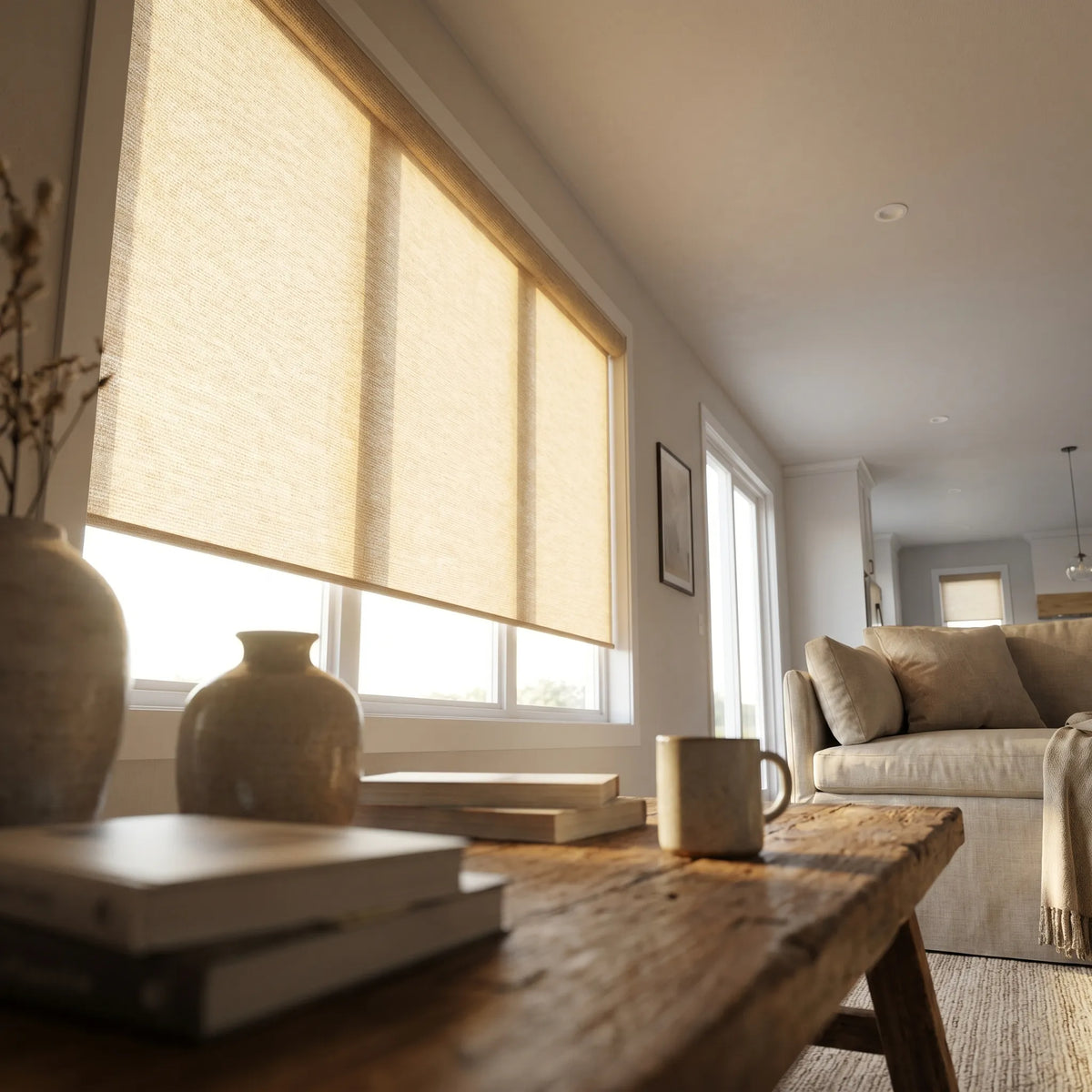
Matte light-filtering fabrics keep daytime privacy intact while softening harsh sun, and their flat finish sits naturally against concrete and drywall. Linen-look roller fabrics introduce a small amount of warmth and texture without tipping into a traditional or cottage feel—this is a popular middle ground for lofts that want the concrete-and-steel look to feel livable. Solar screen fabrics, especially in charcoal, black, or concrete gray, are the most distinctly "industrial" option: they maintain a view to the outside while cutting glare, and the visible weave reads as technical rather than decorative.
World Wide Shades stocks all three fabric families in openness percentages ranging from 1% to 10%, so you can dial in exactly how much view-through versus privacy you want per window. For a deeper comparison of weave types, weights, and performance ratings, see our guide to the best fabrics for roller shades. If you're unsure which fabric will photograph well against your specific brick or steel tone, order swatches from World Wide Shades before committing to a full order.
Getting the openness percentage right for glare and UV control
Openness percentage—the amount of open weave in a solar screen fabric—is the single biggest lever for comfort in a loft with large, unshaded glass. A 1% openness fabric blocks roughly 95-99% of UV rays and offers the strongest glare control, which matters most for rooms with televisions, monitors, or reading nooks near the windows. A 3% openness fabric still delivers strong glare reduction, around 90-95% UV blockage, while preserving more of the view for social or living areas. A 5% openness fabric trades some glare control for a noticeably clearer view outward, which works well on windows that face greenery or skyline rather than direct sun.
As a planning rule, moving from 5% to 1% openness can cut perceived glare dramatically on a west-facing wall of glass while still letting in ambient daylight. For homes with intense afternoon sun, pairing a low-openness solar screen with a secondary blackout shade in sleeping zones is a common World Wide Shades recommendation. If UV damage to floors and furniture is a concern—loft floors are often original hardwood or polished concrete that shows fading—read our dedicated breakdown on UV protection window shades for specific blockage percentages by fabric type.
Ready to compare openness levels for your exact window sizes? Design your shade in the World Wide Shades builder or call (844) 674-2716 to talk through your light exposure with a specialist.
Light-filtering versus blackout by zone
Because lofts are frequently open-plan, a single light control level rarely works for the whole space. Splitting your plan by function keeps the aesthetic consistent while solving each zone's actual problem.
Light-filtering roller shades keep common areas bright and airy, which supports the open, high-ceiling feel that makes lofts appealing in the first place. They soften direct sun without eliminating daylight, so kitchens, dining areas, and home offices stay comfortable through the day. For a full rundown of filtering percentages and use cases, see our light filtering shades guide.
Any sleeping area that shares a window wall with the rest of the loft benefits from blackout roller shades, which block essentially all incoming light. This matters for early risers dealing with sunrise-facing glass and for anyone in a city loft managing streetlight at night. If you're deciding between blackout shades and blackout curtains for a partition-style bedroom, our comparison of blackout curtains versus blackout shades breaks down light-blocking performance, cost, and space requirements.
Color strategy: neutrals with the right undertone
Industrial does not mean cold or colorless—it means intentional. The most successful loft palettes use neutrals chosen specifically to complement (not fight) concrete, brick, and steel.
Warm gray reads like concrete but carries enough warmth to avoid looking sterile, making it one of the most versatile choices for large expanses of glass. Charcoal pairs naturally with black steel window frames and creates a cohesive, monochromatic sightline. Sand and putty tones warm up red or orange-toned brick without drifting into a traditional beige look. Matte white provides clean contrast against dark steel frames and works well in lofts with lighter, whitewashed brick.
For a broader look at how undertones interact with popular 2026 palettes, see our window shades color guide and the seasonal roundup in window shade trends 2026. Because screen photos and paint chips rarely match fabric in person, ordering physical swatches from World Wide Shades against your actual wall and floor materials is the most reliable way to avoid a mismatch—call (844) 674-2716 if you want a second opinion before ordering.
Mounting and hardware for oversized loft windows
Large, exposed windows show every imperfection in a shade installation, so mounting decisions matter more in a loft than almost any other style.
Inside mount creates a clean, built-in appearance when your window frame has sufficient depth, and it's the preferred option for steel-framed industrial windows where the frame itself is part of the design. Outside mount is often the better call on brick openings with uneven trim, since it can hide imperfect surfaces, increase light blockage at the edges, and visually frame oversized glass. If you're new to measuring, our step-by-step guide to installing roller shades covers both mount types in detail.
Even quality blackout fabric can leave small light gaps along the sides of the shade. For sleeping zones, an outside mount with side channels, a deeper fascia, or a layered approach with a secondary shade all help close that gap. If you want a way to conceal the headrail while keeping the industrial look, our roller shade valance options guide shows minimalist styles that won't clash with exposed ductwork or steel beams.
Motorization for tall and hard-to-reach glass
Industrial lofts frequently include clerestory windows, multi-panel glass walls, or windows set behind furniture that's difficult to reach with a manual chain. Motorized roller shades solve both the reach problem and the safety concern of long cords in an open, high-traffic space.
World Wide Shades customers with tall loft glass often note that motorization saves several minutes a day that would otherwise go to manually adjusting shades as the sun moves across a west- or south-facing wall—time that adds up quickly during a workday spent near a glare-prone monitor. If your loft already runs on a smart home system, our guide to motorized shades with Alexa and Google Home explains setup, voice commands, and scheduling. To see motorized options sized for your exact windows, start a build in the World Wide Shades builder or call (844) 674-2716 for a walkthrough of hardwired versus battery-powered systems.
Budget planning for industrial loft roller shades
Cost depends primarily on fabric type, window size, and whether you add motorization. As a planning guide, light-filtering roller shades typically represent the mid-range option per standard window, solar screen fabrics land in a similar range depending on openness percentage, and blackout roller shades run higher due to the heavier fabric construction and lining required to fully block light. Adding motorization increases the per-window cost but removes the ongoing hassle of manually adjusting tall or hard-to-reach glass, which is especially valuable in a loft with multiple large window walls.
For a full breakdown of pricing by fabric, size, and control type, see our detailed guide on how much custom roller shades cost. If you're also weighing custom shades against big-box store options for large industrial windows, our comparison of custom roller shades versus Home Depot covers fit, warranty, and long-term durability differences worth knowing before you buy.
Pairing roller shades with common loft materials
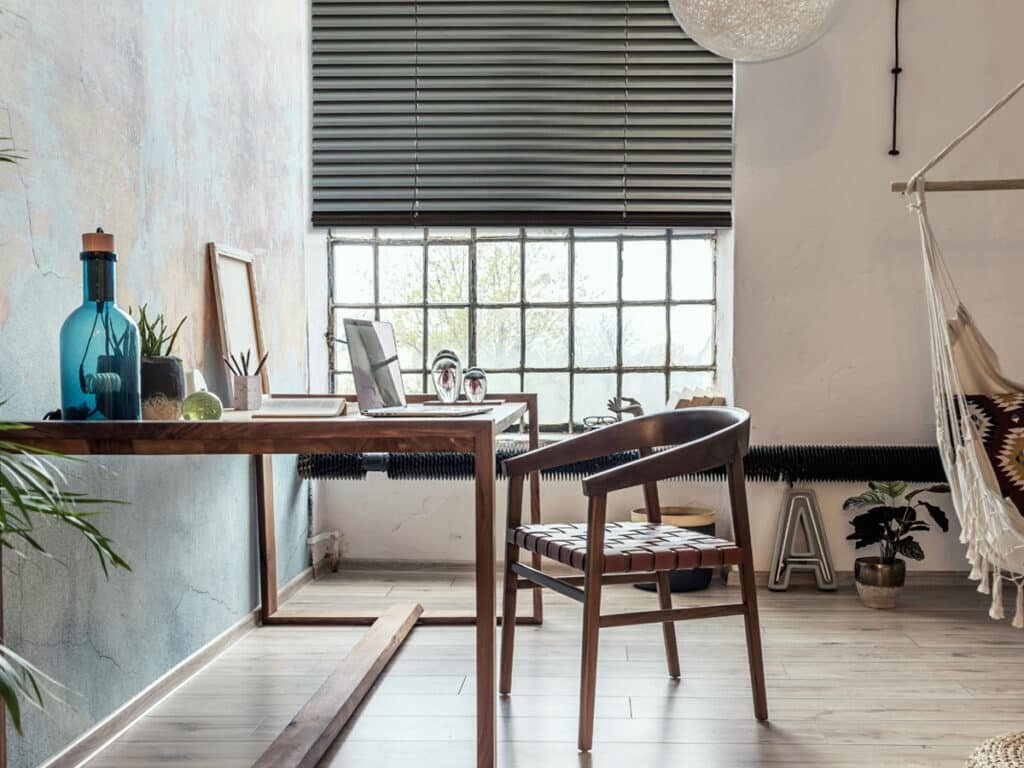
Matching your shade to the dominant materials in the room keeps the whole space feeling coordinated rather than accidental. Against exposed brick, choose a fabric with a subtle woven texture and avoid glossy finishes—warm gray or sand tones typically look best against red or orange brick tones. Against black steel windows, charcoal, black, or white shades all read well; a matte black solar screen can look like an intentional architectural element rather than an add-on. Against polished concrete floors, which tend to be cool-toned, a linen-look roller shade or a warmer gray fabric prevents the room from feeling sterile. Against reclaimed wood accents, match the shade's undertone to the wood tone—warm wood pairs with warm fabric undertones, and cool-toned wood pairs with cooler grays.
Fast styling wins for loft-style rooms
Keeping a multi-window wall in one solid, consistent color reduces visual noise and reinforces the architectural feel that defines the style. If you want texture, build it into the fabric weave rather than introducing bold patterns, which tend to compete with brick and steel rather than complement them. Match your shade hardware finish to nearby metals—black steel, brushed nickel, or matte white—so the headrail disappears into the room instead of standing out. In mixed-use lofts, plan blackout shades for sleeping zones and light-filtering shades for living zones so each area performs the way it needs to.
World Wide Shades specializes in custom roller shades sized precisely for oversized industrial windows, which is where most off-the-shelf shades fall short. Whether you're outfitting a single loft window or a full glass wall, get a walkthrough from World Wide Shades or call (844) 674-2716 to talk through fabric, openness, and mounting for your specific space.
Frequently Asked Questions
For most loft living areas, 1% to 3% openness offers the best balance—it reduces glare on large windows while still allowing daylight in. Choose 5% openness when preserving a clear view matters more than maximum glare control, such as on windows facing greenery rather than direct sun.
Not when the fabric is matte and the rest of the palette stays light. Dark shades in charcoal or black often echo steel window frames and read as an intentional design choice rather than a visual weight, especially against exposed brick or concrete.
Yes, if the sleeping area shares a window wall with the rest of the open floor plan. Blackout roller shades are the most effective way to manage sunrise glare and nighttime streetlight, and an outside mount with side channels further reduces light gaps at the edges.
For clerestory or floor-to-ceiling glass, most owners find motorization worthwhile because tall windows require more frequent adjustment as the sun moves. It also removes long pull cords from an open, high-traffic space, which is a meaningful safety benefit.
Pricing depends on size, fabric, and motorization, with light-filtering and solar screen fabrics generally in a mid-range bracket and blackout fabrics priced higher due to heavier construction. See our full cost guide for detailed ranges by fabric type and window size.
Use consistent alignment and color across the full window wall, choose minimal or matching-metal hardware, and opt for an inside mount whenever the frame depth allows it. These details are what separate a custom, architectural look from an obvious retrofit.
Ready to plan your loft's exact fabric, openness, and mount type? Design your shade in the World Wide Shades builder, order swatches to test against your concrete and steel, or call (844) 674-2716 to speak with a World Wide Shades specialist directly.