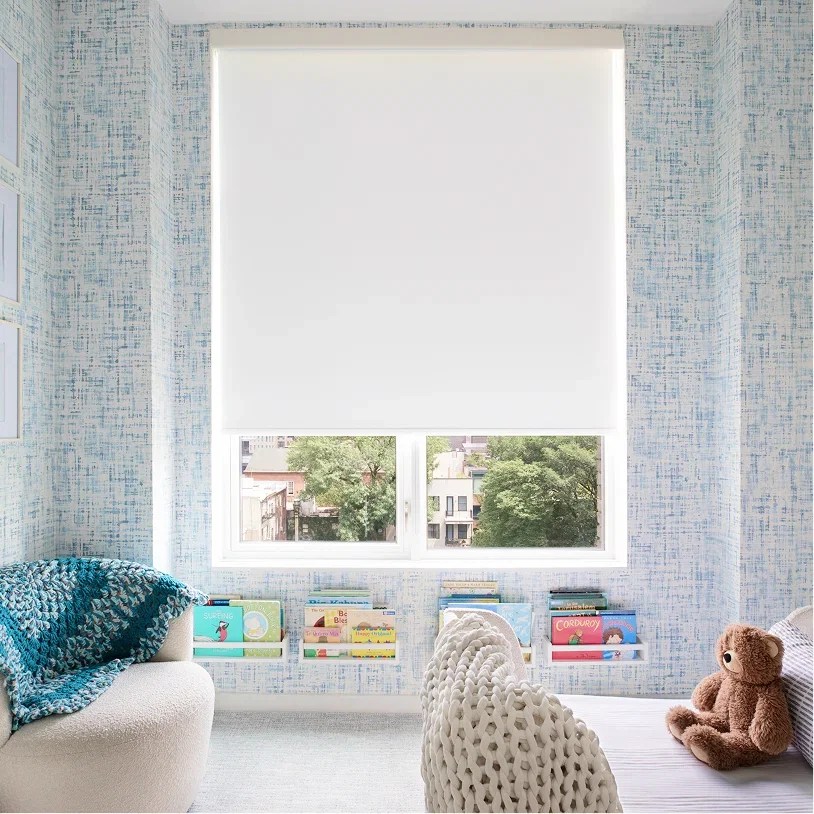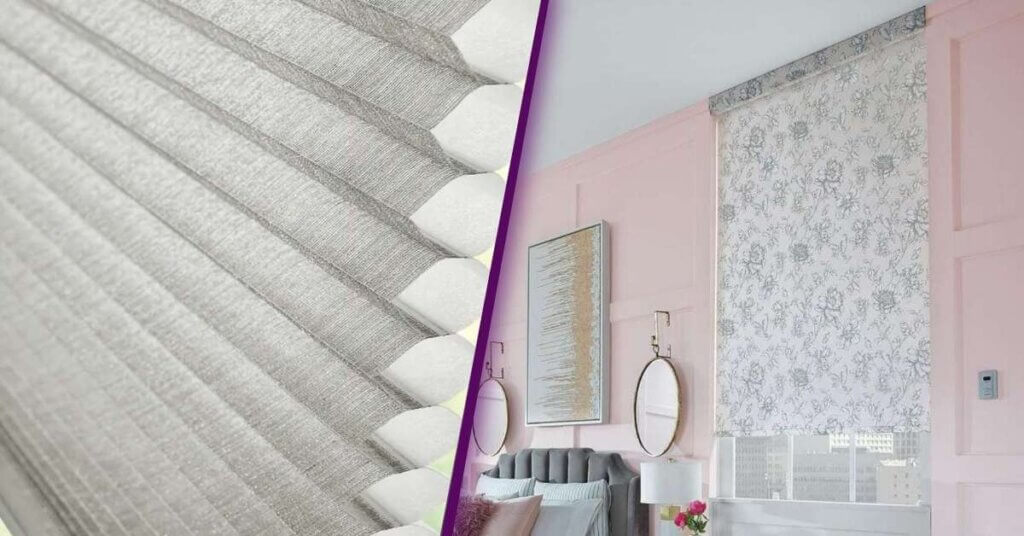
Roller shades and cellular shades solve different problems. A roller shade is a single fabric panel that rolls around a tube, giving you a broad range of colors, openness, and clean-lined styles. A cellular shade is a pleated fabric with air pockets that fold into a compact stack and improve the window’s thermal performance.
Neither is automatically “better.” The right choice depends on the room’s temperature swings, sunlight, view, privacy, and visual style. Use the World Wide Shades online builder to price both options with the same dimensions, then compare fabric and operating systems rather than comparing a basic roller with a premium cellular by name alone.
The short answer
Choose roller shades when you prioritize color, a slim appearance, easy cleaning, solar glare control, or a wide range of blackout fabrics. Choose cellular shades when insulation, draft reduction, and flexible top-down/bottom-up privacy matter most.
A common whole-home strategy is roller shades in living rooms and kitchens, with cellular shades in bedrooms, offices, and drafty north-facing rooms. World Wide Shades can mix the two while keeping colors coordinated. Contact the team if you want a room-by-room recommendation.
Construction and appearance
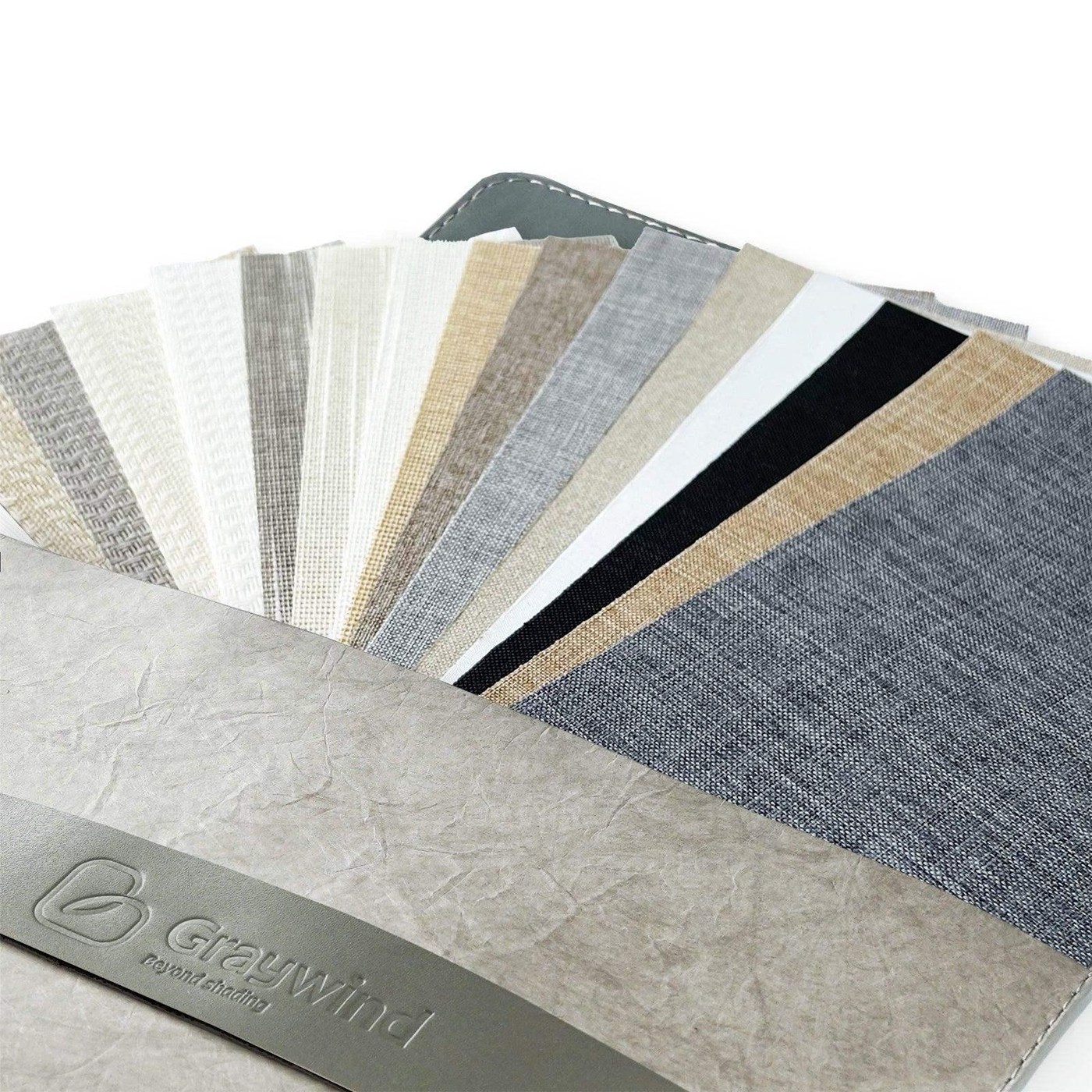
Roller shades create a flat fabric face when lowered and nearly disappear when raised. Linen-look, woven, solar, screen, room-darkening, and blackout options make it easy to tune the visual texture. The exposed or concealed tube can be matched to the wall, window frame, or hardware.
The profile is useful in shallow recesses and behind handles, but the fabric can leave a small gap at each side on an inside mount. An outside mount with 3 to 4 inches of overlap on each side reduces those gaps. Explore roller shade valance options if you want to conceal the tube.
Cellular shades use single-, double-, or triple-cell construction. The pleats create air pockets that slow heat transfer, while the folded fabric gives the window a softer, more architectural texture. Top-down/bottom-up operation lets you cover the lower glass for privacy while daylight enters above.
The stack is taller than a roller when raised. A standard cellular shade can stack roughly 6 to 12 inches at the top depending on height and cell size, so check whether that blocks a transom, view, or artwork. World Wide Shades can help confirm stack dimensions before production; request a consultation.
Insulation and energy performance
Cellular shades generally provide more insulation than a single-layer roller because the cells trap air. Double-cell shades are particularly useful in cold climates, over older glass, and on north-facing windows. A tight fit helps, but no shade replaces weatherstripping, a sound frame, or a high-performance window.
Roller shades can still improve comfort. A dense room-darkening fabric reduces radiant glare, while solar fabrics reduce solar intensity and protect finishes. Some lined or insulated roller constructions add more thermal resistance than a basic screen. See energy-efficient window shades for a broader view of shade, glazing, and installation variables.
Use measurable expectations: a shade may reduce perceived draft and peak glare, but whole-house energy savings depend on window area, climate, HVAC, orientation, and how consistently the shade is closed. In a five-window bedroom, a double-cell configuration may cost about $600 to $1,200, while basic manual rollers may cost less; get a project-specific quote through the World Wide Shades builder.
Light control and privacy
Solar roller shades excel at glare control while preserving the view. A 1% or 3% openness fabric blocks more direct brightness than a 5% or 10% fabric. Cellular shades diffuse light through their pleats and can be ordered in light-filtering or room-darkening materials, but the view becomes more obscured.
For a bright monitor-facing window, use 1% to 3% solar roller fabric or a room-darkening cellular shade. For a living room where the view is important, 5% solar or light-filtering roller fabric may feel more open. Order swatches from World Wide Shades to see how each weave handles your actual sun.
Both types can be made room-darkening or blackout, but the edges still matter. An inside-mounted shade can show a halo around the frame; an outside mount, cassette, or side channel improves coverage. Cellular shades may offer a honeycomb edge and a softer look, while a blackout roller offers a smooth, uninterrupted plane.
For a bedroom, compare the details in best window shades for bedrooms and blackout curtains vs. blackout shades. World Wide Shades can specify the fabric and mount together.
Operation and daily convenience
Manual roller shades are straightforward: lower, raise, and stop at any position. Cordless lifts are clean for reachable windows and safer around children and pets. Motorization is useful for tall windows, paired shades, and schedules.
Cellular shades are often chosen for top-down/bottom-up operation. This is a strong solution for bathrooms, street-facing bedrooms, and front rooms where you need privacy at eye level but still want daylight above. The extra hardware can increase cost and may require more care than a basic roller.
Battery motorization often adds about $180 to $350 per shade. A hardwired system can cost more because it includes electrical planning, but it avoids charging. For voice and schedule integrations, read motorized shades Alexa and Google Home, then ask World Wide Shades to configure the right system. Call (844) 674-2716 if you are automating several rooms.
Cleaning and durability
Roller shades have a relatively smooth surface. Dust with a feather duster or soft brush, and spot-clean according to the fabric code. Their simple geometry is a good fit for kitchens, mudrooms, and homes with pets, especially when you choose a performance fabric. See pet-friendly window treatments for fiber and cleaning considerations.
Cellular pleats collect more dust in their folds and should be cleaned with a brush attachment on low suction. Do not press hard into the cells or soak the fabric. In high-humidity rooms, ventilation matters because damp dust can become harder to remove.
Cost comparison
Price depends on width, height, fabric, lift, mount, and quantity. As broad planning ranges, a manual roller might run $120 to $450 per window, while a cellular shade might run $180 to $600. Double-cell, top-down/bottom-up, blackout, and motorized configurations can reach $700 or more per opening.
Compare like with like: a solar roller with a cassette and motor is not equivalent to a basic cordless cellular. Enter the same measurements in the World Wide Shades builder and compare the complete configuration. Contact World Wide Shades when you need a budget split between must-have and nice-to-have upgrades.
Which shade belongs in each room?
Cellular shades win when winter comfort, top-down privacy, or a drafty window is the priority. Blackout rollers win when you want a perfectly flat appearance or a broader color range. Layer either with curtains if you need additional side coverage.
Roller shades usually win when the view, color coordination, and simple profile matter. Solar fabric is effective for glare; light-filtering fabric creates a softer atmosphere. Use a cellular shade when the room is noticeably cold or hot at the glass.
A roller is usually easier to clean and better suited to splashes. Choose a moisture-tolerant performance fabric and keep the treatment clear of steam and water. Read roller shades for kitchens and bathrooms.
Choose solar roller fabric for monitor glare and preserved views, or room-darkening cellular/roller fabric for a presentation or media space. Motorization is valuable when the shade is behind a desk or difficult to reach. Contact the team for paired window planning.
Frequently Asked Questions
Usually, yes. Cellular shades trap air in their honeycomb pockets, so they generally insulate better than a single-layer roller. Double-cell construction can be especially useful over older glass or in cold climates. Actual savings depend on the window, climate, fit, and use; a shade is not a substitute for air sealing.
Both can provide blackout fabric. A blackout roller gives a smooth, clean face and broad color choice, while a blackout cellular shade adds pleated texture and may offer better thermal performance. Edge gaps remain important for either type, so specify an outside mount, cassette, or side channels when darkness is critical.
Basic manual rollers are often less expensive, with planning ranges around $120 to $450 per window. Cellular shades commonly start higher, around $180 to $600, especially with double cells or top-down/bottom-up operation. Exact pricing depends on size and options. Use the builder to compare equivalent configurations.
Yes. Use rollers where you want a slim profile, easy cleaning, or a preserved view, and cellular shades where insulation or top-down privacy is more important. Coordinate colors and top lines so the home feels cohesive. World Wide Shades can create a mixed-room specification.
A 1% to 3% solar roller shade is often the best first test when you need glare control and a view. A room-darkening cellular shade is better when the room must become much darker. Position the screen perpendicular to the glass when possible, then choose opacity based on the remaining glare.
Choose by problem, then refine by style
Roller shades bring range: solar openness, refined textures, blackout, cordless lifts, and compact profiles. Cellular shades bring insulation, diffused light, and top-down privacy. The smartest installation may use both, with each window receiving the shade that solves its actual problem.
World Wide Shades can compare fabrics, mounts, and controls with the same window measurements. Start in the online builder, request swatches, or contact World Wide Shades. Call (844) 674-2716 for help balancing energy comfort, design, and budget.